For most of his life, Ed Williger’s historical passion had been laid out in miniature. A childhood love for military history had evolved into a life of intense studies, spending his free time analyzing, simulating, and recreating history’s great battles on tabletops. Not content to play by the book, he constantly rewrote rules and drafted custom additions and fixes, making sure his battles felt as detailed and authentic as the real thing.
The relentless drive for authenticity wasn’t unique to Williger. He was riding the crest of a massive cultural wave. The 1970s had become the undisputed “Golden Age of Wargaming,” a decade where the hobby exploded from a nerdy pastime into a massive, multi-million-dollar industry. Publishers like Avalon Hill and Simulations Publications, Inc. were selling millions of games to a rapidly growing audience of adults who wanted mentally stimulating entertainment.
Yet, away from Williger and the highly dedicated community of armchair generals, something was brewing that ultimately would come to change how battles were fought.
A technology revolution was taking root, not only reshaping the fringes of Silicon Valley but also the very future of tabletop gaming itself. Computers, once mysterious monstrosities tucked away in corporate basements, were becoming ever more compact and personal, so much so that you could now have one comfortably on your desk at home.
Williger, like most people at the time, was largely unaware of the technology shift happening. He had never once touched a computer, let alone written a single line of code. But that was all about to change when a simple paper flyer taped to a wall inside a local California hobby shop caught his attention.
The ad had been posted by Joel Billings, a passionate young Stanford graduate and hardcore board gamer fascinated by the idea that microcomputers could act not only as the ultimate game bookkeeper but also as an adversary for the many solitary players. The early summer of 1979 was spent cold-calling existing board game companies like Avalon Hill, trying to pitch them on digital conversions. When they rejected him, he took matters into his own hands.
Billings typed out a simple questionnaire and flyer, got in his car, and drove around Santa Clara County, pinning them up on the corkboards of local hobby and craft shops. The flyer called for enthusiastic wargamers with programming experience to help build a brand-new software venture.
By late August, Billings had received two responses in his mailbox. The first came from John Lyon, a 39-year-old miniatures enthusiast and seasoned professional who had been writing code for massive IBM mainframes since the 1960s. Stuck in a corporate career that no longer satisfied him, he was looking for an escape where he could merge his technical skills with his love for wargaming. The second response came from Williger. Unlike Lyon, Williger completely ignored the “programming experience” requirement. He answered purely as a die-hard tabletop player and homebrew designer who knew tactical rules better than anybody.
Billings partnered with Lyon to build the company’s first title, Computer Bismarck. The two had originally planned to write it for a primitive North Star computer that Billings had borrowed from his day job at the Amdahl Corporation, as neither owned a computer. However, Apple Computer marketing manager Trip Hawkins, who would later found Electronic Arts, personally intervened. Hawkins convinced Billings to pivot entirely to the Apple II platform to take advantage of its superior graphics capabilities and much larger install base. The gamble paid off. When Computer Bismarck retailed in January 1980, it earned the title of the first “serious wargame” ever published for a microcomputer. It would sell thousands of copies and herald Billings’ company, Strategic Simulations, Inc., as the definitive pioneer of computer strategy.

Big, boardgame-size boxes of Computer Bismarck soon filled Billings’ apartment. While the debut project had focused on naval fleet operations across the North Atlantic, Williger had a radically more grounded and intimate vision. He wanted to zoom all the way down into the hedges of northern France, aiming for an unforgiving and highly detailed simulation of man-to-man infantry combat. He wanted every soldier as an individual character with his own name, backstory, and physical and psychological attributes.
Williger’s ambitions were high, but stepping into software development as the 1970s gave way to the 1980s was a punishing exercise for anyone who had never sat in front of a monitor. Lyon had been a professional mainframe programmer, and even his vast corporate experience didn’t include BASIC, the standard language built into the Apple II. For Williger, the learning curve was infinitely steeper. He was a wargamer who had put it on himself with translating heavy, math-laden rulesets of physical board games he knew so well into strict, structured digital commands.
Evenings were spent inside Billings’ apartment. Armed with the standard Apple II reference manuals, Williger had to rewire his entire approach to design, learning to translate his thoughts into the rigid logic the machine demanded. It was like writing a complex cake recipe in an alien language. But mastering BASIC and the syntax required was only half the battle. He still had to force the 48k computer to cope with human traits like panic and fatigue alongside physical mechanics like weapon proficiency and complex line-of-sight calculations.
Williger’s design was openly inspired by tabletop skirmish games like Avalon Hill’s Squad Leader and SPI’s Sniper!. A soldier pinned down by enemy fire could panic, disobey orders, or freeze entirely. Running, crawling, and carrying heavy equipment exhausted soldiers, directly impacting performance. Even shooting was highly individualized, as a rookie replacement might struggle with a basic rifle, while a veteran sniper could reliably make a near-impossible shot. All of the data, including a strictly enforced “fog of war,” had to be calculated and stored by the computer with every single turn.
After six months, Williger put the finishing touches on his detailed tactical wargame creation. In the process, he had collided head-on with the cold realities of home computer hardware. His initial ambitions had been vastly higher, originally calling for a far greater selection of weapons, a battlefield three times larger, and a much wider array of roles and combat scenarios. He also learned a great deal about his own limitations in simulation design, a fact he stated in the game’s accompanying manual. In June 1980, SSI officially published Computer Ambush for the Apple II.
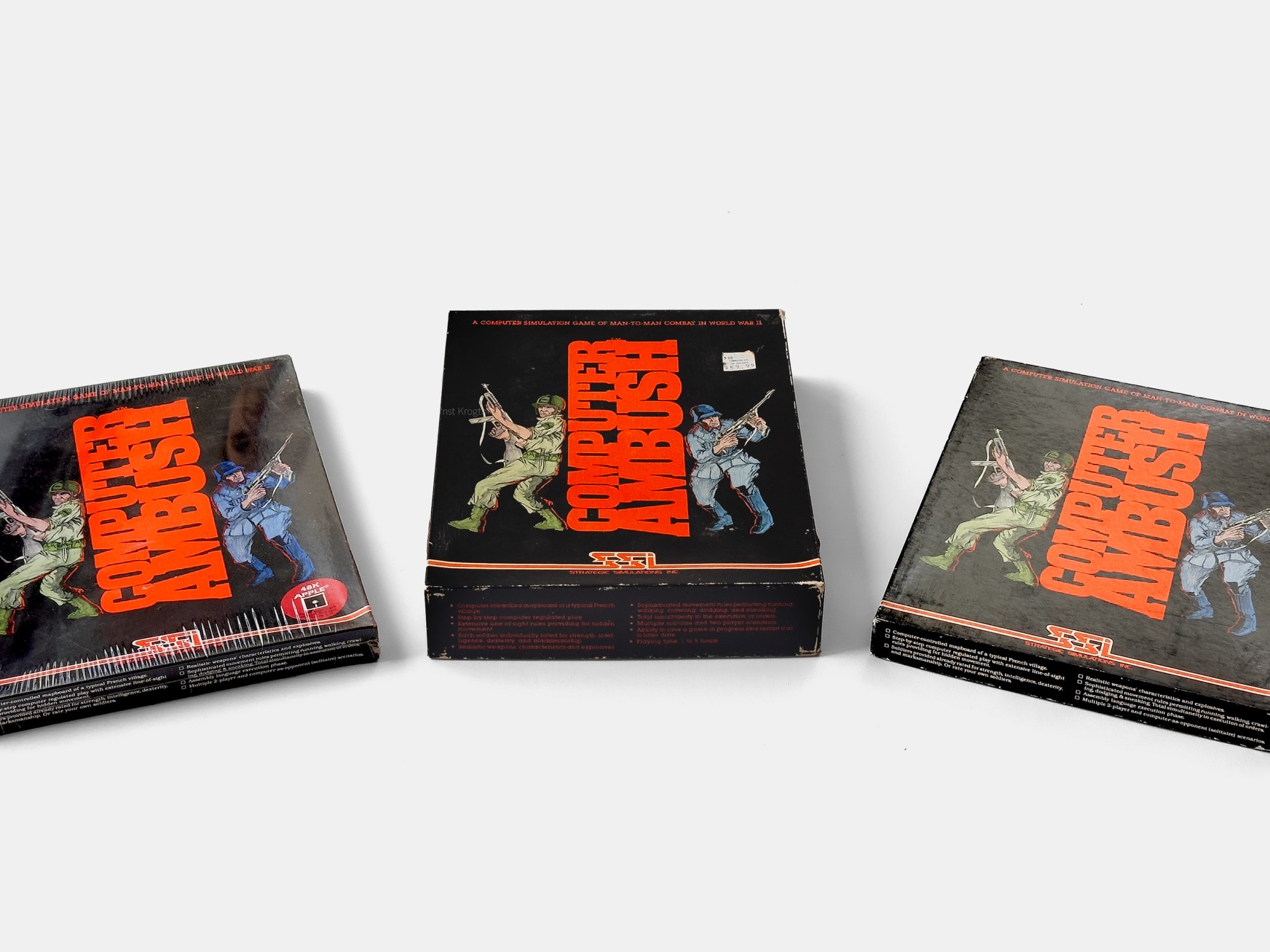
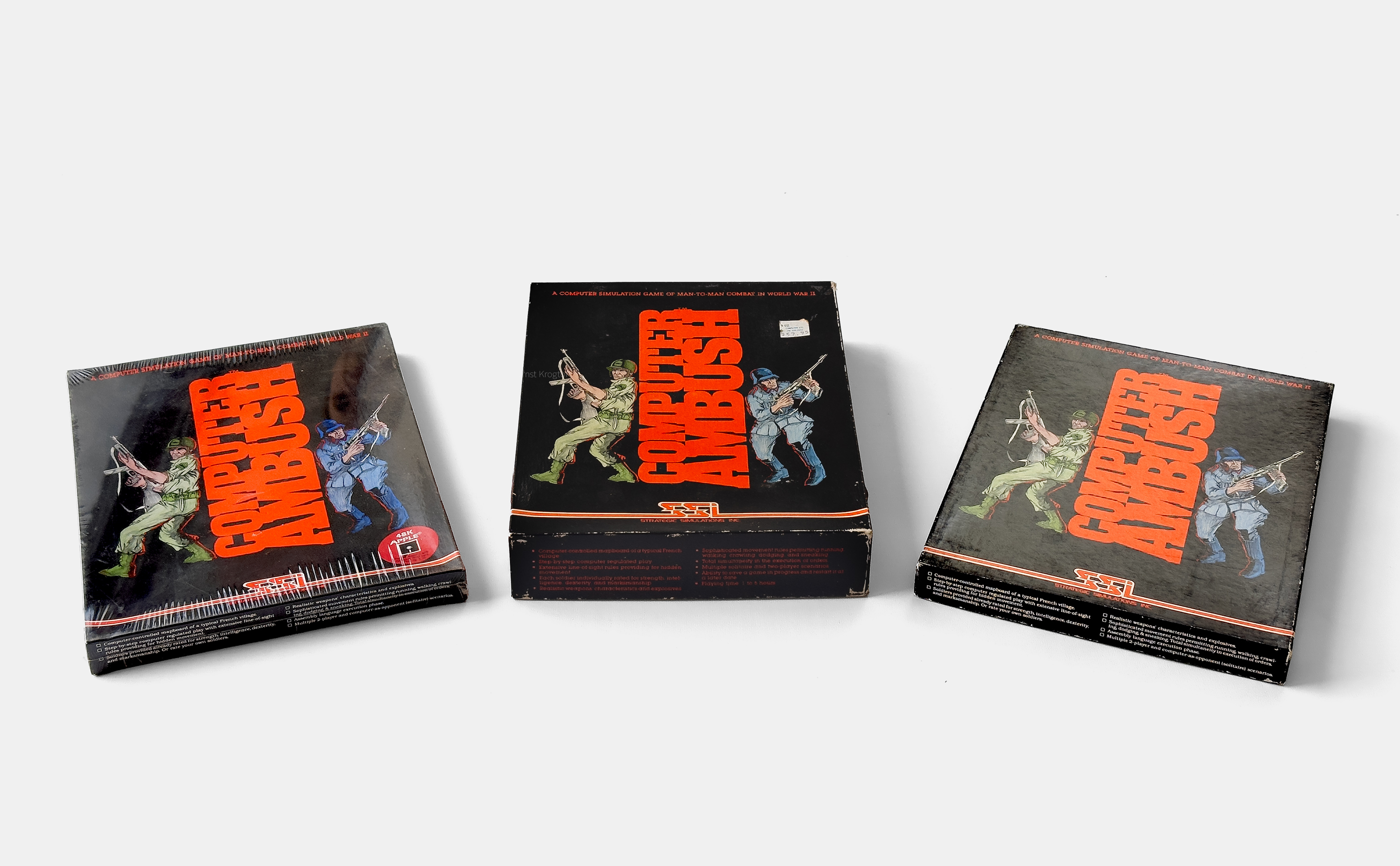
Ed Williger’s Computer Ambush was released for the Apple II in the summer of 1980, as Strategic Simulations, Inc.’s second published game.
Cover design was done by Louis Saekow, who did many of the designs for the company’s early titles.
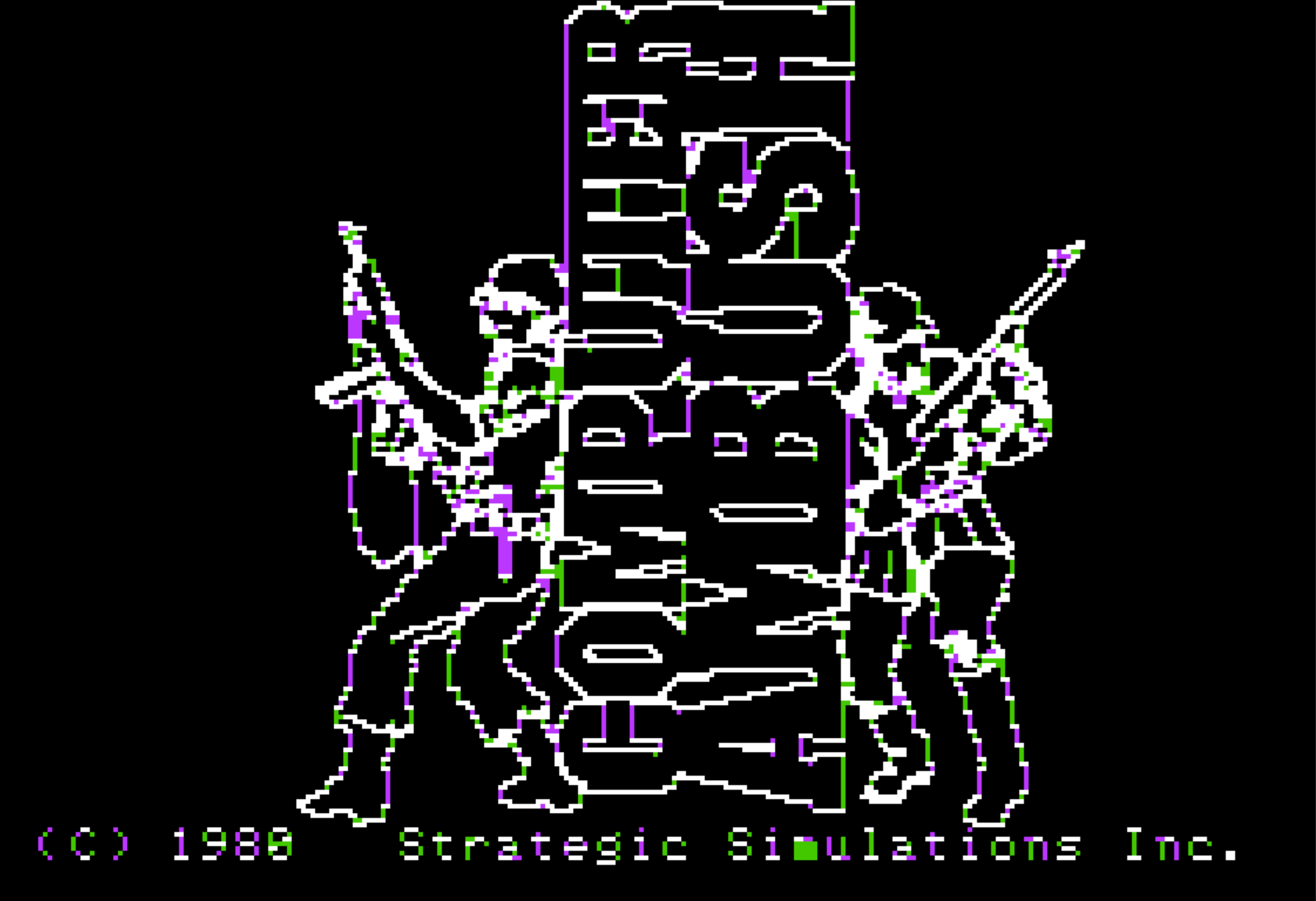
Computer Ambush simulates close-quarters squad combat between American and German forces around a small village in World War II France. The game offers 7 tactical scenarios, 4 of which are head-to-head missions for two players, and 3 solitaire missions fighting against the computer.
To direct your ten-man squad, you have to type out precise, code-like alphanumeric text strings for each soldier. For example, instructing a sergeant to crawl through tall grass for three yards, ready a hand grenade, and watch a specific alleyway required a precise sequence of typed letters and numbers. Once both sides entered their commands, the computer calculates the numbers and executes the actions. Because line-of-sight is completely restricted, the enemy remains invisible until your men physically spot them. A seemingly perfect sprint across an open street could turn into a disaster if the simultaneous resolution suddenly revealed a hidden machine-gun nest.
To truly understand how Computer Ambush forced you to think, you have to look at how a player actually issued orders.
You typed an uninterrupted string of alphanumeric characters for every single soldier.
For instance, entering this string of text:WA99PBMR20SMR21RMR32RMR52RHH
Literally translated to: “Get your breath back, fit your bayonet, stand up, rush into the barn, and melee the enemy in the southwest corner.”
Broken down piece by piece, the sequence shows just how literal the game’s programming logic really was:
–WA99 (Wait): Orders the soldier to rest (for up to 99 time increments) to fully lower their fatigue level. (“Get your breath back…”)-PB (Prepare Bayonet): Tells the soldier to physically fix a bayonet onto the muzzle of their rifle. (“…fit your bayonet…”)-MR20 (Move Running): Tells the soldier to stand up from a prone position and break into an explosive sprint for 20 yards. (“…then stand up, rush into the barn…”)-SMR21, RMR32, RMR52 (Route Trajectory): Successive pathing and vector coordinates that steered the soldier through the door and around internal obstacles to reach the back of the building.-HH (Hand-to-Hand): The final, brutal execution command to initiate direct, close-quarters melee combat. (“…and melee the man in the SW corner.”)
This intense level of detailed micromanagement is exactly why players needed grease pencils, maps, dedication and, not least, a massive amount of patience.
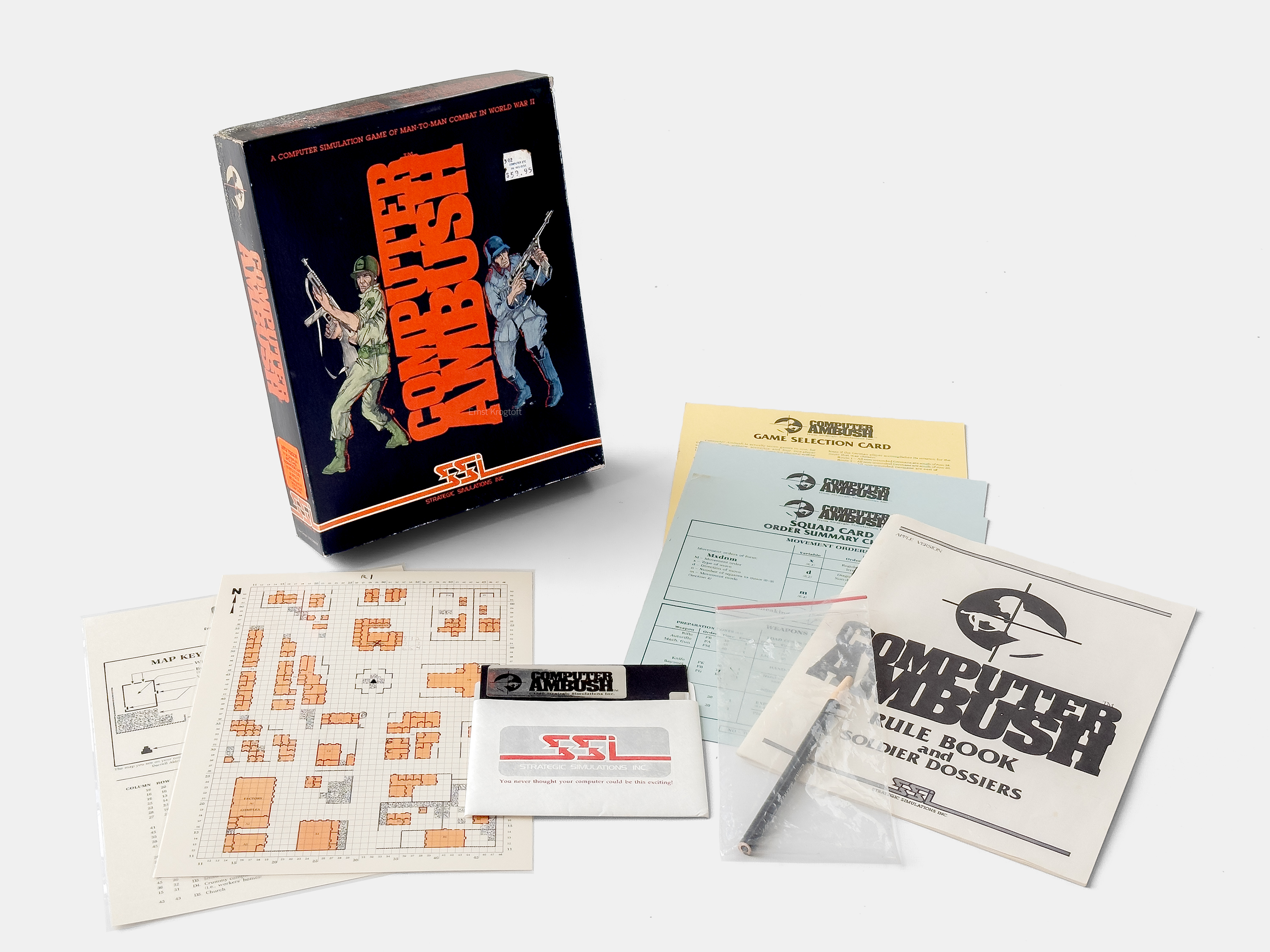
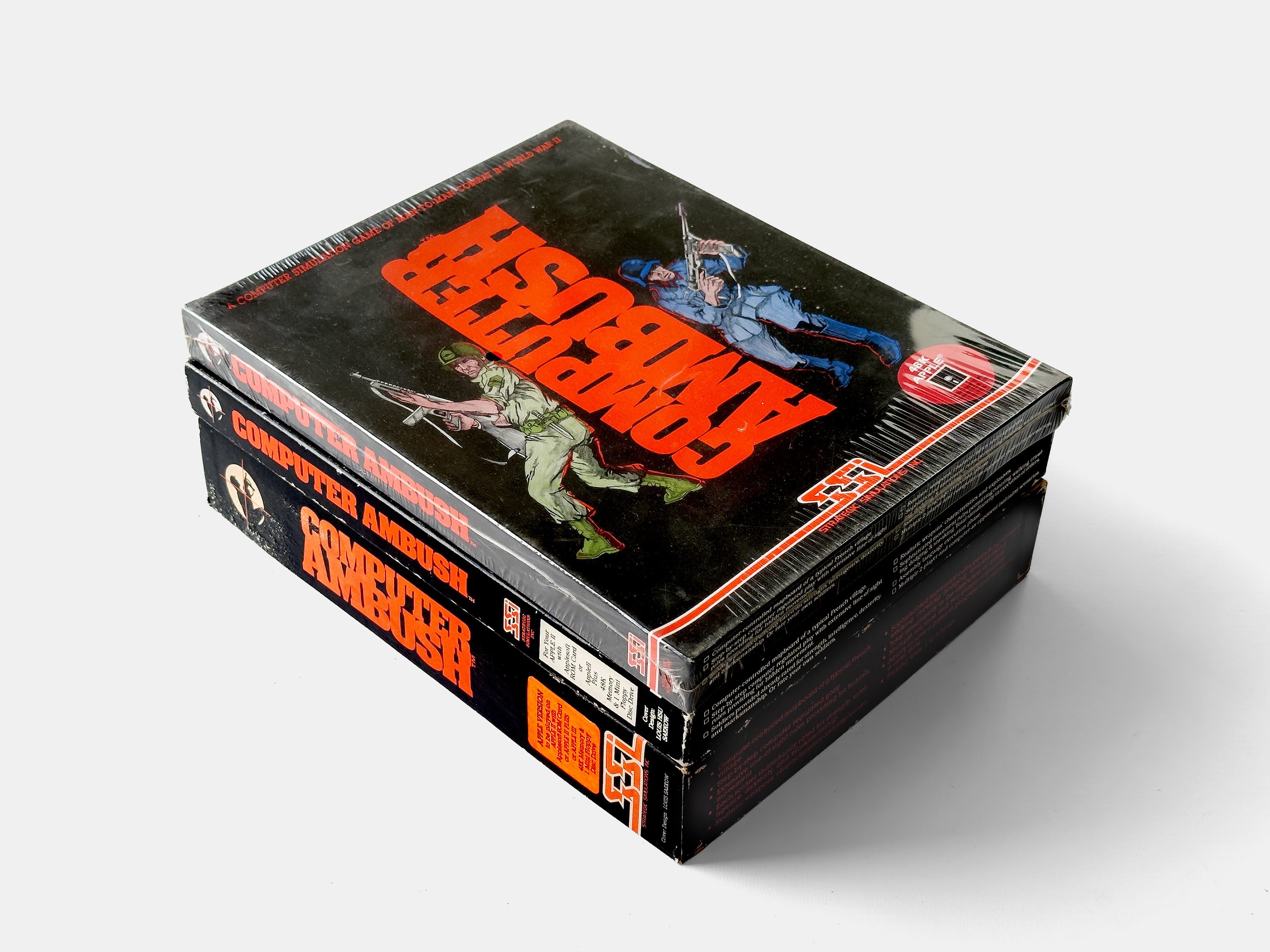
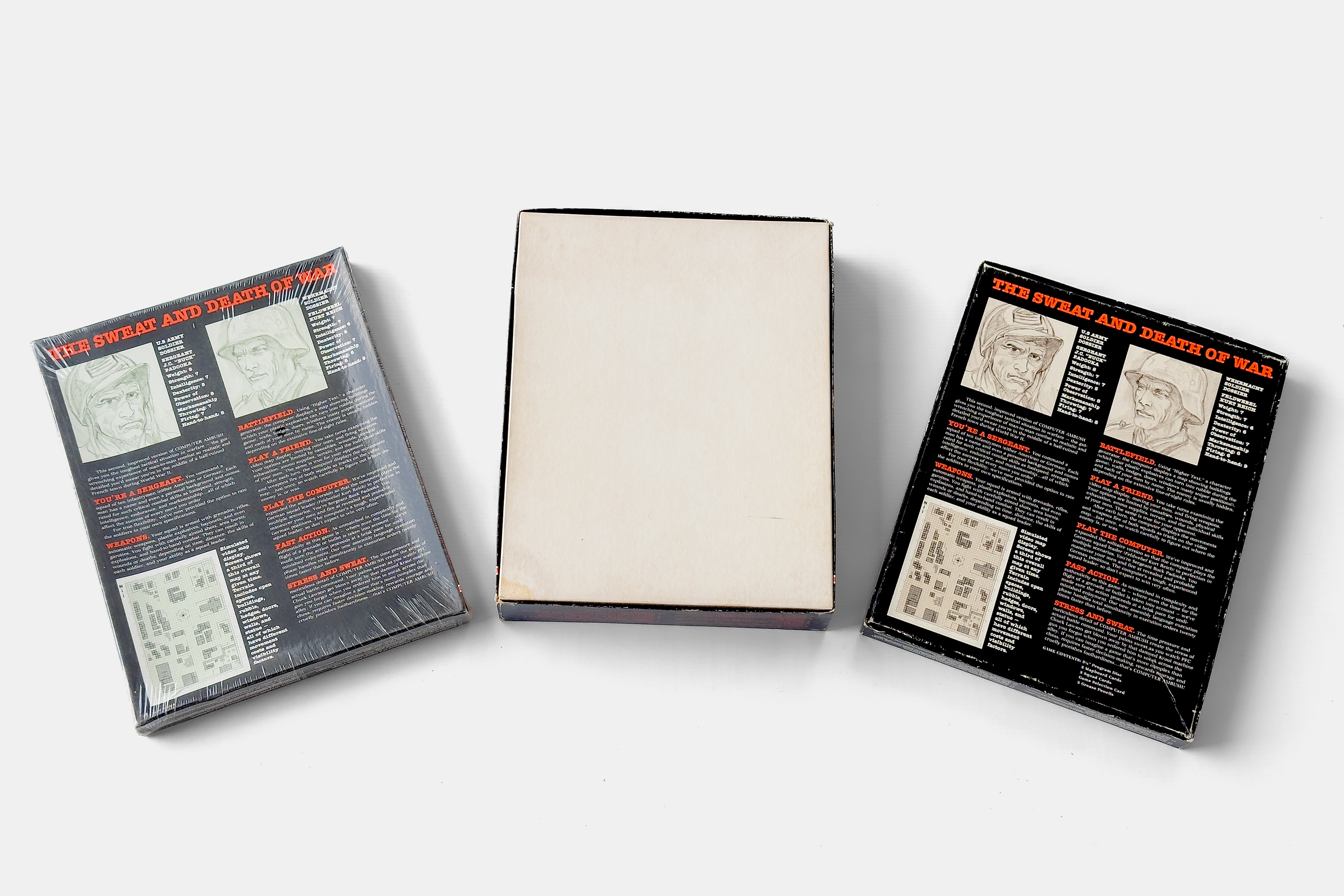
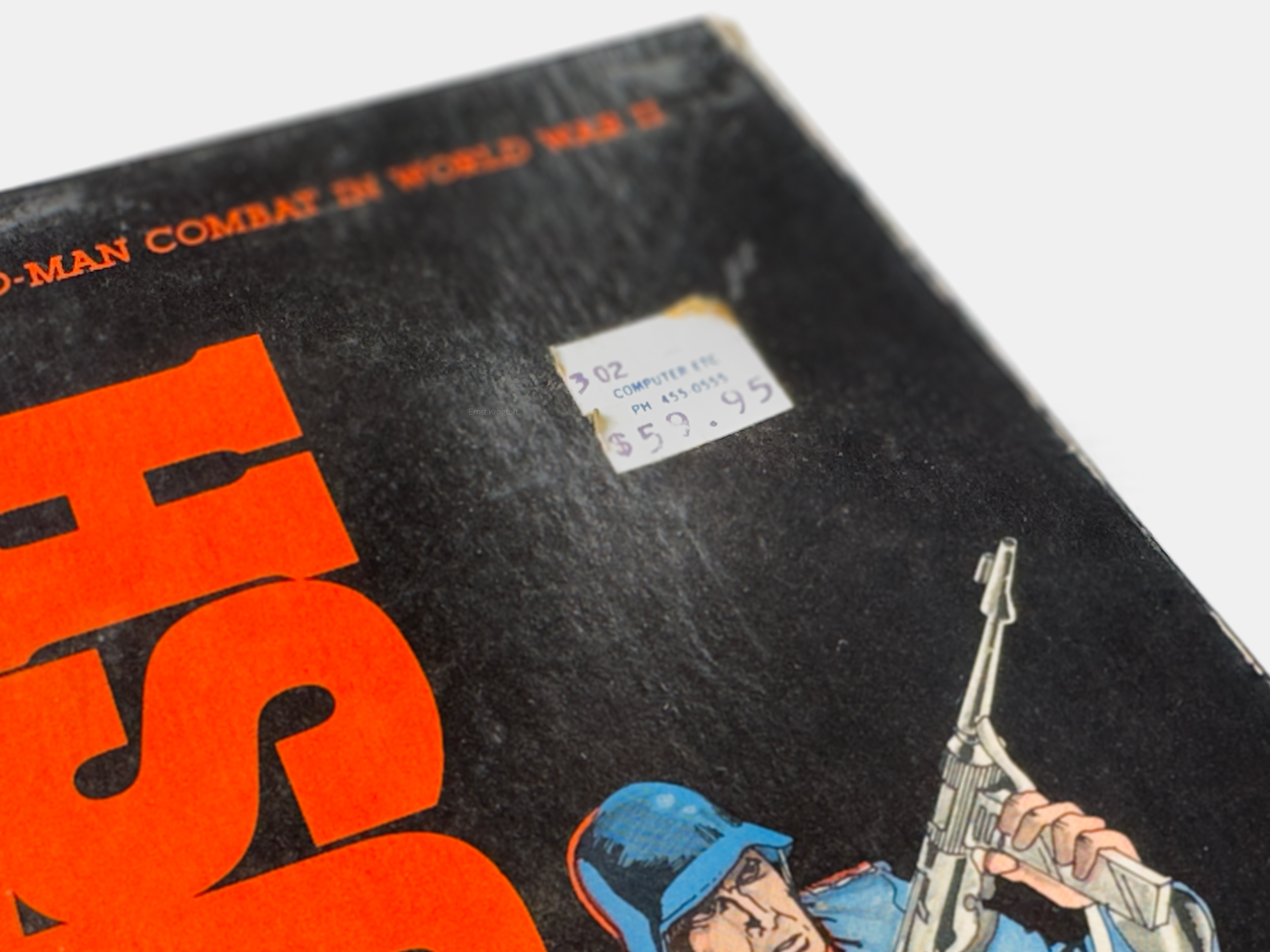
Billings leaned heavily into premium packaging to make his products feel recognizable and valuable, aiming not only to satisfy seasoned traditional board gamers but also to capture the attention of average consumers who knew absolutely nothing about war games. Back then, nearly all home computer software was sold in cheap, unceremonious Ziploc bags. SSI changed the industry by shipping in classic board game-sized boxes. Inside Computer Ambush, players found a detailed manual, laminated maps, and two grease pencils so they could manually track troop positions off-screen. It was marketed as a high-end hobbyist product, retailing for an expensive $59.95 (around $240 in today’s money).
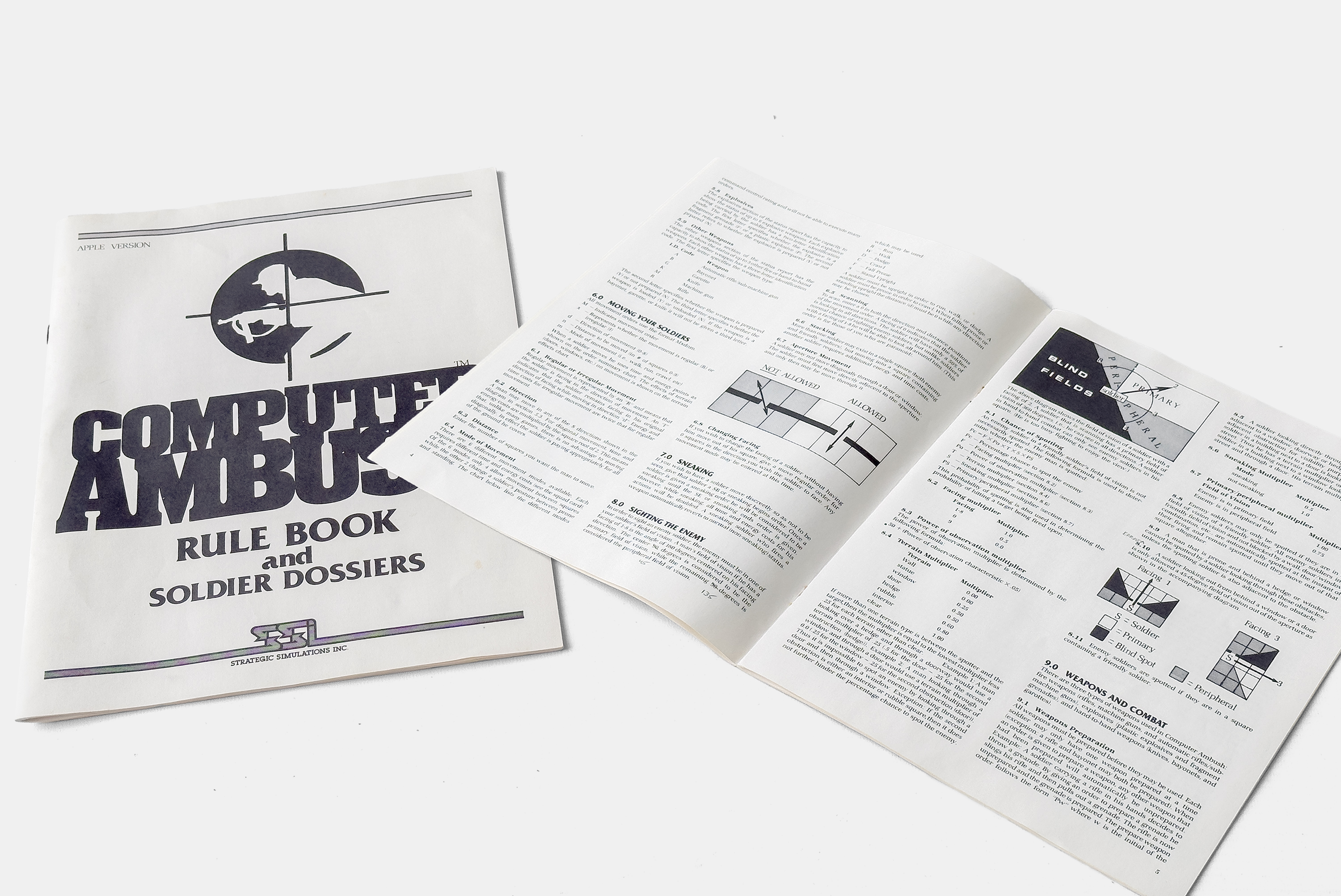
The elaborate, detailed 20-page rulebook was an intimidating sight for players outside the realm of traditional wargaming.
It includes a full index explaining the alphanumeric keyboard strings, like WA99, PB, MR20, or HH, required to issue orders to individual squad members. Detailed chapters break down weapon and combat, line of sight mechanics, and rules behind complex human variables like stamina exhaustion and fear thresholds…
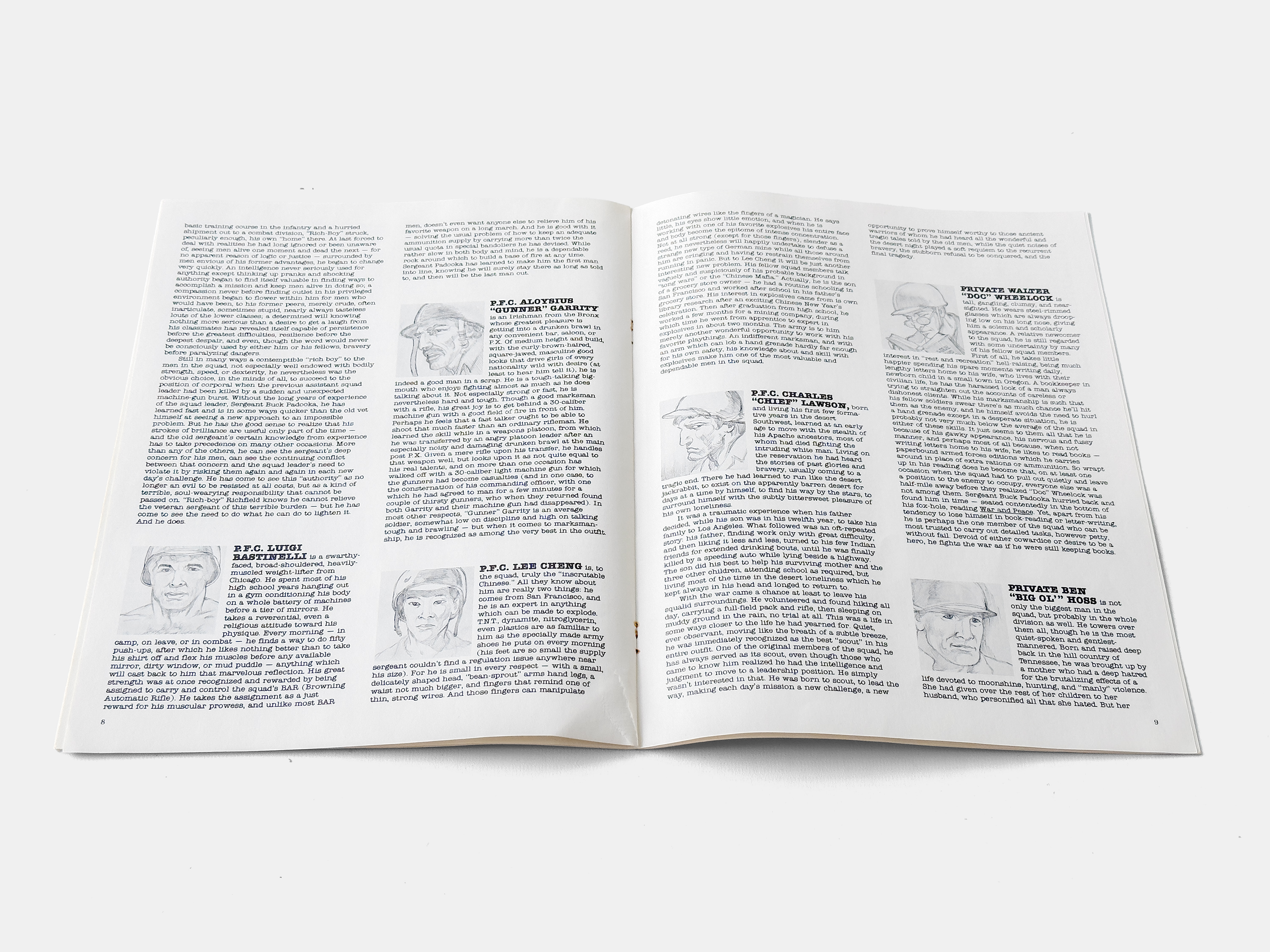
To highlight the personal aspect of the simulation, the back of the rulebook included detailed, well-written biographical dossiers for the ten American and ten German soldiers. The backstories were written by Robert Billings, Joel’s father, who himself was a World War II veteran.
While the game’s attention to detail and tactical depth was unprecedented thanks to Williger’s decades of experience in analogue warfare, Computer Ambush suffered at launch. The entire program had been written in unoptimized, uncompiled Applesoft BASIC, a high-level language burdened by layers of abstraction. When the Apple II had to calculate complex line-of-sight geometries, movement paths, and psychological checks for twenty individual soldiers simultaneously, the machine completely stalled. The game quickly became infamous among early wargamers because it could take up to three hours for the computer to finish processing a single turn. Billings later admitted that the performance was “just terrible.”
The dedicated wargamers audience was willing to overlook the slowdowns for the sheer depth of the simulation. In Softalk magazine’s October 1980 survey of the Top 30 best-selling Apple II programs across retail stores, Computer Bismarck landed at number 21, while Computer Ambush closely followed at number 25, solidifying the company’s place in a rapidly growing industry.
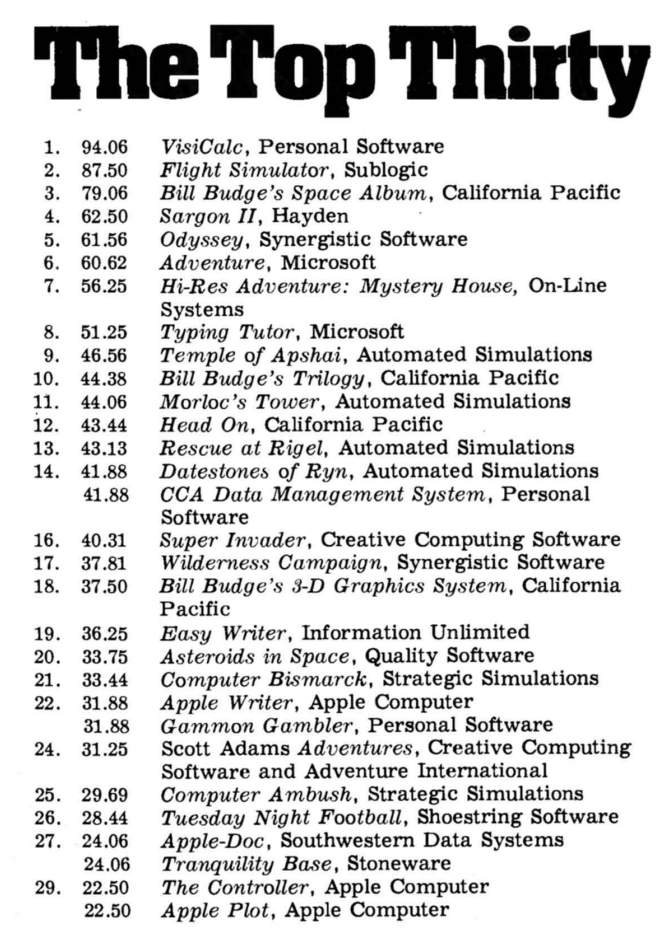
Softalk magazine’s October 1980 survey of the Top 30 best-selling Apple II programs across retail stores landed Computer Bismarck at number 21, while Computer Ambush closely followed at number 25.
Because Computer Ambush launched in a nearly unplayable state due to the crippling calculation speed, SSI had to revise the software quickly. Before a complete code overhaul was possible, a temporary speed boost was achieved by rewriting the software to run on RDOS, a custom, streamlined disk operating system built internally by SSI to manage data reads and memory swaps at much higher speeds.
To distribute the fix, SSI launched a mail-in upgrade program, allowing frustrated players to send in their original disk plus $20 to receive the optimized update. The engineering trick worked, turning processing times from hours down to a more manageable 15 to 30 minutes. The more efficient framework also allowed SSI to expand the game’s actual content. The human-versus-human tactical scenarios grew from four to seven, while the human-versus-computer missions expanded from three to five.
The ultimate salvation for the title came during the tail end of 1981. Realizing that the interim RDOS fixes were only temporary patches, SSI brought in programmers Larry Strawser and Kendall Whitesell to completely rewrite the codebase. The duo systematically rebuilt the entire game from scratch, stripping away the slow Applesoft BASIC and rewriting it entirely in assembly language for the definitive “Second Edition.” While the technical upgrade was officially announced in the autumn of 1981 with a planned December release, delays pushed its actual retail debut into early 1982.
Bypassing the high-level language constraints and layers of abstractions that came with BASIC allowed SSI to cut processing time down to just a few minutes, and yet again they also expanded the game’s actual content. Players could now create their own soldiers, assigning skills and distributing weapons among them, also during play.
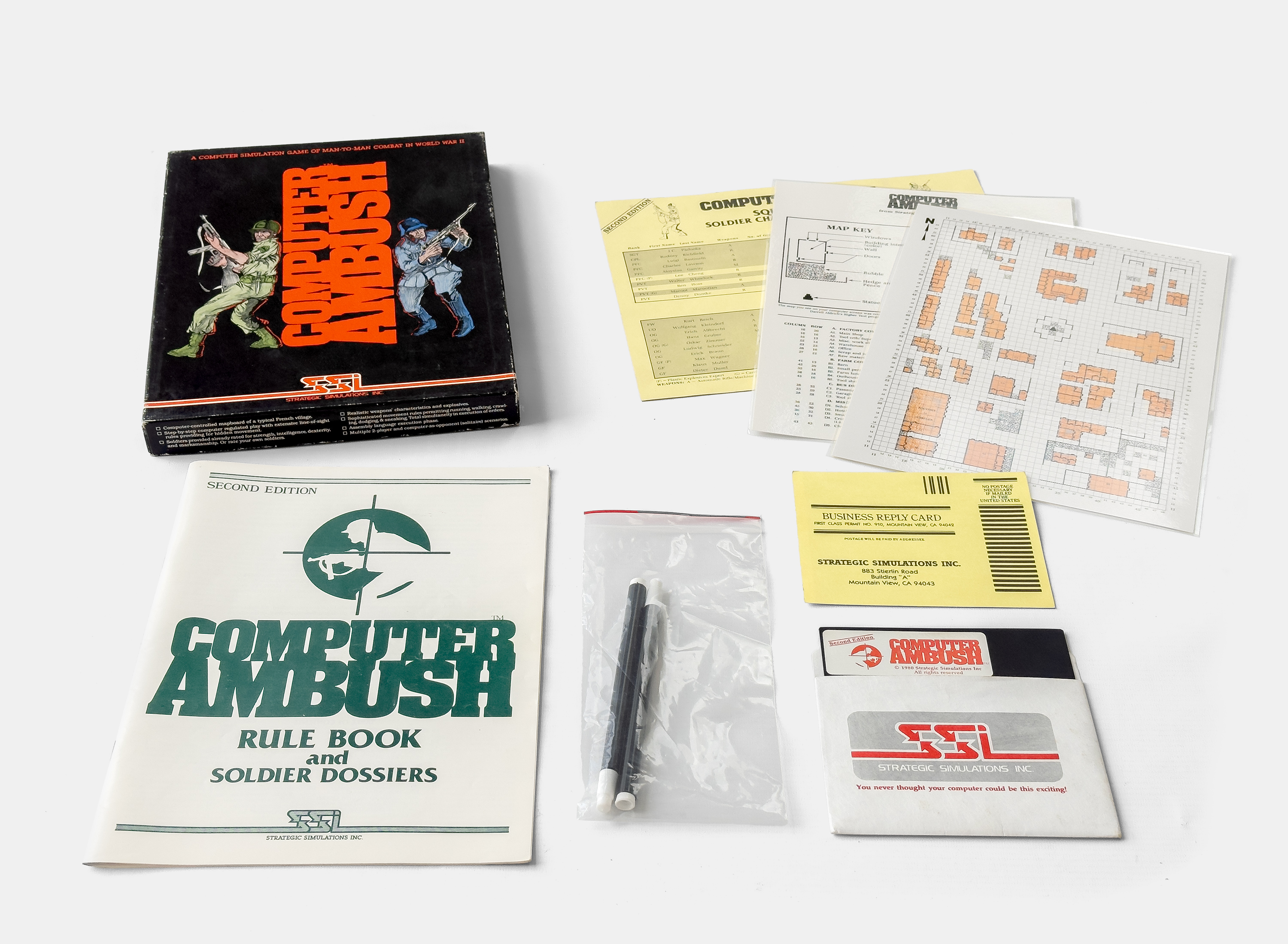
Realizing the game’s reputation was on the line, SSI brought in programmers Larry Strawser and Kendall Whitesell to completely overhaul the code. The duo rewrote the game from slow Applesoft BASIC into compiled assembly language for the 1982 “Second Edition.” The upgrade dropped the agonizing processing time down to just a few minutes.
In 1984, leveraging the optimized machine code from the Apple II Second Edition, SSI ported the game to Atari’s competing home computer architecture. The port added better character generation, smoother controls, and minor balance tweaks. The game retained identical gameplay mechanics but adjusted for Atari’s hardware and color capabilities.
Along with the 1984 Atari 8-bit version, a Commodore 64 version followed in 1985.
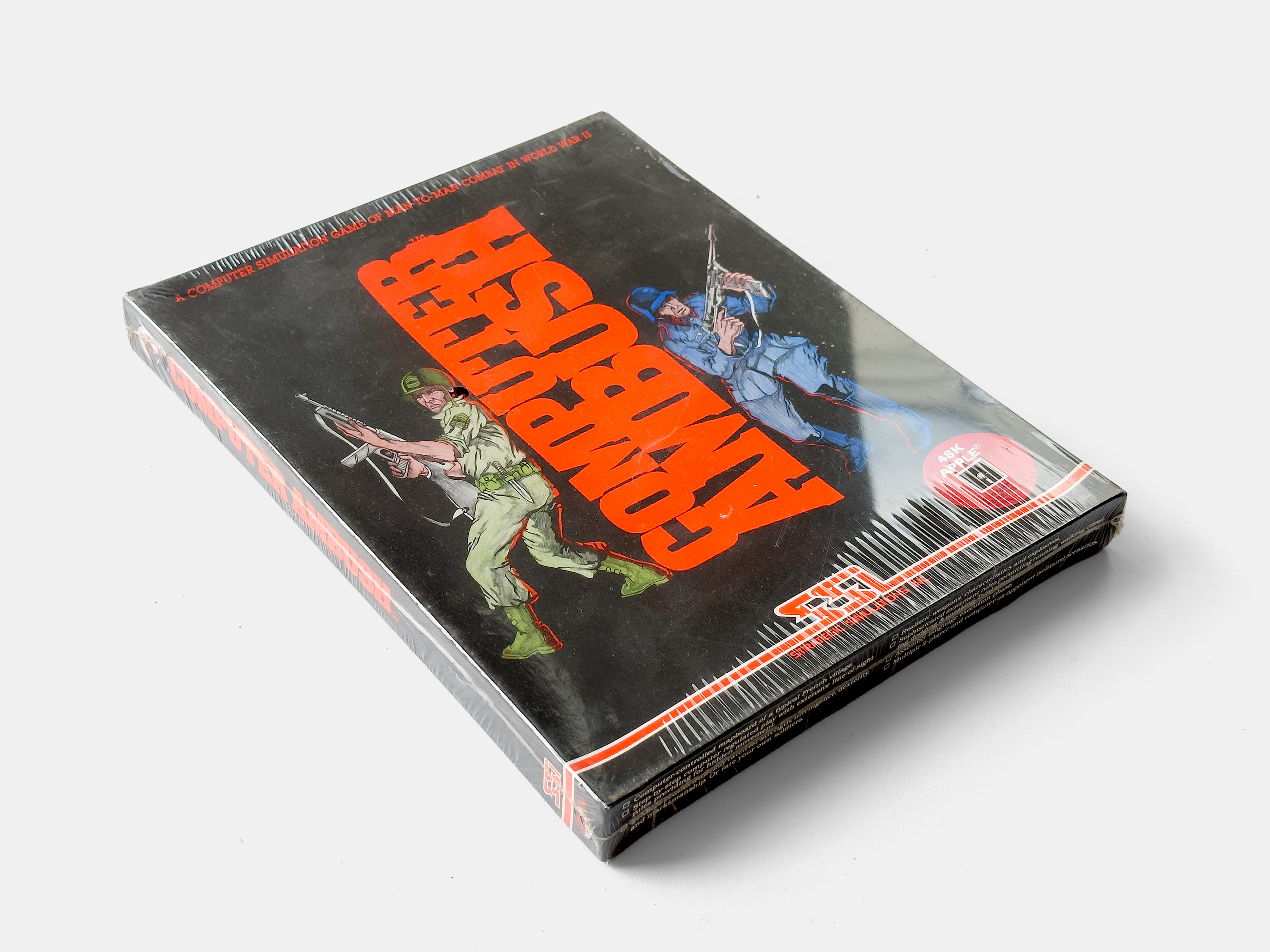
The Apple II version was also rereleased in a slightly more streamlined box.
Computer Ambush was highly praised at tabletop hobby conventions, but mainstream computer magazine reviews were heavily mixed. Outside of the hardcore strategy niche, many general critics felt the game’s steep learning curve, text-heavy interface, and lack of visual appeal made it far too inaccessible for the average player. Despite its flaws, it proved that computers could successfully track detailed squad micromanagement, establishing the baseline mechanics that would help pave the way for milestones years later, with titles like X-COM: UFO Defense (UFO: Enemy Unknown in Europe).
With the game’s critical performance bottleneck solved, and a multi-year presence in SSI’s catalog, it eventually received well-regarded ports to the Atari 8-bit and Commodore 64 platforms. But for the man who had stubbornly forced BASIC and the Apple II to near breaking point, the digital journey was over. Computer Ambush would remain the only commercial game that carried Williger’s name.
Williger stepped away from the emerging software industry. He didn’t stay to watch SSI evolve from a makeshift apartment office into a corporate gaming titan. He missed the entire golden age of the company, from the tactical refinements of during the early ’80s to the massive mainstream success in 1987 when the company secured the TSR license to create the legendary Dungeons & Dragons “Gold Box” series, eventually dominating the 90s strategy market with titles like Panzer General.
Sources: Days Gone By, The Tactical Wargamer, Wikipedia, ANTIC Magazine, Computer Gaming World, SoftSide Magazine, The Wargaming Scribe, Softalk, RockPaperShotgun, Creative Computing…


Great article. I really wonder where you found Ed Williger’s biographical details – I could not. I added a link to your article in my own Computer Ambush article (+ a comment so people notice it).
If I would add one thing, it’s that the Atari and Commodore 64 ports already included some improvement compared to thei initial version, in particular giving you some [limited] information on what is happening during turn resolution – so really it’s a game that was made playable over time.
Thanks. Yes, it was indeed a game that evolved over time. I only played the original (but RDOS) version, and it made me bang my head against the wall countless times… That’s why there’s no gameplay video in the article.
I only found very little on Williger. His very short backstory is cobbled together from his brief passage in the manual and whatever I could find in interviews with Billings.
(I really wanted to play the very first version – I have it on 5.25″ but my hardware is not present at the moment. The earliest version avaiable on the web I believe is the first revision.)