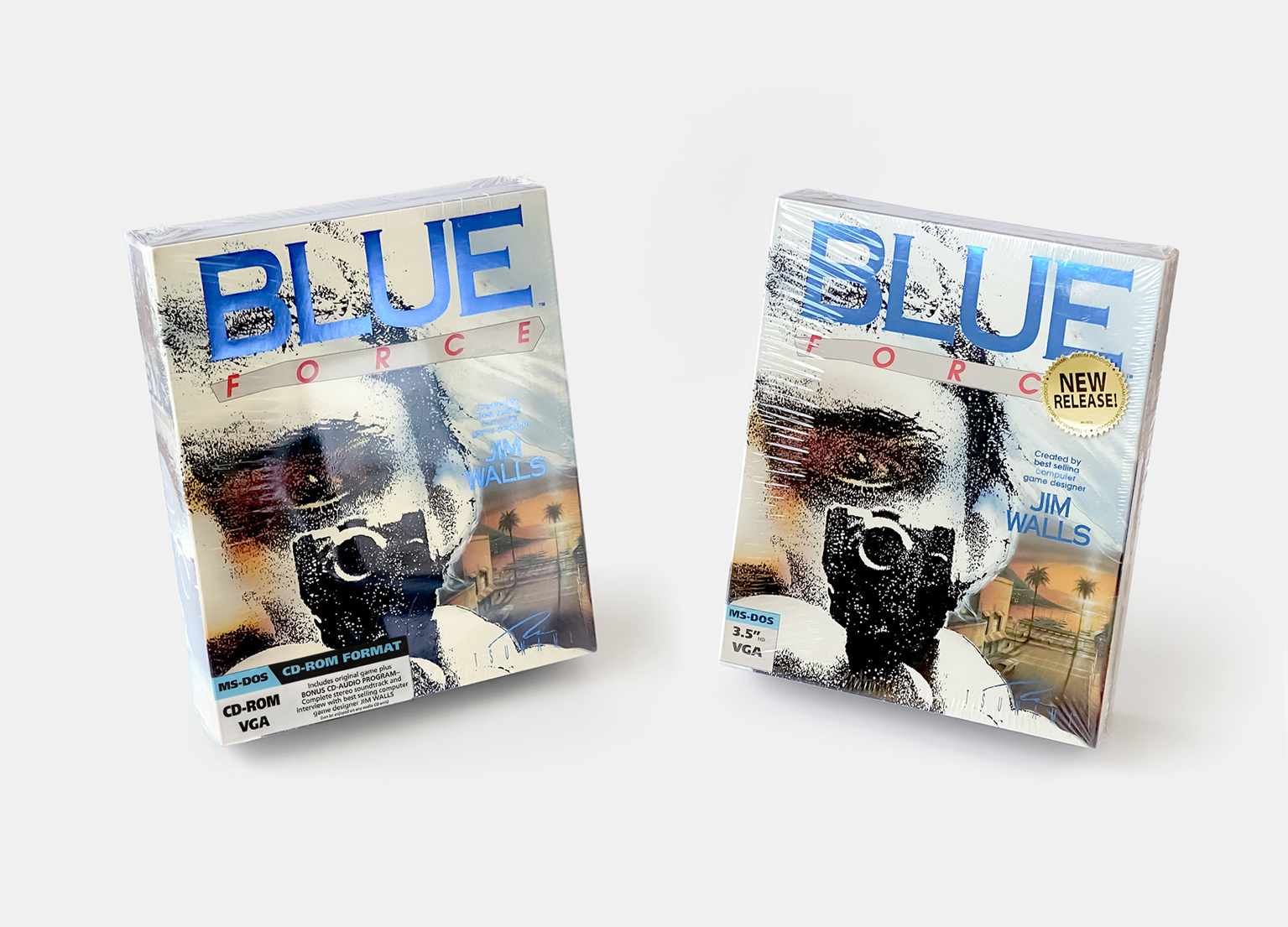
By the early 1990s, Sierra On-Line had become unrecognizable from the small outfit that once operated out of Ken and Roberta Williams’ home. The Oakhurst company was expanding rapidly, pursuing new markets and restructuring itself to accommodate larger projects and more ambitious goals. The future, everyone said, was CD-ROM and full-motion video. Posters of King’s Quest and Space Quest, games that had heralded the company, still lined the walls, but inside the growing company, the atmosphere had changed. Development schedules were tighter, budgets higher, meetings lengthier, and management more corporate than ever before.
For some, this was an exciting transition. For others, it felt like the company was moving away from what had once defined it with small teams, personal visions, and a sense of family. Among those who felt the shift was Jim Walls, the former California Highway Patrol officer who had turned his real-life experiences into Sierra’s popular Police Quest series. Now, during the development of the third title, Walls found himself at odds with the company’s new direction, personal stress, and creative exhaustion.
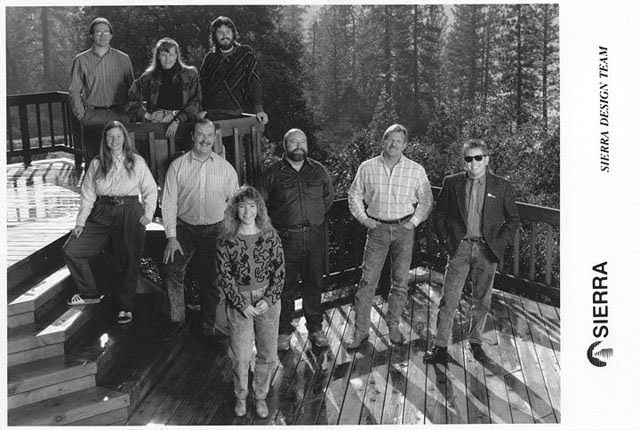
A classic Sierra On-Line promotional photograph featuring the company’s famous design talent during the golden era in Oakhurst, California.
Jim Walls stands second from the right, positioned alongside other legendary creators including Al Lowe and Roberta Williams.
Image from Choicest Games.
Walls’s path into the industry remains one of gaming’s more unusual. A career officer with the California Highway Patrol, his life changed dramatically after a traumatic shooting incident on duty in Los Angeles in January 1984. Forced to step back from law enforcement the following year, he was introduced to Ken Williams through his wife’s hairstylist. Williams encouraged him to turn his first-hand experiences into interactive entertainment. While Sierra’s adventure catalog was built on the whimsical fairy tales of King’s Quest, Walls’s vision was radically different. He was heading for a grounded but unforgiving dive into real-life police procedure, resulting in Police Quest: In Pursuit of the Death Angel, published in 1987.
Instead of hoarding random inventory items to solve abstract puzzles, players had to think like an actual officer, checking their police cruiser’s tires, filing proper arrest reports, and memorizing police codes to avoid an instant “Game Over.” The unique blend of discipline and high-stakes drama resonated with audiences, leading to Police Quest II: The Vengeance and Police Quest III: The Kindred, with each installment expanding the story of officer Sonny Bonds while using the era’s evolving technology.
In the summer of 1991, the same year Police Quest III shipped, Tsunami Media, Inc. was founded just miles from Sierra’s Oakhurst offices. The company had been established by Ed Heinbockel, Sierra’s former Chief Financial Officer. After managing Sierra’s rapid financial trajectory for four years, Heinbockel chose to cash out his substantial Sierra stock holdings during 1990 to finance a new venture. Rather than relying on rigid outside venture capital, he envisioned a smaller, more nimble company free from crippling corporate overhead.
Tsunami quickly transformed into an attractive haven for Sierra talent seeking an escape from corporate pressures. Programmers, artists, and designers familiar with Sierra’s game creation tools and production methods soon filled its ranks. The geographical and professional proximity triggered a bitter rivalry with Ken Williams, who regarded Tsunami as a predatory competitor operating right in his own backyard. Williams later admitted that Sierra heavily weighed legal action against Tsunami over the aggressive recruitment of its former staff. Yet for the ones who jumped ship, Tsunami offered a chance to recapture the spirit of creativity and independence that they felt was fading at Sierra.
In 1991, Walls formally severed ties with Sierra and signed a contract with Tsunami. His reputation was firmly established through the Police Quest series, though by the time Police Quest III was in production, his direct involvement had already begun to wane. Walls laid down the concept and structure, but departed before the game was fully wrapped, leaving colleagues such as designer and writer Jane Jensen to complete the dialogue and tie up loose ends. The shift gave the game a somewhat uneven tone, part Walls’s procedural vision, part the work of others, to ensure the project reached completion.
For Walls, Tsunami represented a genuine fresh creative start where he could construct a spiritual successor to his police games without directly infringing on Sierra’s protected intellectual properties.
Tsunami would come to rely on its proprietary Tsunami Adventure Game Engine, TsAGE, developed during the company’s first time producing point-and-click adventures with 256-color VGA backdrops and character overlays, mirroring the style of Sierra’s SCI engine without infringing on copyright. While lacking the deep scripting and cross-platform flexibility, TsAGE offered a robust toolset for creating commercial games with familiar mechanics.
Heinbockel initially intended his company to act primarily as a pure design house. In fact, he had previously established a contract with industry titan Electronic Arts to develop and publish what was intended as a sequel to EA’s Starflight and Starflight 2: Trade Routes of the Cloud Nebula. However, when unexpected business disagreements caused the relationship to fall apart, Tsunami was forced to pivot rapidly to not only change the game but also to self-publish to protect the project. Leveraging Heinbockel’s corporate financial background and his liquid Sierra stock capital, Tsunami took on the retail distribution burden themselves and published the finished product as Protostar: War on the Frontier, the company’s first published title.
While Protostar was in development, work on Blue Force began, with Walls again drawing heavily upon his California Highway Patrol roots. He structured the rhythm of traffic stops, tactical routines, and crime scene integrity to shape the journey of rookie officer Jake Ryan in the fictional city of Jackson Beach. The coastal setting was a dream of Walls’s own design, capturing an idyllic beachfront backdrop, a far cry from his actual, hard-bitten years on the highways of California.
The production and its overall design mirrored the proven concept of Police Quest alongside the technical achievements of its third installment. It featured video-captured actors, with many roles filled by Tsunami employees and their families to keep production costs down. The development team was led by former Sierra artist and animator Cheryl Loyd, while programming was driven by a small team including Robert Eric Heitman. Having previously helped implement Sierra’s AGI engine and later co-developed its successor, SCI, Heitman was now spearheading the creation of the TsAGE system and the lineup of games it made possible.
During the early summer of 1993, as Walls and the team were wrapping up the development, the industry found itself at a crossroads. With multimedia technology rapidly capturing the market, Tsunami rushed a CD-ROM version into production to launch alongside the standard floppy edition. By late summer, both versions arrived simultaneously on retail shelves.
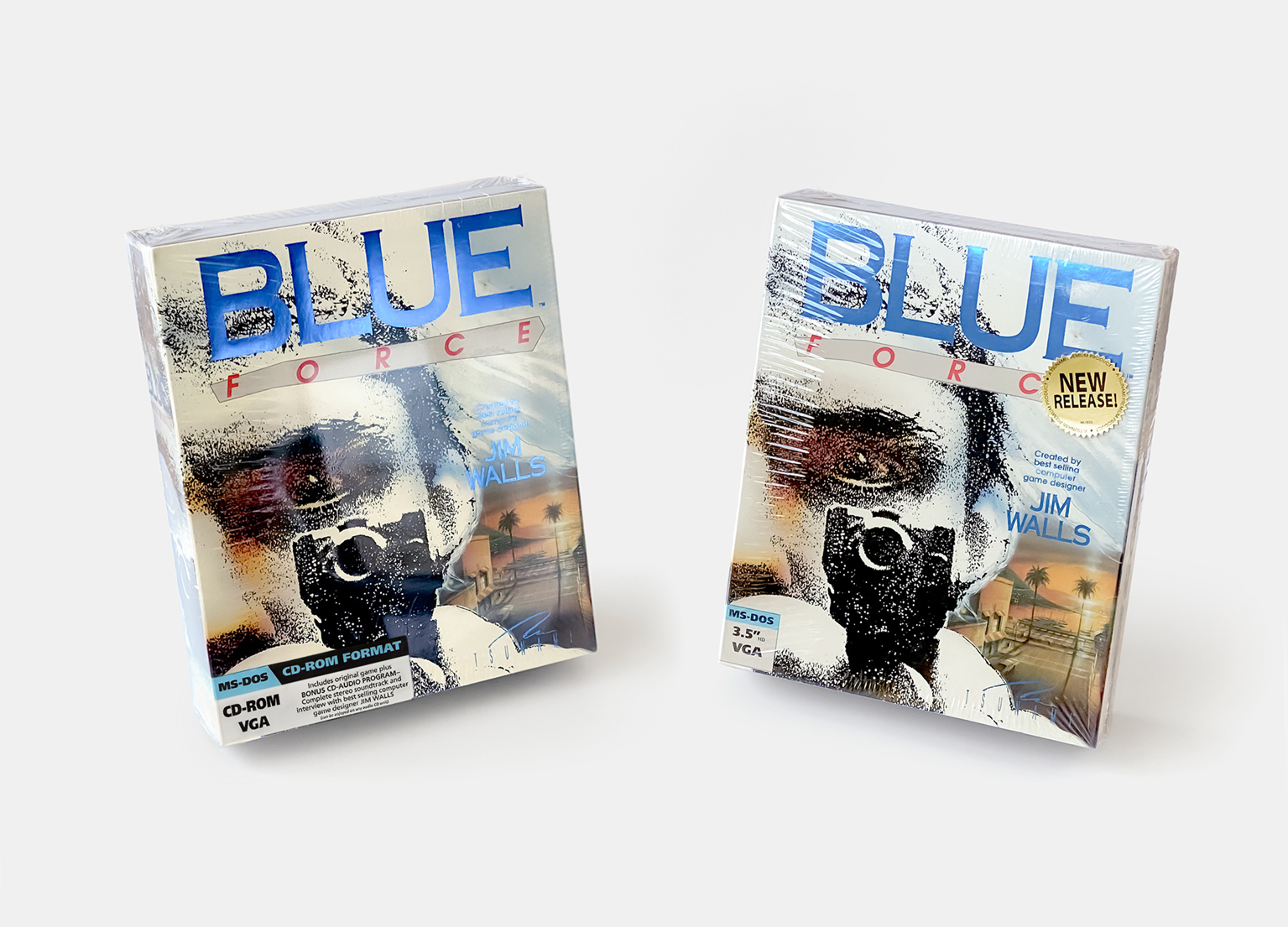
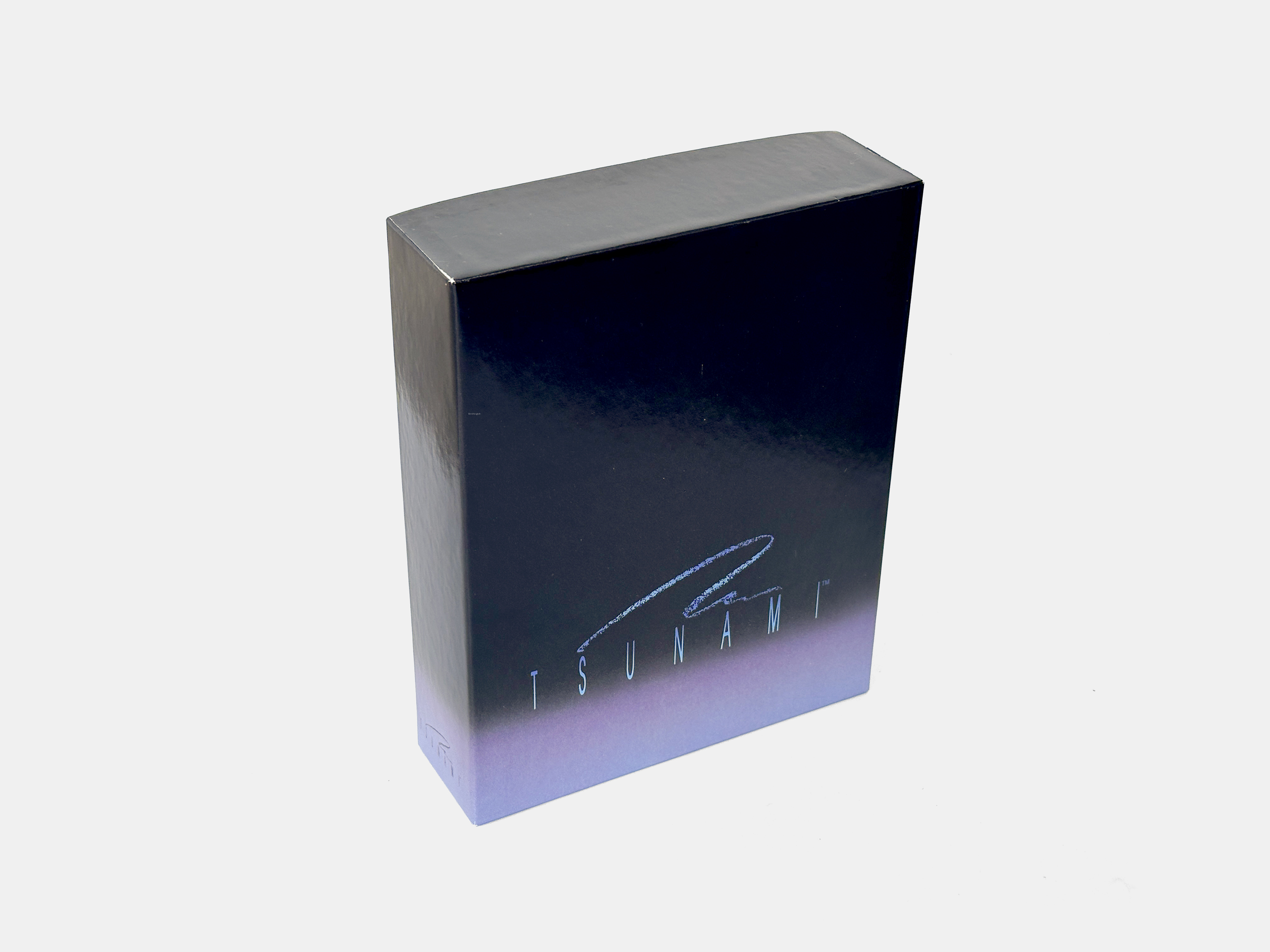
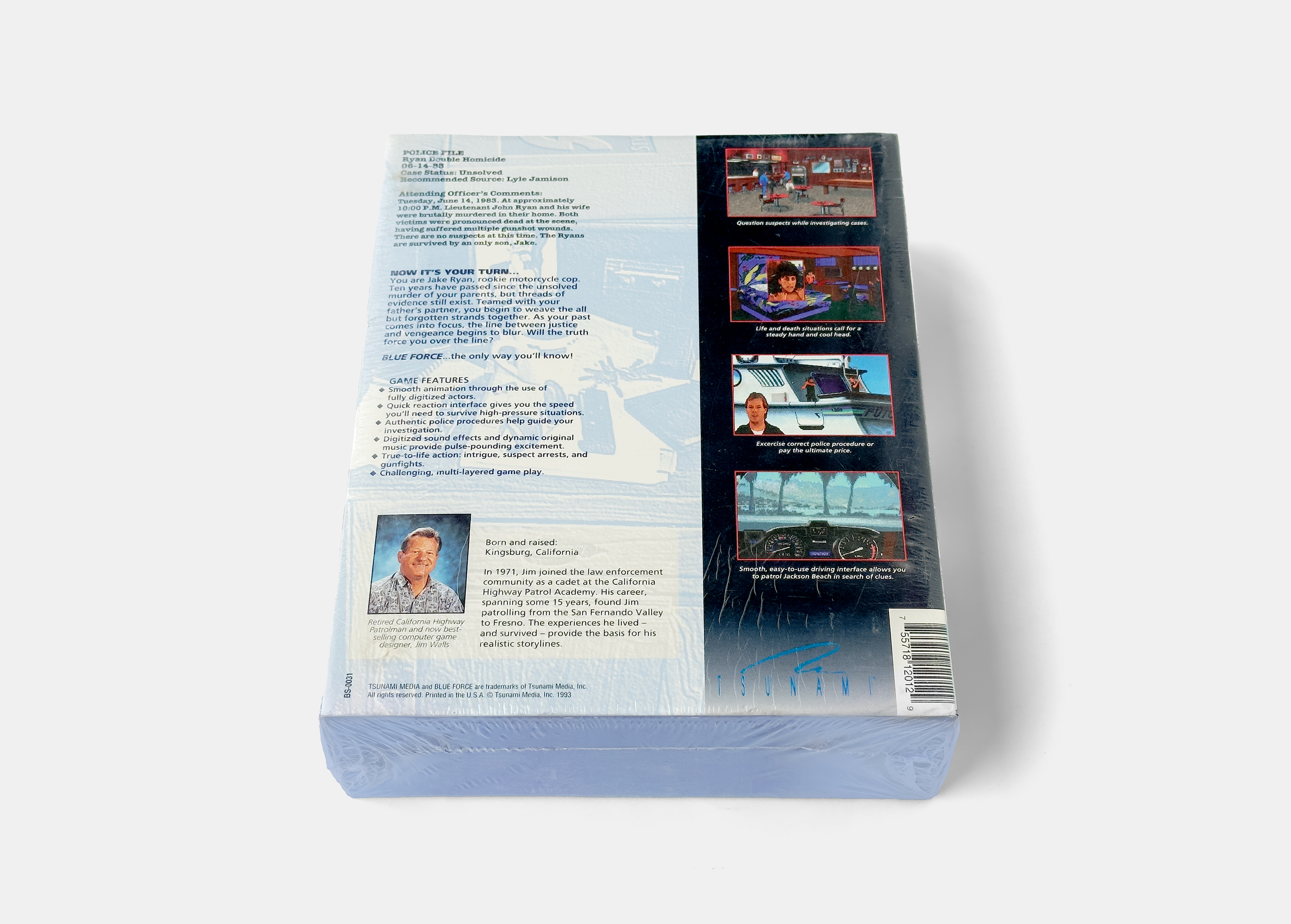
Tsunami Media self-published Blue Force in 1993 on both floppy disk and CD-ROM, featuring cover art by ex-Sierra artist Greg Steffen.
The “New Release!” splash on the floppy box was a pure shelf-marketing meant to catch the eyes of retail shoppers, rather than indicating a newer version of the game.
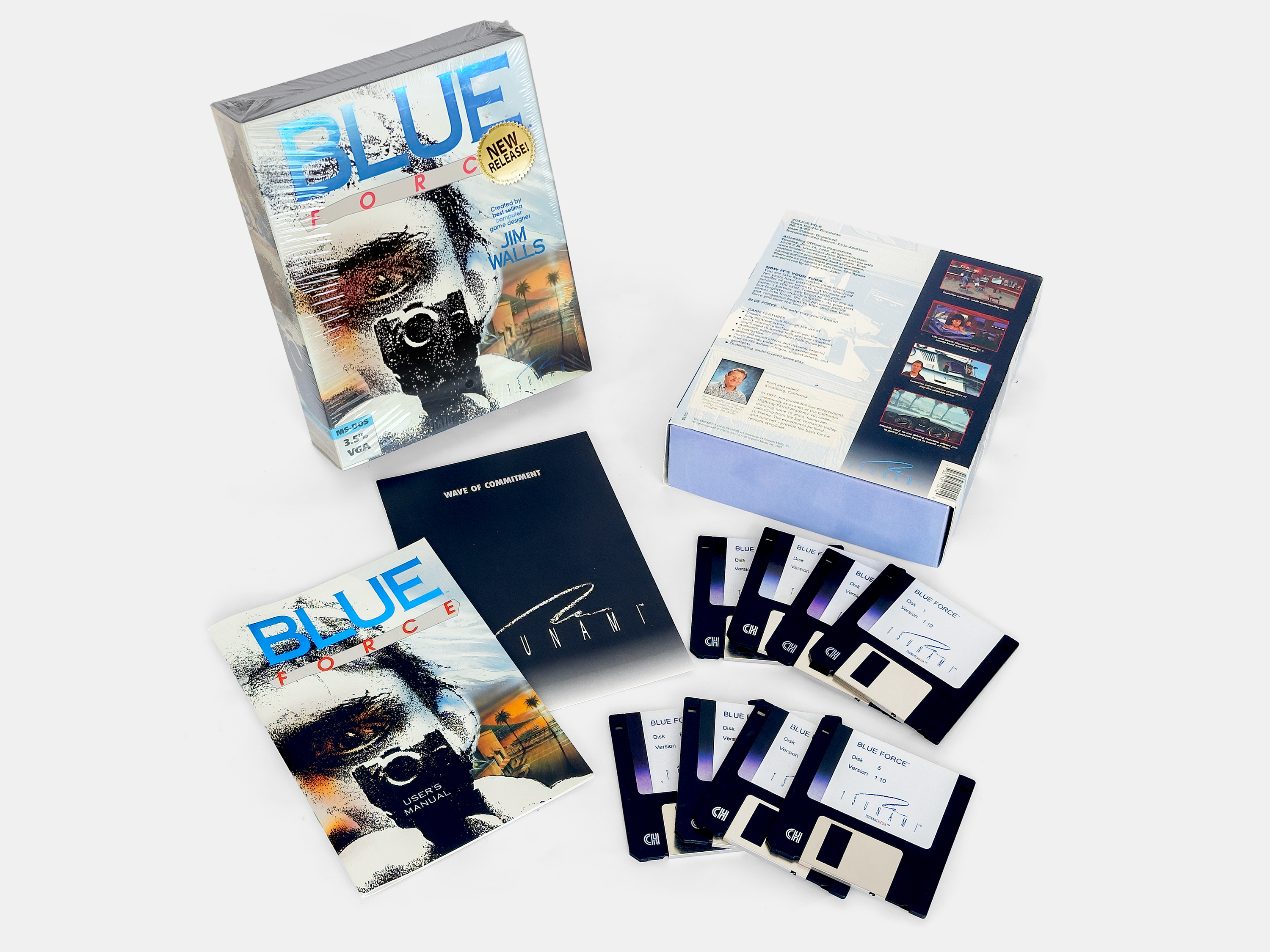
The floppy version spanned eight high-density disks, and while the game was identical, the CD-ROM version offered a few extras, including a stereo CD soundtrack and an exclusive audio interview with designer Jim Walls discussing the game’s connection to real-life law enforcement.
Technically, Blue Force closely resembled early 1990s Sierra titles. It used Tsunami’s proprietary Tsunami Adventure Game Engine, which combined hand-painted VGA backgrounds with digitized, video-captured actors. While this approach gave the game a semi-photorealistic look, it remained less ambitious than Police Quest III and was a far cry from the full-motion video blockbusters Sierra was about to release into the market.
The game follows rookie officer Jake Ryan through his daily duties in the fictional town of Jackson Beach, where routine encounters gradually unfold into a personal narrative centered on the unsolved murder of his parents ten years prior. Much like Police Quest, mistakes such as mishandling firearms or ignoring protocol led to failure, though Tsunami intentionally streamlined some of the harsher penalties of Walls’s earlier designs to improve accessibility.
Initial sales figures were highly promising, with 20,000 units shipped in the first month. The initial wave was fueled almost exclusively by the built-in audience of loyal Police Quest players and Walls enthusiasts who recognized his name prominently featured on the retail box. However, once the game fell into the hands of critics, the assessment turned mixed to negative.
The most devastating critique arrived in Computer Gaming World, where reviewer Charles Ardai panned the title. Ardai characterized the game world as a series of superficial “prop-up facades,” heavily criticizing its “abysmal” dialogue, “appalling spelling errors,” and sluggish speed. He concluded his review by dryly writing that “Walls and Tsunami both have better work in them… they have nowhere to go but up.” The review’s legacy persisted, and in 1996, the magazine officially ranked Blue Force as the 37th Worst Computer Game of All Time.
European outlets like PC Format similarly targeted the game’s structural shortcomings. They criticized the restrictive, trial-and-error design philosophy and repetitive administrative paperwork, noting that an uninspired storyline and sterile, unpopulated screens heavily outweighed the game’s positive procedural segments.
While the CD-ROM version highlighted Tsunami’s desire to keep pace with industry shifts, the company lacked the capital or infrastructure to produce full-motion video or hire voice actors for a “talkie” version. Instead, the CD version offered modest enhancements with former Sierra composer Ken Allen’s MIDI soundtrack upgraded to CD-Audio. The disc also included a 20-minute audio interview track with Walls playable in standard CD players. Compared with Sierra’s contemporary CD-ROM blockbusters like Gabriel Knight: Sins of the Fathers, which featured high-profile Hollywood voice talent, Blue Force underscored the steep production gap between a self-published upstart and established industry giants.
Struggling with upfront retail distribution costs, Blue Force achieved a substantial secondary footprint through mid-90s multimedia distribution. Stripping away the expensive cardboard packaging allowed Tsunami to offload inventory directly to the likes of sound card manufacturers and warehouse budget racks, ensuring the game reached PC owners, eager to test their newly acquired CD-ROM drives.
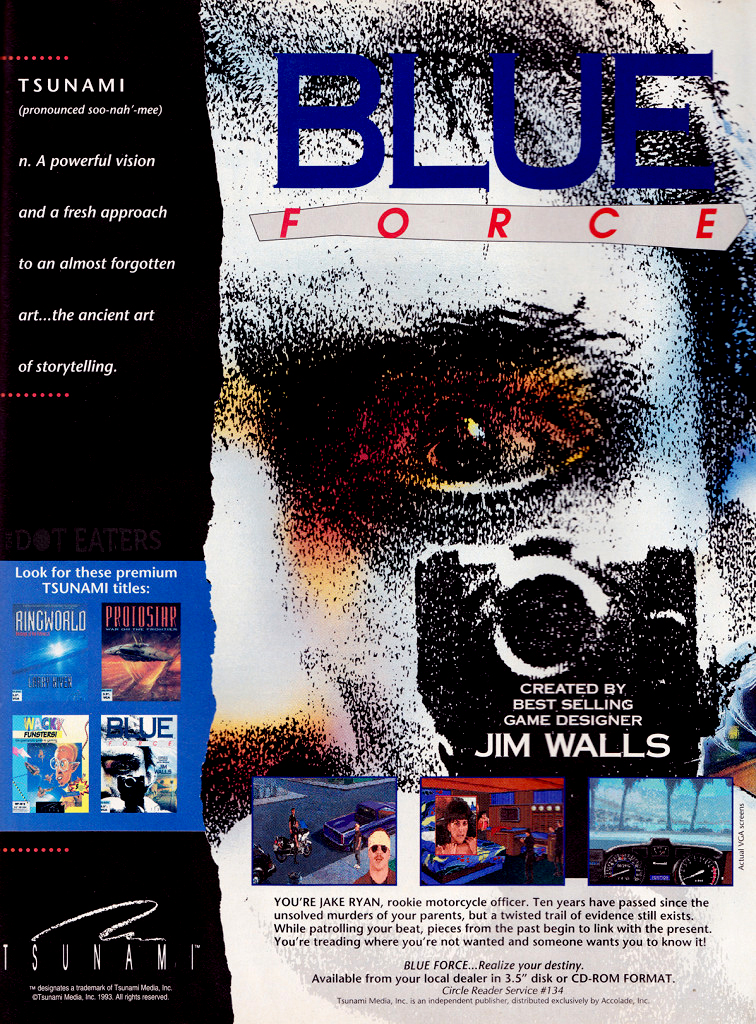
A Blue Force magazine advertisement from 1993–1994.
Recognizing that Jim Walls had built a substantial reputation through his work on the Police Quest series, Tsunami prominently featured his name and designer status.
The release of Blue Force in 1993 positioned it in a direct head-to-head retail market battle against Sierra’s own fourth installment, Police Quest: Open Season. Launching the same fall, the two projects shared a common genetic lineage but showcased entirely divergent game design philosophies. Blue Force remained true to earlier graphical adventures. Open Season, in contrast, reflected Sierra’s new direction with a grittier, more cinematic police drama fronted by former LAPD chief Daryl F. Gates, with full-motion video cutscenes and much higher production values.
For players, the contrast was stark. One was the work of the series’ creator, attempting to preserve authenticity in a traditional adventure framework, while the other was a reinvention of the brand as part of its push toward multimedia. Together, they captured the crossroads of early ’90s game design, where small-team, designer-led projects increasingly gave way to Hollywood partnerships and CD-ROM blockbusters.
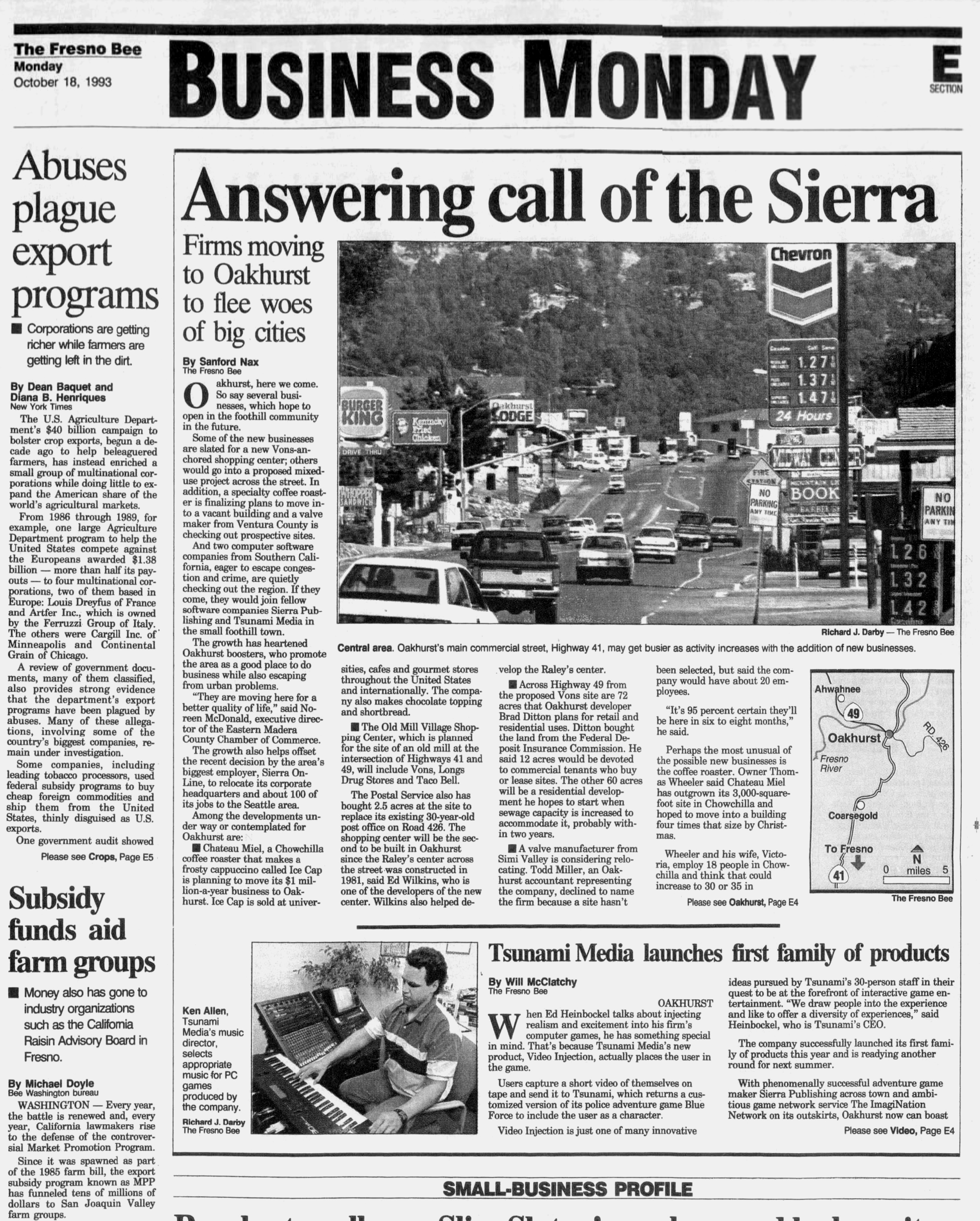
Local coverage of Sierra On-Line and Tsunami Media sharing the same page in The Fresno Bee on October 18, 1993.
For well over a decade, the small town of Oakhurst served as the unlikely epicenter of the adventure gaming world. Throughout the 1990s, it uniquely housed two serious rivals competing in each other’s backyard for the exact same market.
Walls’s professional tenure with Tsunami Media was ultimately short-lived, and Blue Force remained the only game he completed. Following its lukewarm critical reception and tapering sales, Walls left Tsunami in late 1993 to seek out flexible independent design contracts elsewhere. He initially signed development agreements with Tachyon Studios and Philips Interactive Media, though none of those concepts advanced out of pre-production.
Walls eventually found a stable second chapter in 1996 when he relocated to Las Vegas to join real-time strategy titan Westwood Studios. Brought in by co-founder Louis Castle, Walls lent his authentic law enforcement background to design the detective investigation segments of the critically acclaimed 1997 adventure title Blade Runner. The success led to a full-time position at Westwood, where he designed mechanics for Pirates: The Legend of Black Kat and the MMORPG Earth & Beyond until the company was eventually dissolved by Electronic Arts in 2003.
Tsunami Media continued on for several years without Walls, pivoting away from traditional graphic adventures toward interactive live-action full-motion video titles like Flash Traffic and Silent Steel, the latter of which was awarded a Murphy Award by PC Entertainment Magazine for “Best Use of Live-Action Footage.” While Heinbockel had managed to close his first external financing deal in 1993 with San Francisco investment firm Unterberg Harris, his company would ultimately struggle to compete in a rapidly changing market. Like many mid-sized companies of the era, Tsunami lacked the resources to match the polish or marketing reach of larger competitors. At the same time, adventure games, once king of gaming, were slowly but surely slipping out of fashion… just like Full-Motion Video.
In December 1999, Heinbockel restructured the business by selling Tsunami Media, Inc. to Tsunami Media Corporation, a newly formed Delaware corporation, where he would continue to serve as CEO. The strategic evolution was designed to completely phase out traditional retail games and transition into a tech infrastructure platform. Under his guidance, TMC developed proprietary streaming-video delivery systems and interactive ad-insertion software, taking the early full-motion video technology built for games like Silent Steel and weaponizing it for the early 2000s commercial broadband internet market.
The story of Blue Force nearly had a second chapter. Heinbockel had teased a sequel during a late 1993 newspaper interview, confidently projecting a commercial release for the summer of 1994. In a 1994 issue of Compute! magazine, industry journalist Shay Addams reported: “In other Tsunami news, Jim Walls won’t be doing the next Blue Force. Michael Levine, author of the novels Deep Cover and The Big White Lie, is designing Blue Force II.”
However, Blue Force II would never see the light of day. Tsunami had spent a significant amount of financial capital poaching Walls and senior development talent from Sierra to construct the first game. The company gambled heavily on building a chart-topping hit that could directly rival Sierra’s dominant Police Quest franchise. When Blue Force flopped both critically and commercially, it also sank any realistic chance for a sequel.
By 1994, the market for traditional 2D point-and-click adventure games was rapidly declining. Tsunami management realized that their proprietary TsAGE engine was becoming obsolete when stacked against emerging 3D technologies and CD-ROM multimedia video productions. The company completely abandoned the traditional adventure game format and reallocated their studio resources to full-motion video games. Their next police-themed procedural project was Flash Traffic: City Under Threat, an interactive, live-action movie. Likely, any conceptual plot outlines or narrative designs Levine had drafted for Blue Force II were either heavily reworked into the live-action script for Flash Traffic or abandoned entirely.
Sources: Wikipedia, MobyGames, The Fresno Bee, Police Quest fandom, Computer Gaming World, forceforgood.co.uk, Compute! Magazine…


Really good article; I loved the deep dive on the history of the game and of a designed I had never heard about.
The game itself looks, err, dated indeed – and not in a good way.
Thanks, yeah, unfortunately, it hasn’t aged well… not the story nor the visuals.
I kinda liked it back when it was released, but I was also a huge Police Quest fan. But it never managed to capture my imagination like the first 2 Police Quest games did.