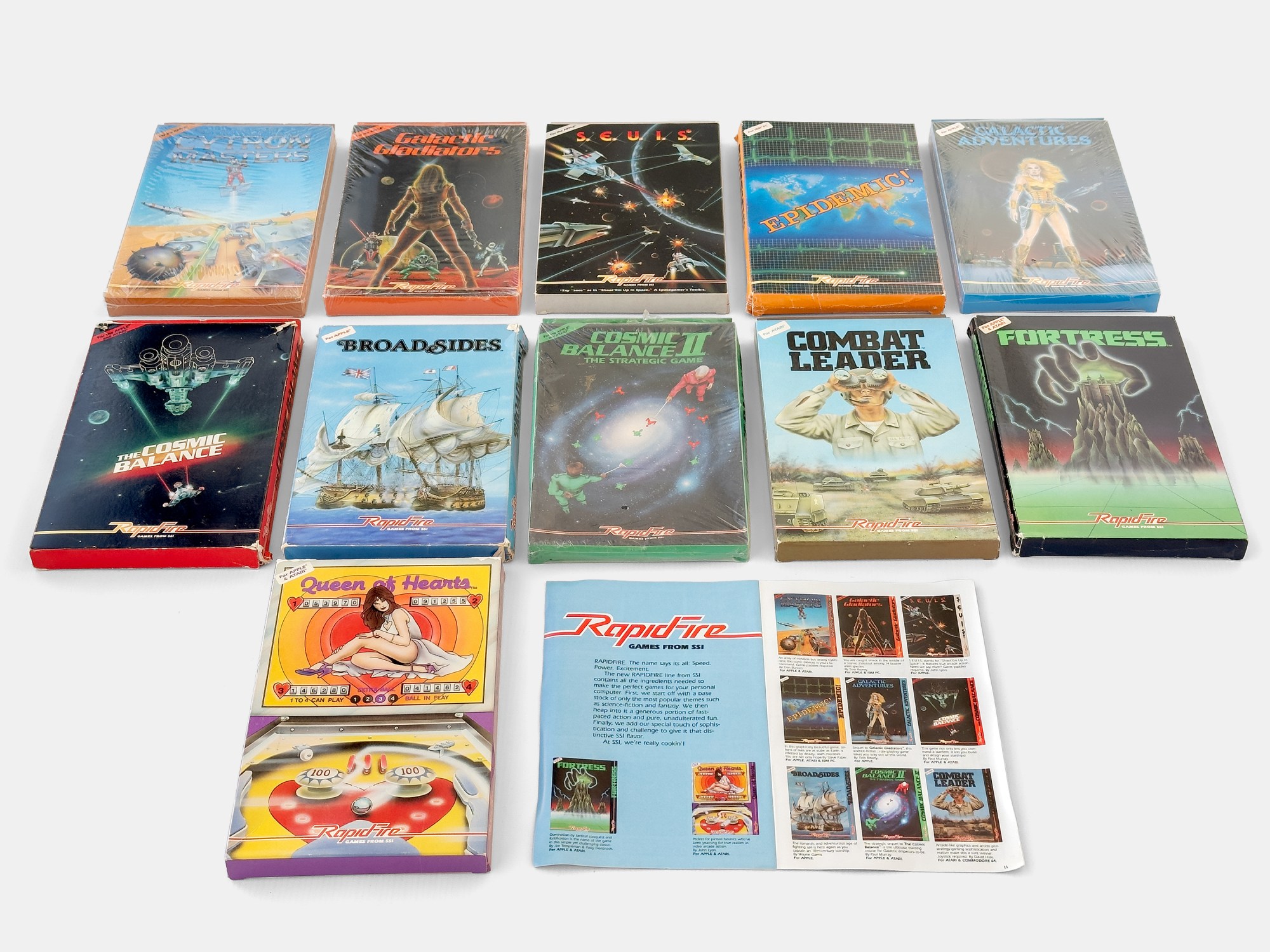
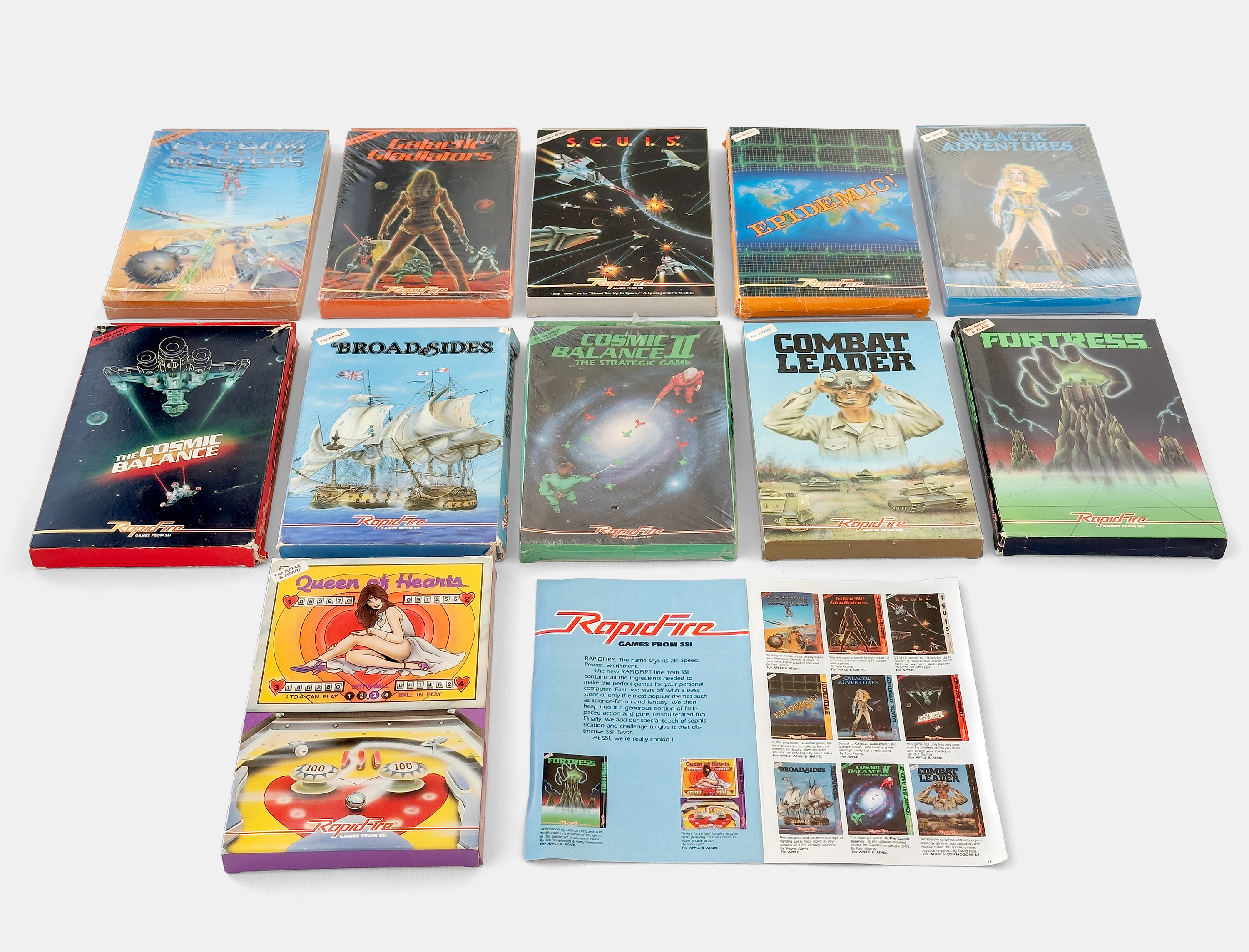
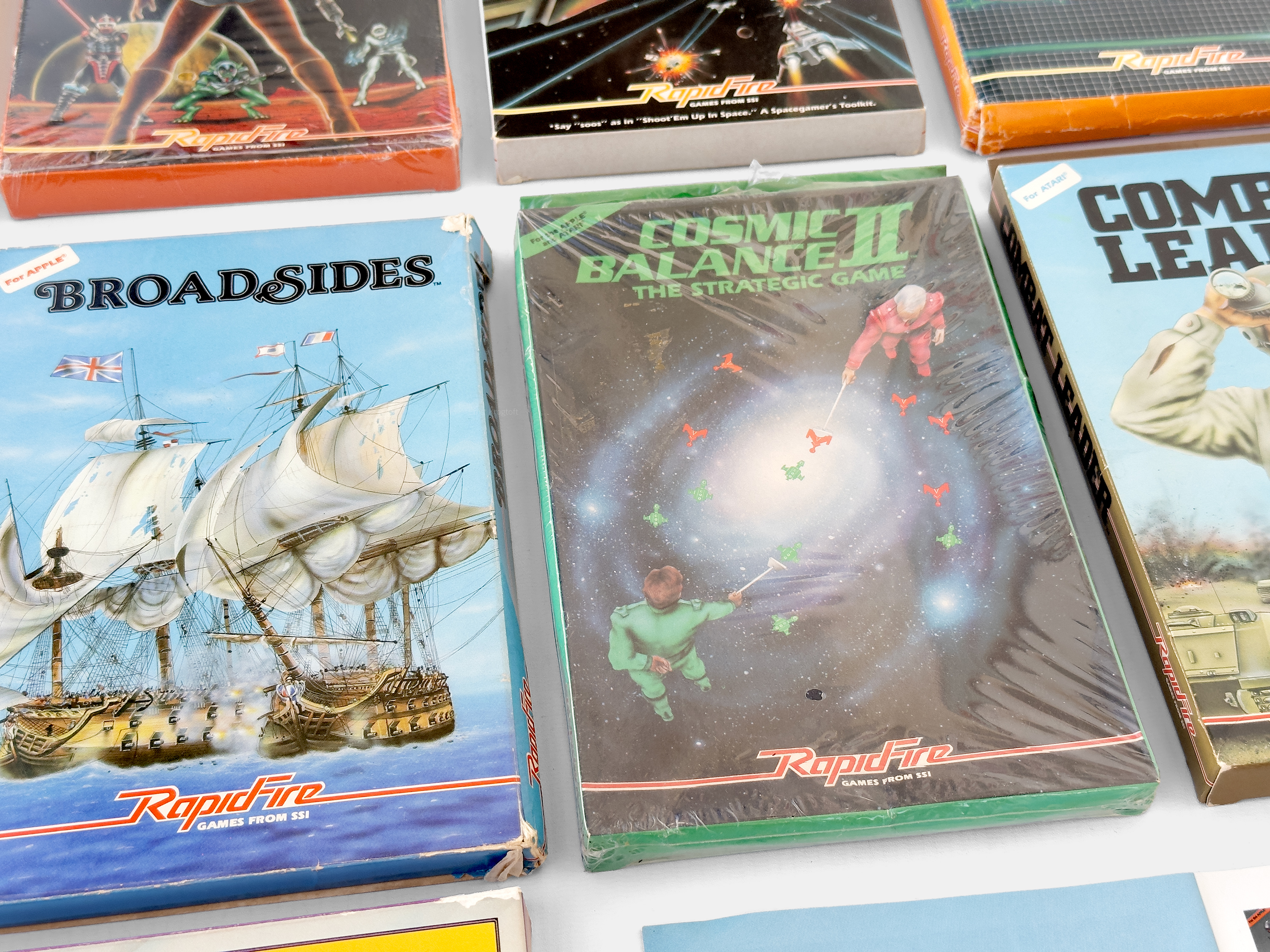
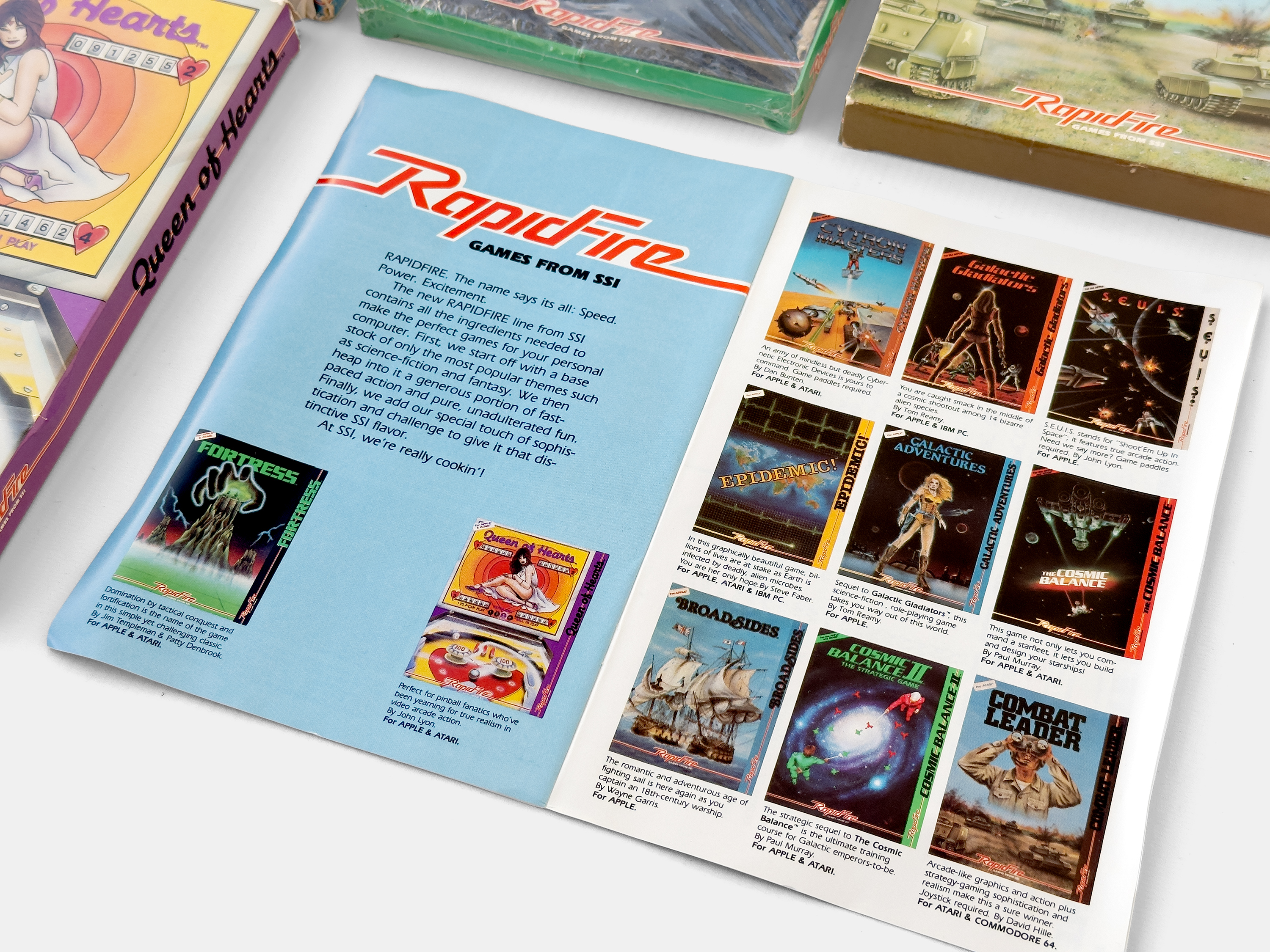
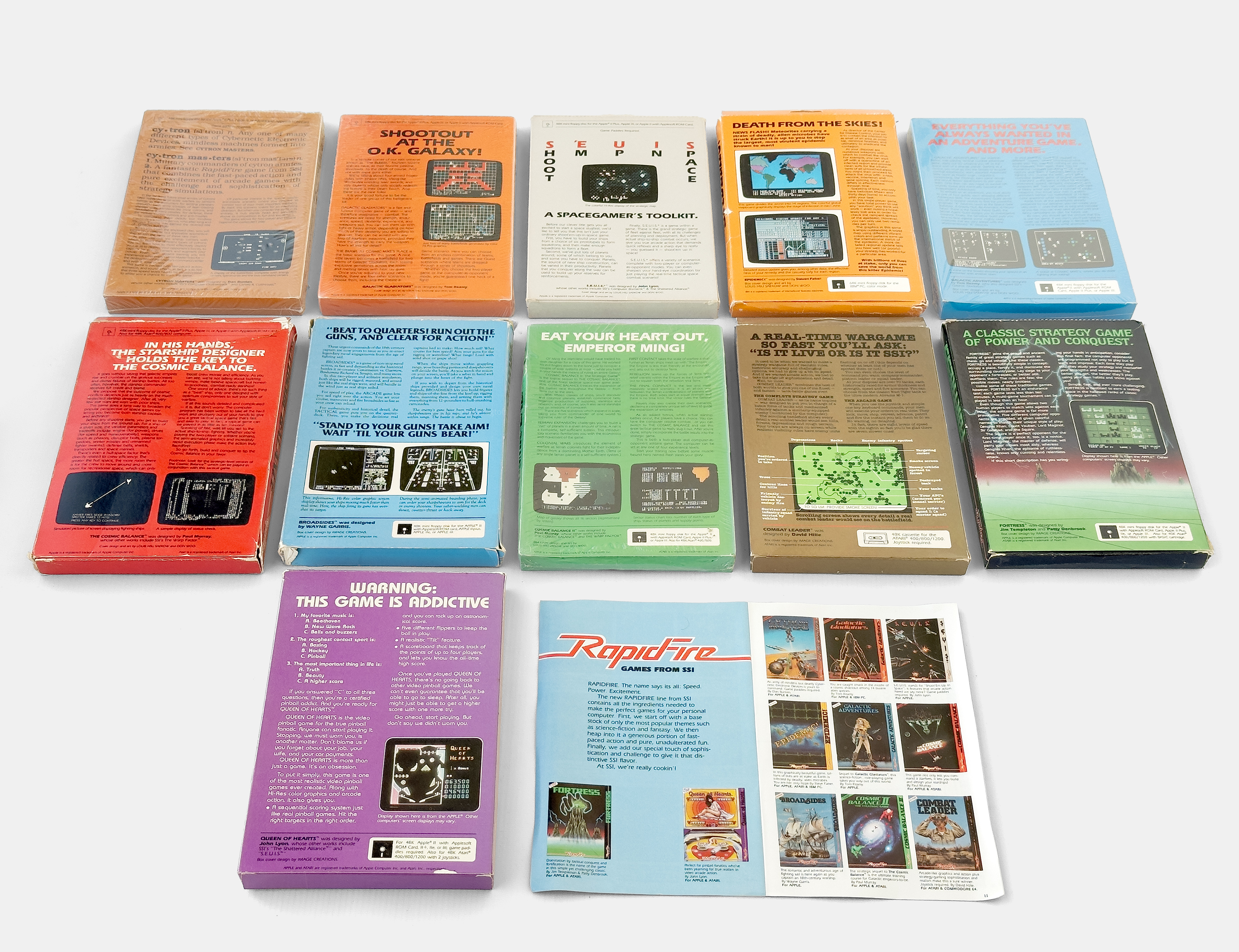
Before starting detailed write-ups on some of the games released under SSI’s short-lived RapidFire label, I wanted to give a brief overview of the brand and the titles it introduced between 1982 and 1983.
By 1982, Strategic Simulations Inc. had firmly established itself as the premier publisher of computer wargames. Founded in 1979 by Joel Billings, the company built its reputation on historically grounded simulations like Computer Bismarck and Computer Ambush, catering to a dedicated audience of strategy enthusiasts more familiar with tabletop games than joysticks. But as the home computer market expanded and diversified, so too did player expectations. SSI recognized the need to broaden its appeal beyond hardcore wargamers and, in response, introduced a new label in 1982.
The label, RapidFire, served as a platform for faster-paced, more graphically engaging games developed by external authors, and aimed primarily at the growing youth market drawn to arcade-style entertainment. While the name suggested action, the branding wasn’t limited to any single genre. It was simply a way to distinguish these accessible, often experimental titles from SSI’s main line.
From tactical sci-fi combat to abstract strategy and historical simulation, across 1982 and 1983, RapidFire covered a surprisingly broad spectrum of genres. Some games leaned into arcade influences, while others still carried traces of SSI’s strategic DNA. The label offered an early showcase for fresh creative voices, including collaborations with lesser-known but talented developers outside SSI’s usual circle. It came to serve as an early platform for pioneering developers like Danielle Bunten Berry and helped introduce gameplay mechanics that would go on to shape future genres, most notably, the emergence of real-time strategy.
Following the North American video game crash of 1983, market conditions and consumer demands were shifting rapidly. While the RapidFire label gave SSI valuable room to experiment and broaden its creative scope, it struggled to establish a unified identity in the eyes of consumers. The eclectic mix of genres and gameplay styles made the brand hard to define, and sales figures reflected the inconsistency. Some titles performed well, while others failed to find an audience.
In January 1983, Space Gamer’s Chris Smith praised the first four RapidFire titles as “the best line of computer games I’ve ever seen.” Yet despite such strong critical reception and a spirit of innovation, the RapidFire venture proved short-lived. The final game bearing the label was released before the end of 1983, and by the mid-1980s, the brand had quietly faded from the market.
As RapidFire faded, SSI’s focus sharpened. With the home computer landscape evolving, the company secured the coveted Dungeons & Dragons license and began channeling its resources into fantasy, deeper, story-driven RPGs, and more sophisticated strategy titles. The energy once invested in RapidFire was reabsorbed into SSI’s core operations as the company prepared for its next chapter, one that would come to define its legacy throughout the latter half of the decade and into the ’90s.
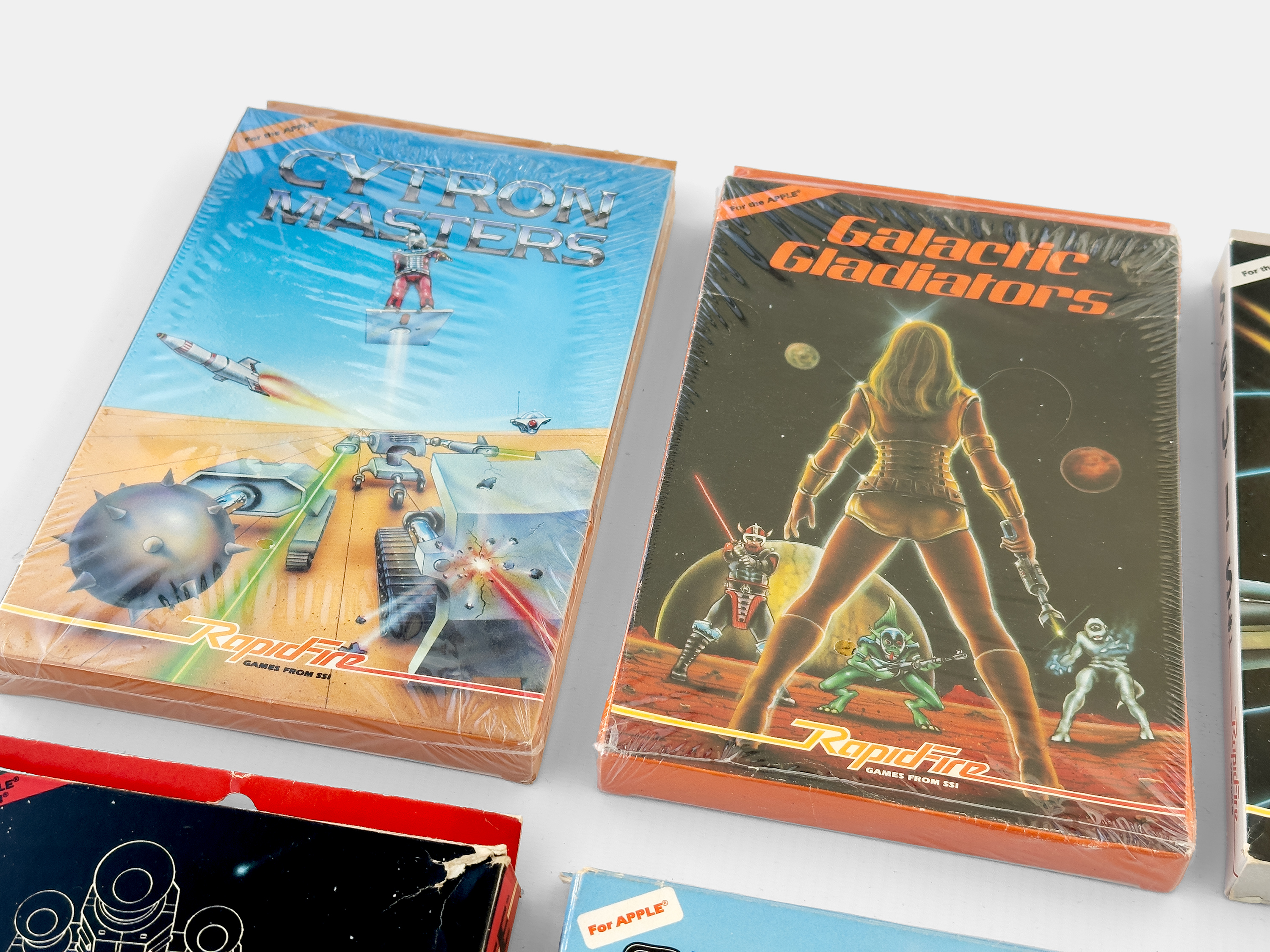
Cytron Masters – 1982 – Apple II/Atari 8-bit
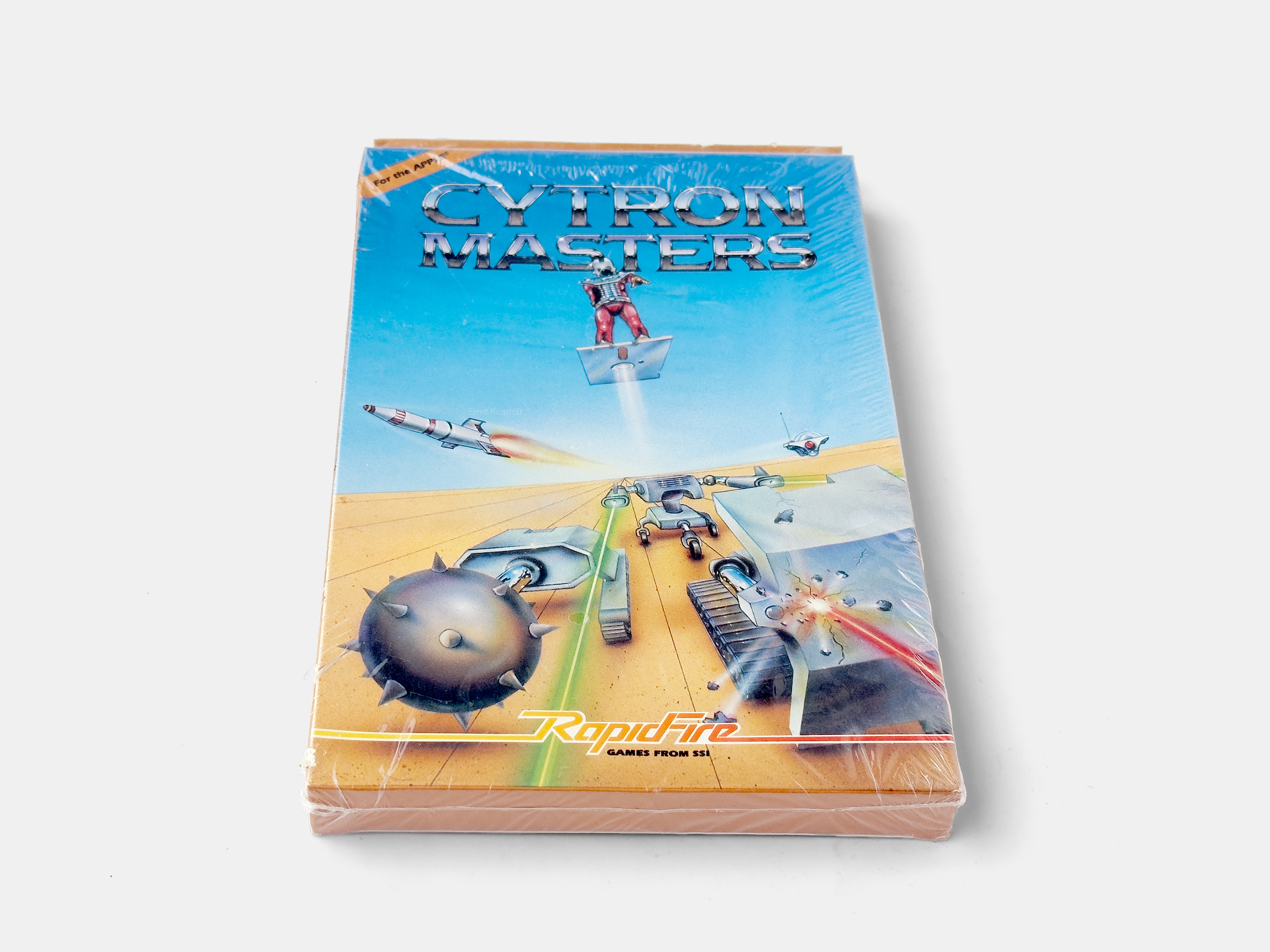
Developed by Danielle Bunten Berry (credited as Dan Bunten) and Ozark Softscape, Cytron Masters is often regarded as one of the earliest real-time strategy games. Players command robotic units called “Cytrons” on a grid-based battlefield, managing energy resources to deploy and maneuver units in real-time combat. The game’s innovative mechanics laid the groundwork for future RTS titles.
Galactic Gladiators – 1982 – Apple II/IBM PC
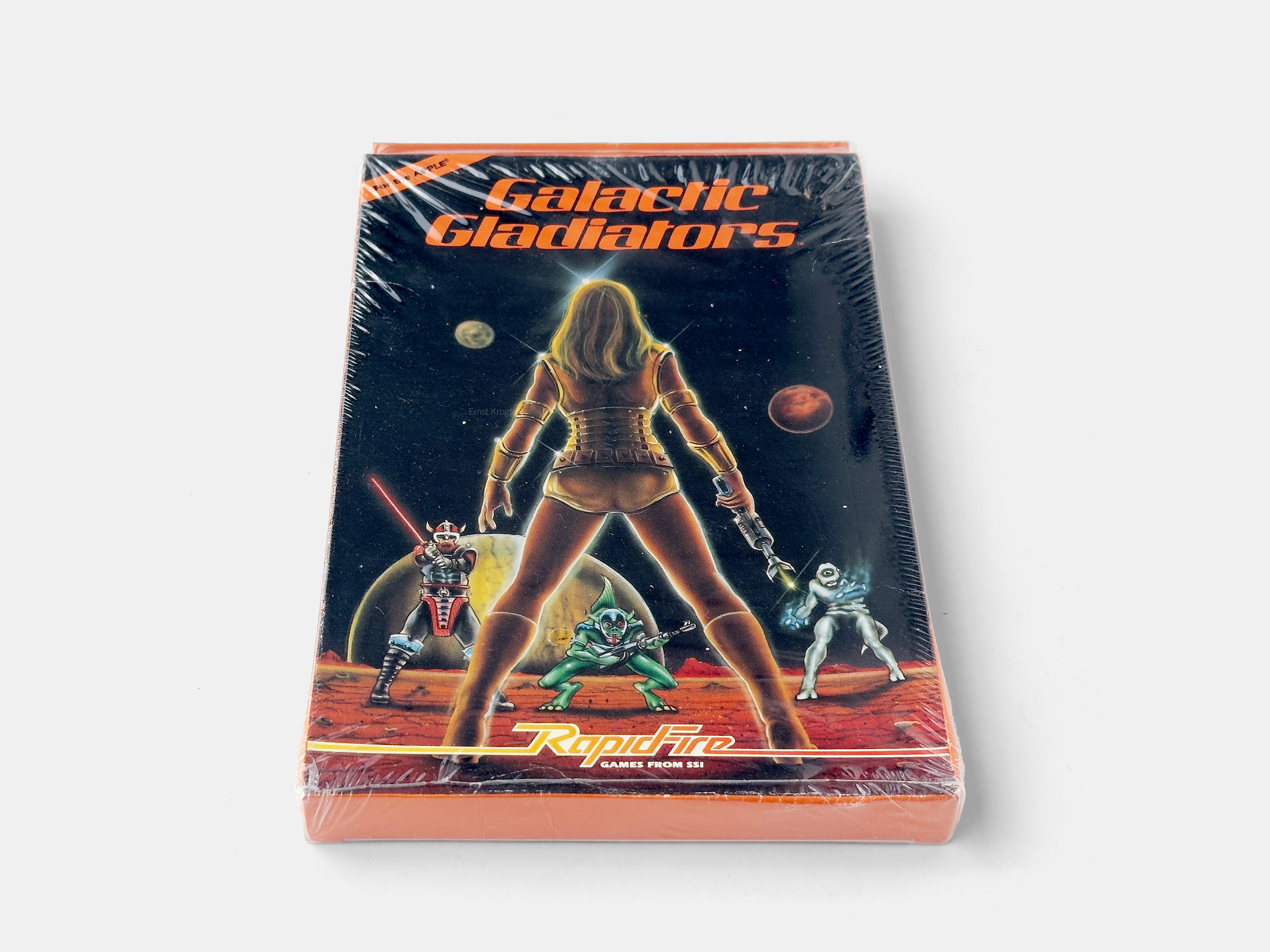
Created by Tom Reamy, it is a tactical combat game featuring team-based battles between various alien species. Each unit possesses unique abilities, requiring players to strategize and adapt to different combat scenarios.
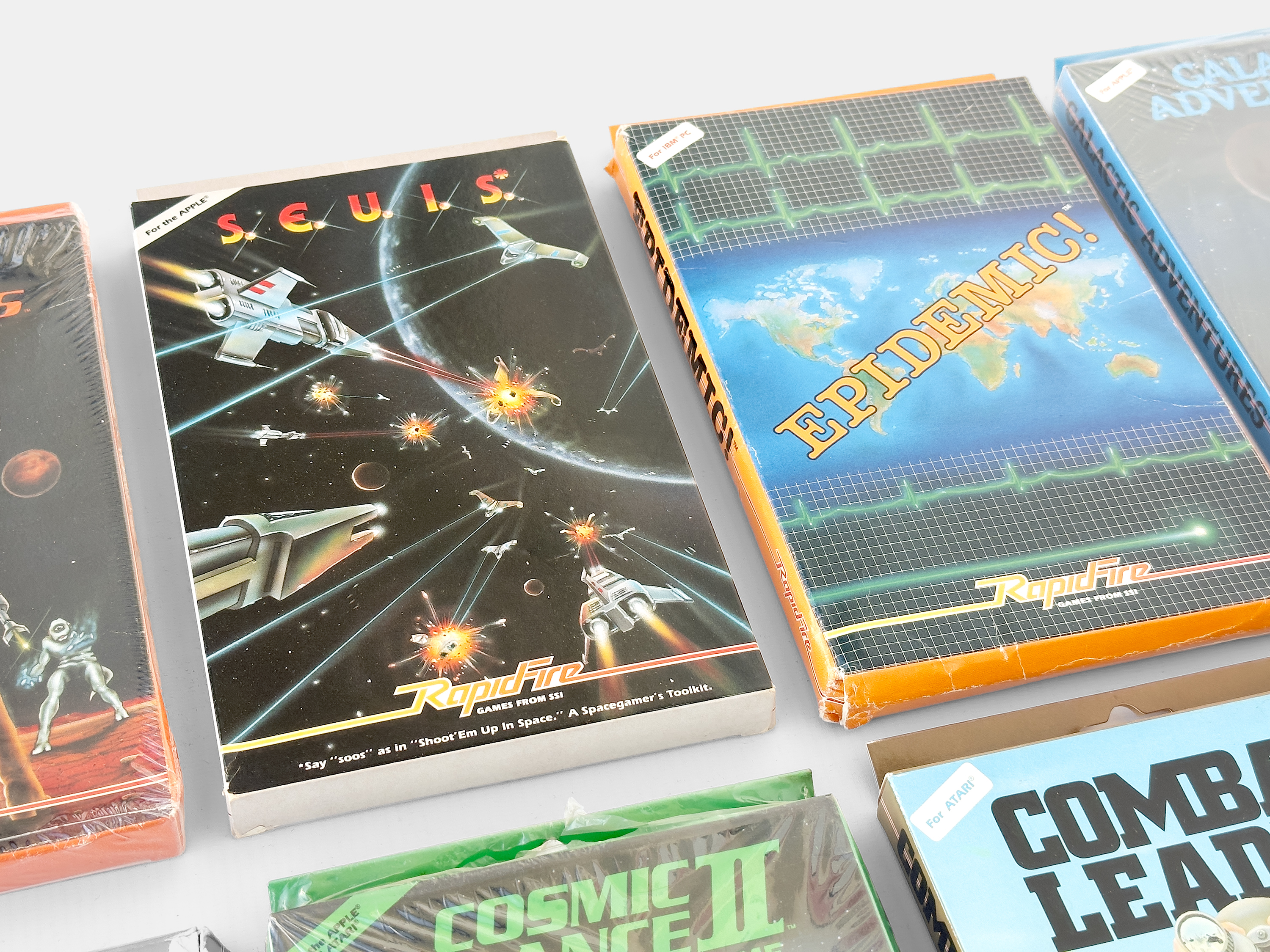
Shoot’em Up in Space – S.E.U.I.S. – 1982 – Apple II
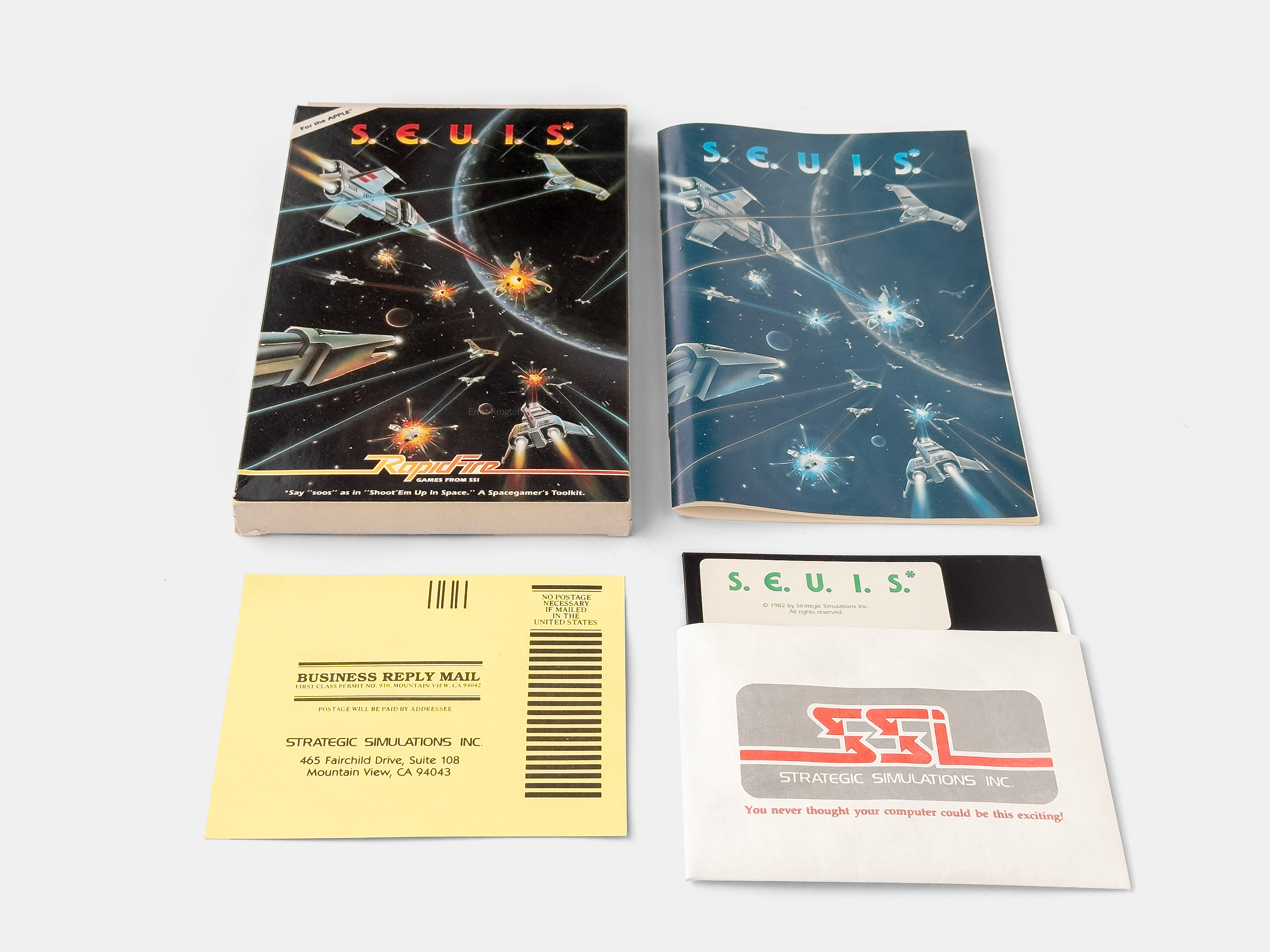
Developed by John Lyon, S.E.U.I.S.* (Shoot ‘Em Up In Space) blends arcade-style action with light strategic elements. Players command a fleet of starships in fast-paced battles across galactic sectors, combining reflex-driven shooting with tactical decision-making between encounters.
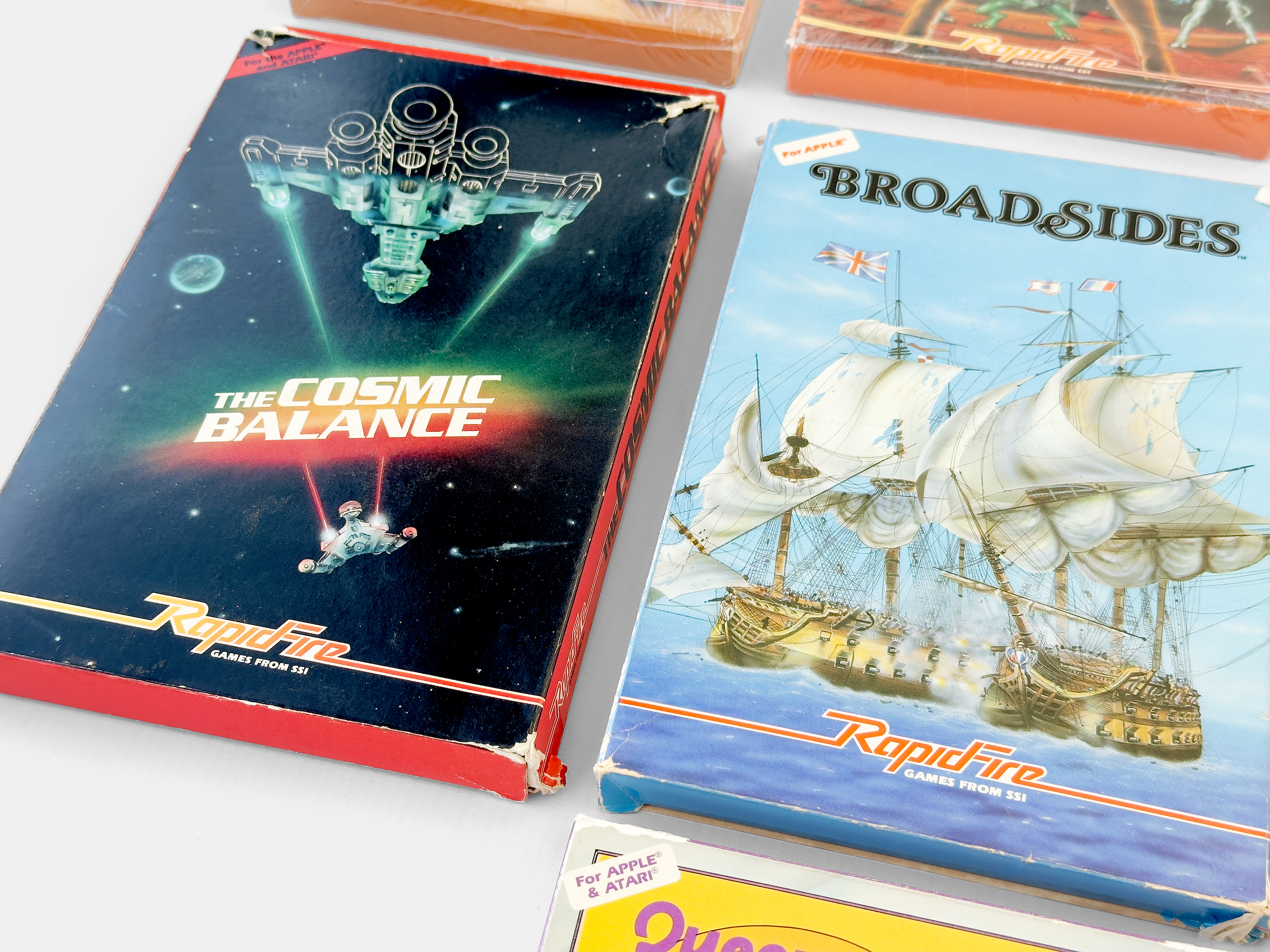
The Cosmic Balance – 1982 – Apple II/Atari 8-bit
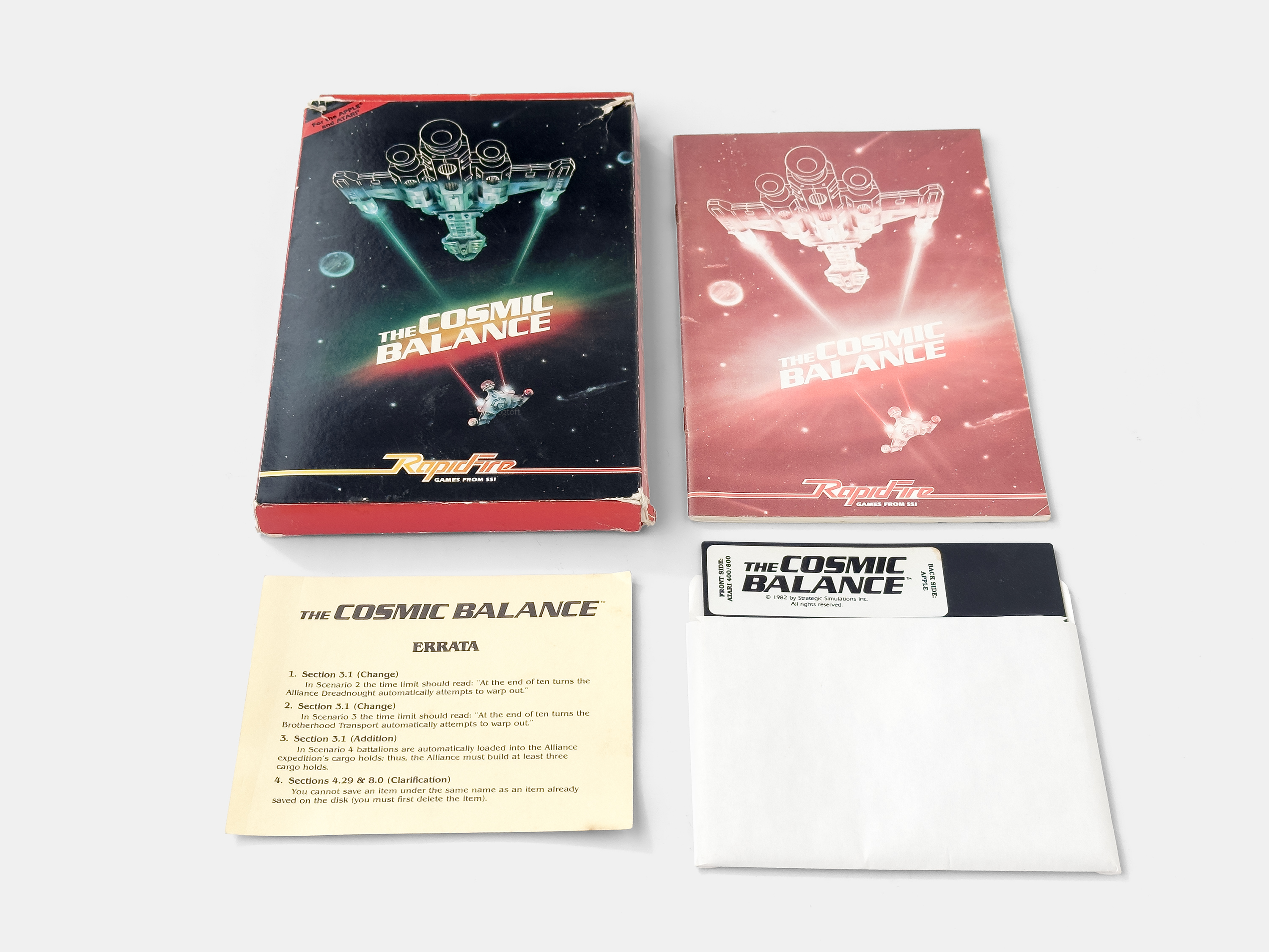
Designed by Paul Murray, The Cosmic Balance is a space strategy game where players design and command starships in tactical battles. The game emphasizes ship customization and strategic positioning, offering a deep and engaging experience for fans of sci-fi warfare.
Cosmic Balance II – 1983 – Apple II/Atari 8-bit
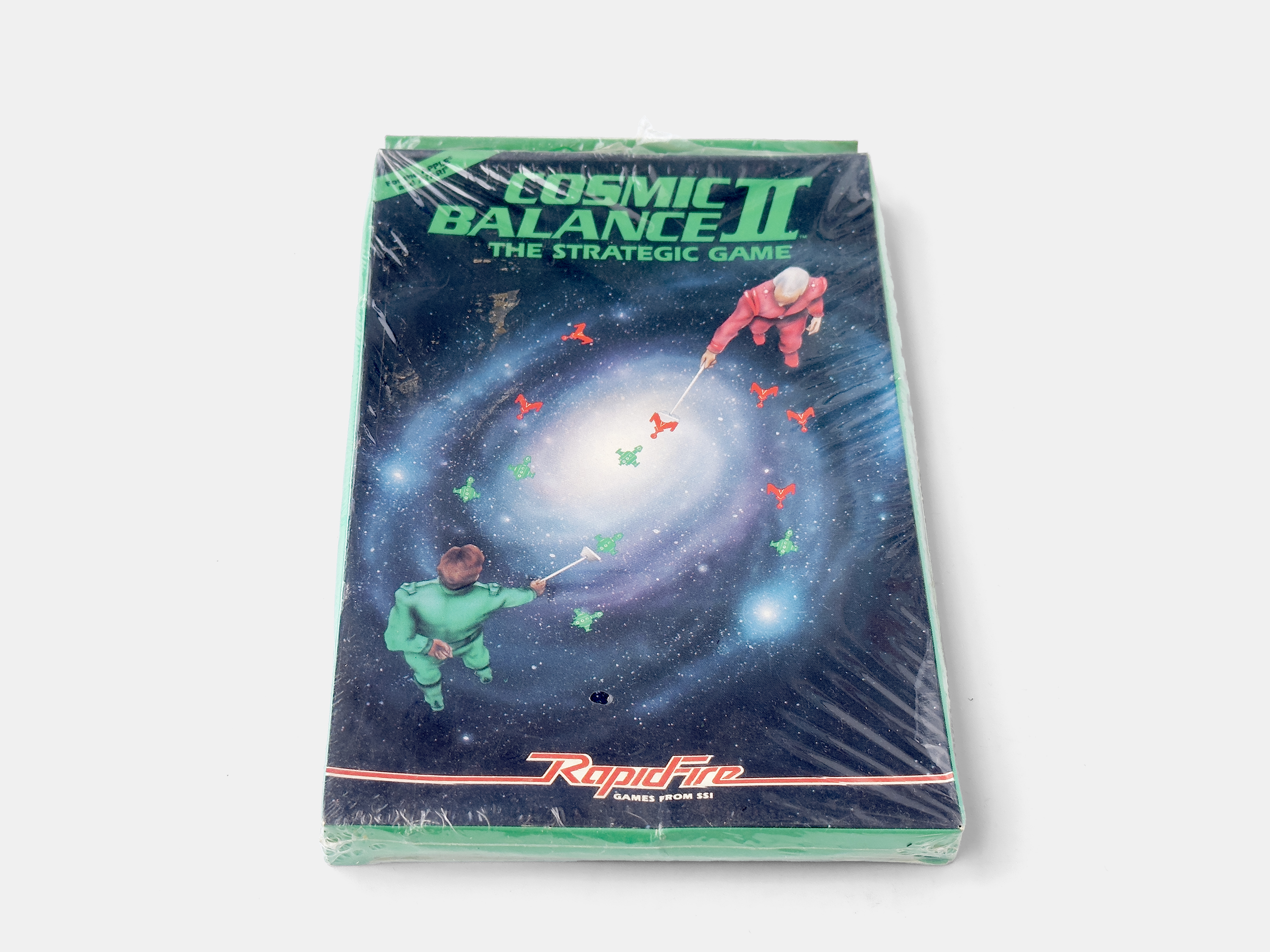
A sequel to The Cosmic Balance, this title expands upon its predecessor by introducing a strategic layer where players manage interstellar empires. Players must balance economic growth, technological advancement, and military conquest to dominate the galaxy.
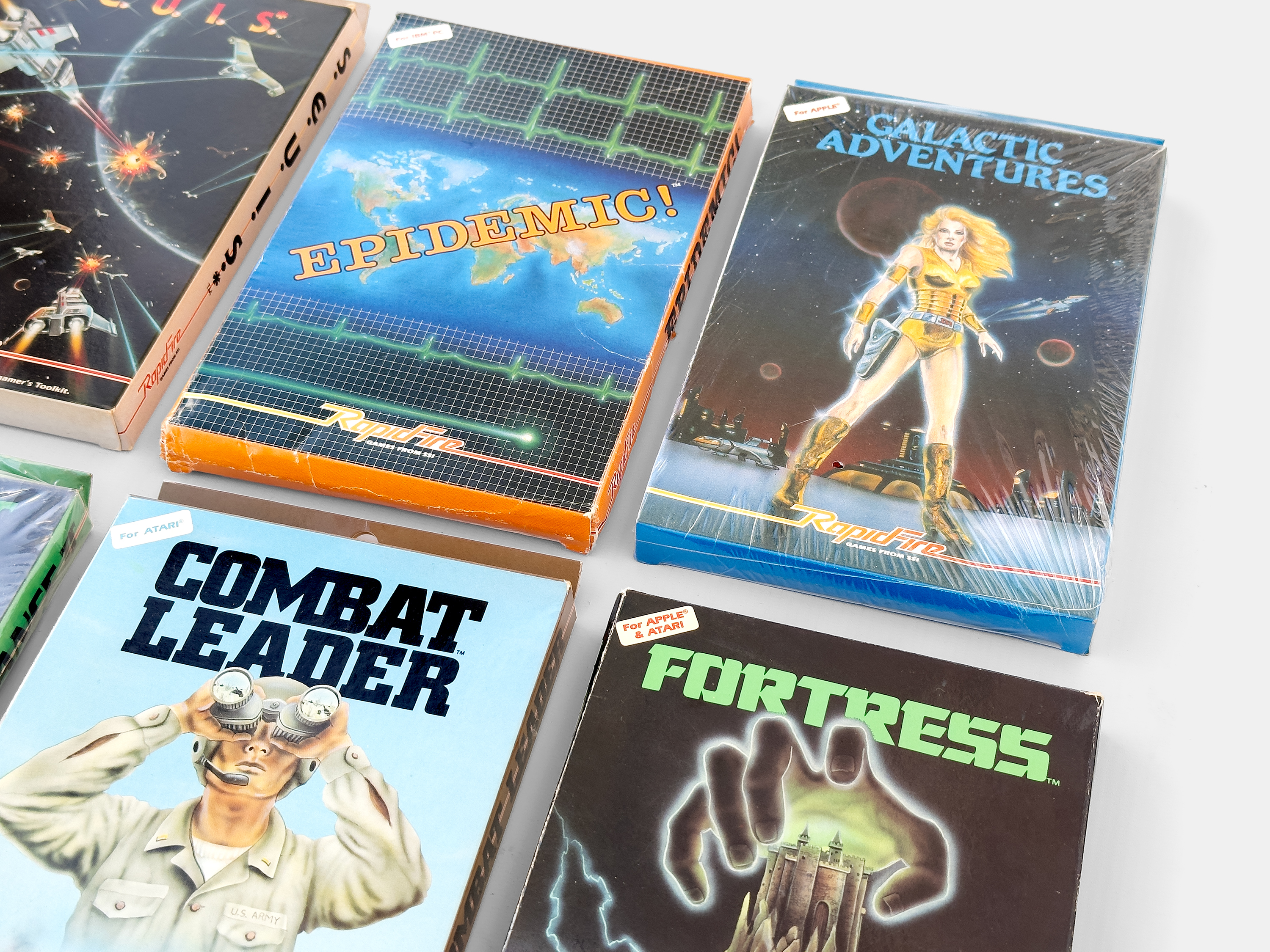
Epidemic! – 1983 – Apple II/Atari 8-bit /IBM PC
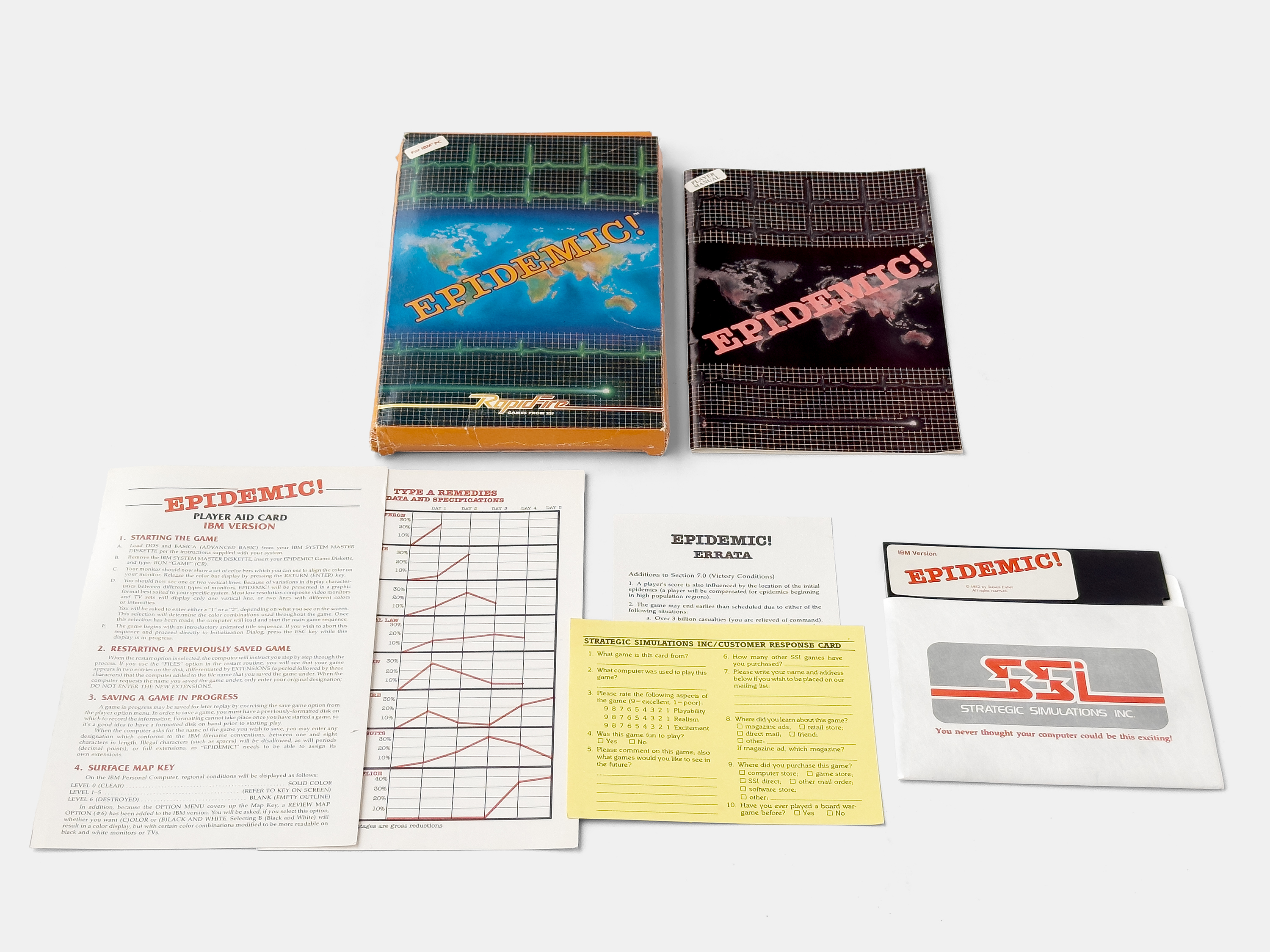
Developed by Steven Faber, Epidemic! challenges players to contain and eradicate a global plague. The game combines real-time strategy with resource management, as players deploy medical teams and research cures to prevent the spread of the disease.
Fortress – 1983 – Apple II/Atari 8-bit
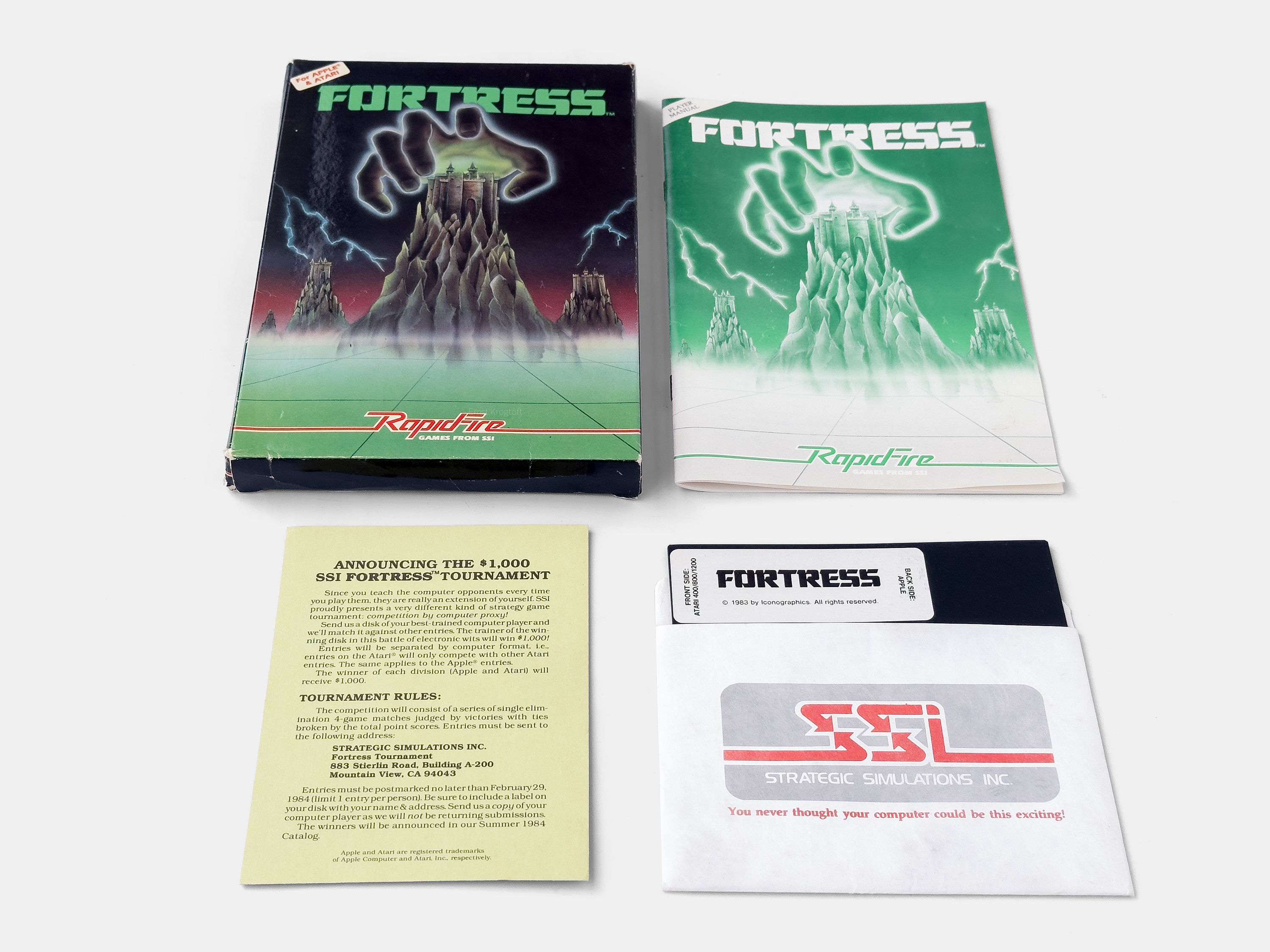
Created by Jill Templeton and Patty Denbrook, Fortress is a turn-based strategy game focused on territorial control. Players compete to capture and defend squares on a grid-based map, carefully planning their moves to outmaneuver opponents. Simple in appearance but rich in tactical depth.
Galactic Adventures – 1983 – Apple II/Atari 8-bit

Designed by Tom Reamy, Galactic Adventures is a science fiction role-playing game that blends exploration, combat, and character progression. Players lead a team across planetary surfaces and space environments, encountering alien creatures and navigating narrative-driven scenarios.
Broadsides – 1983 – Apple II
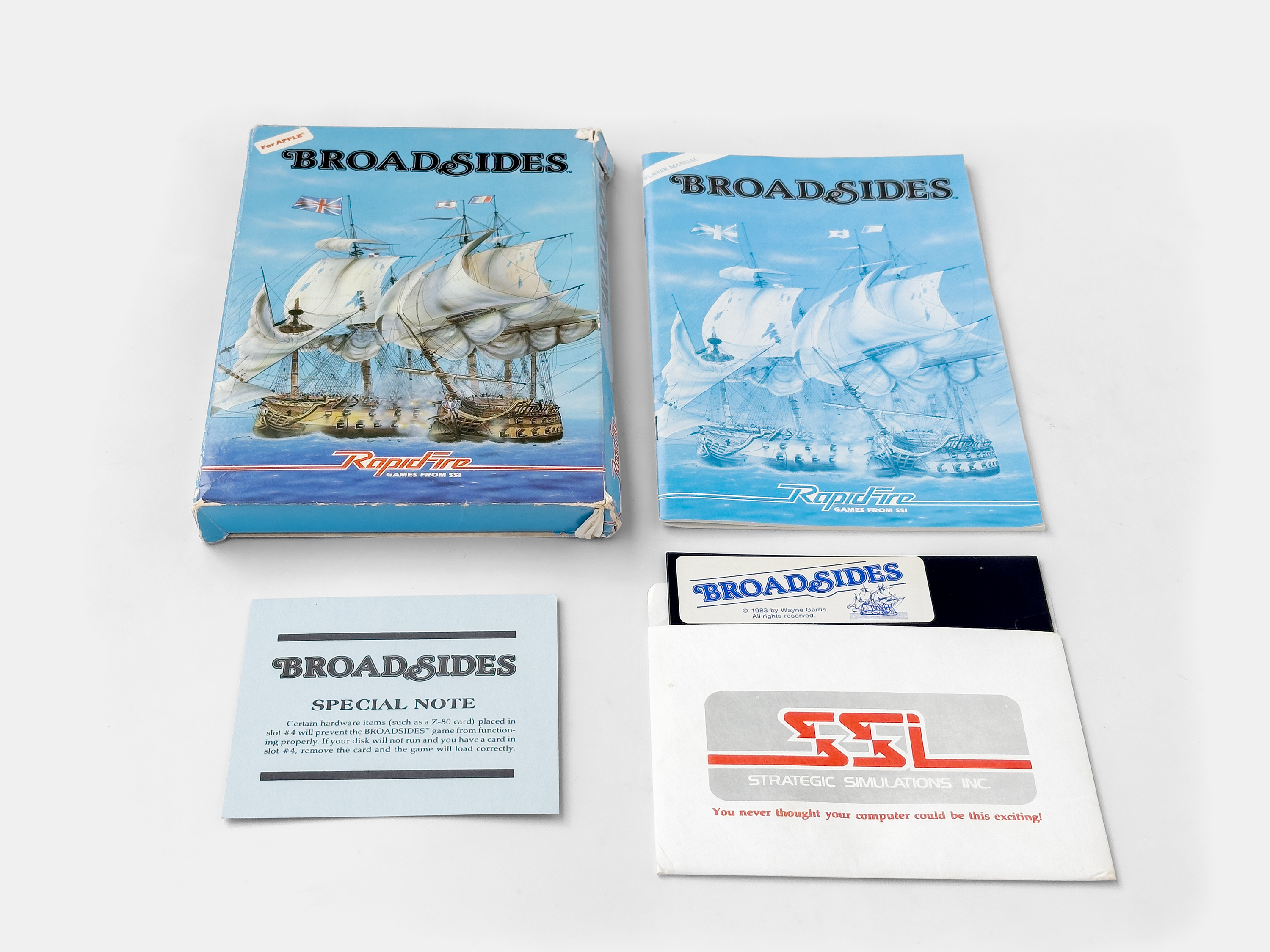
Created by Wayne Garris, Broadsides is a naval combat game set during the Age of Sail, where players command warships in tactical sea battles. Wind direction, cannon range, and ship positioning all play a critical role as players maneuver to unleash devastating broadsides. With its blend of historical flavor and strategic depth, the game captures the tension and timing of 18th-century naval warfare.
Combat Leader – 1983 – Atari 8-bit/Commodore 64
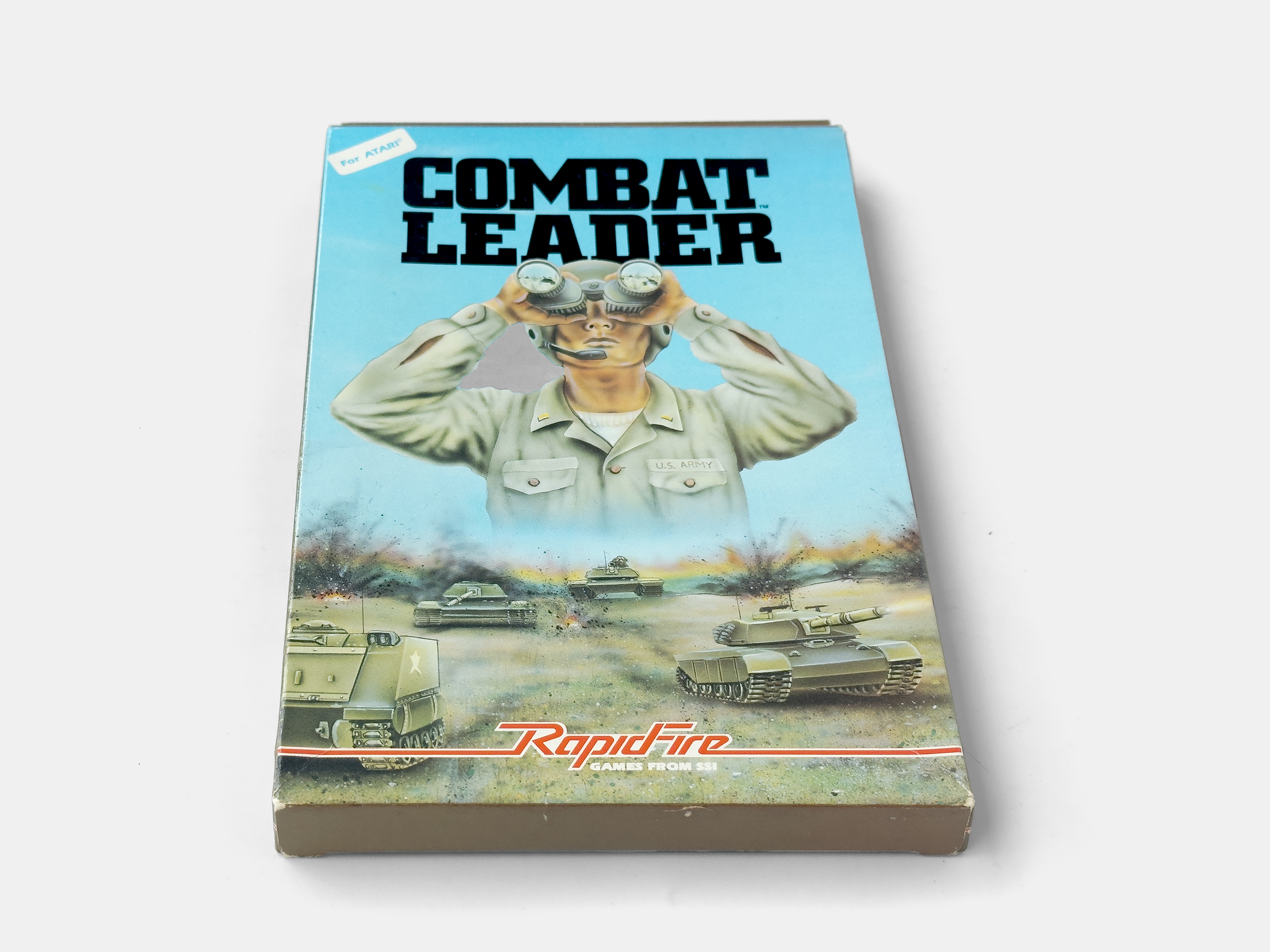
Designed by David Hille, Combat Leader is a turn-based tactical wargame set in a modern battlefield environment. Players control squads of soldiers across varied terrain, managing movement, cover, and line-of-sight in tightly paced skirmishes.
Queen of Hearts – 1983 – Apple II/Atari 8-bit
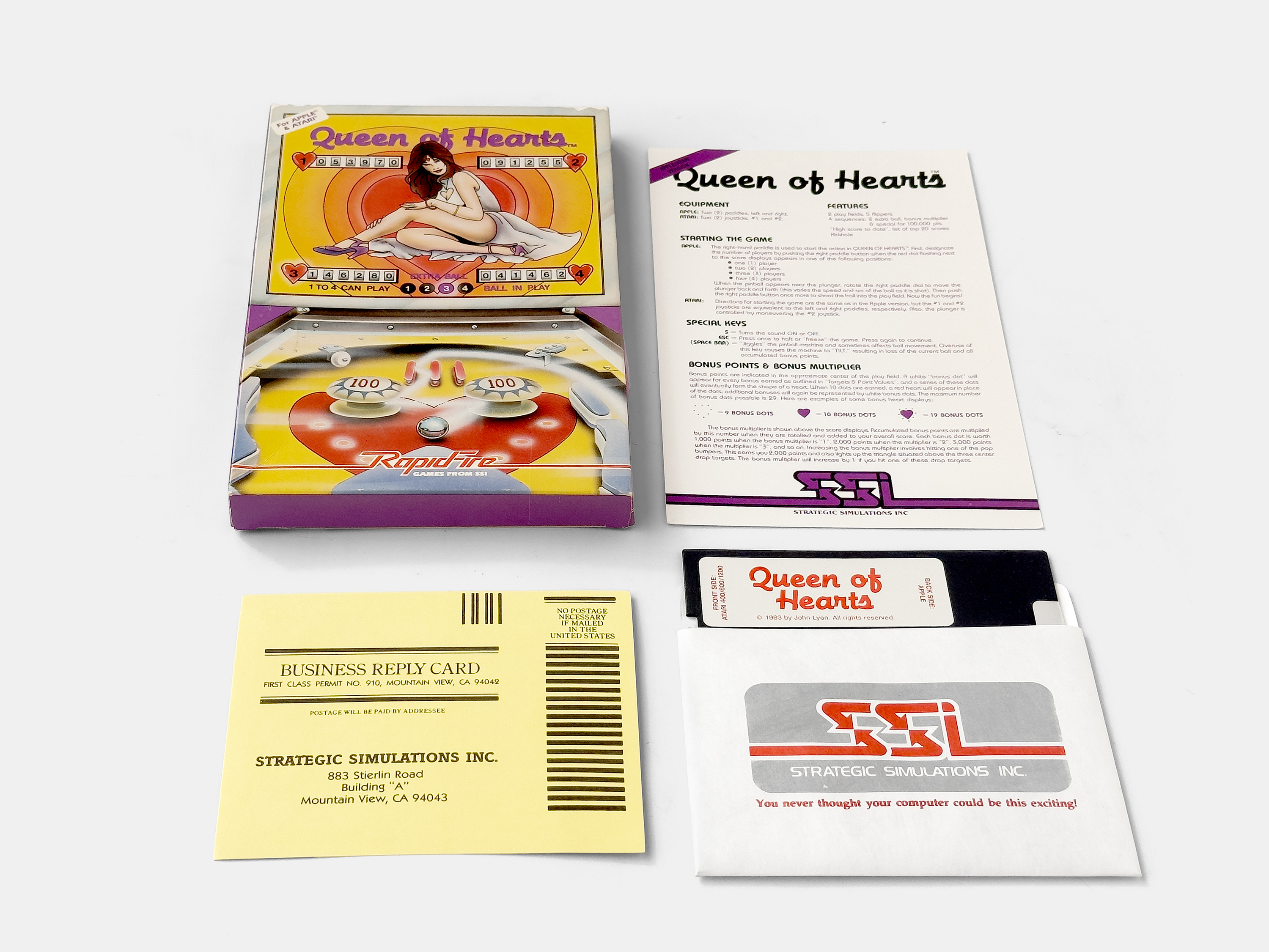
Created by John Lyon, Queen of Hearts is a digital pinball game that simulates the classic arcade experience. Players control flippers to keep the ball in play, aiming for high scores by hitting various targets. While a departure from SSI and the RapidFire lineup, the game showcased the company’s willingness to explore different genres.

 Retro365
Wow, thx for this one. Brings a lot of memories.
Also special as I ported one of their futur game (Pool Of Radiance) from PC to the Amiga Computers.
Nice collection. Fun fact: The Warp Factor was briefly part of the RapidFire series (Summer 82 catalogue), possibly to “sell” the IBM release.
RapidFire was actually somewhat of a success. While some games tanked, Broadsides was the most successful release of 1983 (24K sales in US), with Combat Leader tying Knights of the Desert and Carrier Force for second place (16K in the US). The Cosmic Balance had been the second most successful game of 1982, too, at 13K.
The two reasons for stopping RapidFire is that it has become inconsistent (Cosmic Balance II was NOT rapid) and more important because due to Assembler becoming the go-to language instead of BASIC, all games were “rapid” in a sens, so it became less of a a selling point.
Thank you for your input, much appreciated! :) I didn’t want to go into too much detail on each title in this overview, but I’ve revised the paragraphs to clarify that while not all RapidFire games were commercial hits, several did earn critical acclaim and became strong sellers for SSI.
Also, for any one who wants to dig a bit deeper with gameplay and mechanics, please do visit The Wargaming Scribe on Zeitgame.net (as I rarely focus on gameplay).