Once upon a time, more accurately, in the 1980s, fantasy films stepped out of the niche shadows and into the bright, sword-clashing, spell-casting, box-office-dominating mainstream. Hollywood finally embraced the idea that audiences were willing to embark on epic journeys through enchanted forests, battle fearsome creatures, and watch actors deliver dialogue that sounded like it was lifted from an ambitious Dungeons & Dragons session. The era gave us Conan the Barbarian, The NeverEnding Story, Legend, Labyrinth, and The Princess Bride, among many others. Some were dark, others whimsical and family-friendly, but all shared the common goal of transporting viewers into magical realms where anything was possible.
In the fertile ground of fantasy fandom, Willow emerged in May of 1988. With George Lucas at the helm as the story’s creator and Ron Howard directing, the movie was Lucasfilm’s attempt at crafting another legendary saga, one that could perhaps fill the void left by the conclusion of the original Star Wars trilogy. The movie tells the story of a reluctant hero, Willow Ufgood, who finds himself protecting a prophesied child from the evil Queen Bavmorda. With Warwick Davis in the lead role and Val Kilmer swashbuckling as Madmartigan, the movie had the ingredients for success and finished as the 12th highest-grossing film of 1988. While not quite achieving the blockbuster status of Star Wars, it found a devoted audience and, naturally, spawned the kind of tie-in merchandise like toys, books, board games, and, of course, video games that all fantasy epics demanded.
Mindscape, a renowned company with a history of dabbling in educational and entertainment software since 1983, secured the rights to publish Willow for home computers. The Mindscape Internal Development Group took on the majority of the design work, with development and programming handled by MidNite Entertainment and Brian A. Rice, Inc. MidNite Entertainment was a relatively obscure company with few notable titles, primarily working on contract-based projects. Rice, by contrast, had a more established history in software development, beginning with educational software for the Apple II before transitioning into game development as the PC market expanded.
Cashing in on a popular movie made perfect business sense, but that’s about the only thing that did. With lofty ambitions to translate the movie’s magic into an interactive experience, the design team opted for an approach best described as experimental. The idea was to use a number of mini-games, each representing different parts of the film’s story, all tied together with a brief narrative.
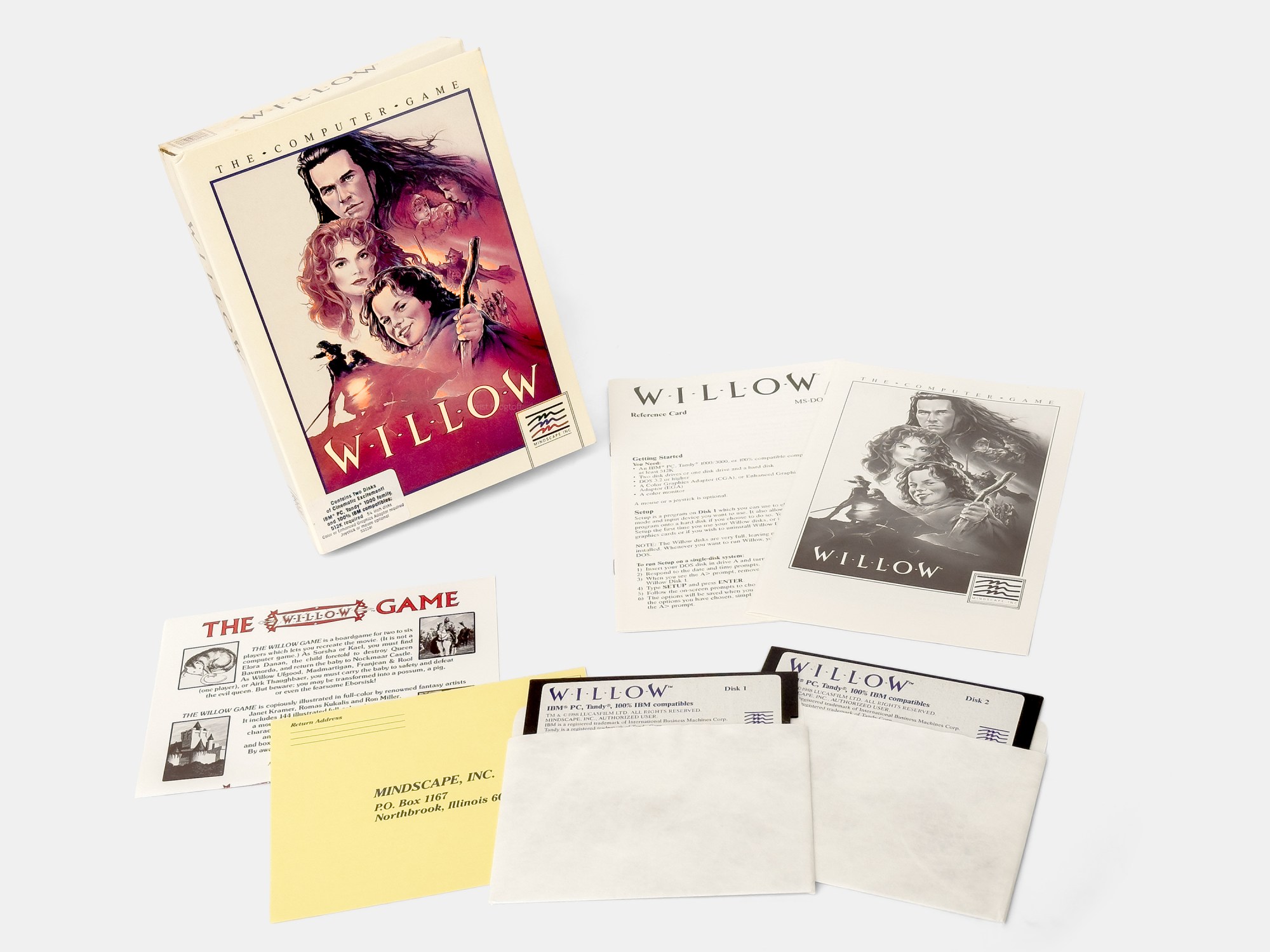
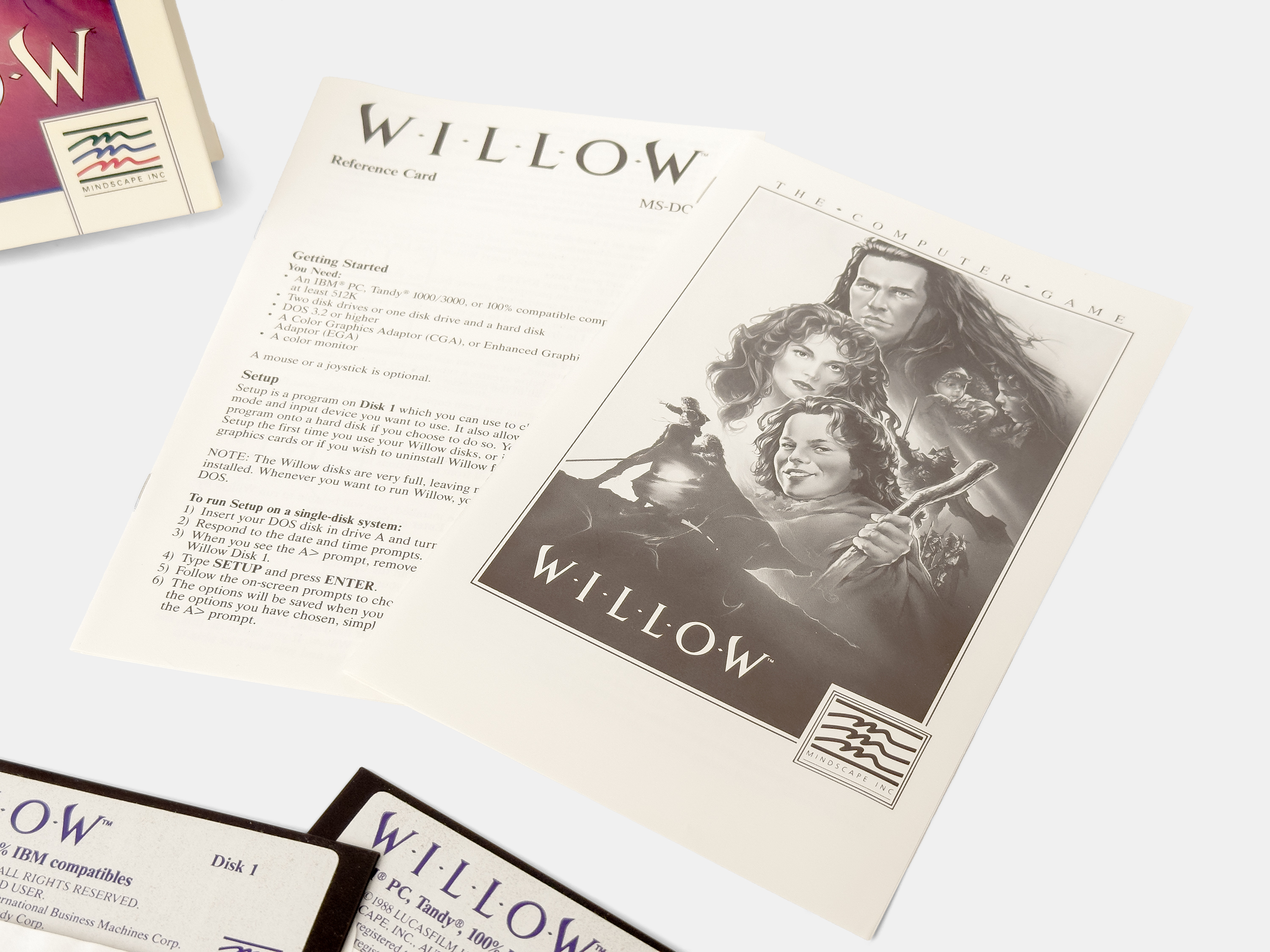
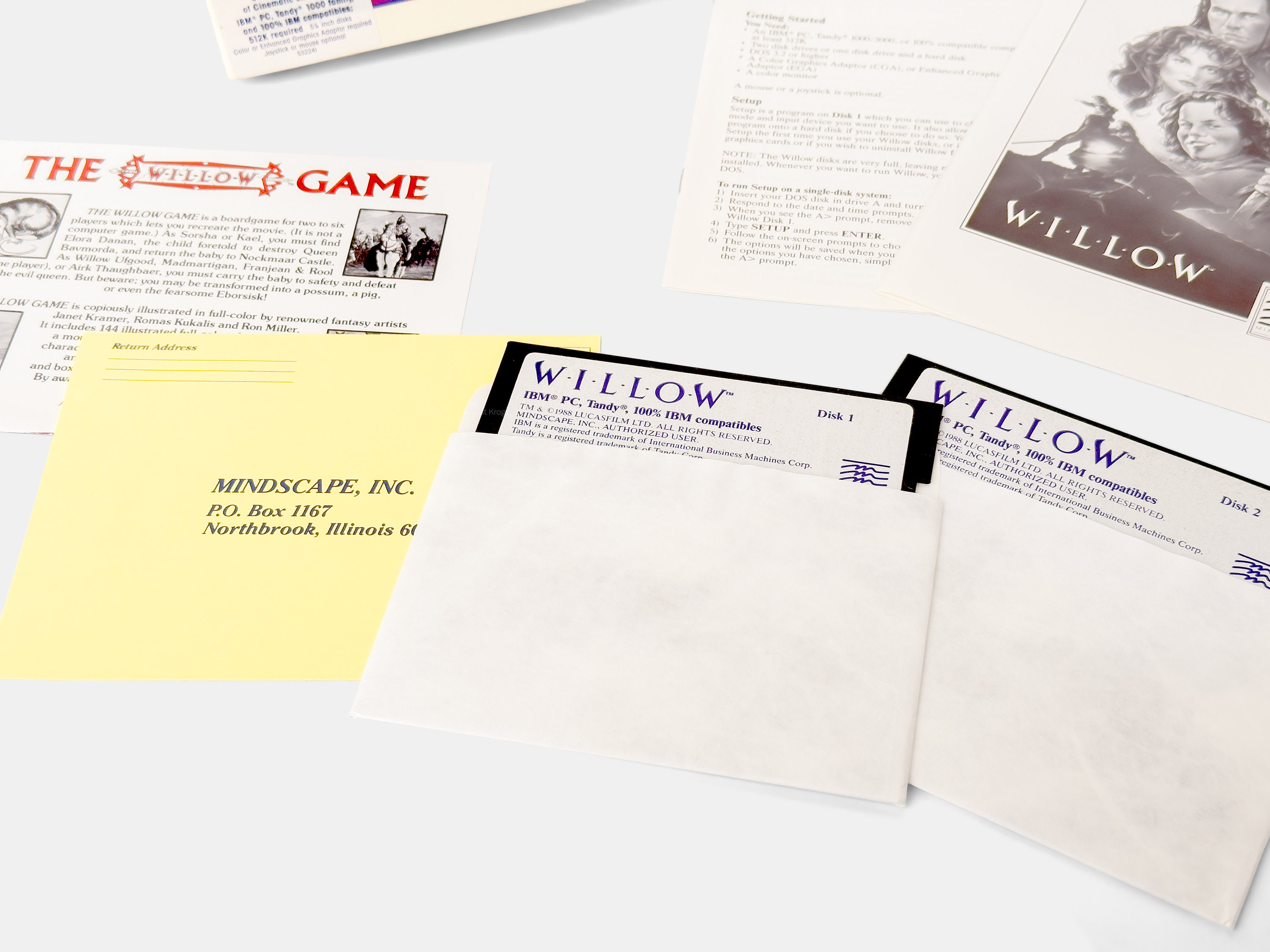
Willow, The Computer Game, was released for the Commodore Amiga, Atari ST, and IBM PC in 1988, with a Commodore 64 version following in 1989. All releases, one worse than the next, could generously be described as a frustrating mess serving as a masterclass in how not to design a game unless one defines a good game as banging your head against the keyboard in utter disbelief and frustration.
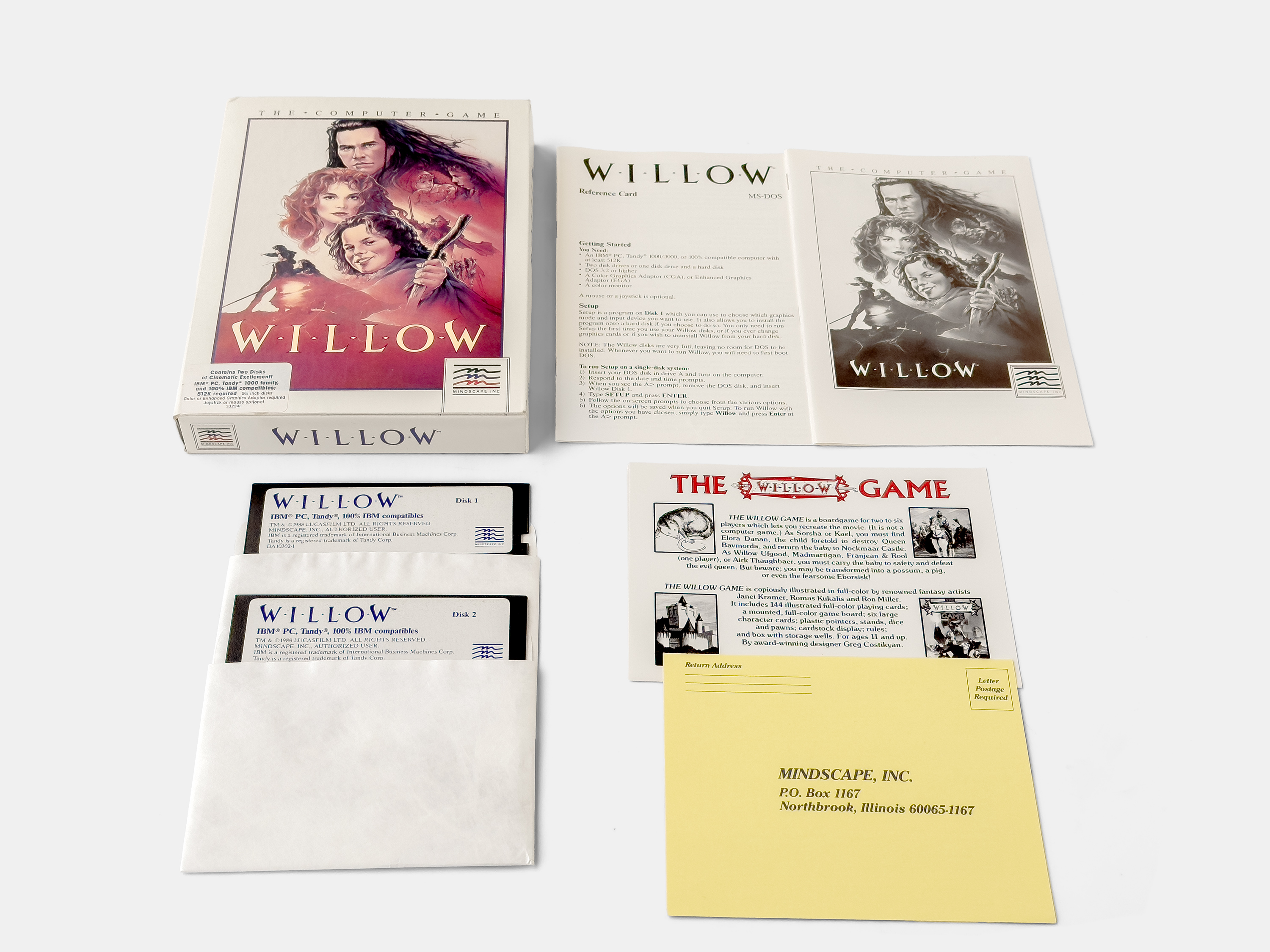
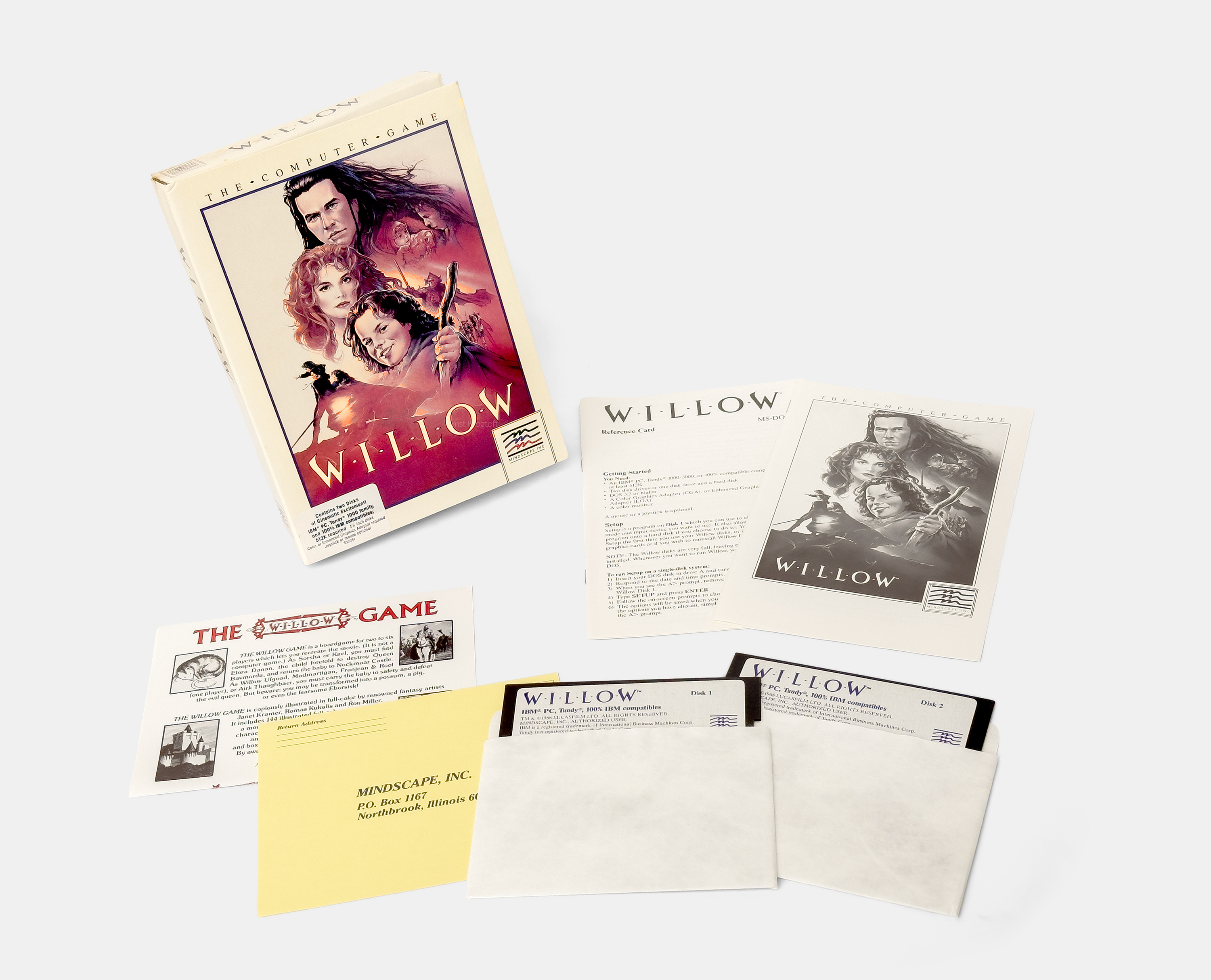
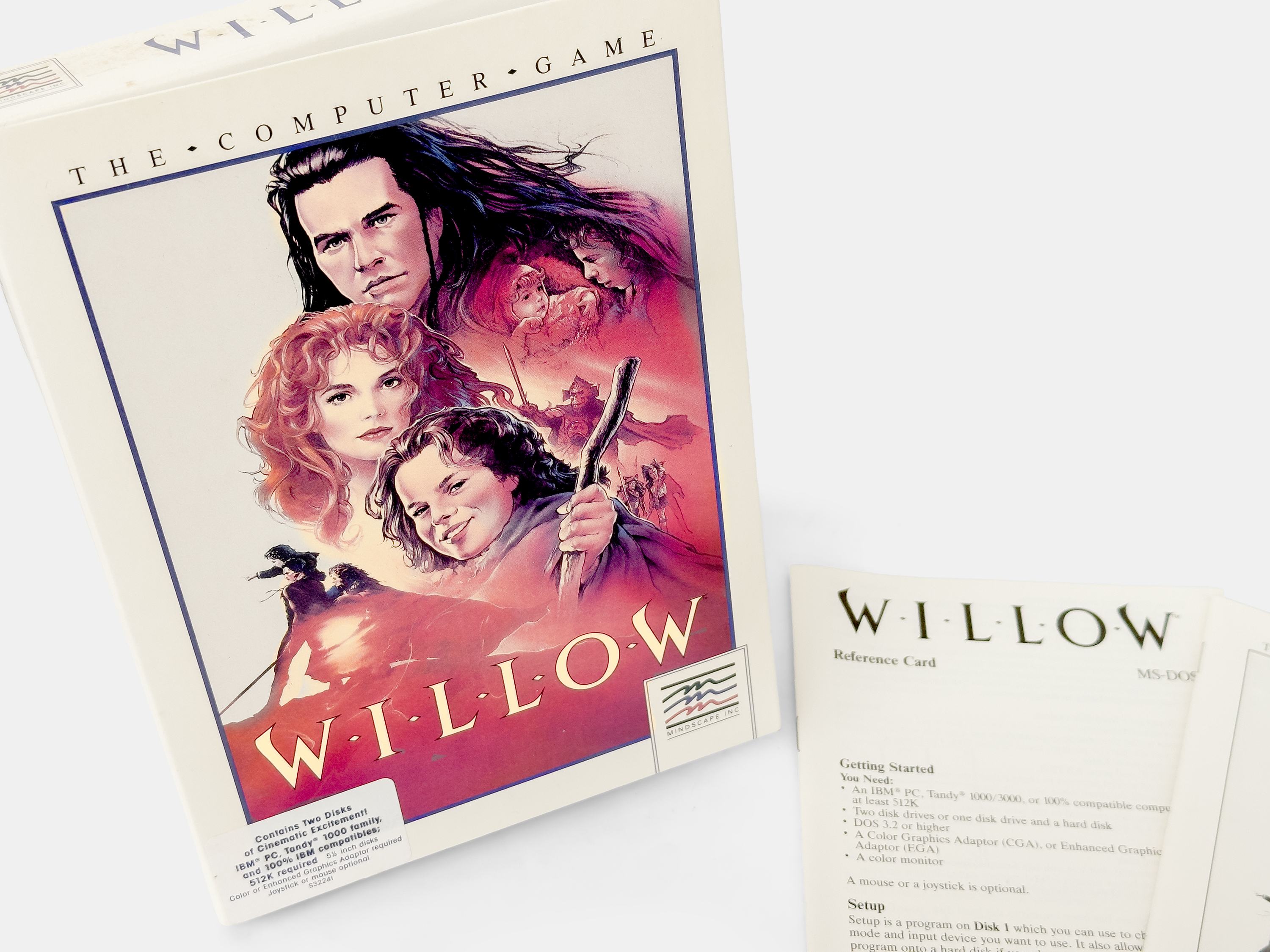
Willow, The Computer Game, as best enjoyed, with the computer turned off.
The game was released for IBM PC, Commodore Amiga, and Atari ST in 1988. A Commodore 64 version followed in 1989.
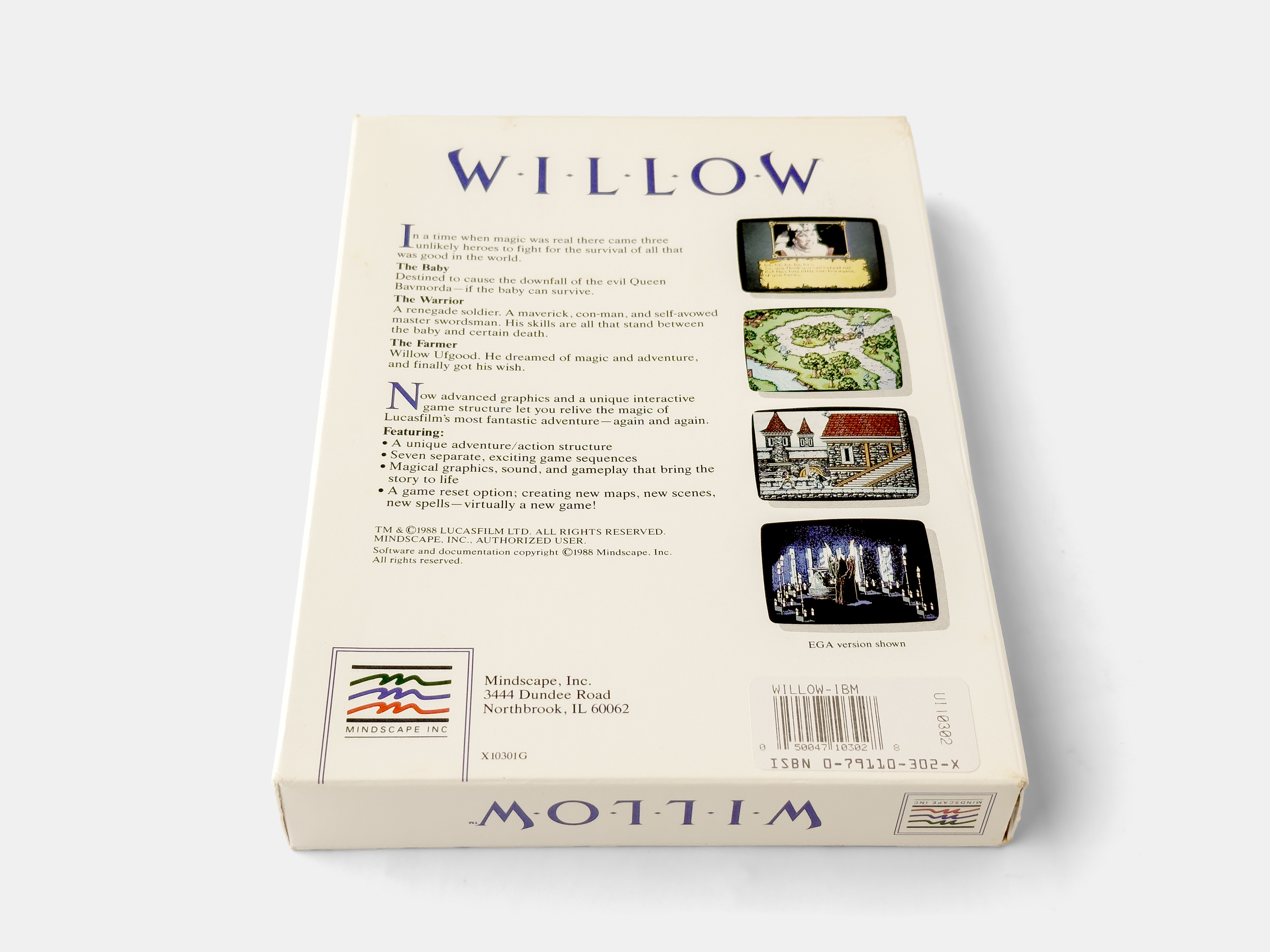
Using a thin strand of narrative, about as sturdy as a bridge made of dental floss, the disconnected and questionable mini-games, each representing a different part of the film’s story, were duct-taped together. The overall idea was commendable, but the execution and design of the mini-games were a frustrating mess of guesswork, subpar action sequences, and clunky controls.
The graphics were created by well-established artist Rick Incrocci, known for his artistic approach to visuals in earlier games.
The graphics looked great, for the most part, for 16-color EGA, and they are the game’s biggest asset.
Upon release, Willow was met with what can best be described as “polite disappointment.” While some contemporary gaming magazines tried to be diplomatic in their critiques, the consensus was clear: this was a painfully dull, unengaging adaptation of a movie that deserved better. The lack of consistent mechanics, reliance on trial-and-error gameplay, and complete absence of player agency made it feel less like an adventure and more like an elaborate psychological experiment to test players’ frustration thresholds.
Meanwhile, the design team, seemingly engaged in fantasies, believing slapping together half-baked concepts would result in success, Capcom’s developers over in Japan were busy crafting actual games. A platform game for arcades and an RPG for the NES, both of which were based on the movie, and both of which turned out quite well.
While Mindscape would go on to develop and publish many other games, Willow remains one of their most infamous misfires. Unlike bad games that find redemption through nostalgia or achieve cult status, Willow has not enjoyed such a fate. It remains a curiosity, an example of how film-to-game adaptations can go horribly wrong when developers either don’t understand the source material or, more likely, are too busy squeezing every last drop from the cash cow to care.
Willow, the movie, retains a loyal following and even managed to spawn a Disney+ sequel series decades later. The computer game adaptation, however, has mercifully faded into obscurity, surviving only in the hearts of the few masochists who have dared revisit it, including me. It serves as a cautionary tale of rushed movie tie-ins and the dangers of mini-game-based game design. If nothing else, it allows us to appreciate the good adaptations of the era, titles that actually respected their source material and sought to create engaging experiences rather than a collection of bewildering challenges.
 Retro365
Very good article! I remember when i bought it for my Amiga 1000 back in my teen days, after seeing the movie and all excited to play it. Obviously, the result was the same as yours.
Thanks:) Yes, it definitely deserved better.
I remember playing the PC game on my friend’s computer, and then revisited the game a few years ago. Unlike many movie tie-ins which are merely generic arcade games with a loose skinning for characters, this game adaptation of Willow at least tries to tie in actual movie content and plot. The NES game is also decent from a Zelda-like quality.
I agree. The idea and overall concept are somewhat commendable but the design and execution of the mini games leaves a lot to be desired. Both the arcade game and NES RPG game is quite well executed.