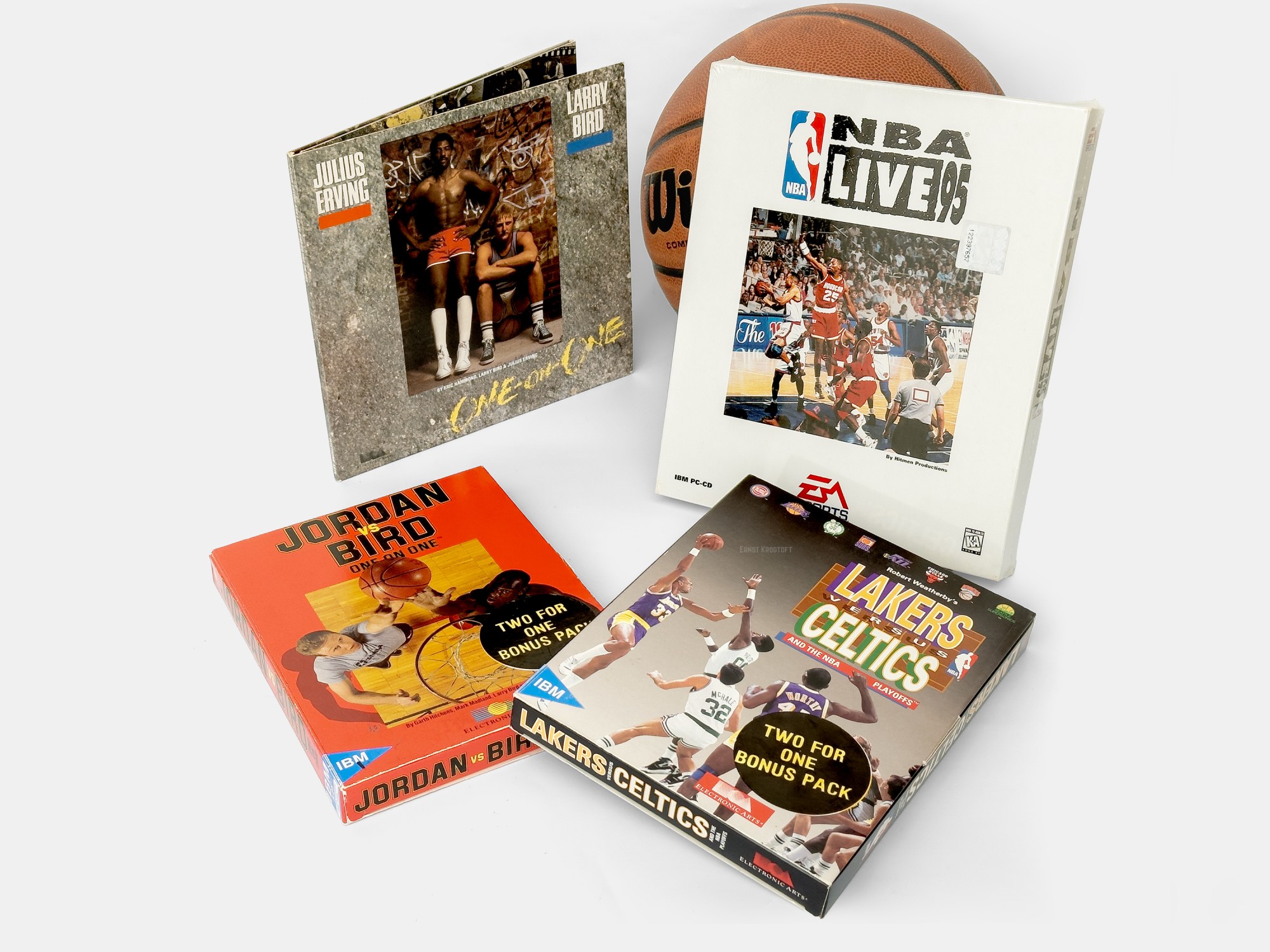
As basketball surged in popularity during the 1970s and 1980s, it became more than just a sport, it was evolving into a cultural phenomenon. With players like Julius Erving, Larry Bird, Magic Johnson, and Michael Jordan becoming household names, basketball began to dominate not only arenas but also sports television and playgrounds. Video game developers soon realized the potential of bringing the energy into people’s homes, translating the thrill of basketball into digital entertainment. Early efforts like Atari’s Basketball from 1978 were rudimentary, but by the early 1980s, advances in computer technology and skilled programmers surfacing allowed for more ambitious interpretations of the sport.
Newly founded Electronic Arts recognized the potential of combining star power with the interactive potential of personal computers. Founder Trip Hawkins, a Harvard MBA with a lifelong passion for sports and games, had long dreamed of bringing realistic sports simulations to life. While football was his ultimate goal, basketball offered a more immediate path to capturing the energy and personality of athletic competition. The company’s very first sports game became a reality with Eric Hammond’s One on One: Julius Erving vs. Larry Bird.
Released in 1983 for the Apple II, Julius Erving vs. Larry Bird was a groundbreaking title that captured the essence of basketball’s one-on-one duels. Hammond combined a programmer’s technical expertise with the passion of a true basketball fan, crafting a game that brought the sport’s dynamic energy to life. Leveraging his skill in animation, he delivered fluid and authentic character movements that pushed the boundaries of what home computer hardware could achieve at the time. The game also introduced innovative mechanics, including stealing, blocking, and the unforgettable ability to shatter the backboard with a thunderous dunk.
The choice of Julius “Dr. J” Erving and Larry Bird was deliberate. Erving, with his electrifying dunks and ABA roots, represented the flash and charisma of basketball, while Bird, the cerebral shooter, embodied the grit and skill of the NBA. Their contrasting styles made for an engaging video game pairing. Electronic Arts marketing team secured their likenesses and endorsements, setting standards for integrating real-life athletes into video games.

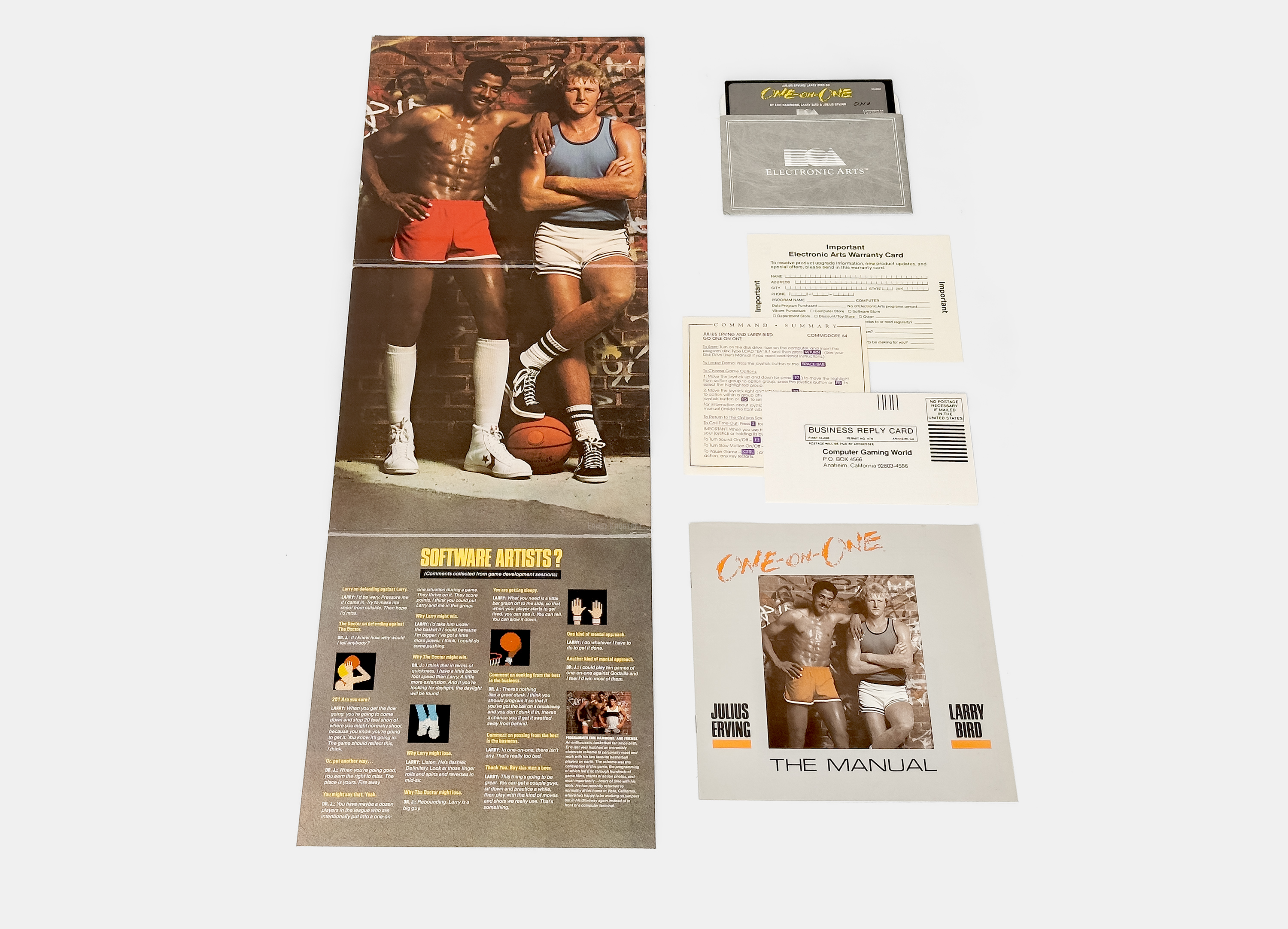
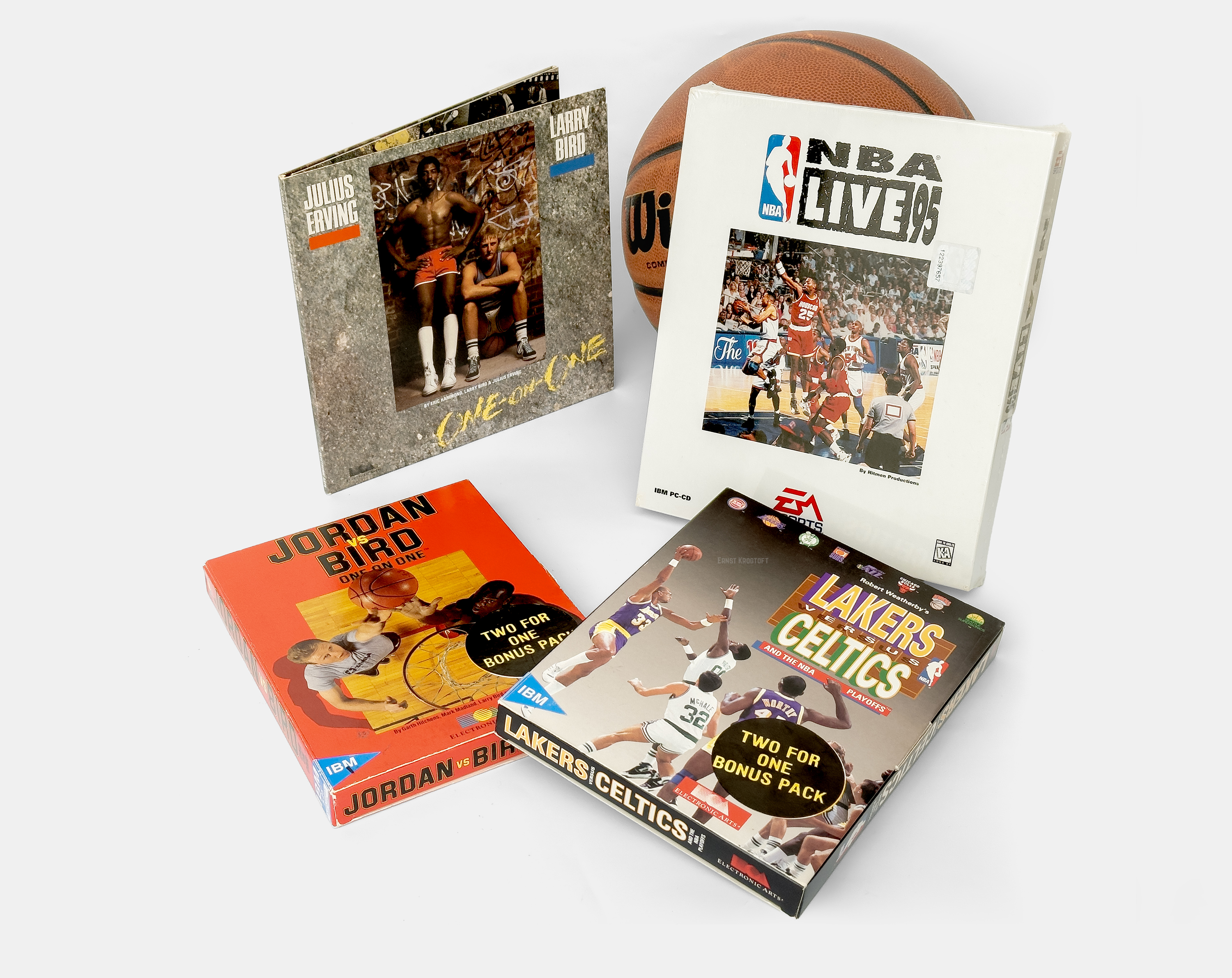
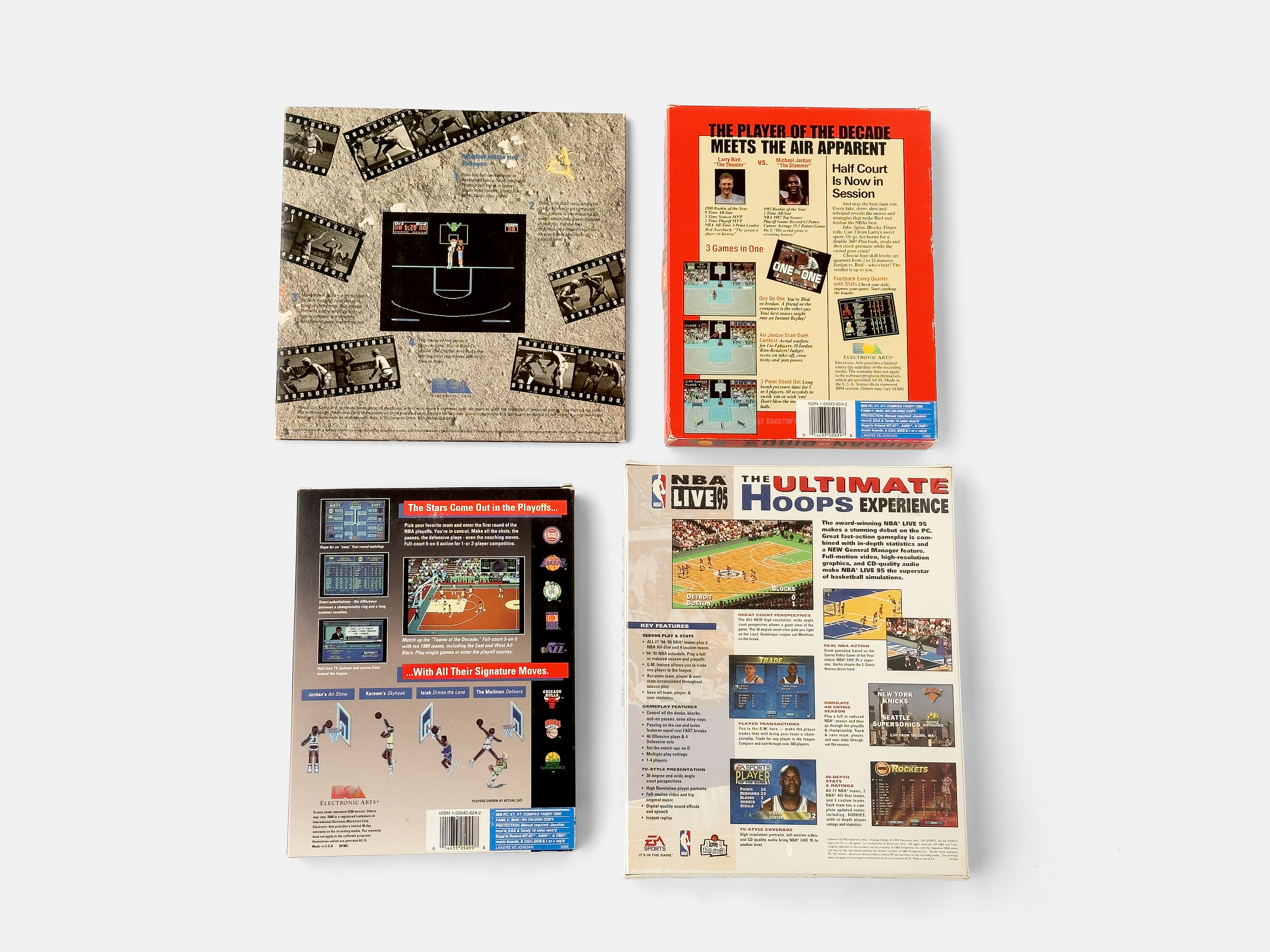
One on One: Julius Erving vs. Larry Bird debuted on the Apple II in 1983 as Electronic Arts’ first-ever sports title. True to Trip Hawkins’ vision of celebrating developers as rockstar creators, the album-style packaging featured the developers behind the game. When unfolded, the packaging revealed a “poster” of Julius Erving and Larry Bird, perfectly capturing the star power that defined the title, which would go on to become one of the best-selling sports titles for home computers during the ’80s.
One on One offers an intense head-to-head basketball experience, pitting two of the NBA’s most iconic players against each other. With smooth animations, innovative mechanics like stealing and blocking, and the ability to shatter the backboard, the gameplay set a new standard for sports simulations.
The game was released for other systems in 1984.
One on One was a commercial success and became the best-selling sports game for computers at the time selling over 400,000 copies by late 1988. Its success proved that sports simulations could captivate audiences and helped pave the way for Electronic Arts’ future sports titles.
By the latter part of the 1980s, Michael Jordan had risen to superstardom, with Bird remaining a dominant figure. Their rivalry, though brief, was one of the most celebrated in sports. Building on the success of One on One, Electronic Arts released Jordan vs. Bird: One on One in 1988. The game retained the one-on-one format but added mini-games tailored to each player’s strengths. Jordan’s slam dunk contest allowed players to replicate his aerial acrobatics, while Bird’s three-point shootout showcased his sharpshooting precision.


Jordan vs. Bird: One on One, released in 1988, came in a standard box that reflected the era’s shift in packaging trends. While smaller than the album-style designs of earlier Electronic Arts titles, the box still highlighted the star power of Michael Jordan and Larry Bird, featuring artwork that captured their legendary rivalry.
Players choose between Michael Jordan and Larry Bird to compete in one-on-one matchups. Mini-games like a slam dunk contest and a three-point shootout add variety, showcasing each player’s signature skills.
The game’s music was done by British composer and 8-bit musical maestro Rob Hubbard, who had just joined Electronic Arts.
(Unfortunately, I had some issues with the sound and it comes off as heavily distorted.)
Electronic Arts’ next basketball title, Lakers versus Celtics and the NBA Playoffs marked a turning point for the genre. Released in 1989, it was one of the first games to feature full team rosters, thanks to official NBA licensing. This allowed players to control not just individual stars but entire teams, introducing a new level of depth and strategy.
The title focused on the 1988 NBA playoffs, allowing players to choose from eight teams, including the Lakers, Celtics, Bulls, and Pistons. Incorporating the intense Lakers-Celtics rivalry of the 1980s, the game resonated with fans who had witnessed the two teams face off in multiple NBA Finals. Players could replicate Magic Johnson’s precision passing or Larry Bird’s sharp shooting while navigating team-based strategies.
Development was spearheaded by a talented team that included industry veteran Don Traeger. Traeger, who had previously produced Jordan vs. Bird: One on One and numerous other best-selling action and sports titles for Electronic Arts, brought a wealth of experience to the project. Having started his career at Atari Games in the early 1980s, he joined Trip Hawkins at Electronic Arts in 1984, where he quickly became a driving force behind the company’s sports initiatives.
Traeger played a pivotal role in shaping the EA Sports brand, not only negotiating and securing licensing deals with Michael Jordan and the NBA but also conceptualizing the distinctive look and feel that would define EA Sports’ identity for years to come. His vision would help position EA as the definitive sports producer for decades to come.
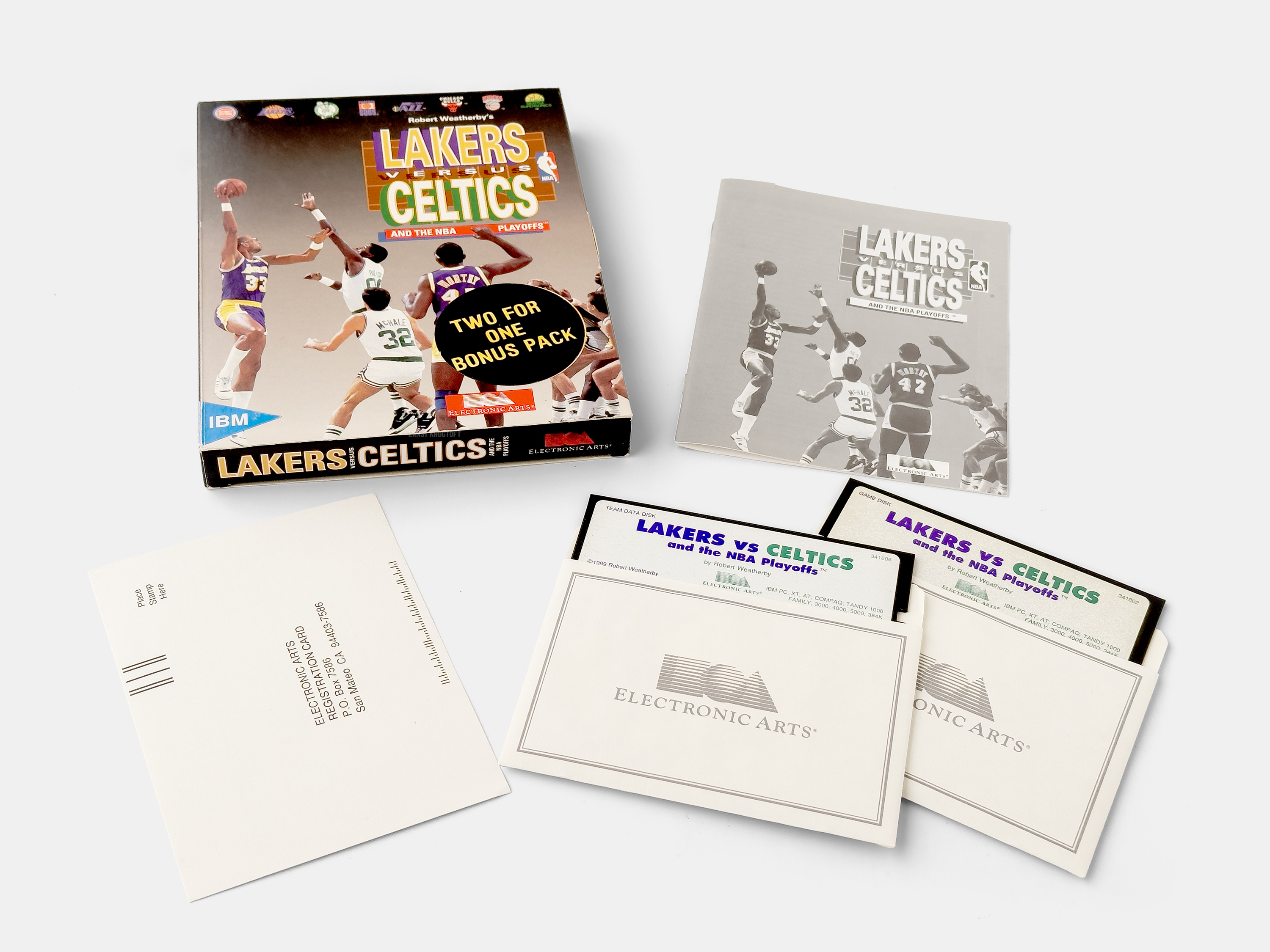
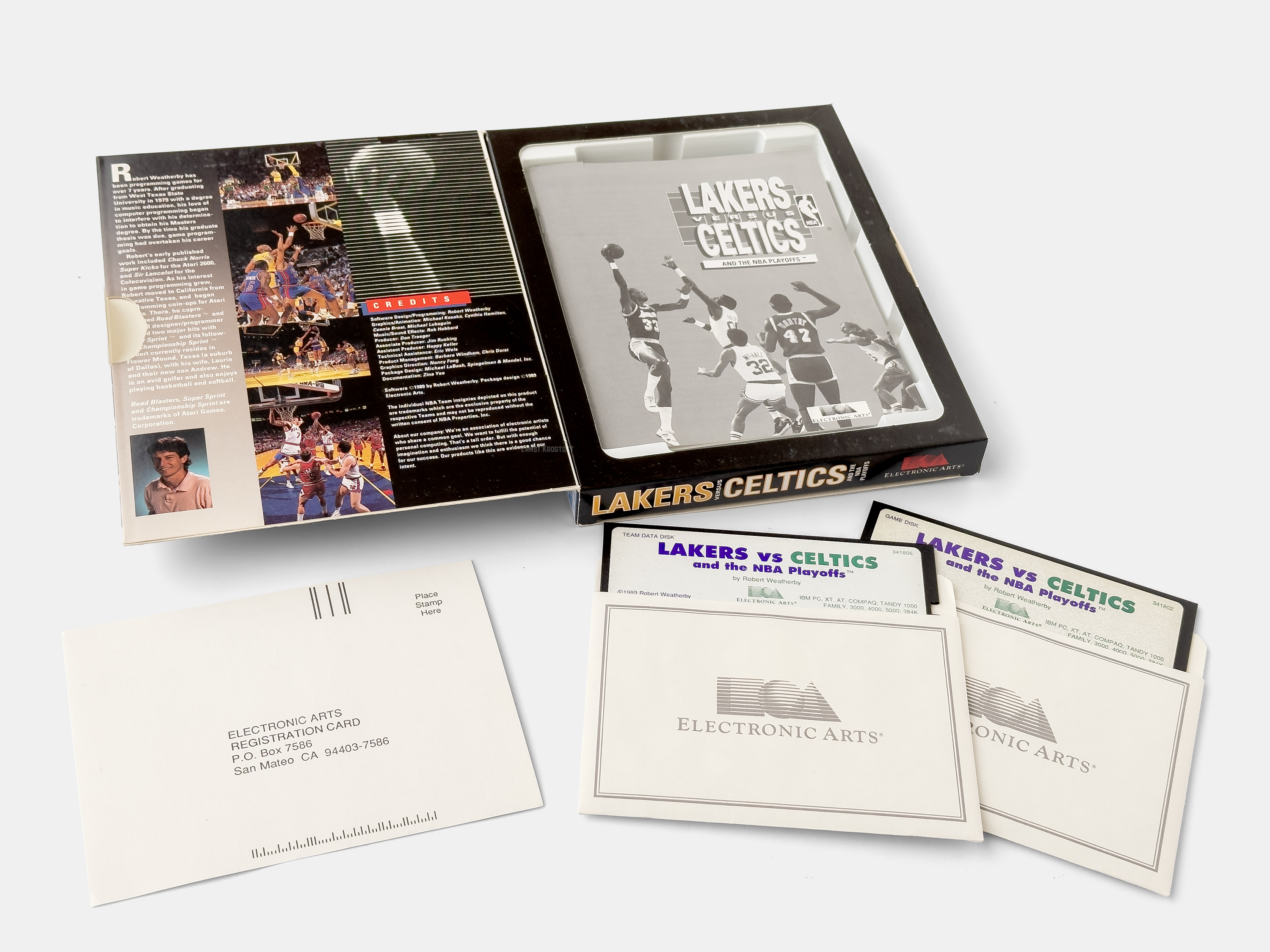
Lakers versus Celtics and the NBA Playoffs, released in 1989, marked a pivotal step in basketball gaming. The box art featured dynamic, game-inspired imagery that emphasized the intensity of NBA action, with its title prominently highlighting the legendary Lakers-Celtics rivalry of the 1980s. This was one of the first basketball games to include full NBA team rosters, setting a new standard for realism and authenticity in sports video games.
Lakers versus Celtics and the NBA Playoffs brought full team rosters and a strategic team-based gameplay experience to basketball gaming. Players could control playoff-caliber teams, utilizing individual player strengths and authentic NBA strategies to capture the fast-paced action of professional basketball.
By the mid-1990s, Electronic Arts had honed its Basketball formula, culminating in NBA Live 95. The game represented a giant leap forward, building on the foundations of its predecessors while introducing a fully realized basketball simulation. Developed by Hitmen Productions (EA Canada) a larger, more specialized team, NBA Live 95 featured all 27 NBA teams, complete rosters, and detailed player statistics. It brought the NBA to life with its multimedia presentation, isometric perspective, fluid animations, and team-specific strategies.
The development process involved advanced motion-capture techniques, ensuring lifelike player movements, while innovations in sound design added layers of realism. Features like substitutions, season play, and stat tracking elevated the experience, making it a must-have for basketball fans.
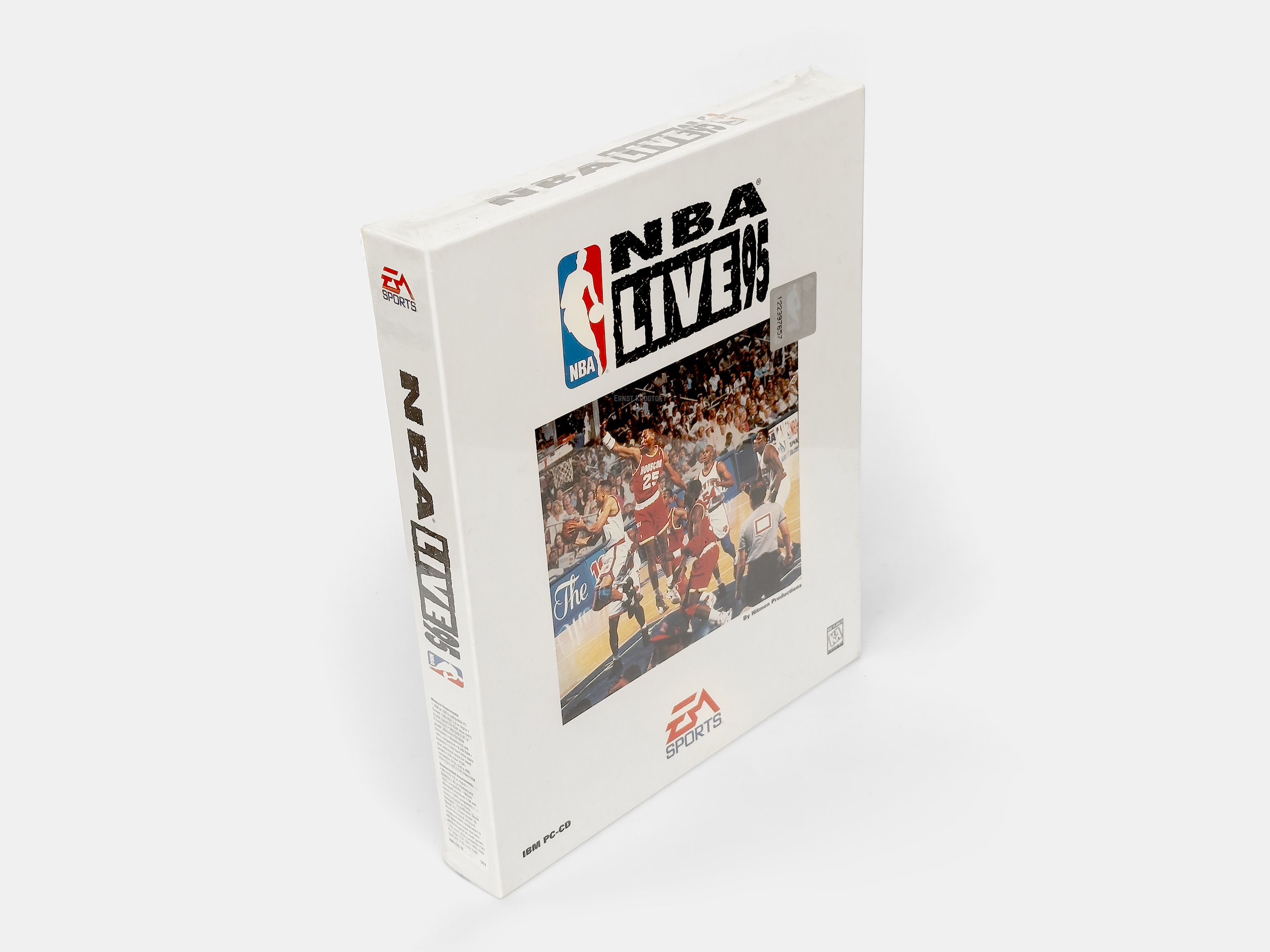
NBA Live 95, released in 1994, marked a revolutionary leap in basketball gaming. The packaging embraced the bold EA Sports branding that was becoming synonymous with quality sports titles. The box highlighted the game’s groundbreaking features, including full NBA team rosters, detailed player statistics, and isometric gameplay that set a new standard for realism. As the first title in the enduring NBA Live series, it solidified Electronic Arts’ dominance in the “modern” sports gaming genre.
NBA Live 95 redefined basketball gaming with dynamic isometric gameplay, complete team rosters, and realistic player attributes. Combining fast-paced action with detailed stats and season play, it offered an immersive and authentic NBA experience that set a benchmark for the genre.
NBA Live 95 was more than a game, it was the beginning of a franchise that would dominate basketball gaming for decades. Its success cemented Electronic Arts’ reputation as the leader in sports simulations.
From One on One’s groundbreaking debut to NBA Live 95’s fully immersive simulation, Electronic Arts’ basketball titles charted the evolution of the genre. Each game pushed the boundaries of what was possible, incorporating technological advancements and star power to deliver authentic and engaging experiences.
Together, the titles mirrored the rise of basketball as a global phenomenon and solidified Electronic Arts’ place in gaming history. They set the standard for sports games, proving that with the right mix of innovation, authenticity, and ambition, video games could capture the spirit of the court. Today, the legacy of these games lives on in modern franchises, reminding us of a time when the magic of basketball first found its way into the digital world.
Sources: Computer Gaming World, Wikipedia, GameDeveloper…
 Retro365
The glass breaking in One on One was a big part of the fascination for me and my friends when it came out. Sports games, especially more arcadey ones, always benefit from a bit of that kind of sizzle.
I agree:) Overall, One on One was pretty much ahead of everything in the sports genre at the time. While simple, it featured animations clearly showing the different moves and actions and the backboard shattering showed that “nice to have” elements lifted the overall feel of the game…