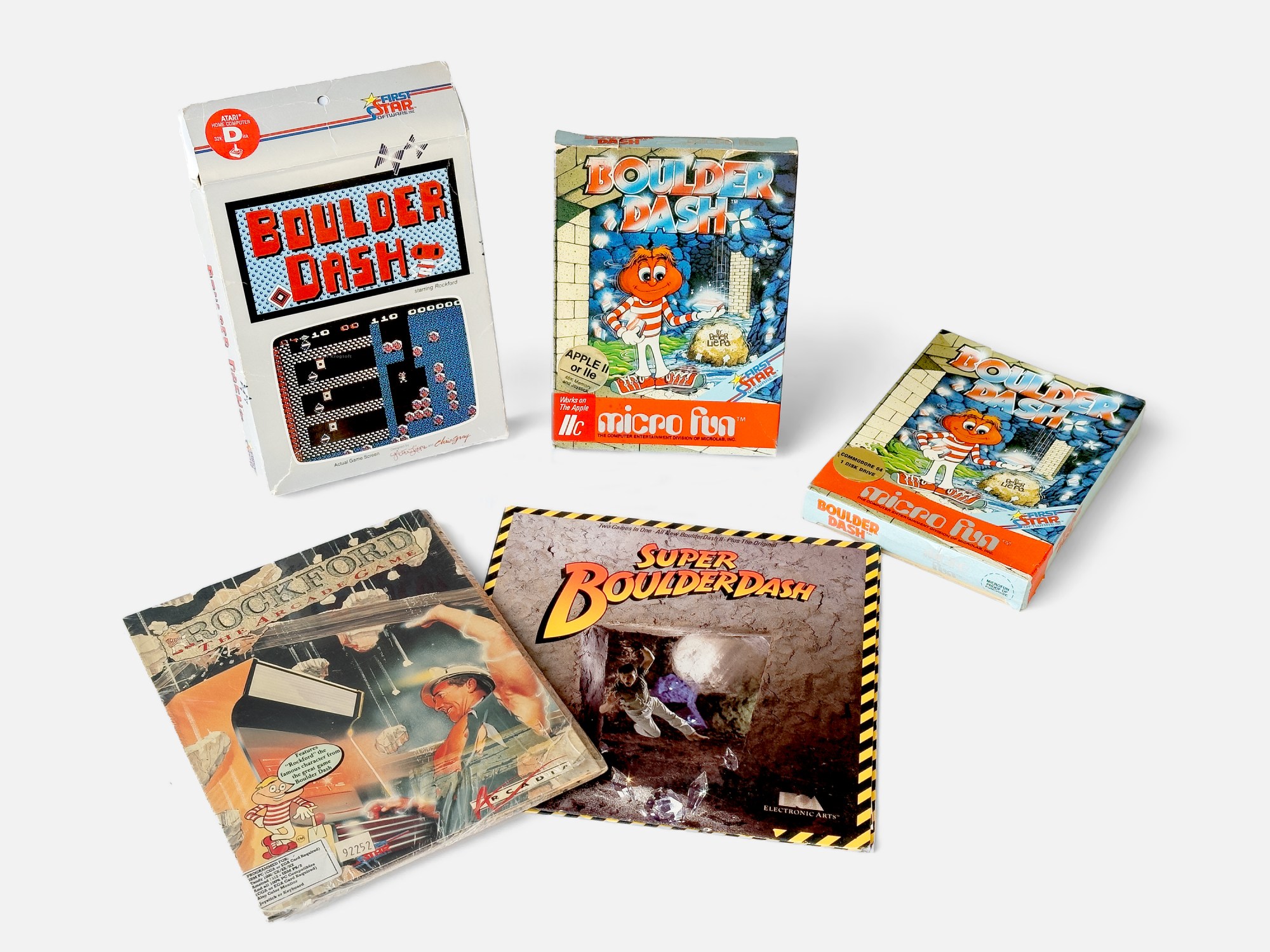
Let’s start with the basics, or rather, the complete lack of them. We don’t really know who or what Rockford is. He could be male, female, or some kind of gender-neutral diamond-devouring entity. All we’re sure of is that he/she, or it, has a serious thing for sparkling rocks and seems to have a soft spot for crawling through the dirt like a pixelated worm all thanks to his creator’s impressive programming wizardry. For the time, it was practically magic. Now? It’s still magical.
To uncover Rockford’s origins, we need to jump into the time machine and journey back to early 1980s Canada. In 1983 Peter Liepa was working away on his Atari home computer. Playing with his small character editor, a modest 64-pixel sprite emerged, simple but full of potential. This tiny figure quickly evolved, pixel by pixel, into Rockford, the pixel hero who would charm the early home computer scene.
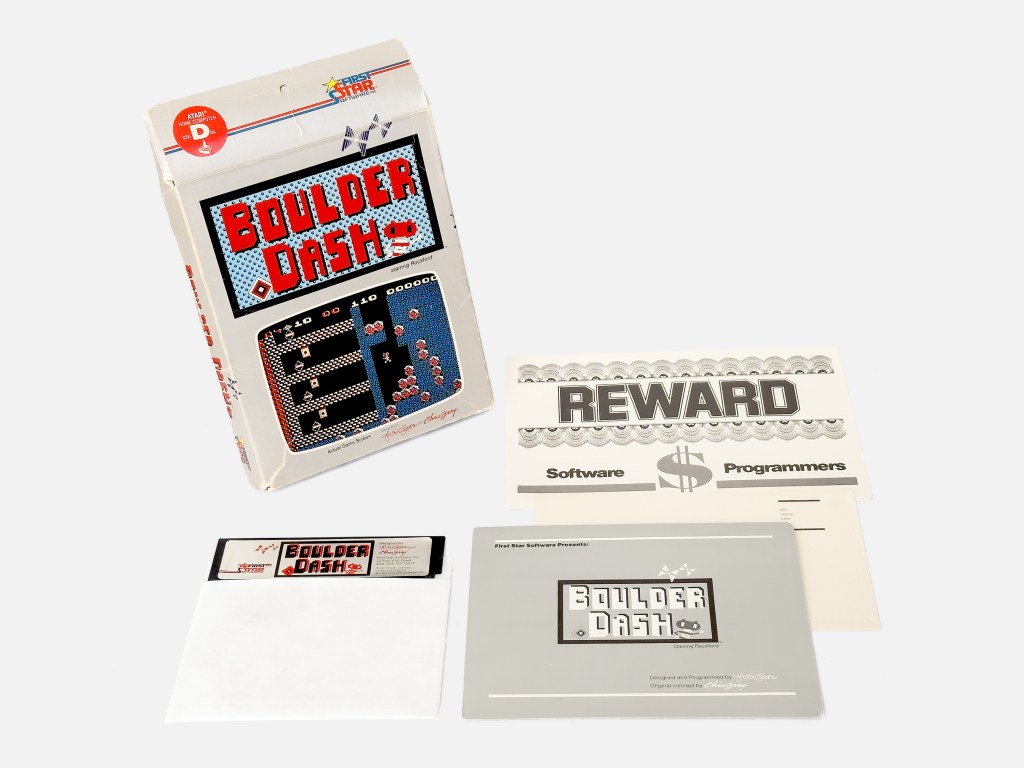
Rockford’s first public appearance occurred in 1984 in Boulder Dash, running on the Atari Home Computer. That’s where we first saw his unhealthy obsession with diamonds. Now, based on the relentless digging and jewel hoarding, you might assume Rockford’s a lady, right? I mean, diamonds are a girl’s best friend. But think again. So far, I’ve never seen women go wild over diamonds while crawling through dirt and dodging boulders (at least not in public). It’s equally possible that Rockford is an alien on a top-secret mission to strip Earth of its diamond supply.
When Rockford first hit the screen in Boulder Dash, the title said it all: danger, excitement, and lots of dashin’ away from big rocks ready to crush his fragile body at the slightest misstep. The mission? Collect enough diamonds before time runs out and, maybe, just maybe, avoid being squashed like a bug by a falling boulder. But here’s the kicker: every time Rockford thinks he’s done, and that sweet relief of victory is near, his creator throws him into an even nastier pit of peril. More diamonds, more creatures, and more boulders just waiting to turn him into pixel paste. It’s almost like the game was designed to be impossible. Oh wait, it nearly was.
Rockford’s odd talent, beyond his love for shiny things, seems to be his ability to keep players hooked. Once you start mining, you can’t stop. Is it the diamonds? The thrill of dodging death? Or is it the raw, unexplainable charm of this square little character? Whatever it is, it’s got a hold on us, and it’s been that way since 1984.
Now that we’ve dug deep into Rockford’s mysterious, pixelated persona, it’s time to shift our focus to the real mastermind, Peter Liepa, a man whose childhood ambitions swung between animator and particle physicist. Imagine that, creating whimsical animations that leap off the screen or unravel the mysteries of the universe.
In high school, during the late 1950s and early 1960s, young Liepa got the chance to take a one-week internship at the National Research Council of Canada. Naturally, he aimed for the physics lab, after all, particle physicists don’t just grow on trees. But fate intervened, and instead, Liepa found himself in the computer center, staring at a terminal hooked up to a hulking mainframe. Remember, this was long before personal computers were even a twinkle in Jobs and Wozniak’s eyes. Yet Liepa, ever the quick study, figured out how to operate and program the machine. From that moment, the seed of his love for computing was firmly planted.
Back in high school, computers were still more myth than reality, so his only exposure came from devouring programming books. Eventually, Liepa’s passion for math and computers led him to university, where he finally got to play with proper computer terminals. After earning a degree in math and a master’s in Control Theory, he dabbled in software consulting. But the real turning point came when, in his late twenties, he purchased an Atari 800, inspired by playing on a friend’s Atari 400. Now, with his own machine in hand, the real adventure began.
Liepa reached out to a local publisher, hoping to get a sense of what the gaming world was looking for. This led him to Christopher Gray, a 16-year-old programmer with an idea for a game written in BASIC. Gray’s game needed to be translated into machine language, a perfect practice for Liepa, but as he worked on the conversion, he realized the game needed a little oomph. Something dynamic. So he started tinkering with the core elements, dirt, rocks, and jewels. Within a matter of days, he had the foundation of what would become Boulder Dash. His basic physics engine could generate different caves at random and by tweaking rock and jewel density, he stumbled upon endless possibilities for exciting gameplay.
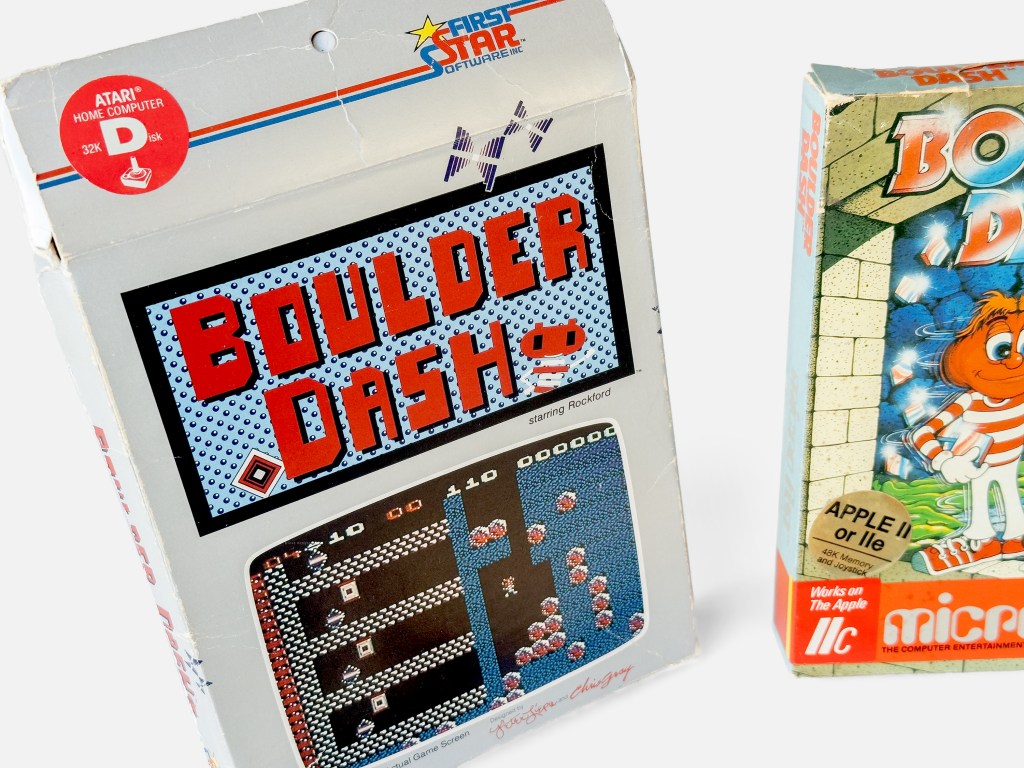
As Liepa’s vision for the game evolved, it became clear that his design approach wasn’t exactly in sync with Gray’s original concept. In the end, Liepa took on the bulk of the game’s development, designing the physics, graphics, caves, and even the music. Gray contributed ideas here and there, but their visions for the game didn’t fully align. Still, after about six months of work, on and off, and another six months of shopping the game around to potential publishers, Boulder Dash finally hit the market in 1984 for the Atari 8-bit home computer, published by First Star Software.
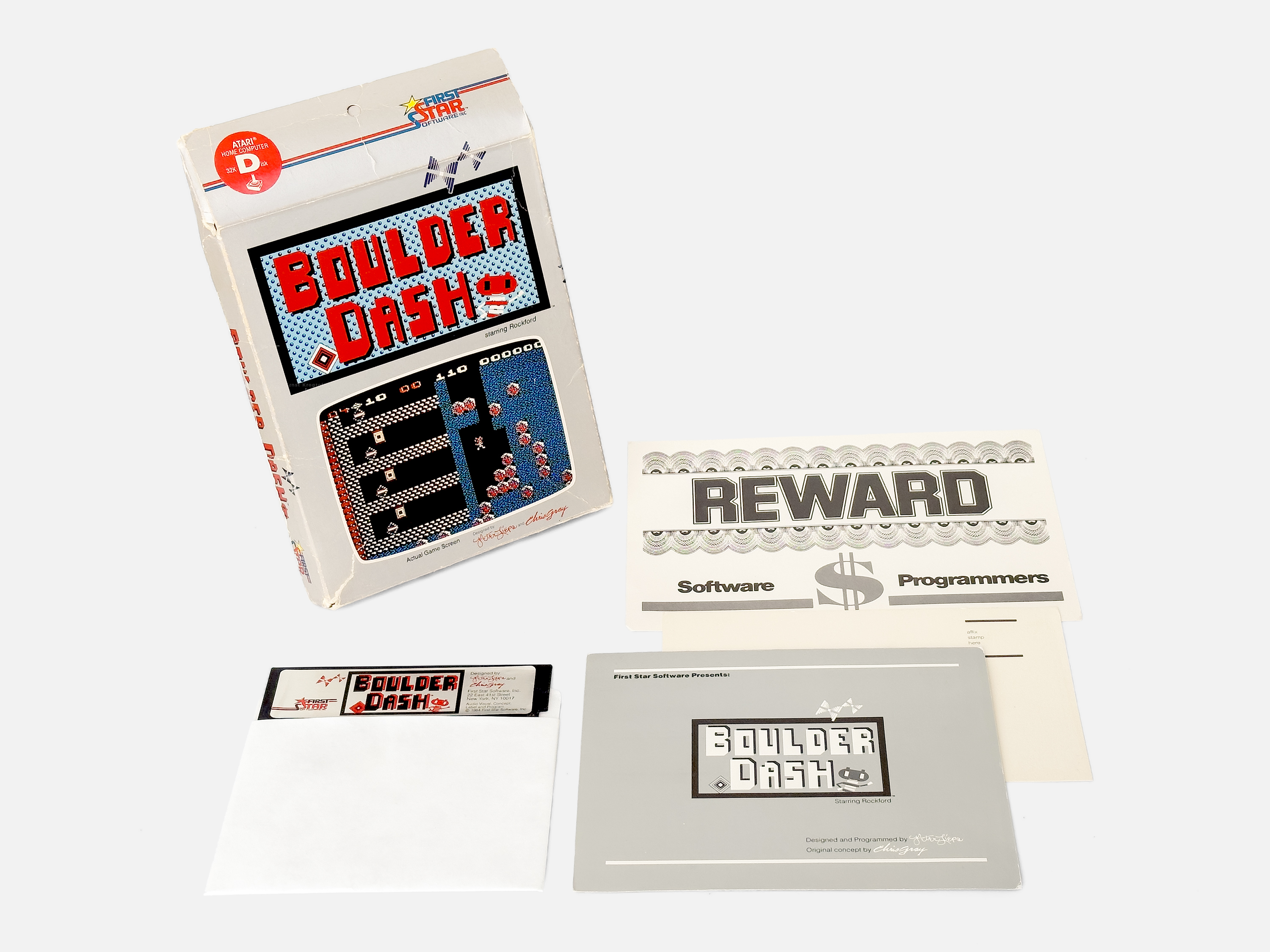
The original Boulder Dash made its debut exclusively on the Atari 8-bit home computer lineup, published by First Star Software in 1984.
Boulder Dash showcased the pinnacle of dig-and-dash excitement, blending action and puzzle-solving in one unforgettable adventure that challenges both reflexes and wits.
The original Atari version is in my opinion the definitive version.
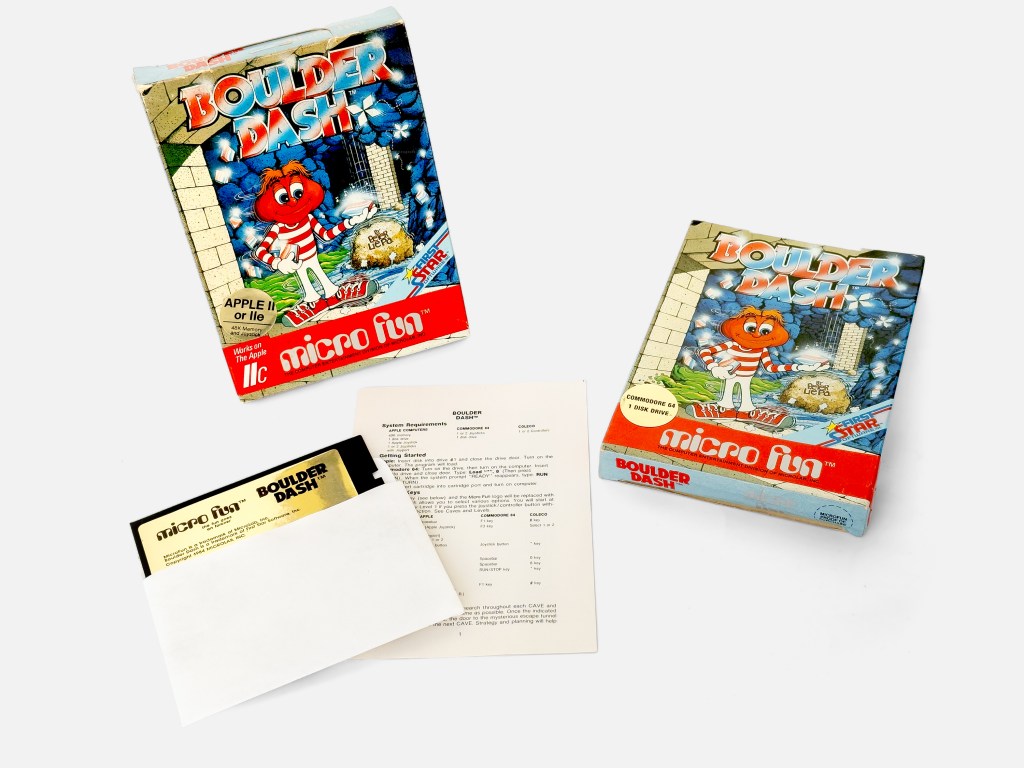
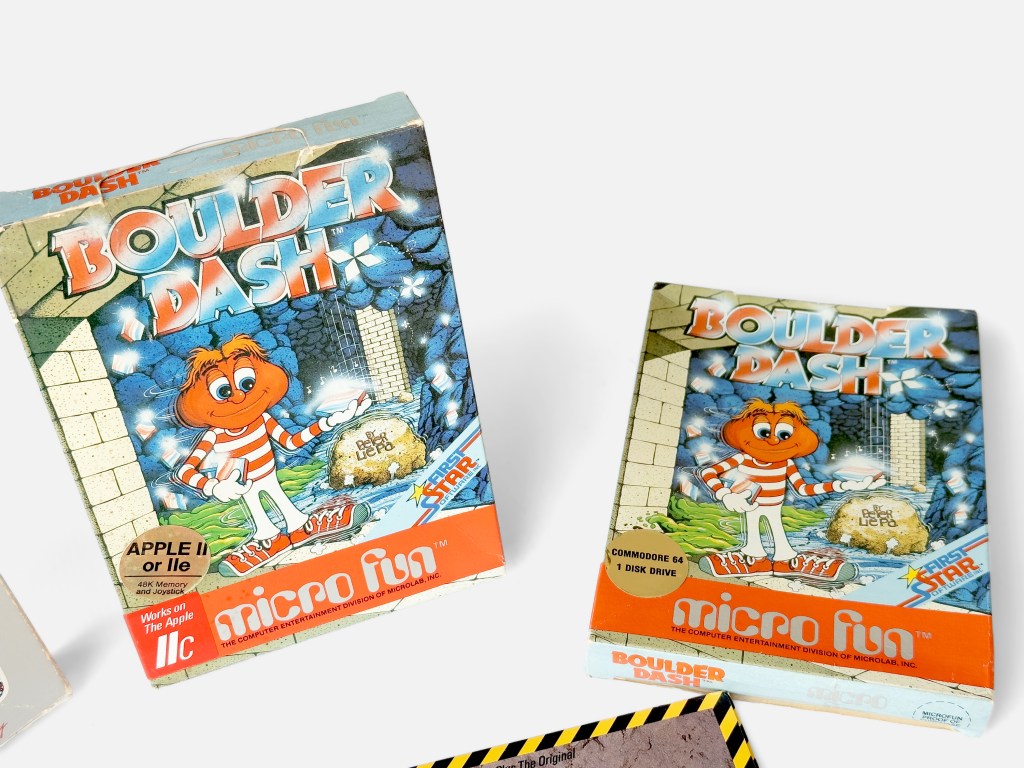
Although both Liepa and Gray were credited as designers on the cover, the tides of recognition soon shifted. When Boulder Dash was licensed to Micro Labs’ entertainment label, Micro Fun and re-released later in 1984 for the Apple II, Commodore 64, and ColecoVision, Peter Liepa’s name took center stage. Gray’s contribution was reduced to a small “original concept by” credit on the back of the box.
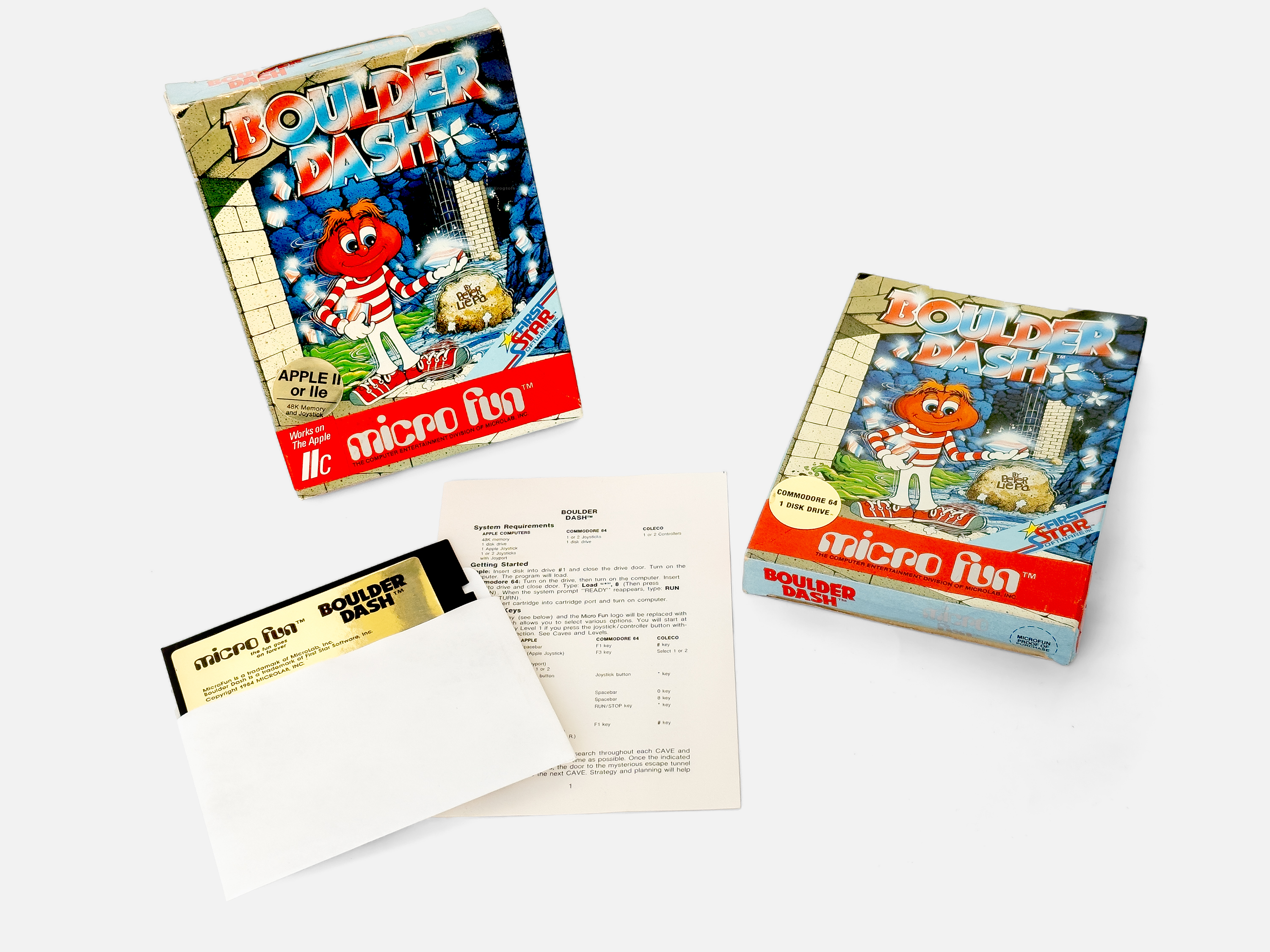
In 1984, Micro Lab licensed Boulder Dash, converting and releasing it for the Apple II, Commodore 64, and ColecoVision under its entertainment label, Micro Fun.
Boulder Dash wasn’t just a one-hit wonder. The game spawned three official sequels, each carrying on Rockford’s dangerous diamond-digging legacy. Liepa returned to design the second installment, Boulder Dash II: Rockford’s Revenge, adding new elements and challenges for our favorite subterranean hero.
Boulder Dash II: Rockford’s Revenge was just as good as the original with a new arsenal of caves and challenges.
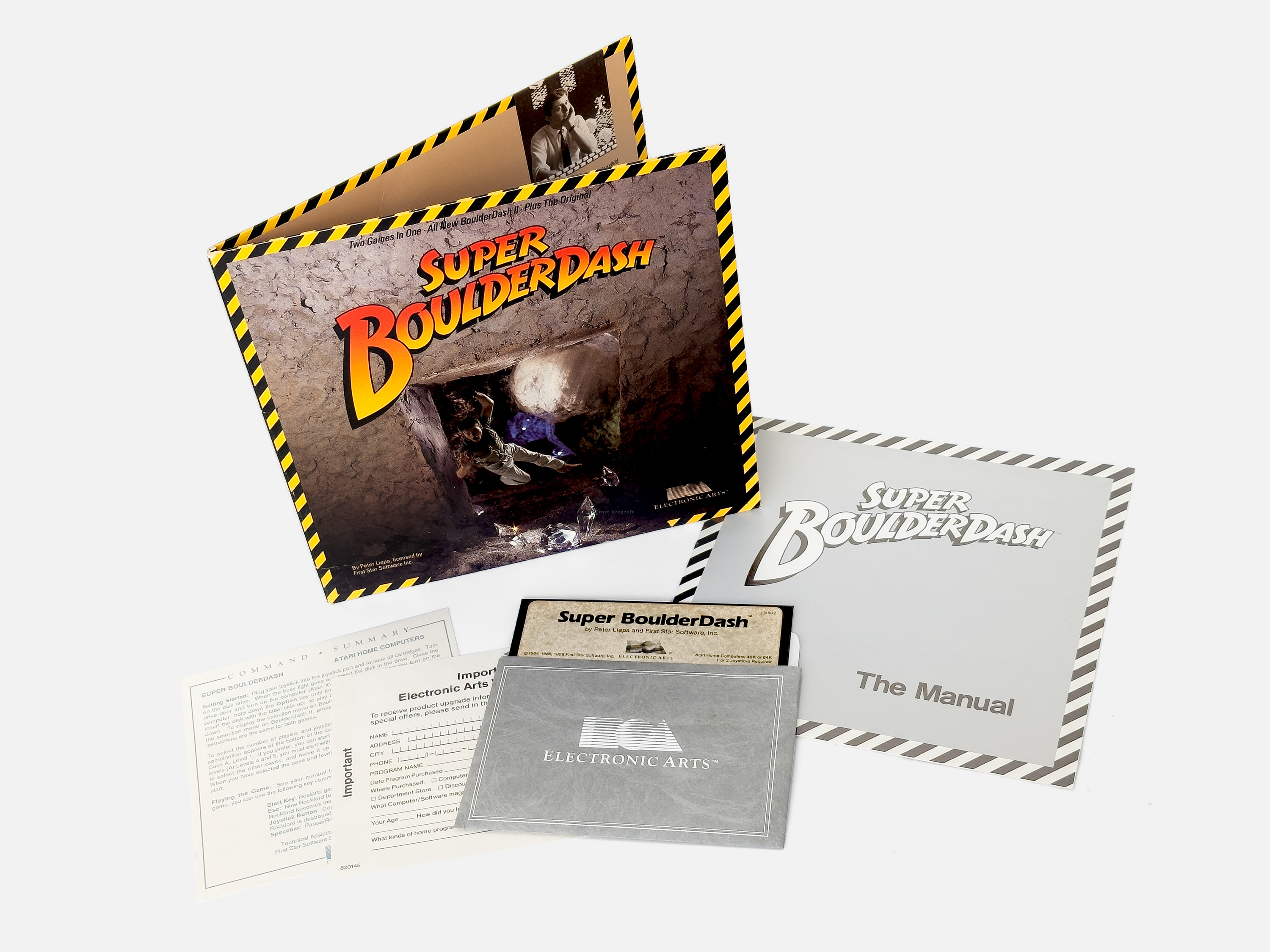
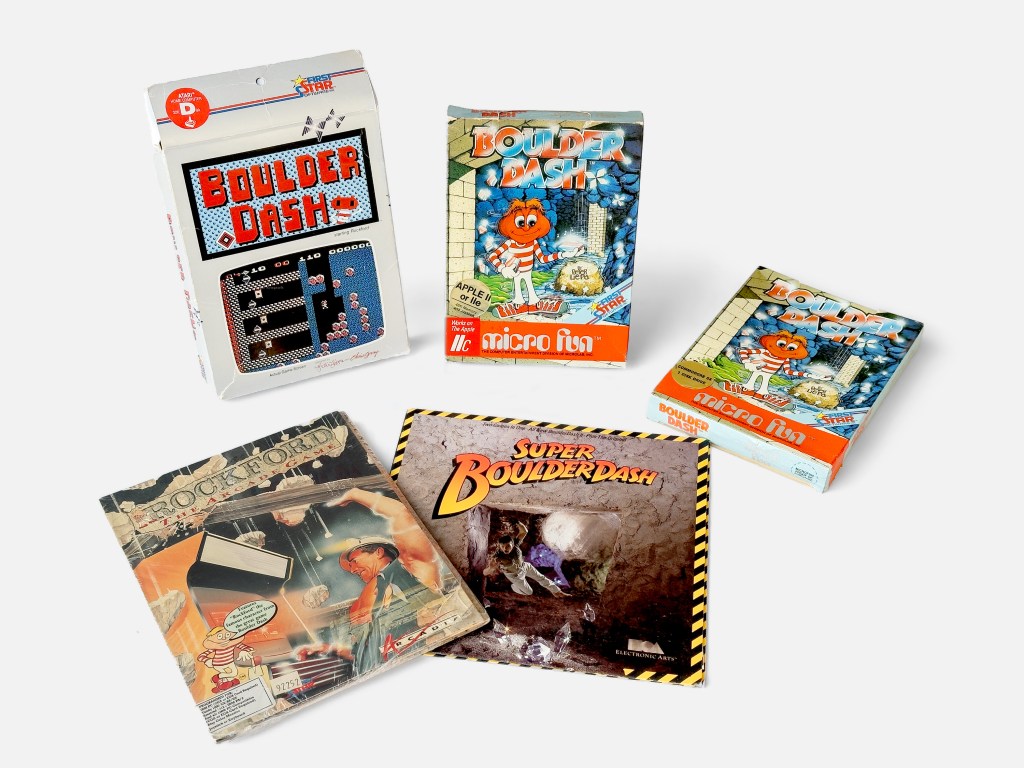
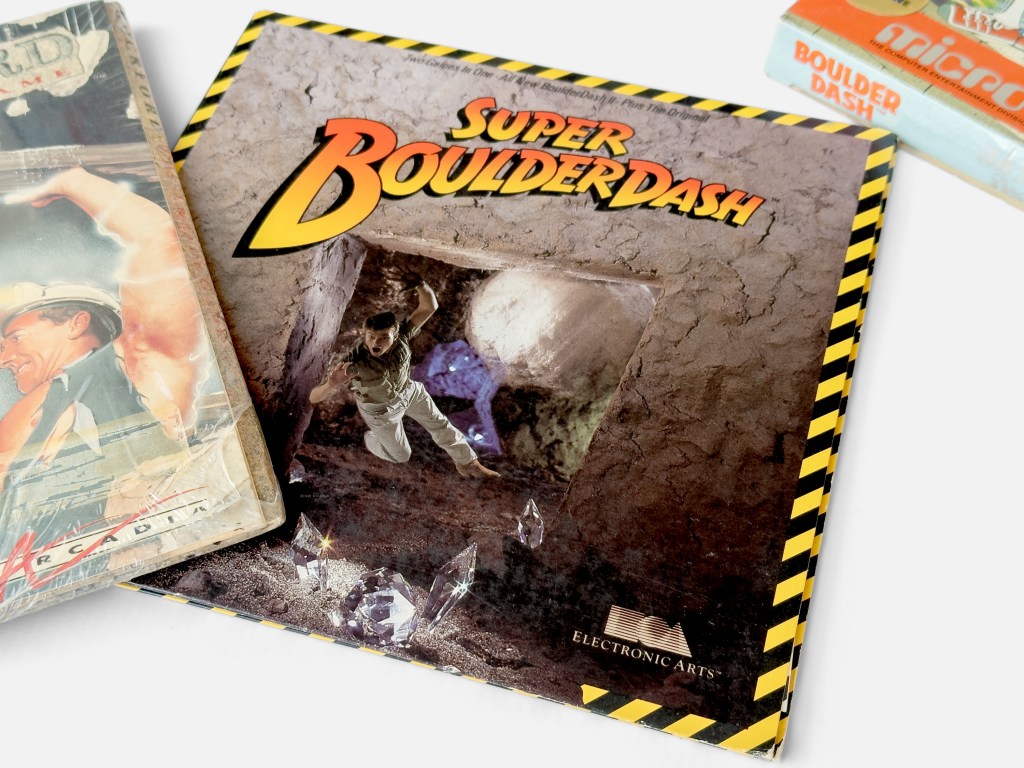
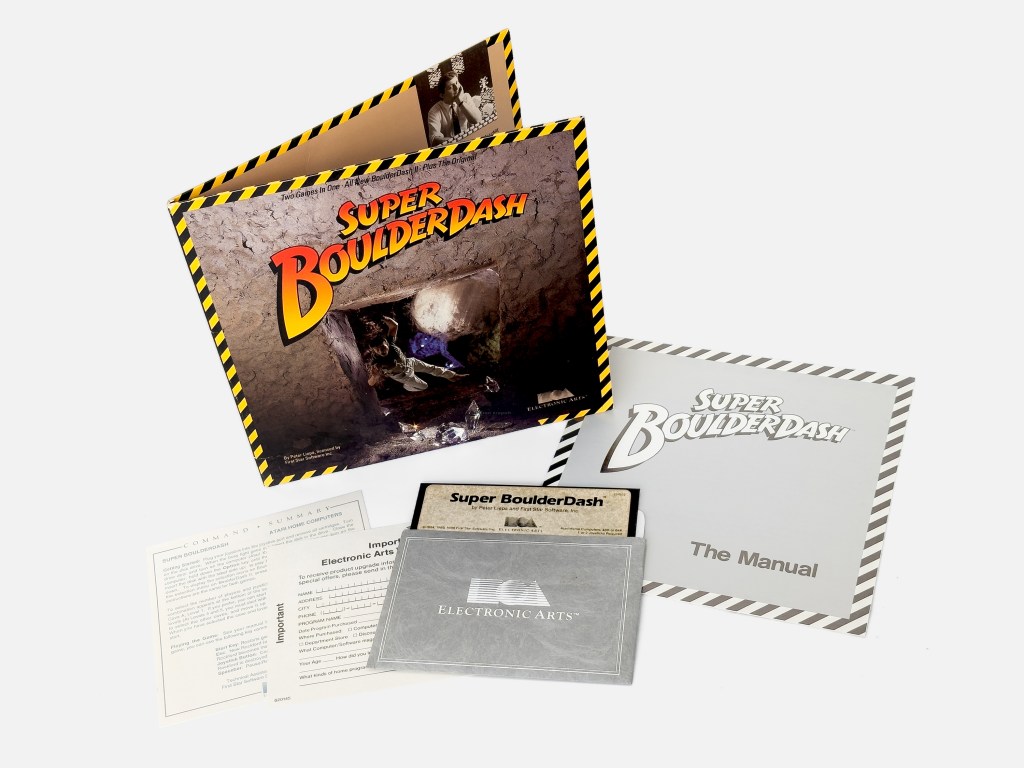
Super BoulderDash, a compilation including the original Boulder Dash and its sequel, Rockford’s Revenge, published by Electronic Arts in 1986.
By the time Boulder Dash III rolled around, First Star Software, facing financial struggles, moved forward without Liepa at the helm. The result? A commercial misstep with poorly designed levels led Boulder Dash III to be somewhat of a dud and a far cry from the game’s earlier successes.
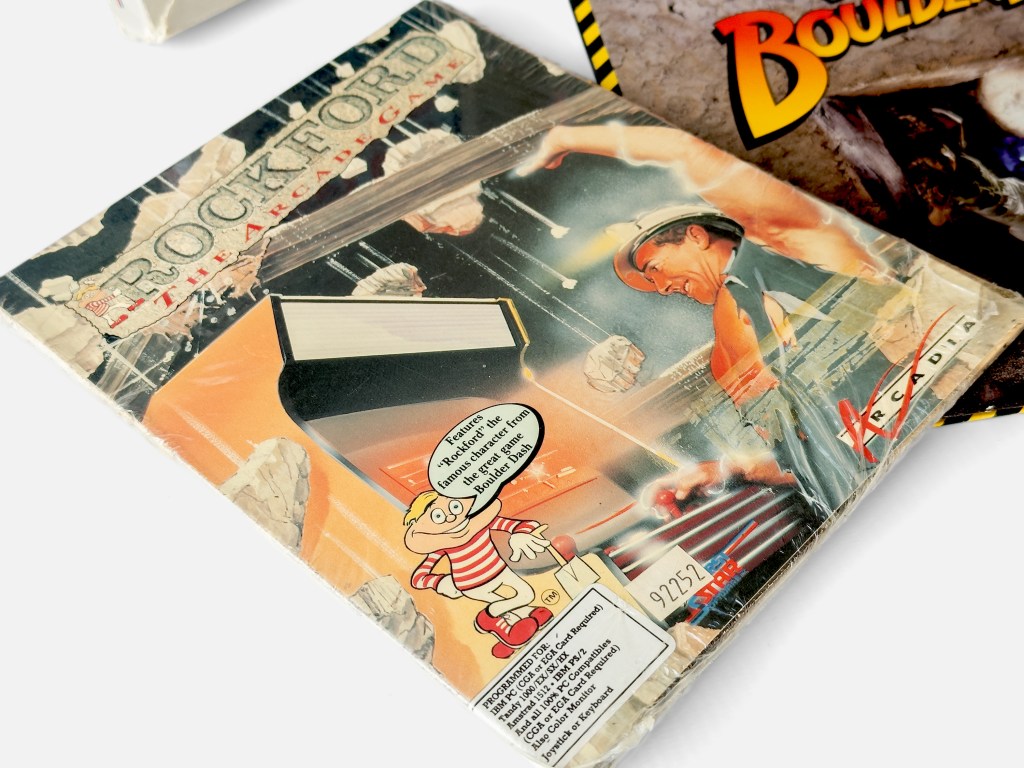
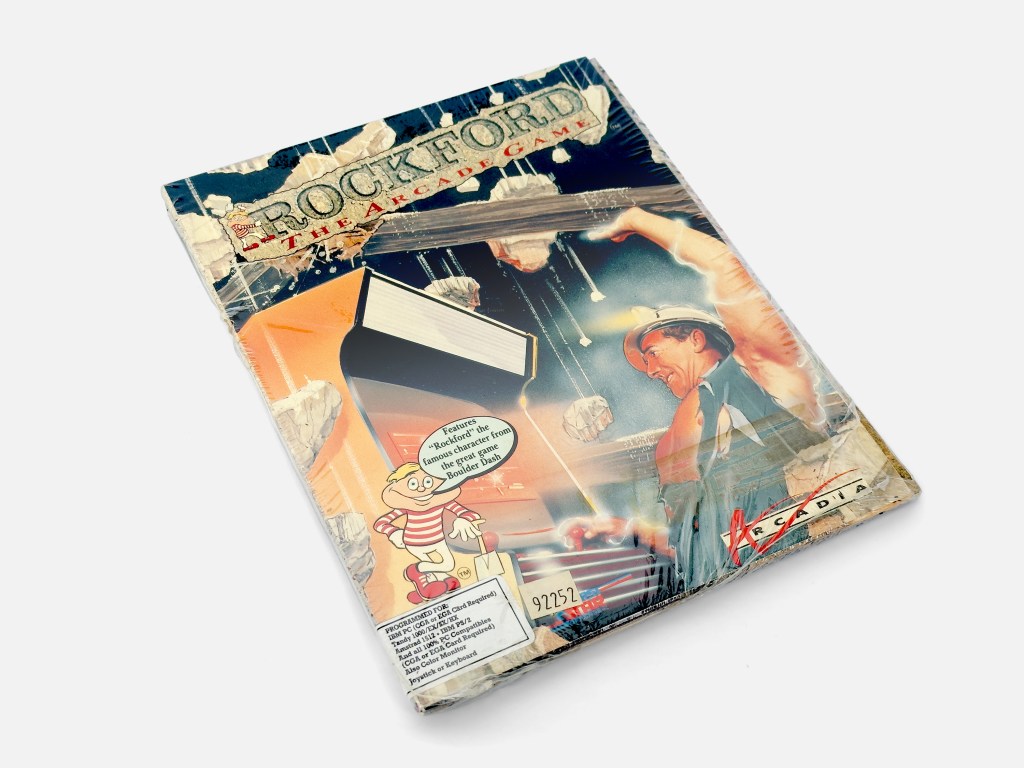
But Rockford wasn’t down for the count just yet. In the late ’80s, the game got a second wind in the UK, where Mastertronic, a major software publisher, set its sights on the arcade market under the Arcadia Systems name. In 1988, Arcadia developed Rockford, a Boulder Dash spin-off for the arcade, and brought it to platforms like the Amiga, Atari ST, Commodore 64, and IBM PC, keeping the Boulder Dash formula brand alive for a bit longer.
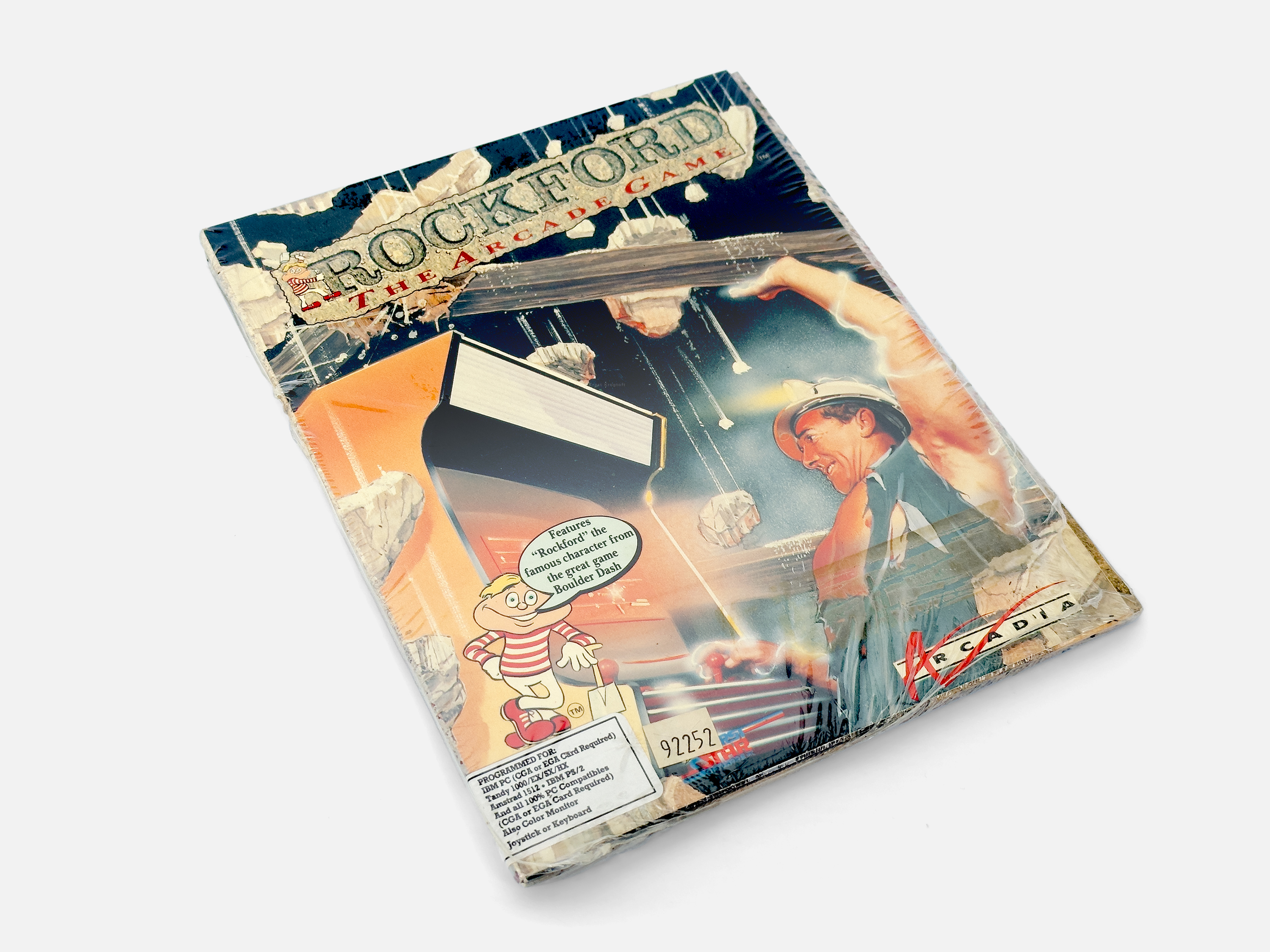
Rockford, The Arcade Game, a Boulder Dash spin-off by Arcadia, was released in 1988.
Though Boulder Dash became a cornerstone of ’80s gaming, its creators took different paths. Liepa, after working on the puzzles for Rockford in 1987, quietly stepped away from the gaming industry. His impact, however, had already been cemented in gaming history. Gray, on the other hand, stayed in the game, quite literally. In 1985, he founded Gray Matter Inc., which grew to become one of the largest game development companies in Canada. In the 2000s, Gray continued his journey in the industry, holding the title of Vice President and Executive Producer at none other than Electronic Arts. Not too shabby for someone who started with an idea about rocks and jewels.
Boulder Dash’s legacy could have ended in the ‘80s but in 2016, First Star Software celebrated the game’s 30th anniversary by releasing an updated version for smartphones, tablets, PCs, and Macs. The updated edition featured polished graphics and sound, but to be honest… it didn’t quite capture the heart and soul of the original 1984 release. Maybe it’s the nostalgia talking, but there’s something about those retro pixels that just feels right. Call me biased, but I’d argue the original still looks better. Some things, like Rockford, are best left untouched.
The original Boulder Dash can still be enjoyed today, on the Internet Archives Atari 8-bit Library
For the IBM PC people, you can play the 1988 spin-off Rockford here.
 Retro365
Thanks for this nice homage to one of the greatest games of its time! As a volunteer editor in the German Wikipedia, I’d love to include some of your images and excerpts of the Videos in our article (https://de.wikipedia.org/wiki/Boulder_Dash), but as German copyright law is quite strict and doesn’t allow anything like “Fair Use”, I’d need the approval of both you as the content creator and BBG Entertainmant to publish these images and clips under a free license (preferably the “CC-BY-SA” Creative Commons license). Would this be ok for you? Then I would also approach BBG Entertainment and ask for their permission. Thanks, Thomas (User:TKarcher in Wikipedia)
Hi Thomas
Thanks for your kind words.
I’m all for sharing:) and you have my full approval to use any of the images and excerpts from the video found in the article (https://retro365.blog/2024/10/26/boulder-dash-starring-rockford-wait-who/)
All the best
Ernst