When Ken and Roberta Williams had completed the development of their first game, Mystery House, in the summer of 1980, Roberta took out a full-page ad in Micro 6502 magazine. To offer more than just Mystery House, two other titles, Skeet Shoot and Trap Shoot, both developed by a third party, were also featured. While Skeet Shoot and Trap Shoot quickly faded away, the company’s portfolio rapidly expanded with a multitude of new titles added over the next couple of years, one of the titles being Sabotage by Mark Allen.
While the majority of action titles released for home computers in the early ’80s either were inspired by or directly copied the very popular video arcade games of the time, Mark Allen’s title Sabotage, released by On-Line Systems in 1981, was an exception. Allen had the year before cloned Taito’s 1978 hugely successful video arcade game Space Invaders with his first game Stellar Invaders.
Apple Computer, was in the early lifecycle of its Apple II home computer, instrumental in the publication of both games and utilities for the machine. Allen’s Stellar Invaders was picked up by the company and published in its Entertainment Series in 1980 as Apple Stellar Invaders. The game played extremely well and proved that Allen was very capable of doing fast-paced action games with animations and sounds on the 1 MHz Apple II computer.


Allen’s Space Invader clone, Apple Stellar Invaders, published in 1980 in Apple Computer’s Entertainment Series
Allen had been programming since his college days while attending the University of California, San Diego, where he had, along with Richard Gleaves, in 1978, been developing a 6502 interpreter for the Pascal programming language. The interpreter later became the foundation for Apple Pascal. For Gleaves and Allen’s contribution, they were both offered jobs at the Apple headquarters up in Cupertino by Bill Atkinson of Apple Computer but they both declined and wanted to stay in southern California.
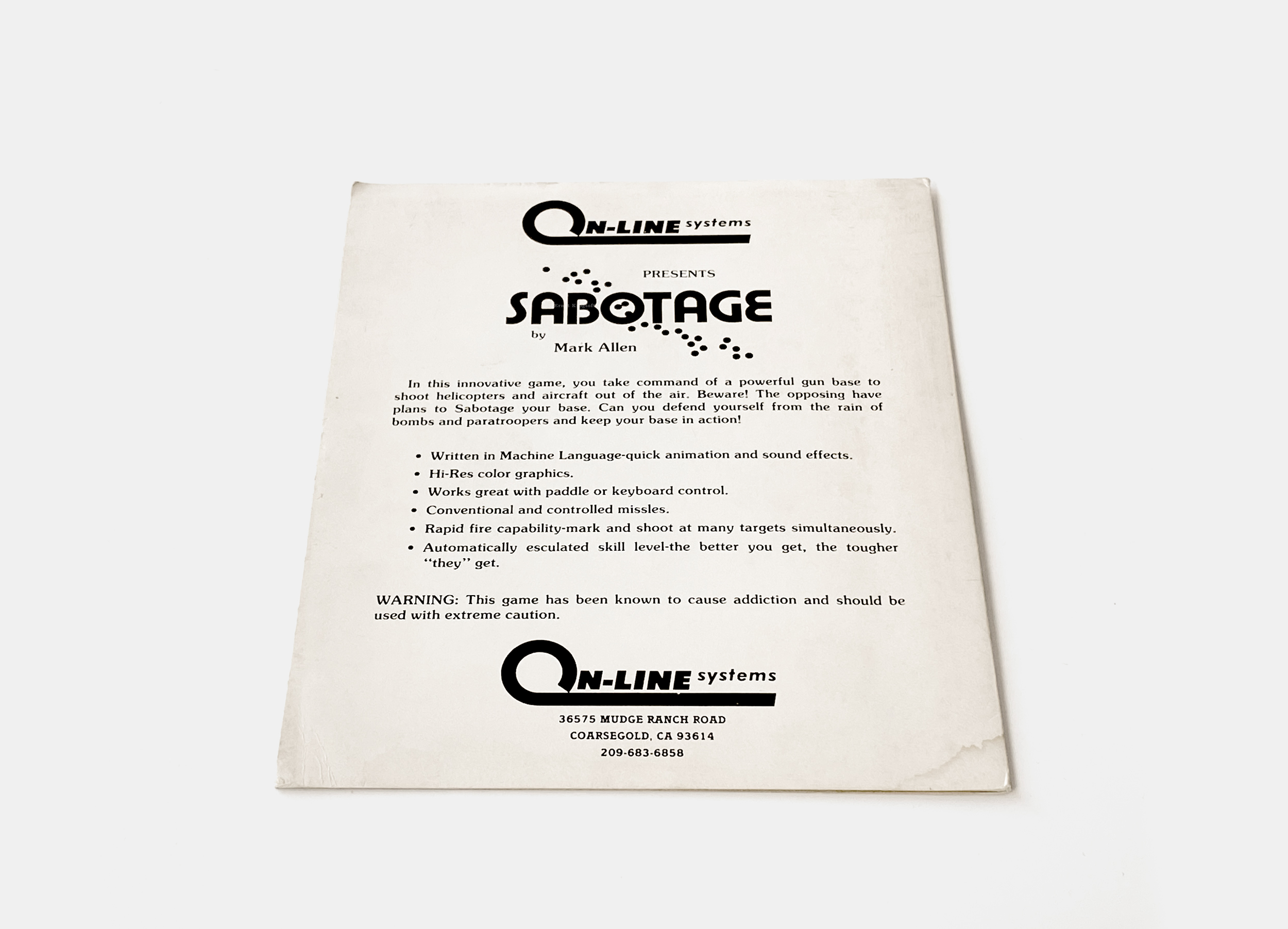
After Stellar Invaders, and with an abundance of video arcade clones on the personal computer market, Allen went with an original idea for his next game, Sabotage. While some core aspects, like shooting incoming waves of intruders, were similar to those of Space Invaders, Sabotage was a distinctive game. Allen fixed the player to the bottom center of the screen in a gun tower, directing fire at incoming helicopters, paratroopers, and bombers.
Helicopters would send down paratroopers that had to be shot before reaching the ground, or they would start infiltrating and ultimately sabotaging the gun tower. When a paratrooper had landed, the only way to kill him was to shoot down an incoming paratrooper (his parachute) in the air, making him fall and crush the one already on the ground. The scoring system was also original, with unlimited shots, but instead of spraying the sky full of bullets, each bullet would subtract a point from your score, making you strive to aim and shoot only where it mattered (which was pretty hard). Points for shot-down helicopters, paratroopers, bombers, etc. all added to your score.
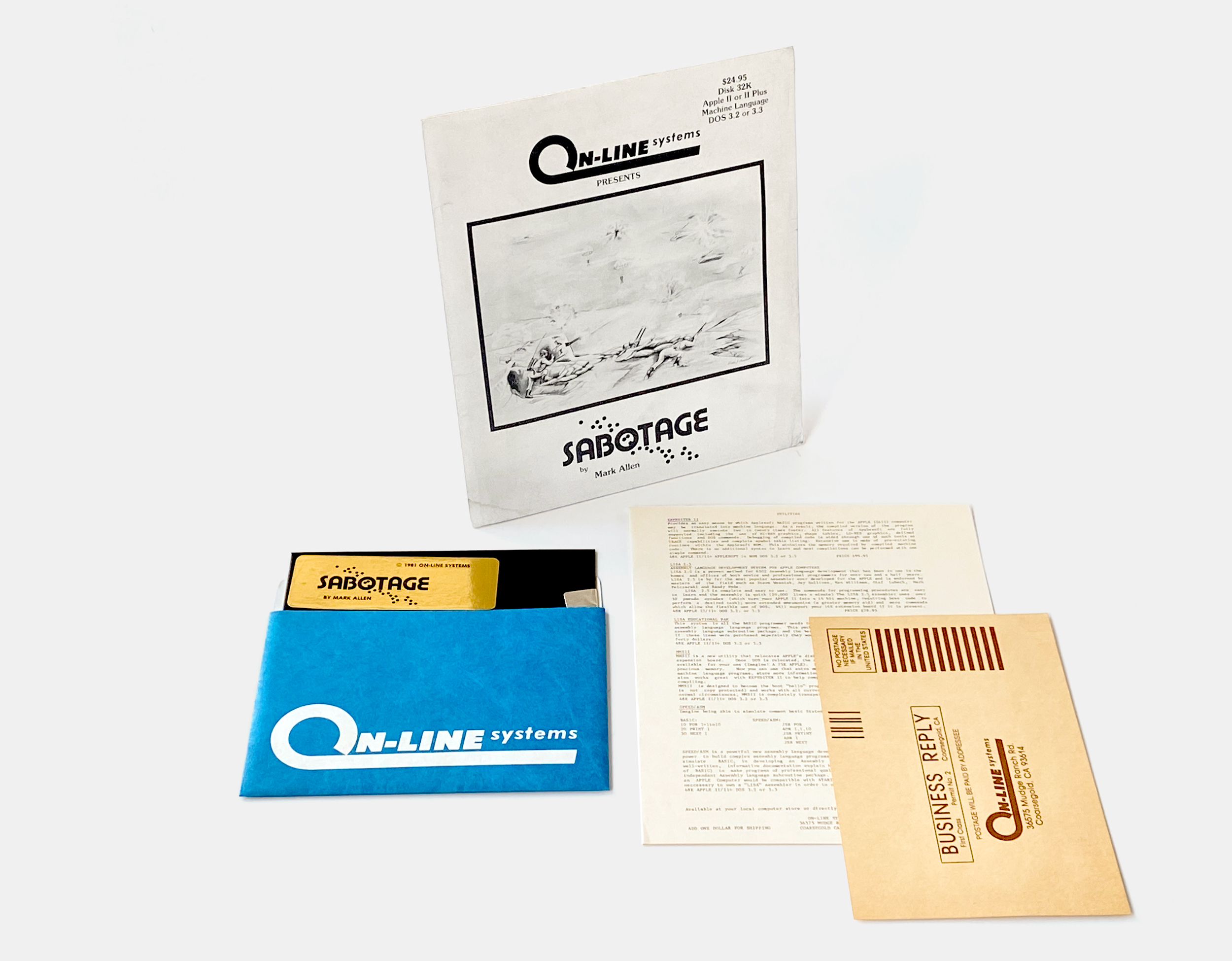
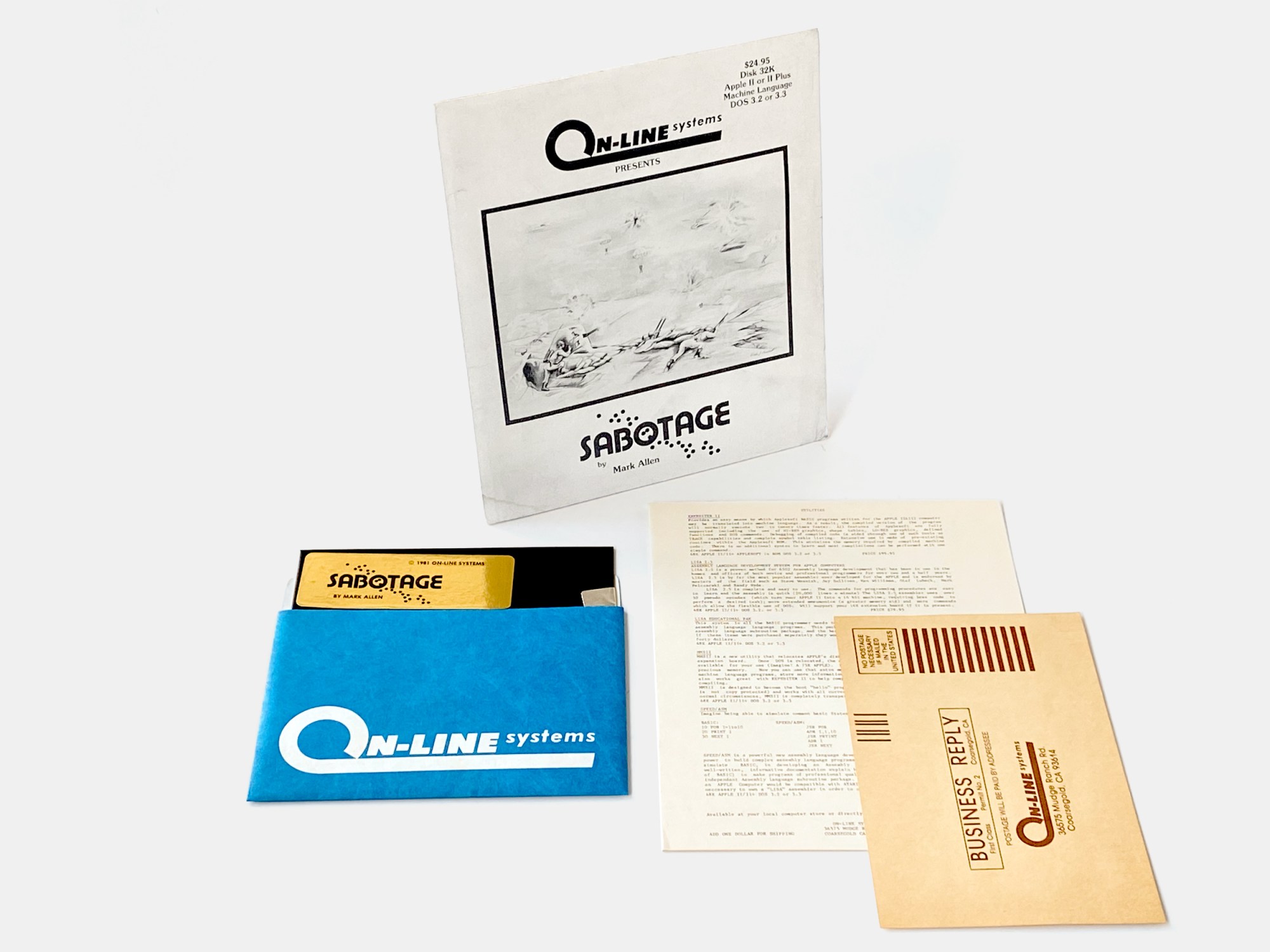
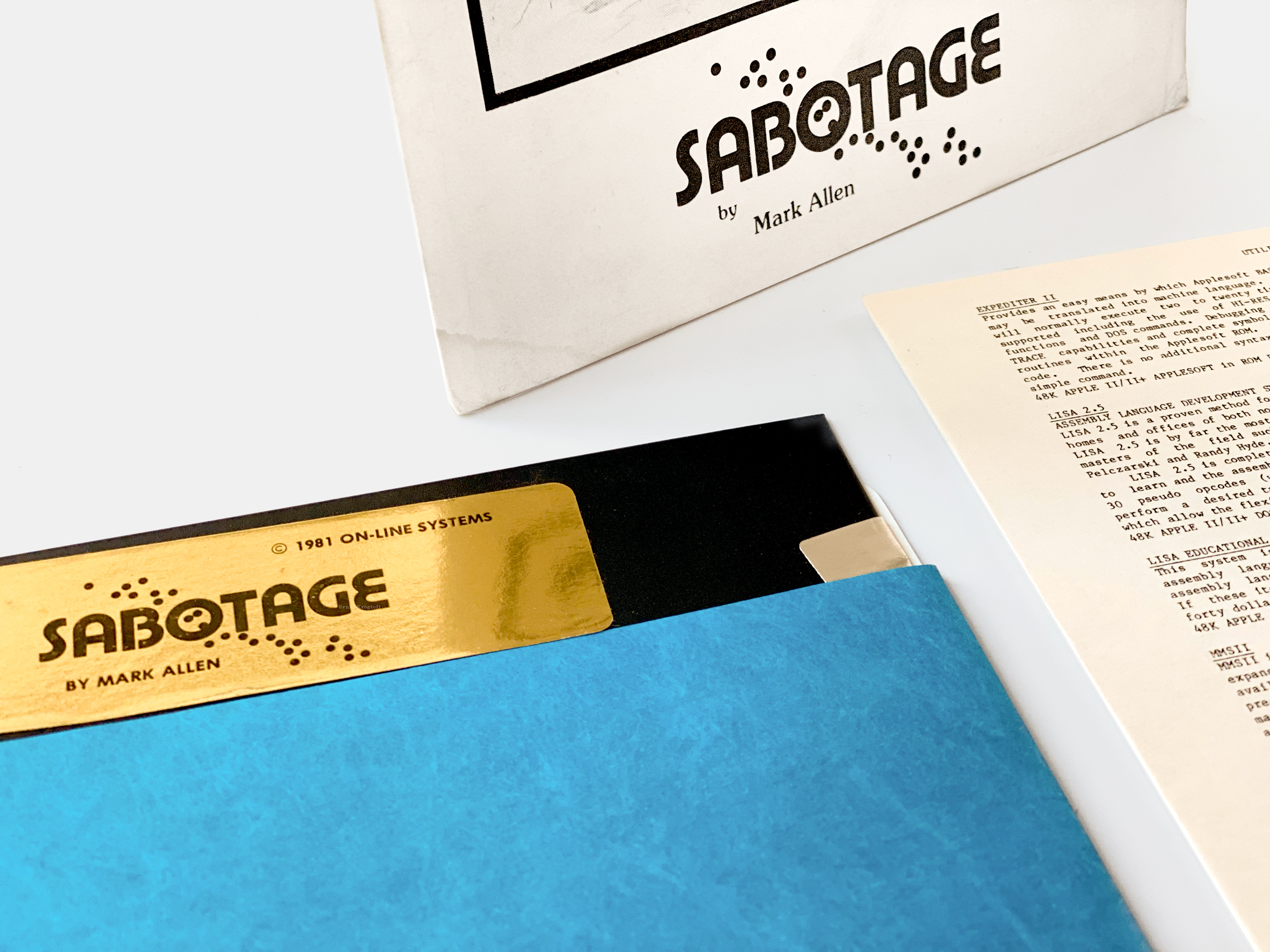
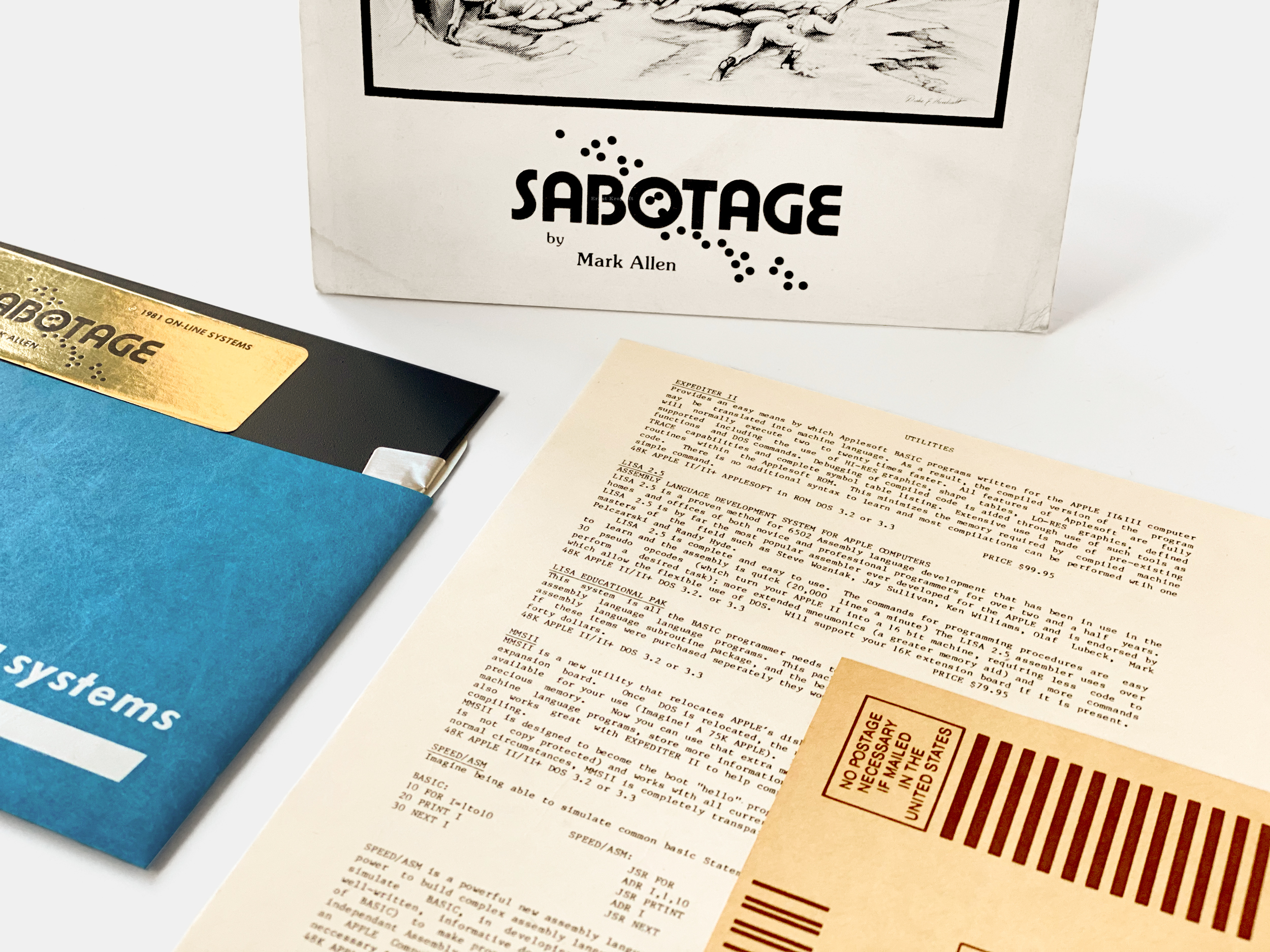
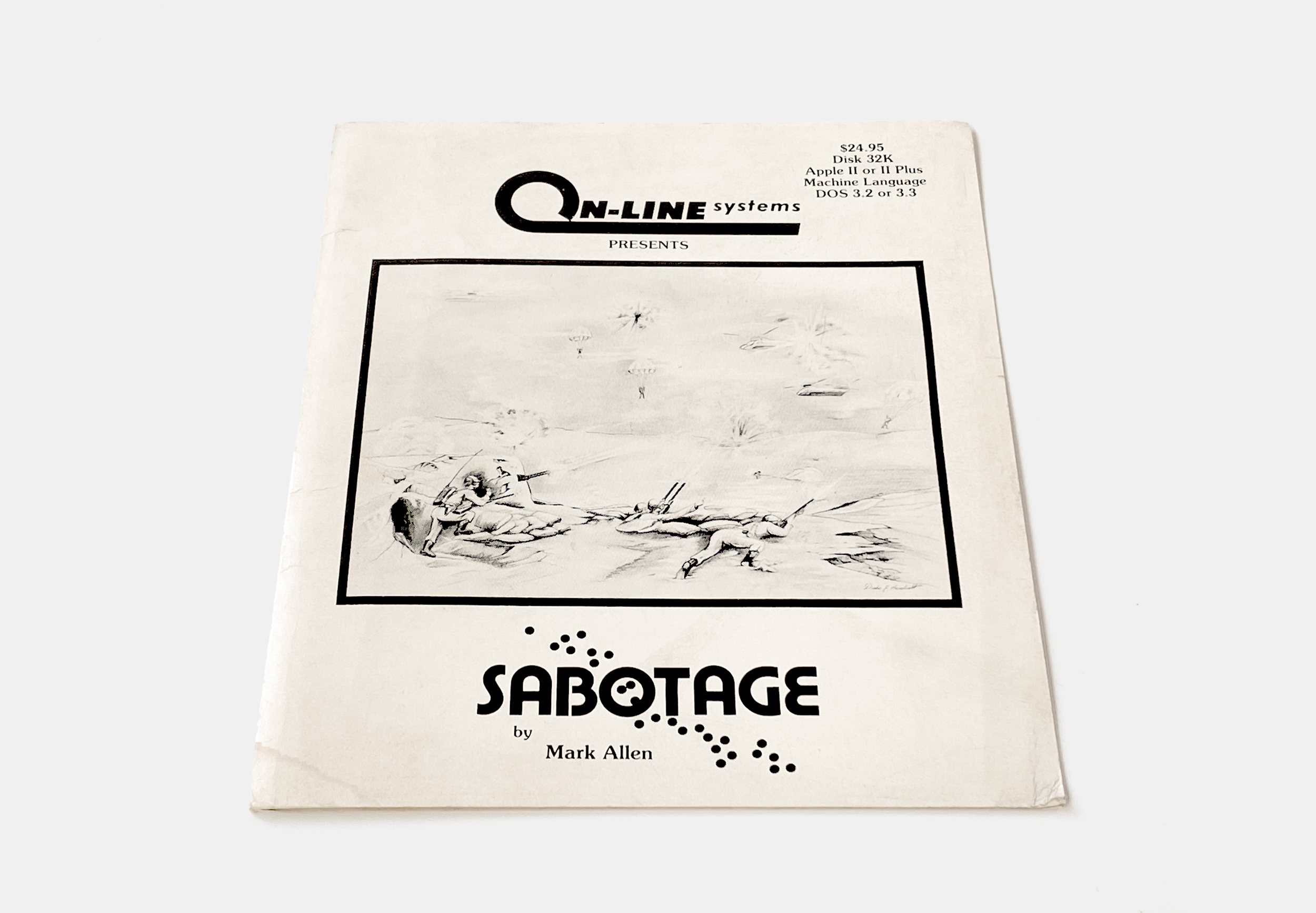
Sabotage by Mark Allen, published by On-Line Systems for the Apple II in 1981. It was later announced under the SierraVision label, Sierra On-Line’s short-lived arcade labe,l but I’m not sure if it ever materialized
Sabotage was clearly designed to be played using the paddles (or an analog joystick), which gave an intuitive and responsive experience. Using the keyboard was quite challenging since directing the gun would happen in fixed degrees and required you to tap the keys until reaching the desired angle
Sabotage, when released in the summer of 1981 for the Apple II, was well received and ended up at 16th place on Softtalk’s Reader’s Poll Top-Thirty chart of 1981. Like most early titles, Sabotage was vastly pirated and became one of the most-played games on the Apple II in 1981. It went on to become a classic with its original fast-paced gameplay, animations, and sounds, spawning numerous clones in the years to come. Including one of the most important early x86 titles, Paratrooper created by Greg Kuperberg and published by Orion Software.
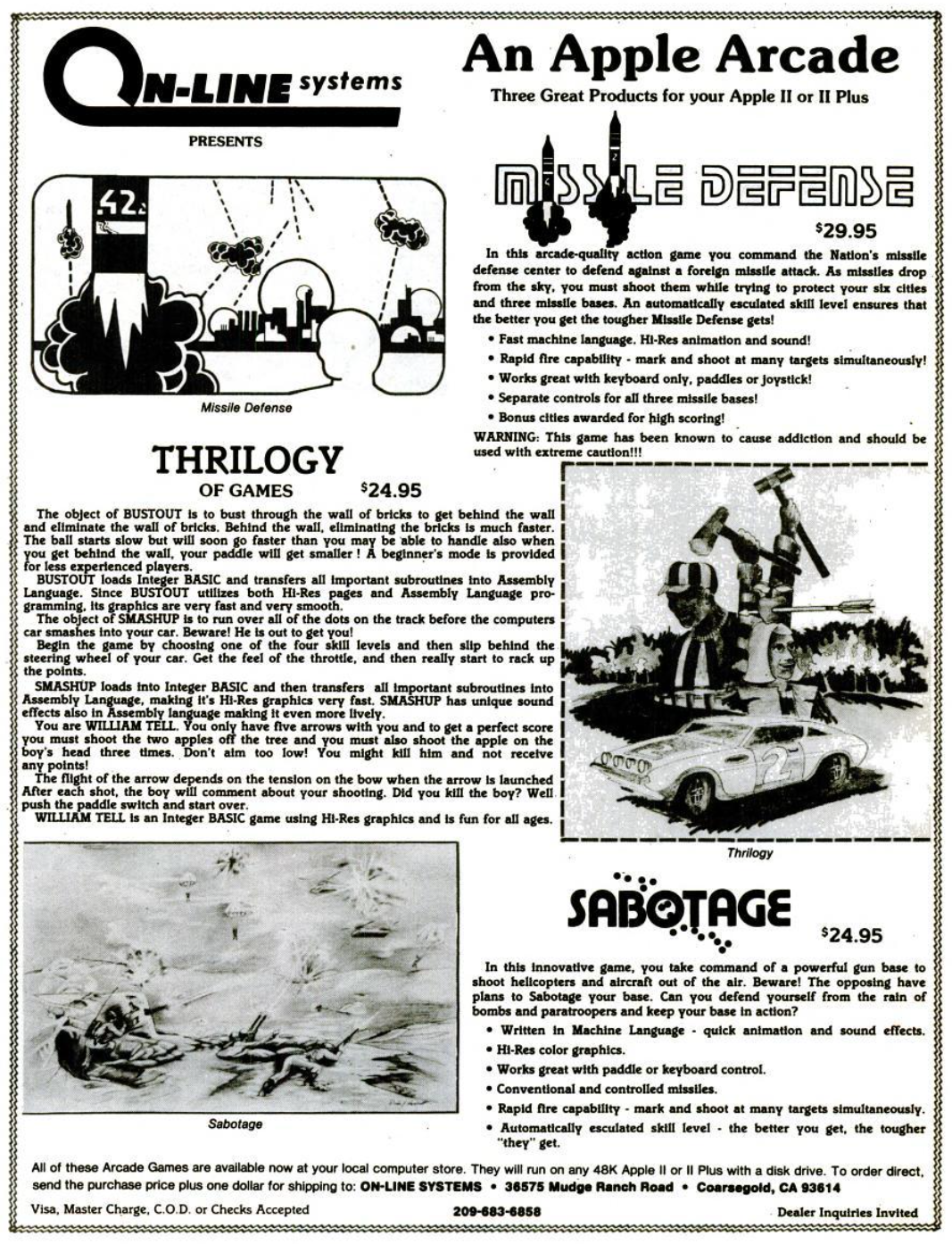
On-Line Systems’ three-title advertisement, including Mark Allen’s Sabotage, from the 1981 May issue of InfoWorld
Sabotage was only released for the Apple II but it was unofficially converted to the Atari 8-bit by a guy who called himself Hacker Cracker, who impressively, without access to the source code, recreated the entire game from a dumped-out Hex table. While the Apple II and Atari 8-bit used the same MOS 6502 processor the two machines worked vastly differently, and a lot of work was needed for the Atari to imitate the Apple II. When completed it was distributed freely on The Edge Of Reality BBS as S.A.B.O.T.A.G.E.
Allen went on to write Pest Patrol, another action title for the Apple II computer published by Sierra On-Line’s short-lived arcade label, SierraVision.
Sources: Hackers by Steven Levy, Wikipedia, Moby Games, The UCSD P-SYSTEM Museum, InfoWorld, Softtalk, Player/Missile Podcast…
 Retro365
Also likely an inspiration for the Atari 2600 game “Commando Raid”, https://voxodyssey.com/atari-2600-commando-raid
Yes, You’re right, Commando Raid (which I’ve never played) looks like it does use the same core principle.