
Among Sierra On-Line’s successful worlds of fairytale knights, space janitors, and lounge lizards the company renowned for its adventure games had yet to explore the realms of established folklore and mythical tales. This would change when a talented female writer, despite lacking prior experience in computer game development, crafted and designed two adventure games both becoming praised and loved for their storytelling, craftsmanship, and charm.
It all started with a phone call in 1988 when Ken and Roberta Williams‘ Sierra On-Line, looking for new talent, reached out to renowned Australian artist and illustrator Peter Ledger, who at the time was living in the Los Angeles area with his wife Christy Marx.
A decade earlier, in 1979, Ledger had briefly met Marx at a Comic Art Professional Society meeting in Los Angeles. Their connection was immediate, but at the time, Ledger was married and preparing to return to his home country of Australia. Two years passed before Ledger, in 1981, returned to the US to work on a project funded by George Lucas and film producer Gary Kurtz. Ledger met up with Marx and yet again sparks flew. After spending a year together in Los Angeles, the couple briefly relocated to Australia to finalize Ledger’s divorce before returning to the United States. In 1983, where they tied the knot on the picturesque Catalina Island, off the coast of Los Angeles.
While Marx, through the ’80s had success with her screenwriting on G.I. Joe: A Real American Hero and as head writer and developer on Jem and the Holograms, the 1988 Hollywood writers strike, the longest in Hollywood history, left Marx without work for months on end. One day she unexpectedly received a phone call from Sierra On-Line, looking for artists to join the ever-growing family in Oakhurst at the foothills of the Sierra Nevada mountains, asking for Ledger. Marx, down on luck with work, used the unforeseen opportunity and asked if Sierra also needed any writers.
While Sierra’s and especially Roberta’s adventure games were highly successful, numerous people over the years had asked for the company to do games based on legends and tales, one of the requests being the story of King Arthur. Such a game would either require a designer with comprehensive knowledge on the subject or somebody with a passion for fantasy, who was willing to do extensive research, a tall order in small-town Oakhurst.
When Ken and Roberta met with Ledger and Marx they were familiar with Ledger’s artistic skills but only then learned of Marx’s extensive scripting background for cartoons and television. The combination of Ledger’s artistic mastery, Marx’s scripting expertise, and the couple’s shared interest in lore and myths proved to be a perfect match. As a result, they both were hired to develop a game that tapped into the timeless realm of classic Arthurian mythology.
In 1988 the couple moved to Oakhurst but as neither Marx nor Ledger knew anything about computers or games for that matter, the couple spent the first months playing adventure games, talking to programmers, and artists, and conducting extensive research on the subject.
The couple slowly started working on their first game, Conquest of Camelot with the subtitle The Search for the Grail, with Marx as director and writer and Ledger as the artist. While Marx quickly adapted to the new medium, learning as she went along, her husband found it, as an artist, frustrating to work with the very limited number of colors and the relatively low resolution available at the time. Despite the constraints of working with only 16 colors, Ledger adapted and transformed Marx’s narrative into visually stunning sceneries with meticulous attention to detail.
The game was completed in late 1989 and went on sale for the IBM PC in early 1990. Every aspect of the game, its story, and dialogue would come to reflect the extensive research done by both Marx and Ledger. Marx’s keen passion for fantasy, and her ability to convey emotion and portray strong female characters, would resonate throughout the game.
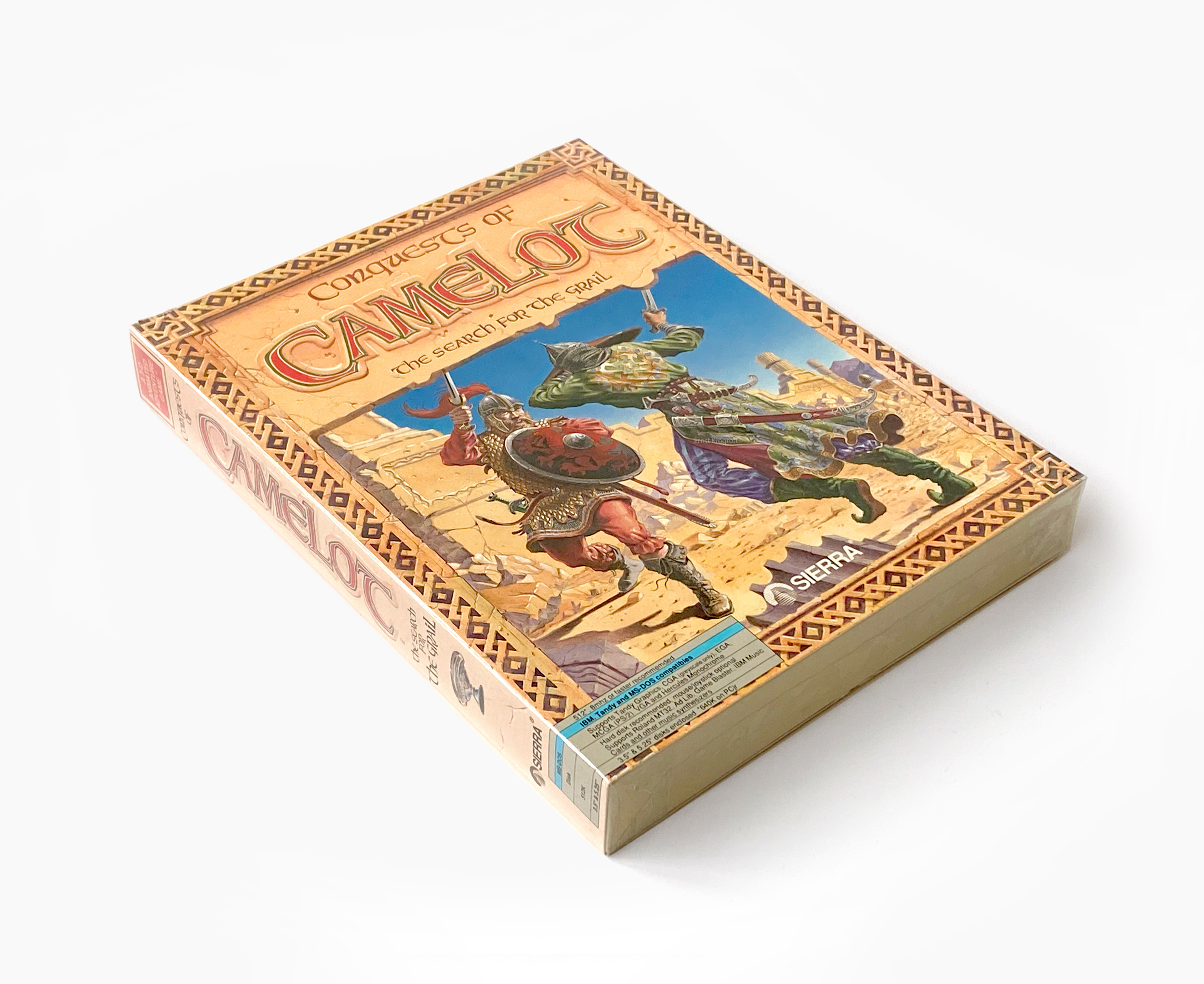
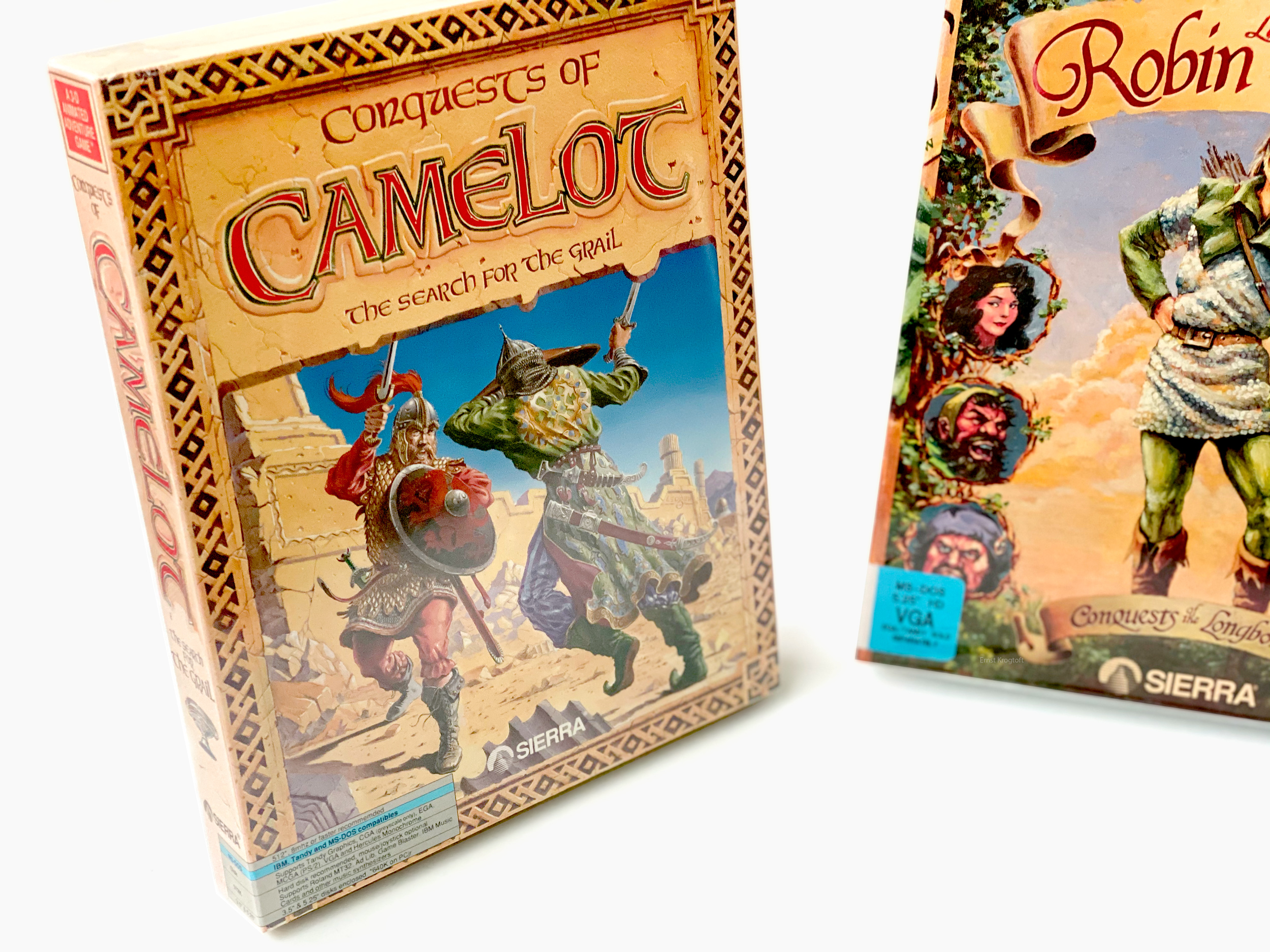
Christy Marx’s debut game, Conquest of Camelot: The Search for the Grail, was released for the IBM PC in early 1990. Later that year, it also became available for the Commodore Amiga and the Atari ST.
The visually stunning in-game EGA artwork and packaging illustrations were skillfully created by Peter Ledger, Marx’s husband
Conquest of the Camelot won the prestigious title of “Best Computer Adventure Game” in 1990, by Video Games and Computer Entertainment Magazine but while being praised for its craftsmanship, compelling storyline, undeniable charm, and visually appealing graphics it arrived at a time when the market was shifting, leaving both 16 color EGA graphics and text parser-driven games behind. The release of Sierra’s highly anticipated fifth installment in its flagship series, King’s Quest V: Absence Makes the Heart Go Yonder! introduced a new era of point-and-click adventure games, now in visually stunning 256-color VGA. Also, competition heightened that year, with Lucasfilm Games unveiling its masterpieces The Secret of Monkey Island and Loom.
Despite facing the challenge of navigating a changing and competitive market, Conquest of Camelot successfully managed to carve out its own small spot.
While Marx, throughout the development, slowly adapted from her earlier linear writings to the non-linear approach a game required, Ledger had a harder time. Computers as a tool for creating art never managed to capture his heart and he left Sierra after the completion of Conquest of Camelot. He continued to do traditional art while still producing artwork for a few games in the coming years, among them Blue Force by former Police Quest designer Jim Walls.
Marx stayed with Sierra and started writing her next game using essentially the same formula as earlier. Initially, she wanted to touch on Greek mythology but with several Robin Hood movies in the making, it made sense to tap into the renewed interest the movies were generating.
The Legend of Robin Hood: Conquest of the Longbow was successfully developed and published in 1991. Utilizing the latest iteration of the Sierra Creative Interpreter (SCI1), the game incorporated a point-and-click interface and delivered enhanced graphics and sound. The upgrade allowed it to compete not only with Sierra’s own successful titles but also with the growing number of games being released by other developers.

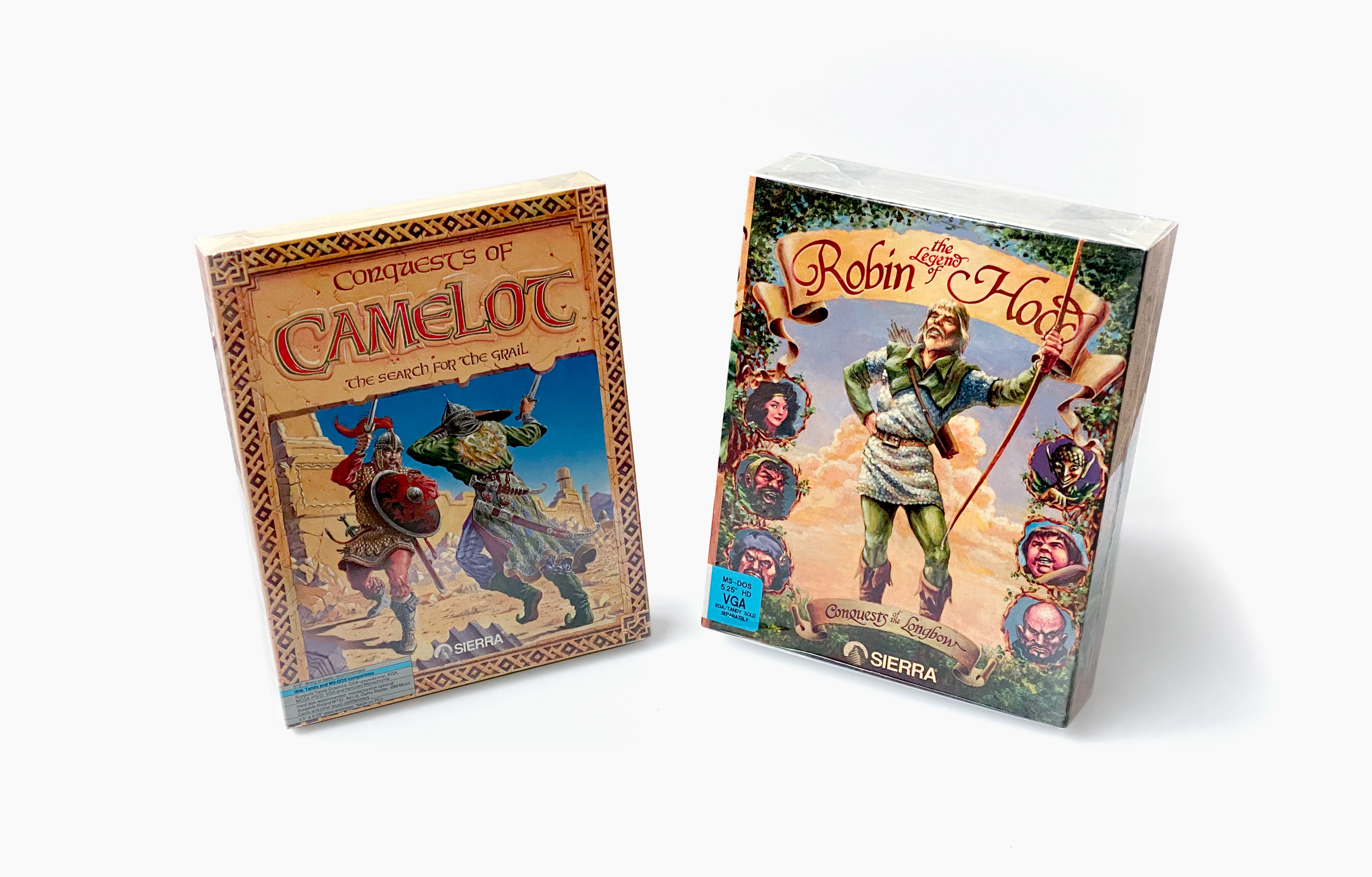
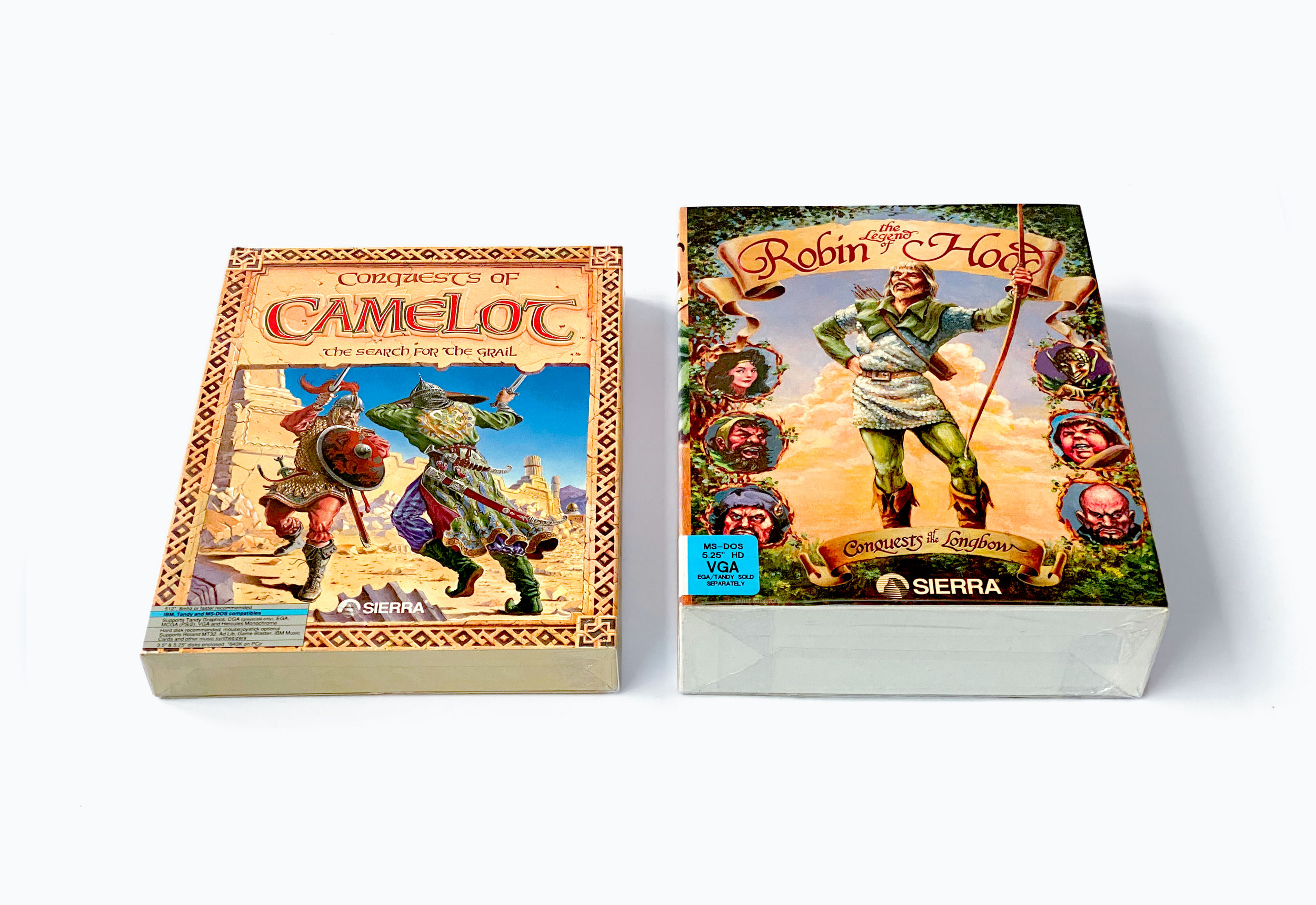
Robin Hood: Conquest of the Longbow, Marx’s followup to Camelot. Released for the IBM PC in 1991. Amiga owners could enjoy it the following year
Similar to Camelot, Conquest of the Longbow deviated from the conventional adventure game formula by diminishing the traditional inventory-based puzzles in favor of solving riddles, exploring, and completing different tasks.
Conquest of the Longbow received highly favorable reviews and won the title of “Best Adventure Game of the Year” by several respected magazines.
Following the completion of Conquest of the Longbow, Marx made the decision to depart from Sierra and game development, opting to return to her previous pursuits in television and animation writing. Marx and Ledger continued to live in Oakhurst, enjoying the creative life and beautiful scenery, Tragically, their lives took a devastating turn on a fateful November night in 1994 when Ledger’s car was broadsided by a semitrailer instantly killing him. Ledger was laid to rest in the serene confines of Oakhurst’s small, historic cemetery.
Marx returned to Sierra in the latter part of the ’90s and joined the design team working on what would become an unreleased Babylon 5 space combat simulator. Here she met writer Randy Littlejohn to whom she later married. At this point in time the Sierra everybody loved was merely a ghost of its former self, gone were Ken and Roberta Williams and the company was heading through tumultuous reconstruction phases. In 1998 Marx, for the final time, left the company where she had started her game writing career a decade earlier. She continued to write and later returned to game design.

Conquest of the Camelot – The Search for the Grail
Centerfold scan from Sierra News Magazine Vol. 3 No. 1 – Spring 1990 – 10th Anniversary
The poster can be downloaded in 600 dpi here – 130MB PNG


 Retro365
