
As I continue my journey through some of the early computer role-playing titles in my collection, I thought I’d write a few words on Stuart Smith’s Ali Baba and the Forty Thieves. CRPG Addict has a great article on his blog, which you should definitely check out.
In the late ’70s and early ’80s, the computer roleplaying game was still trying to find its footing. Most titles borrowed heavily from the conventions, and often the cosmology, of Gary Gygax and Dave Arneson’s Dungeons & Dragons, the tabletop phenomenon that had captivated a generation of fantasy enthusiasts. These early efforts largely followed the same template: dungeon crawls, fantasy races, leveling mechanics, and the pursuit of treasure and experience points. While effective, they were rarely original.
Then, in 1980, a quiet disruption came from an unlikely source. Stuart Smith, an independent programmer working on the Apple II, released Fracas, a low-resolution fantasy RPG that introduced a handful of unusual innovations. Though the game lacked a defined ending and featured only rudimentary graphics, it offered something most of its contemporaries did not, with its cooperative, turn-based multiplayer and a narrative infused with global mythological influences. Developed under Smith’s own label, Computersmiths, Fracas hinted at what computer RPGs could become when unshackled from strict adherence to D&D mechanics.
Fracas was a combat-oriented turn-based RPG but had no end goal and could be enjoyed as a simple journey of exploration and combat. If you were playing with friends, a specific end goal like earning a specific amount of Ducats, reaching a determined skill level, or slaying a specific monster could be agreed upon before starting. Up to eight friends could play a scenario together, with each having a character. The multi-player mechanics allowed for both competitive and cooperative play.
Later that same year, Smith partnered with the California-based publisher Quality Software to re-release Fracas to a wider audience.
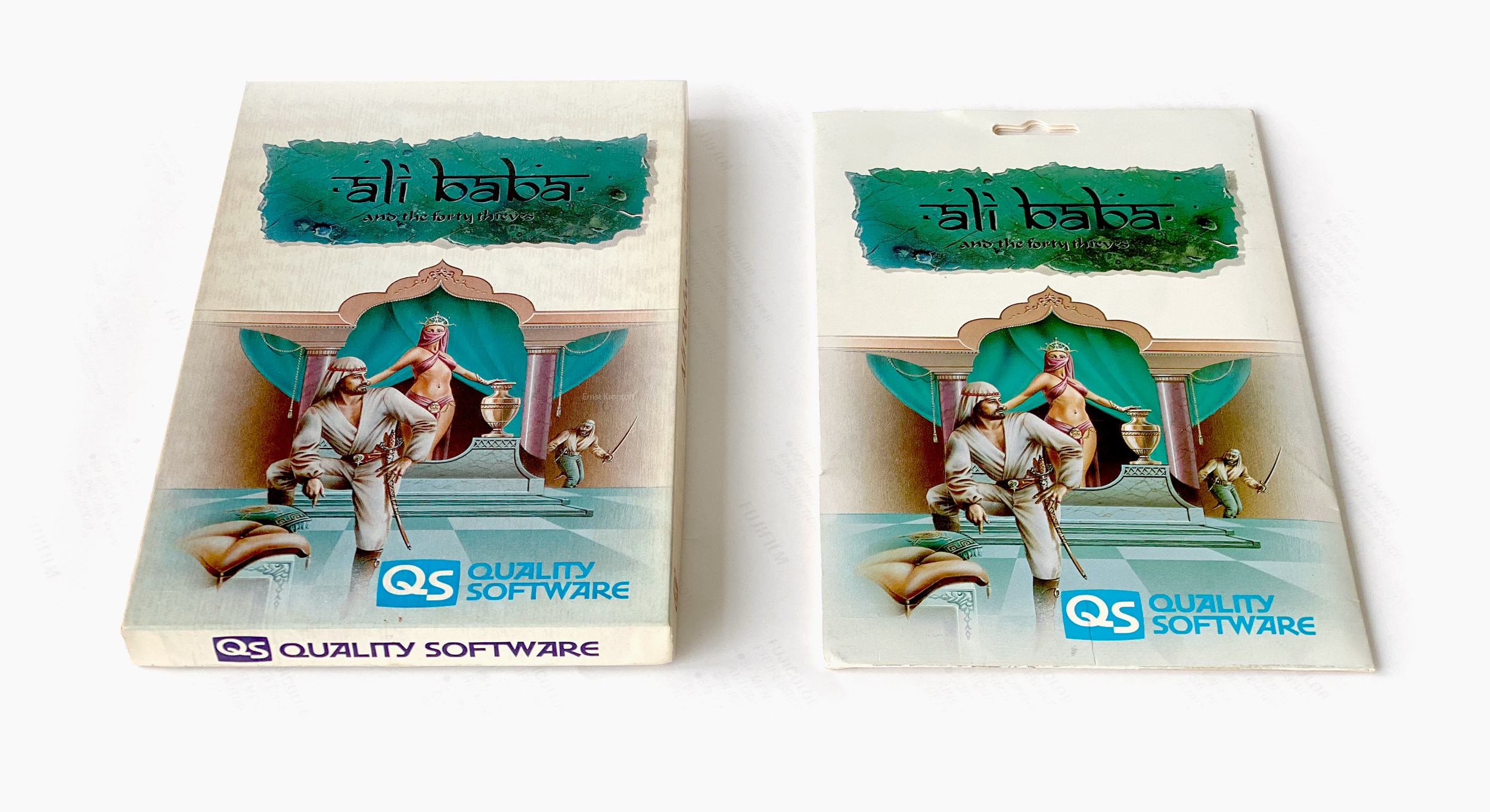
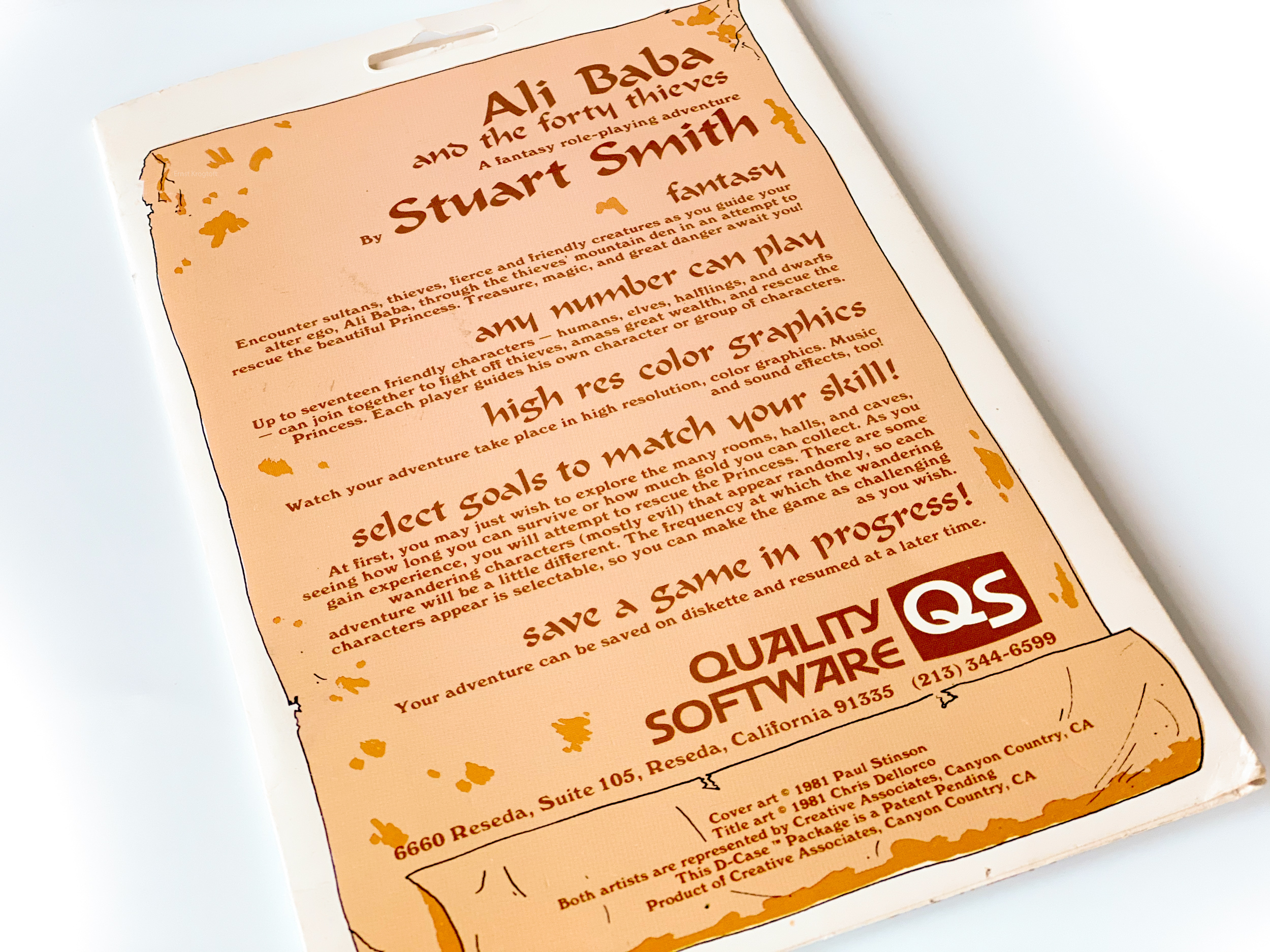
In 1981, Quality Software published Smith’s second title, Ali Baba and the Forty Thieves. Built upon the same underlying engine as Fracas, it was a notable step forward in both design and ambition. The Arabian Nights theme came at the suggestion of Smith’s wife, though in practice, the game’s setting was a playful pastiche, blending characters from the classic One Thousand and One Nights tales with figures from Greek and Roman mythology and even elements borrowed from Tolkien’s Lord of the Rings.
The result was a game both eclectic and imaginative. Players could choose from classic fantasy races, humans, elves, dwarfs, and halflings, and join together in a hot-seat multiplayer mode supporting up to 17 players. These players could form a single united party or splinter into smaller groups, embarking on parallel or conflicting quests within the same world. The game supported all four joystick ports of the Atari 8-bit computer line, allowing for simultaneous play without constant swapping of sweaty controllers, a small but thoughtful technical detail that enhanced the social aspect of the experience.
Ali Baba and the Forty Thieves also distinguished itself in tone. While most early RPGs presented hostile worlds filled with enemies and traps, Smith’s design included friendly creatures and allies who could assist players in their journey. Trading posts dotted the map, allowing for the purchase of armor and weapons. And in a nod to the original folk tale, a player who managed to rescue Princess Buddir, the Sultan’s daughter, without engaging in combat received a personal on-screen message of congratulations from Smith himself.
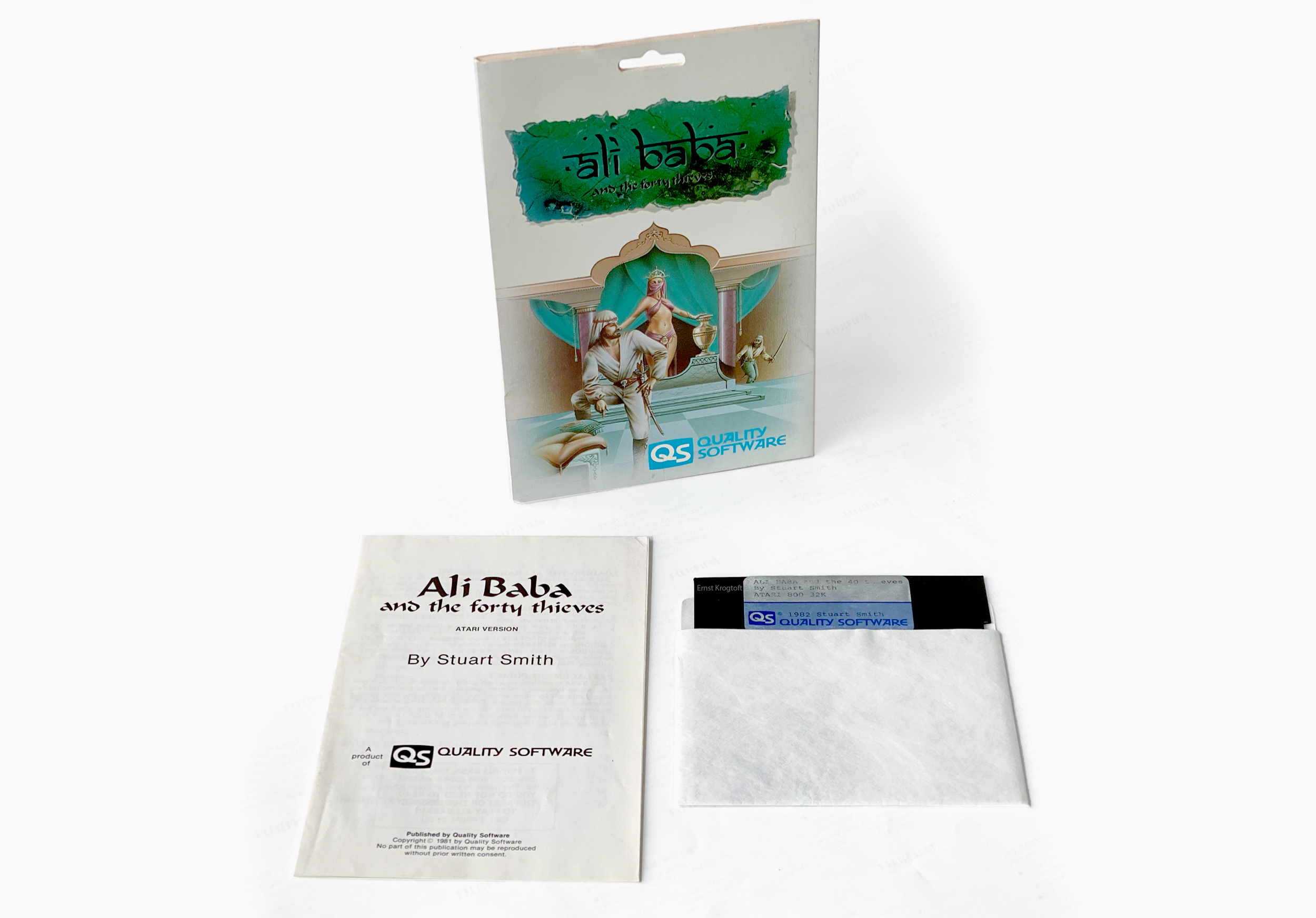
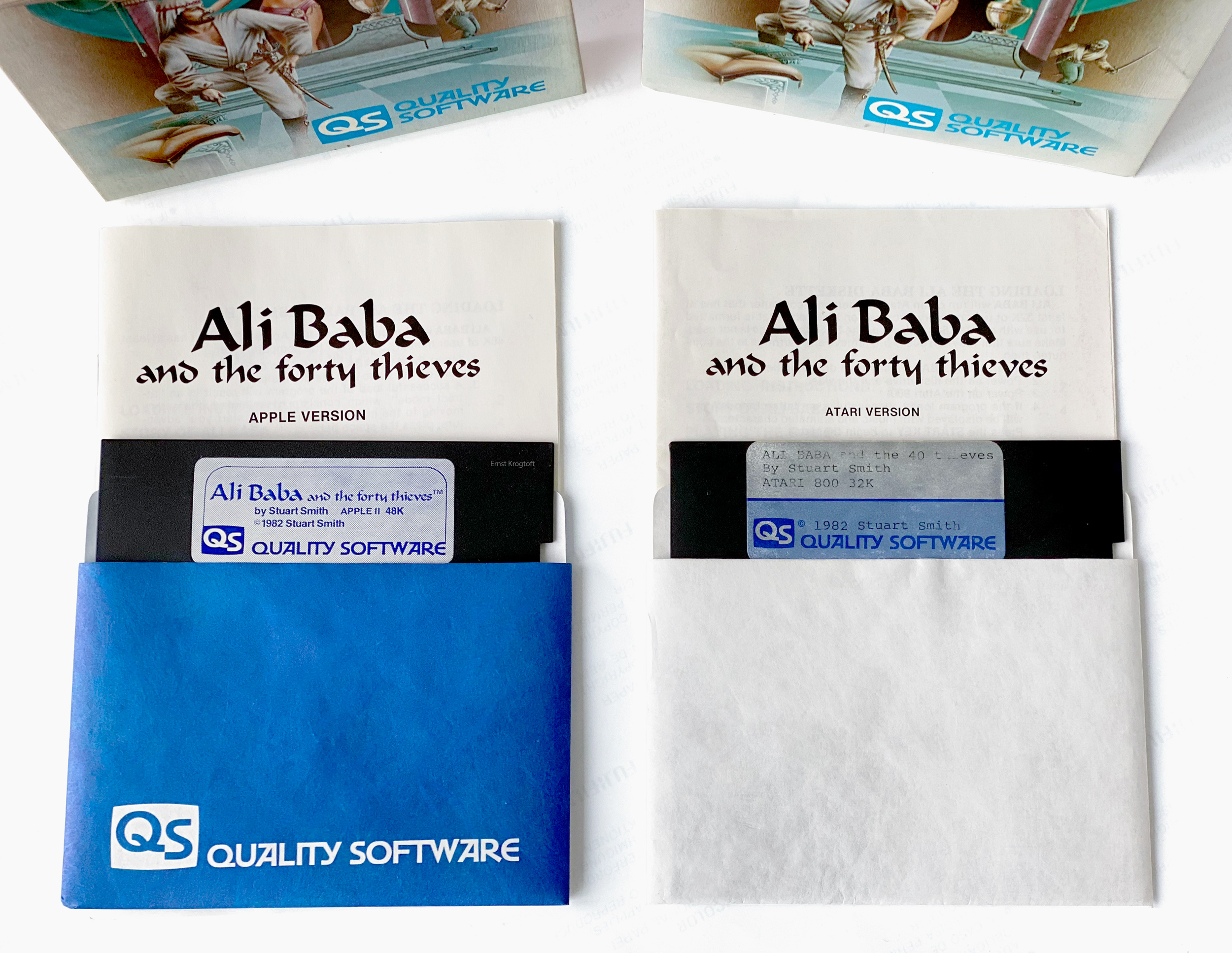
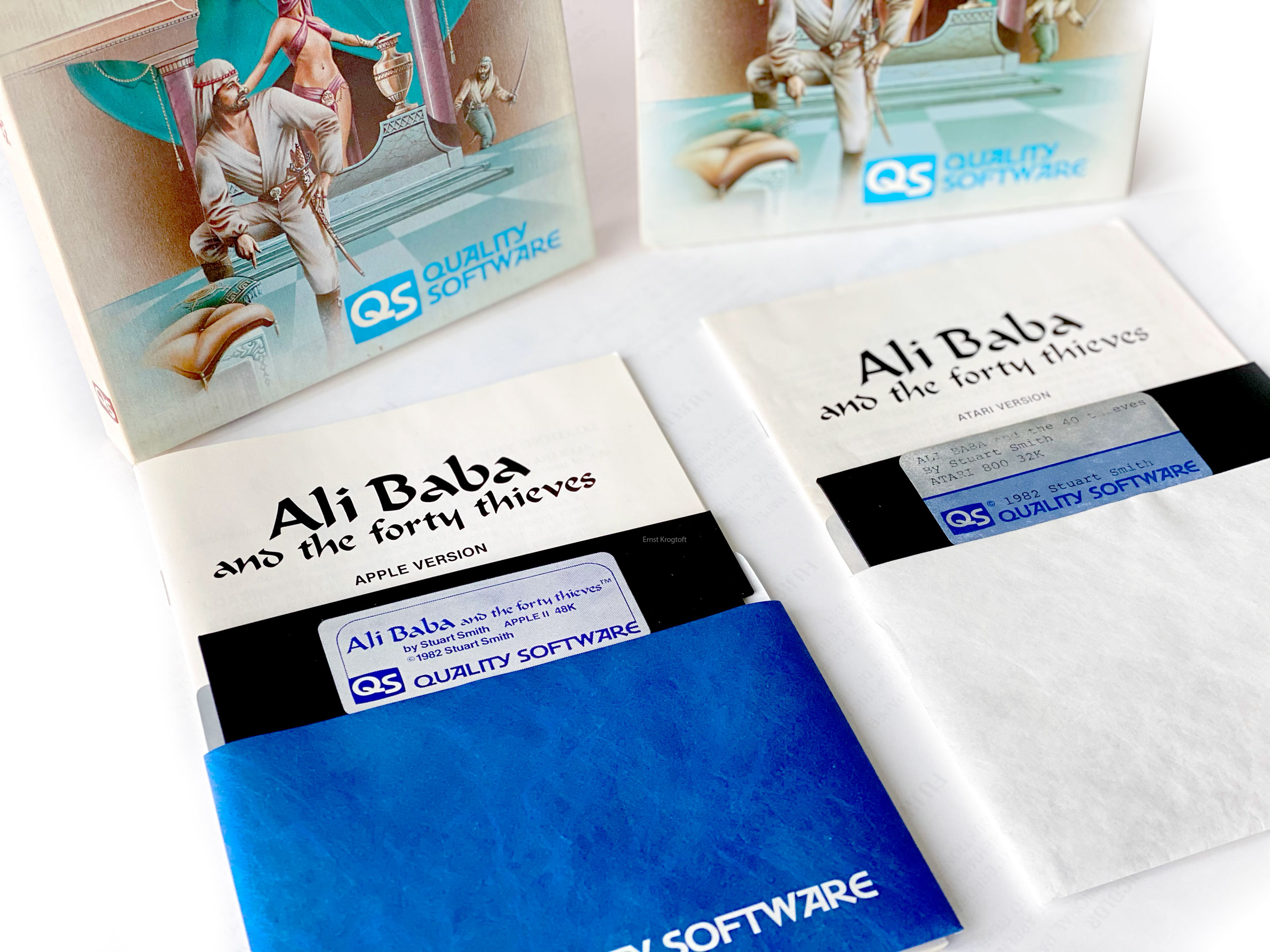
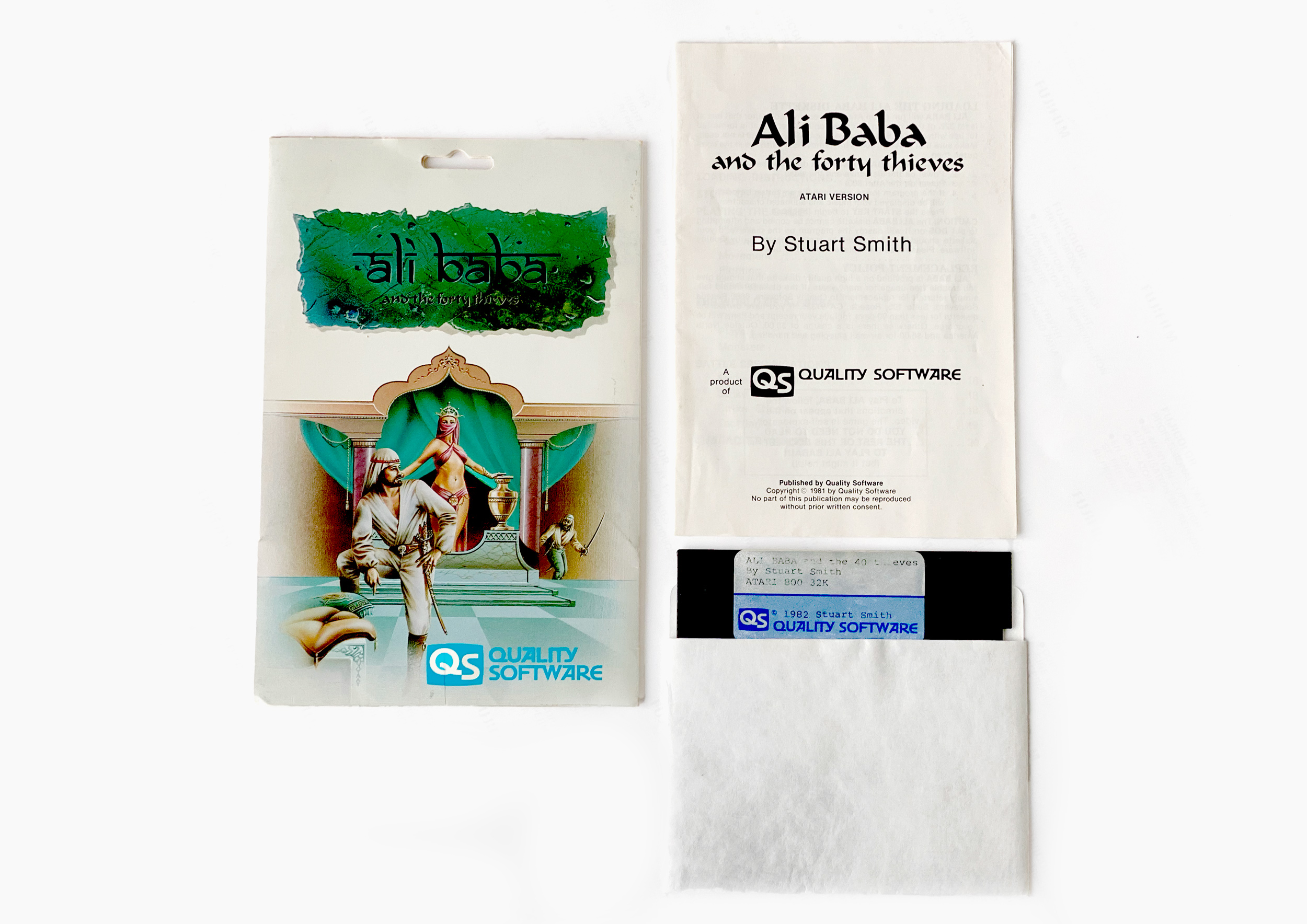
Ali Baba and the Forty Thieves was released in 1981 for the Atari 800 home computer.
The game required an external peripheral disk drive and 32kb of memory.
While Ali Baba and the Forty Thieves mostly played as a typical overhead dungeon crawler of the time, it had some interesting elements, like turn-based cooperative multiplayer gameplay and a storyline and environment inspired by various mythological elements. Travel through the thieves’ mountain lair in order to rescue and free the Sultan’s daughter.
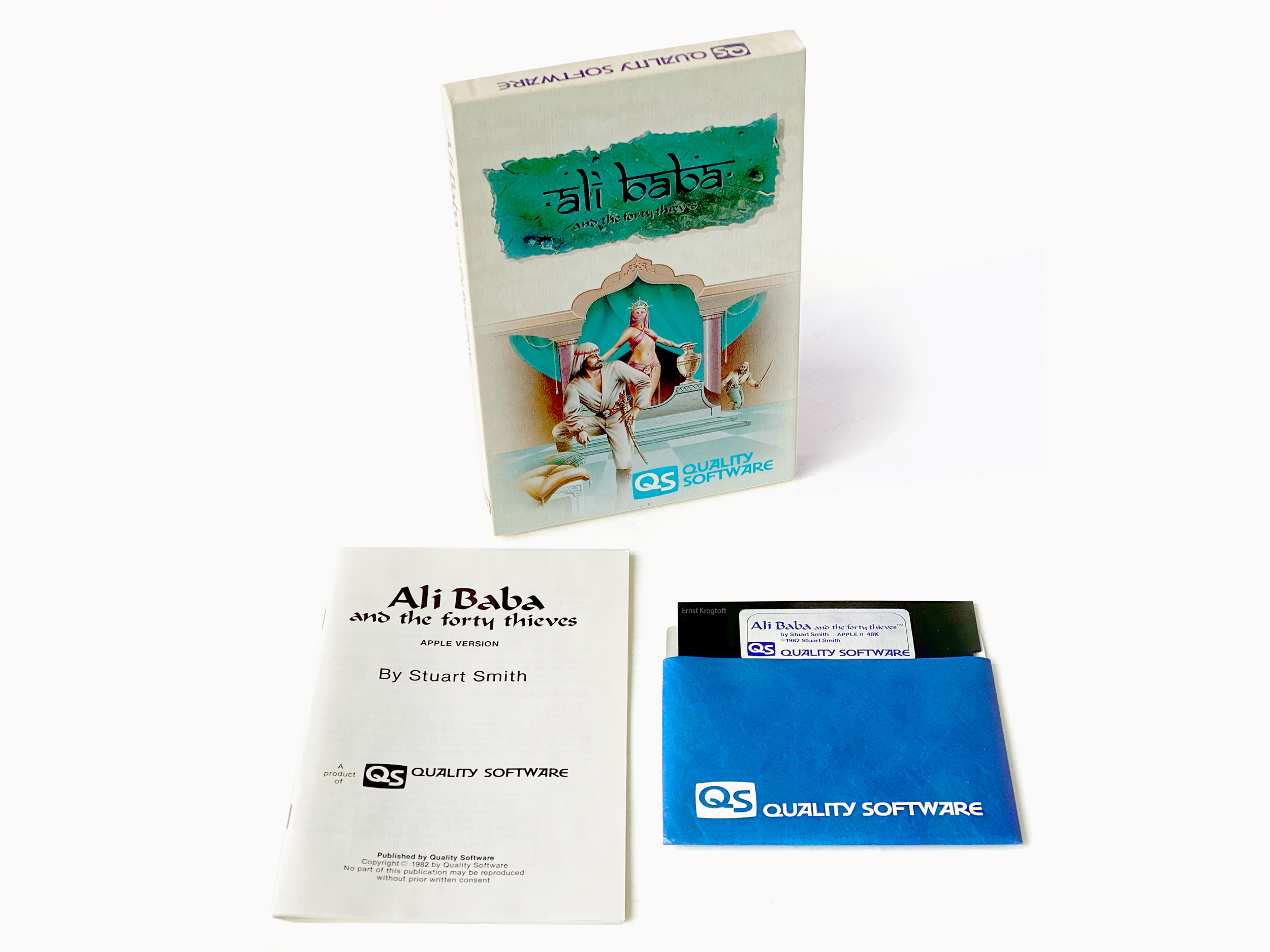
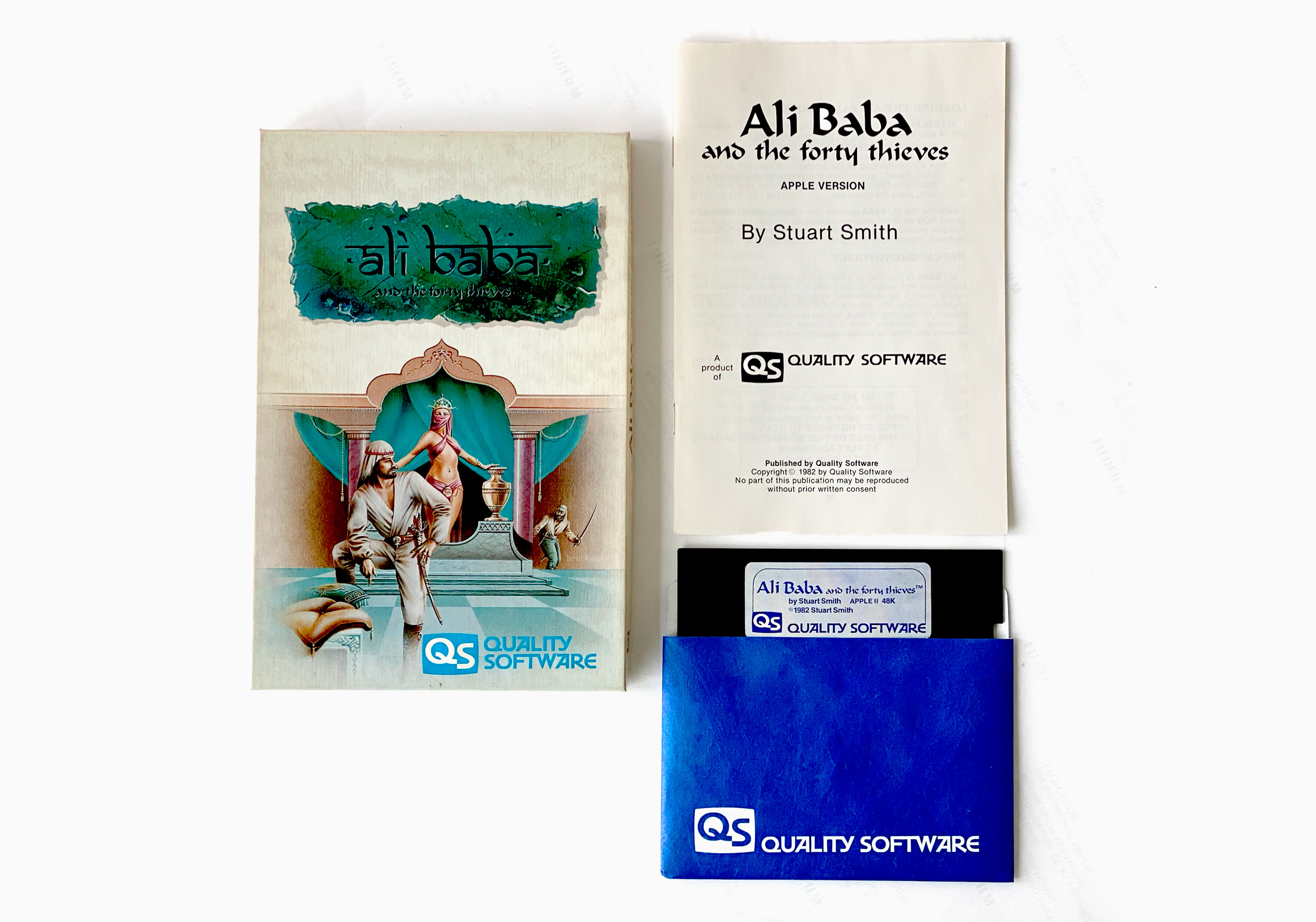
The game was ported to the Apple II and released in 1982. The Apple II version was unlike its Atari counterpart released in a box.
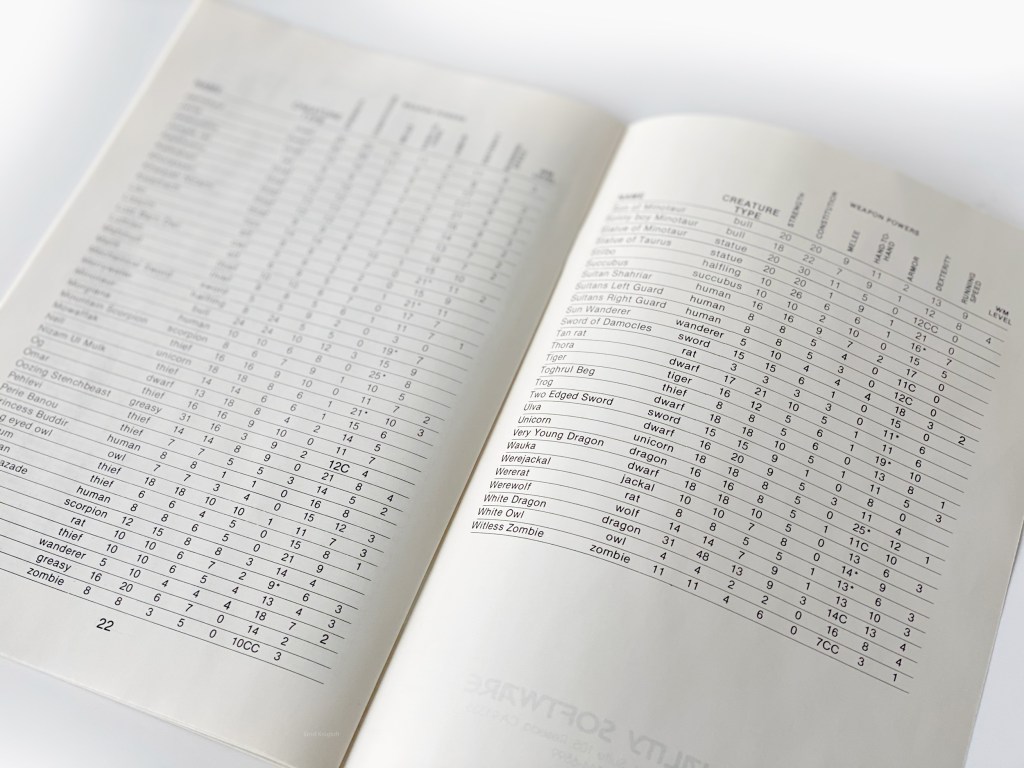
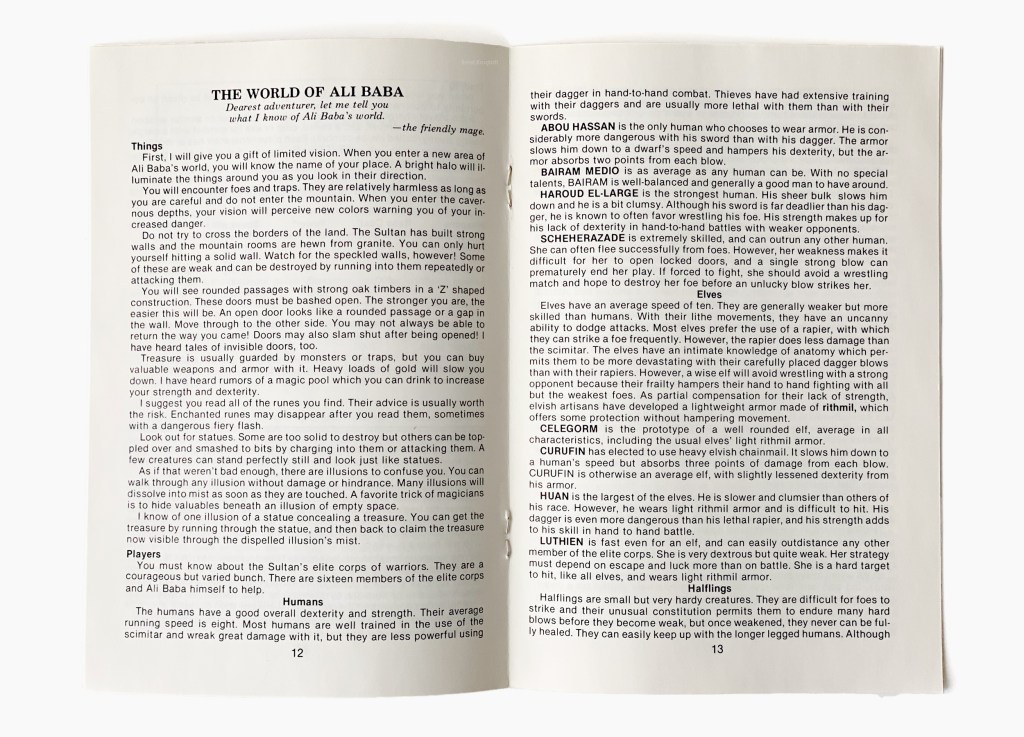
The game came with an elaborate manual, giving insight into the story, the different characters, and creatures you might encounter on your journey.
Despite its innovations, Ali Baba and the Forty Thieves, like many early RPGs, would soon be overshadowed by the emergence of more commercially dominant franchises. Richard Garriott’s Ultima series and Sir-Tech’s Wizardry quickly defined the genre’s commercial and technical standards, leaving many earlier or alternative RPGs behind in the collective memory.
Smith pressed on. In 1983, he released The Return of Heracles, again through Quality Software. Built on the same foundational engine, the game was set in the mythological world of ancient Greece. Players could take on the roles of various legendary heroes, Heracles included, and complete tasks drawn directly from classical sources. Like Ali Baba, the game allowed for cooperative multiplayer, nonlinear quest progression, and an emphasis on exploration over combat. In contrast to the increasingly complex character statistics and rule systems favored by contemporary RPGs, Smith’s work focused on accessibility, mythic storytelling, and inclusivity.
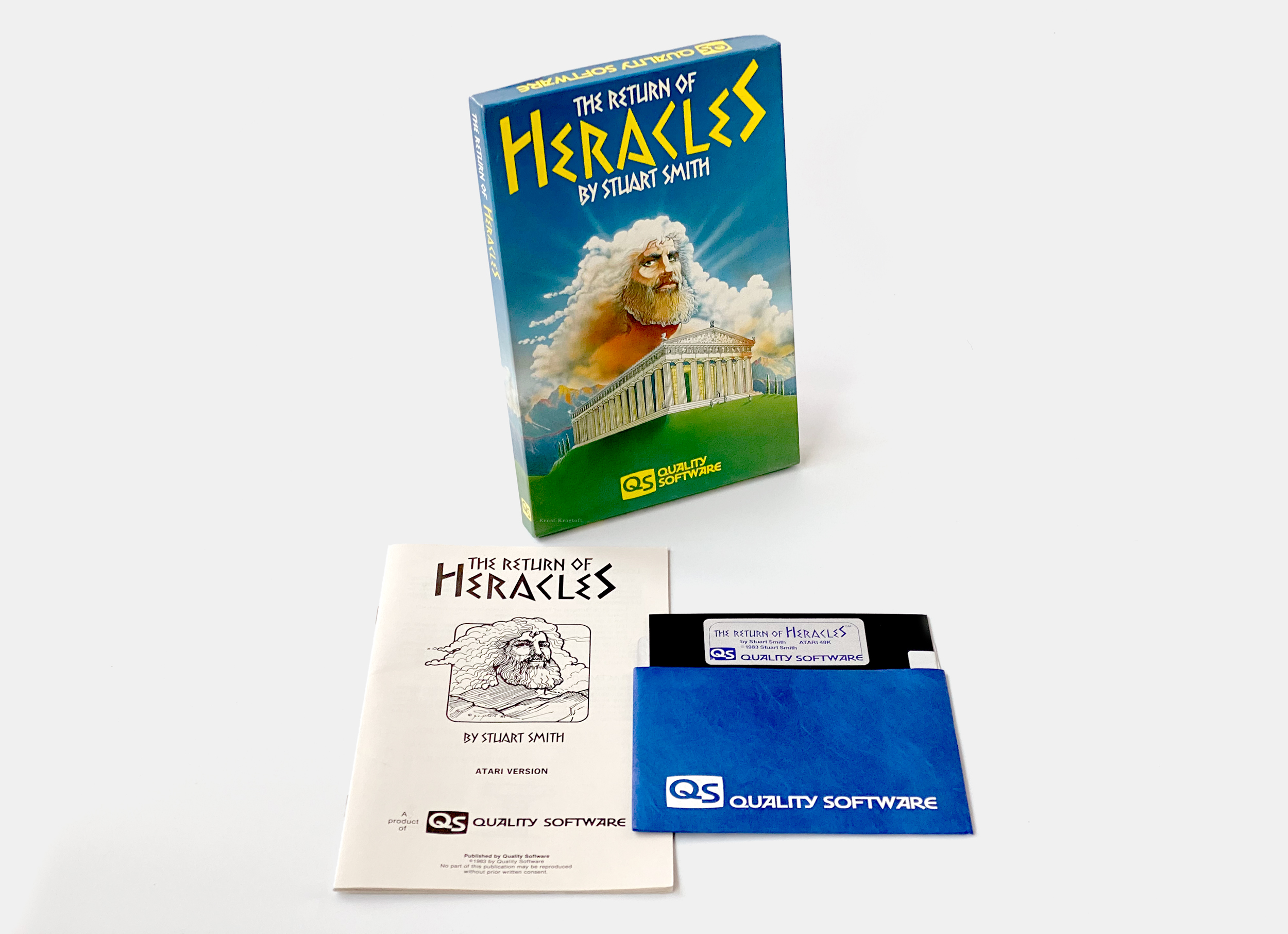
The Return of Heracles for the Atari 8-bit line of computers, released in 1983 by Quality Software.
In 1984, Smith released what would become his most ambitious and final original work, Stuart Smith’s Adventure Construction Set. Published by Electronic Arts, the program wasn’t a game but a toolkit, allowing users to build their own tile-based RPG adventures. Essentially a proto-game engine, it offered a way for players to create and share experiences inspired by Smith’s earlier titles. Initially developed for the Commodore 64, it was later ported to several other platforms, including the Apple II and Amiga. In 1985, it became EA’s best-selling title, underscoring Smith’s intuitive grasp of where gaming was headed: toward player-generated content and open-ended design.
Stuart Smith’s work stands today as a reminder that innovation often occurs at the margins. His games were whimsical, inclusive, and ahead of their time, offering early glimpses of multiplayer design, narrative experimentation, and player agency that would not become mainstream for years. While others sought to translate Dungeons & Dragons to the screen, Smith was doing something else entirely, crafting digital mythologies of his own.
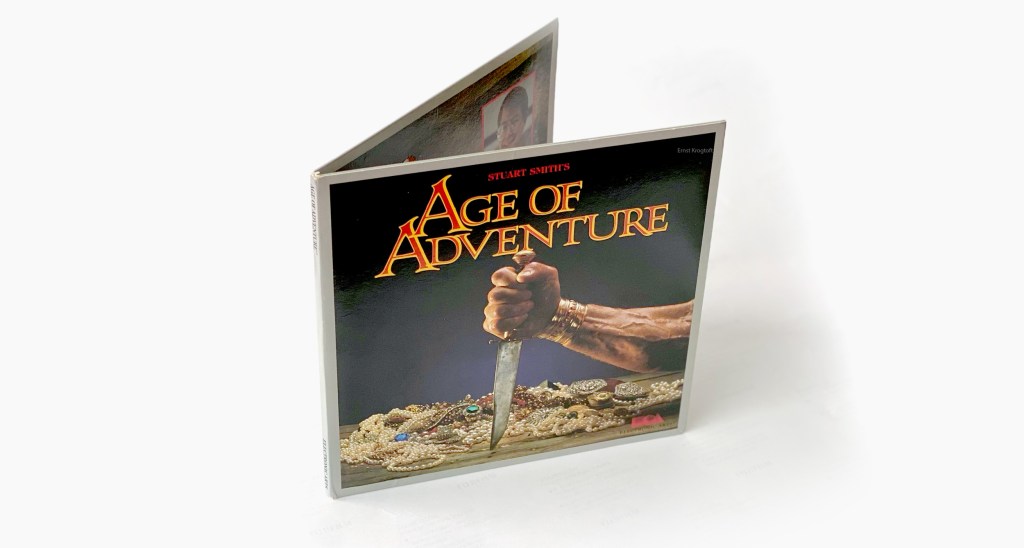
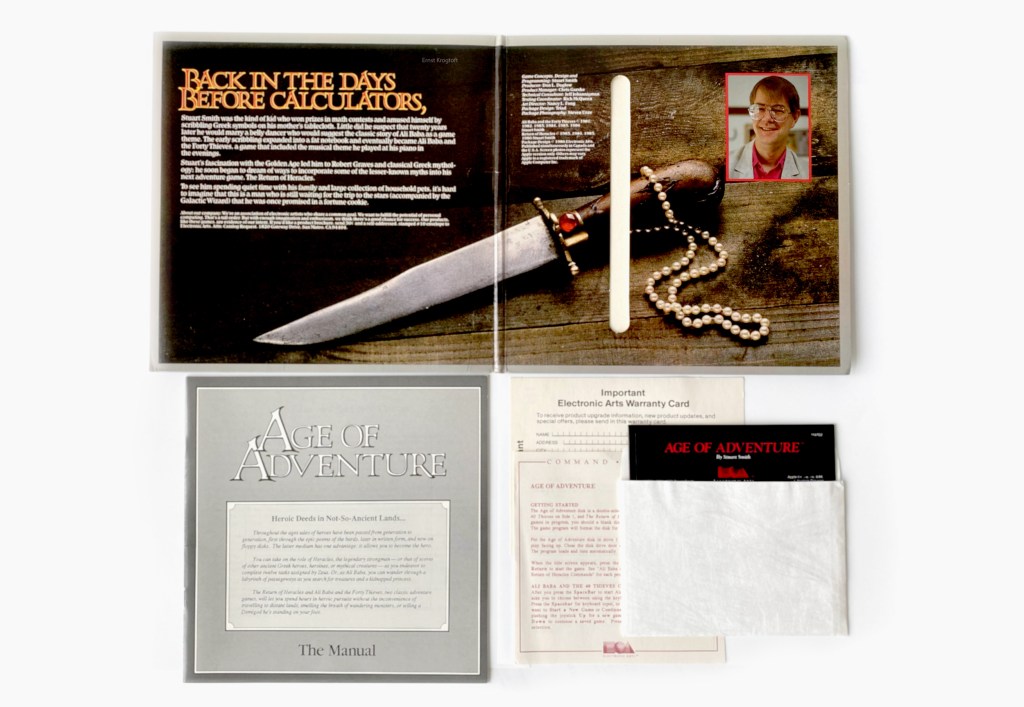
The Apple II release of Stuart Smith’s Age of Adventure compilation, published by Electronic Arts in 1986.
 Retro365
I really love blogs like yours that go methodically through… everything of a type. We do this with science fiction and space shots (and also wargames), and we will be branching out into RPGs and computer games soon
Ali Baba is a great game, but it is hampered by its slowness. When you fight bad guys, you sit through every hit point of damage (“Wayomp. Wayomp. Wayomp.” AIEEEEEEEEEEE)
Return of Heracles lets you speed that up, and it is a superlative game. I once had the world high score for RoH…until someone beat me not too long ago!!!
Thanks a lot:)
I actually started rewriting the article last week and have just completed and updated it – added only a few things so no need to re-read it.
I’ll definitely keep an eye out for your venture into computer games, that’s very exciting indeed.
Thanks again and good luck with your site.
Thank you! You’re encouraged to join the fun and comment when we get to your field of interest/expertise. ;) Maybe… six year? Seven?
Hehe:) appreciate it but I’m just a collector with a heart for history.