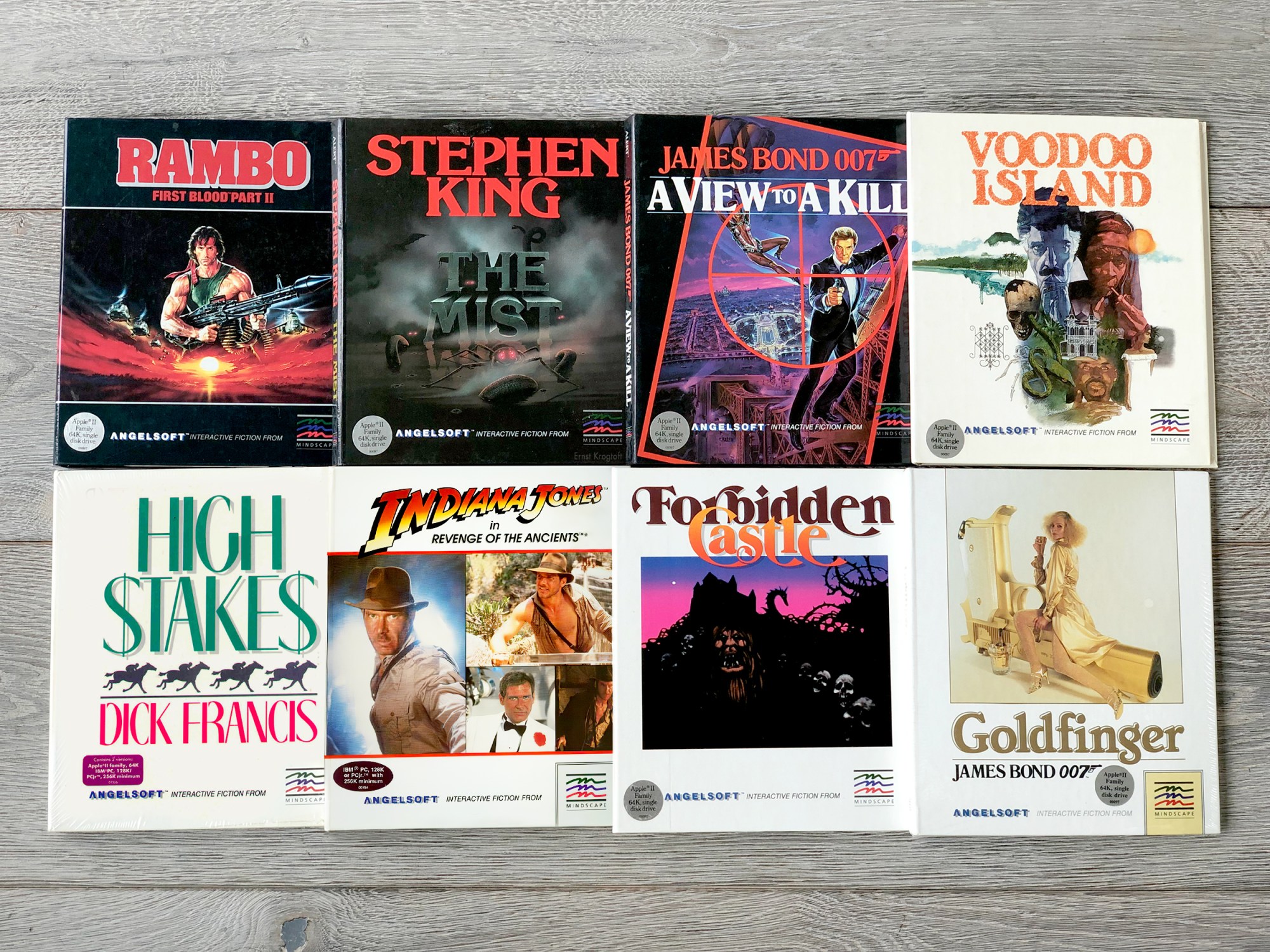
During the early ’80s, text-based adventures experienced a surge in popularity, thanks to influential companies like Infocom and Adventure International who spearheaded the adventure genre. The roots of text-based adventures can be traced back to the mainframe era, when Colossal Cave Adventure captivated tech students and experts, providing them with a novel way to engage in interactive storytelling.
With the advent of personal computers in households during the late ’70s and early ’80s, developers and publishers recognized the need to cater to the growing number of casual adventure gamers. These gamers typically lacked the same level of computer proficiency as hobbyists, who not only enjoyed playing the latest arcade games but also took pleasure in exploring the world of computers. Developers and publishers faced the challenge of making interactive fiction more accessible, while also seeking ways to differentiate adventure games from their competitors and appeal to new customers.
As a result, a new discourse emerged, highlighting the intellectual aspects of adventure games as opposed to the fast-paced and sometimes mindless challenges found in arcade games. This shift aimed to position adventure games as a more thought-provoking and engaging form of entertainment.
Infocom had played a prominent role as a developer and publisher of adventure games during the first half of the ’80s. They were at the forefront of shaping the evolving discourse surrounding adventure games, asserting that they should not be regarded merely as typical computer games but rather as a novel form of interactive literature. To underscore this perspective, Infocom introduced the term Interactive Fiction to more accurately describe their adventure games. This designation was officially adopted in the spring 1984 edition of their newsletter, The New Zork Times. Once the concept of adventure games as a narrative-driven experience took hold, they swiftly became a popular medium for adapting existing intellectual properties.
At the 1984 Consumer Electronics Show in Las Vegas (the same show where the Commodore Amiga was revealed), several publishers made notable announcements regarding computer game series based not only on books but also on movies. Among these was Mindscape, with the development being handled by Angelsoft, a company based in White Plains, New York.
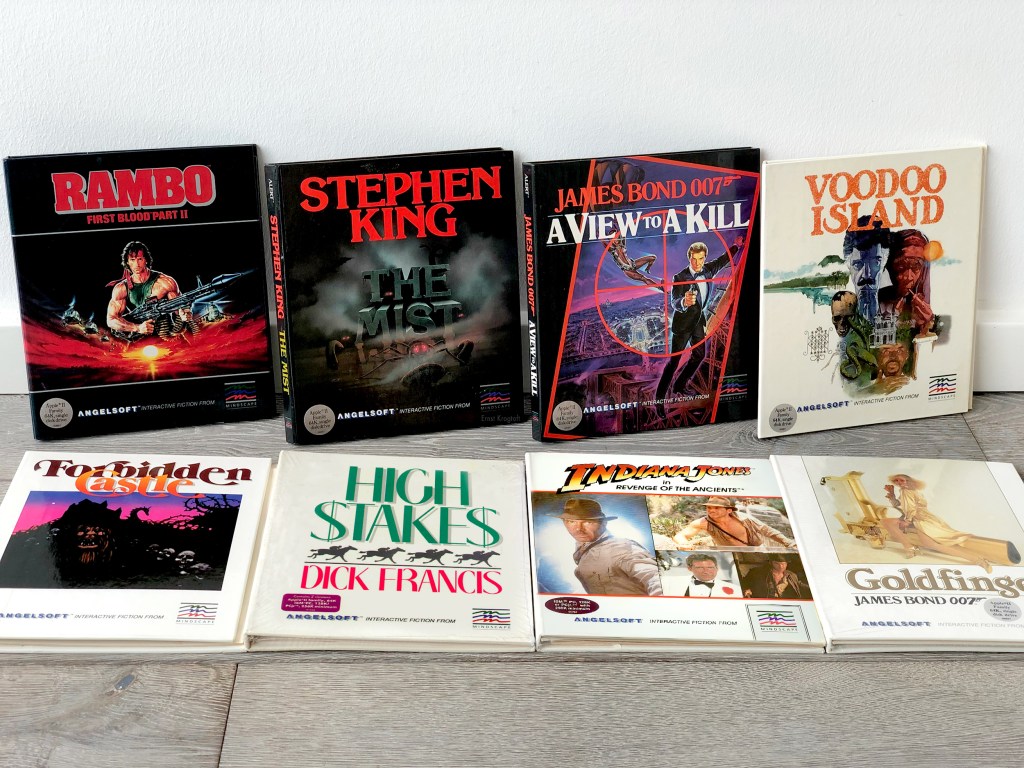
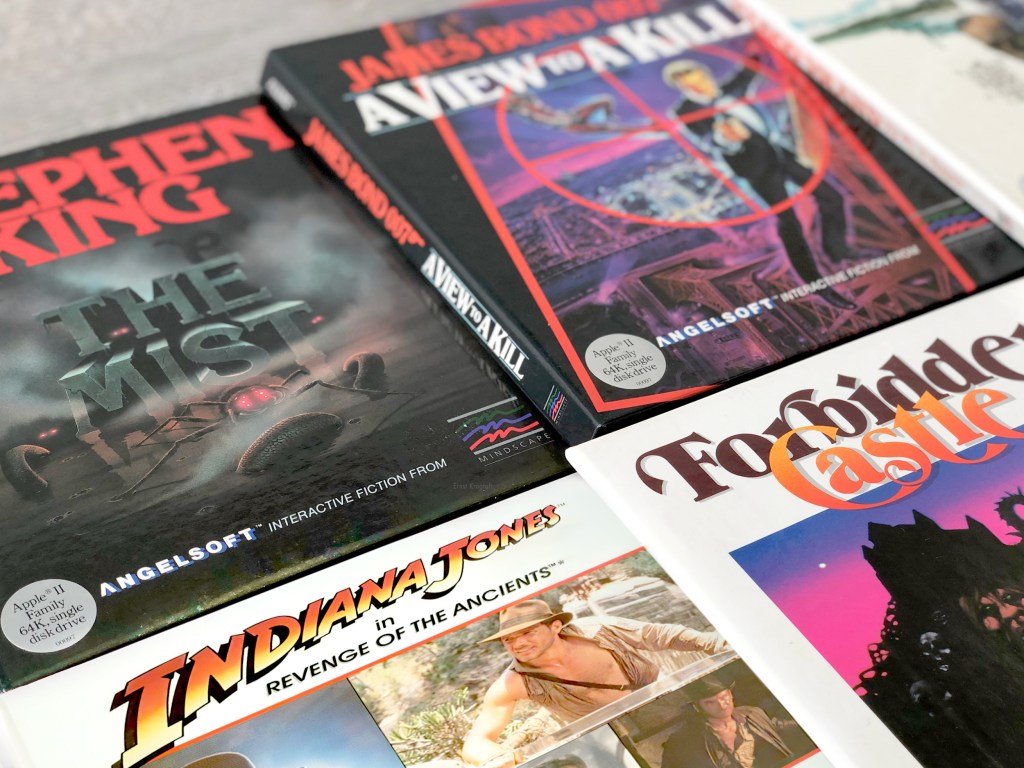
Angelsoft was founded by John R. Sansevere and Mercer Mayer, both renowned for their work as authors of children’s books. From 1985 to 1987, Angelsoft successfully developed eight text adventure titles, out of which six were adaptations of popular books or films. This placed the company in direct competition with Infocom in the realm of pure text adventure games. All eight titles were published under Mindscape’s Alert label, which included recreational software for teens and adults, and for both the Apple II and the IBM/PC platforms, with five of them also being available for the Macintosh.
Angelsoft’s titles struggled to resonate with the established fan base of the adventure genre, although they may have appealed to new players due to the familiarity of their licensed titles. Unfortunately, Angelsoft entered the market relatively late, and by 1987, the demand for text-only adventure games was rapidly declining, making way for the rise of more accessible graphic adventures.
The landscape of games in the latter half of the ’80s had undergone significant changes compared to when Angelsoft first entered the scene. Home computers had made substantial advancements in visual capabilities, rendering the aging text-only adventure format less appealing. ICOM Simulations, another developer whose titles were published by Mindscape, gained considerable attention with their release of Déjà Vu in 1985. This fully realized point-and-click adaptation of the classic adventure game model exemplified the emerging trend known as Macintoshization. The Macintosh, Apple’s home computer introduced in 1984, boasted impressive graphics, sound capabilities, and, perhaps most importantly, a mouse-driven user interface that greatly influenced the design of adventure games.
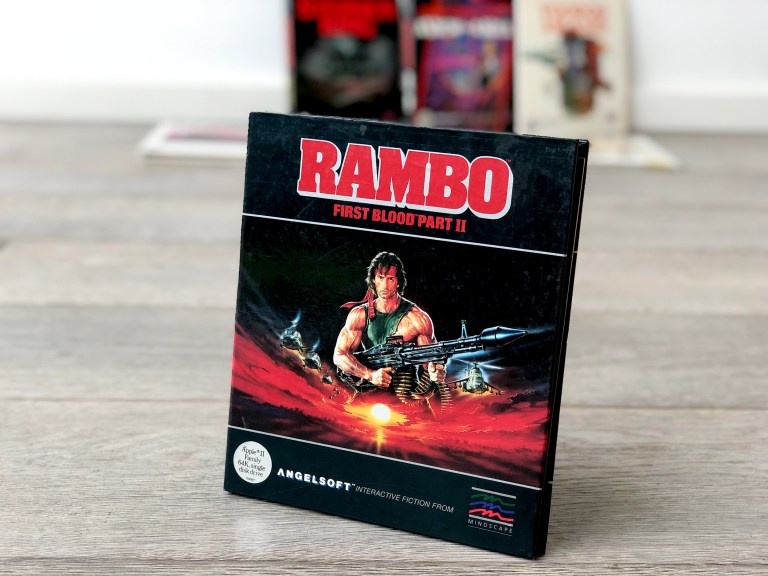
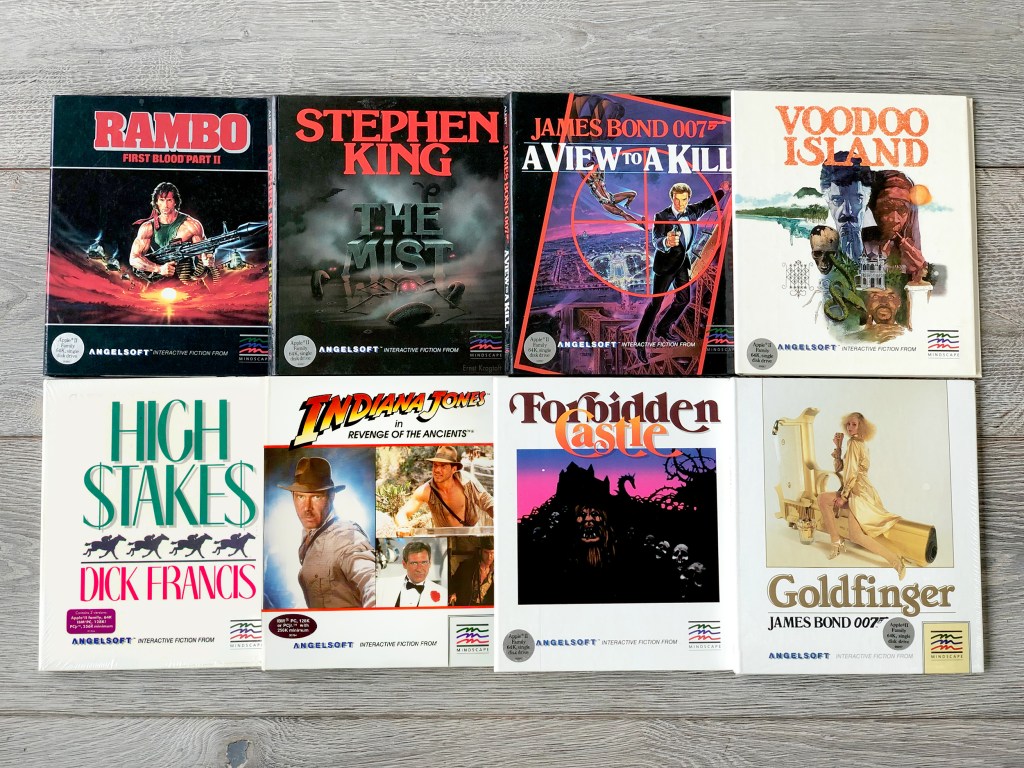
While the Rambo franchise might not be the first and most obvious choice for an interactive fiction adaption, this was nonetheless what Angelsoft did in their 1985 text adventure, Rambo – First Blood Part II.
Take on the role of Sylvester Stallone, your mission is to free prisoners from a POW camp in Vietnam. The game pretty much follows the movie.
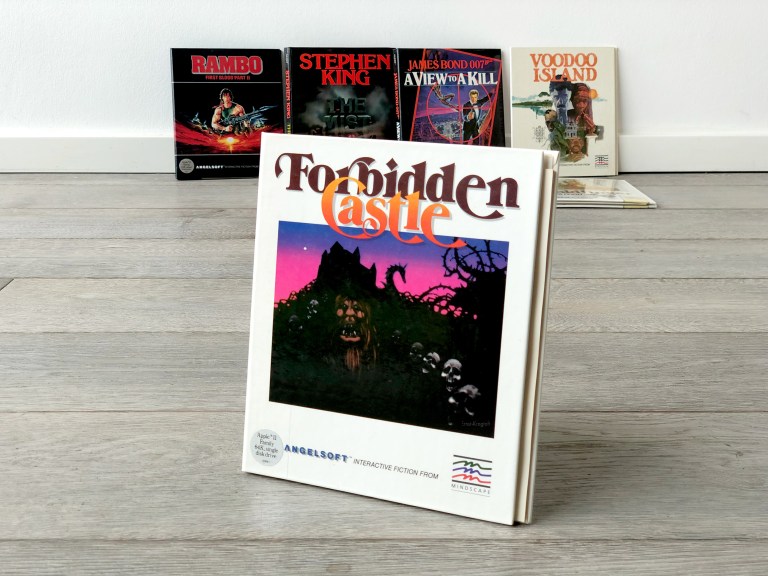
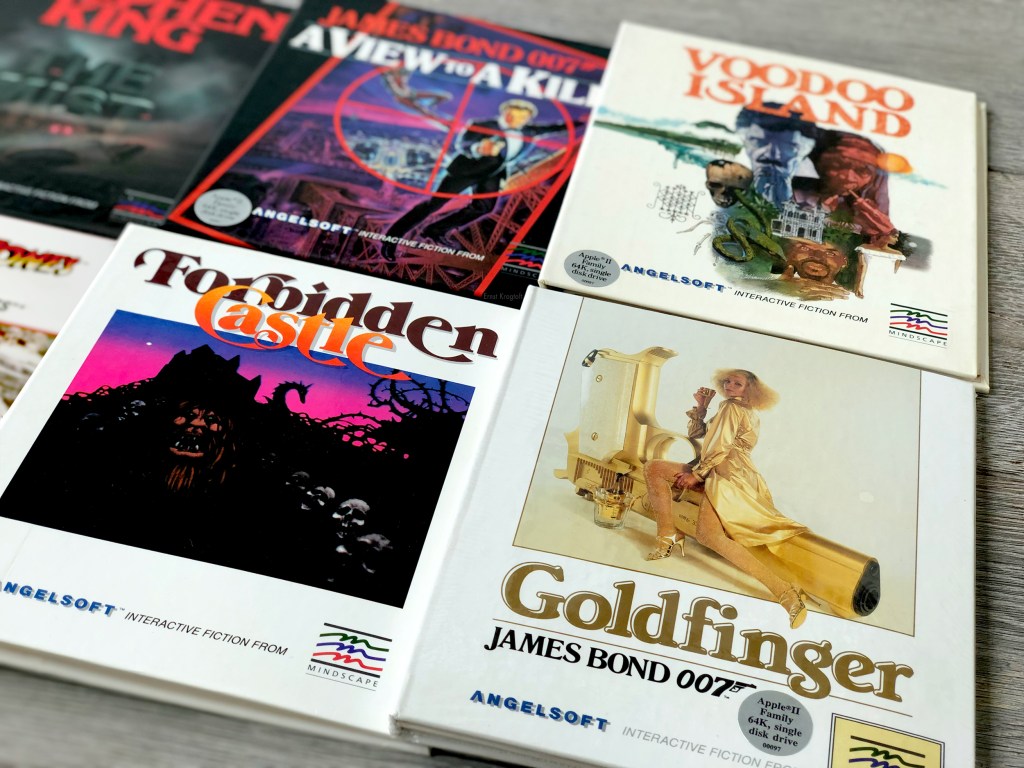
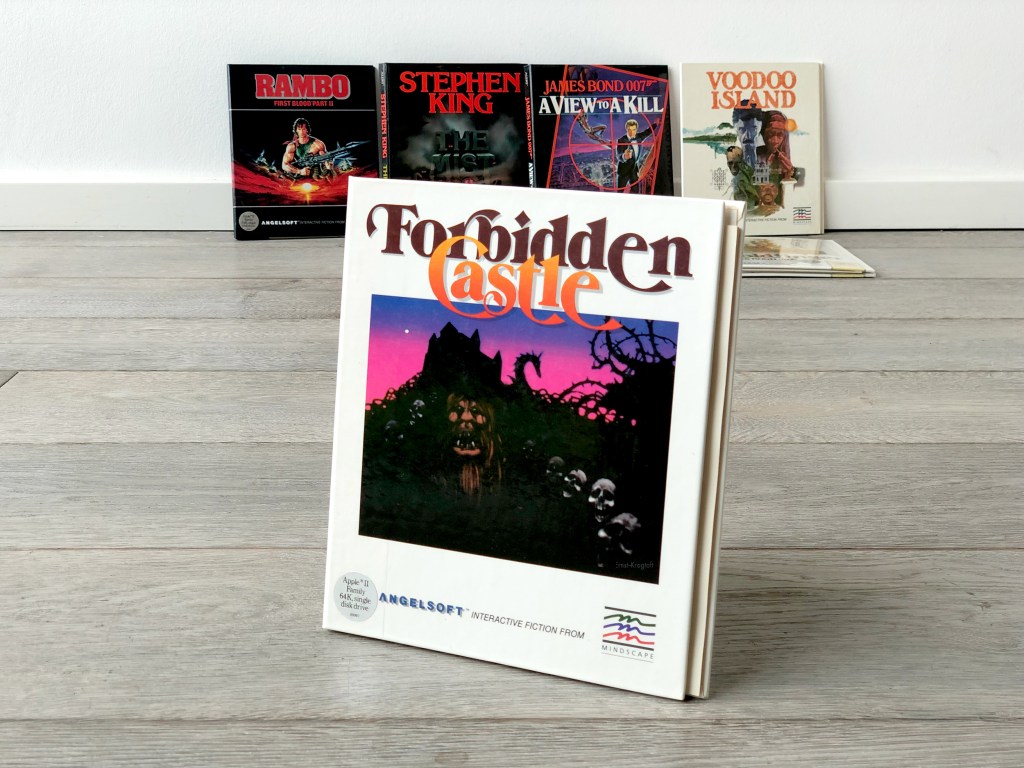
One of Angelsoft’s titles that weren’t licensed was Forbidden Castle from 1985, written by founder Mercer Mayer.
On vacation in London, our protagonist enters an antique store and is drawn to a magic book that hurtles you into a fantastic world, where you are to undo the harm done to the world by the wicked Blue Faerie and solve the puzzles of the forbidden castle.
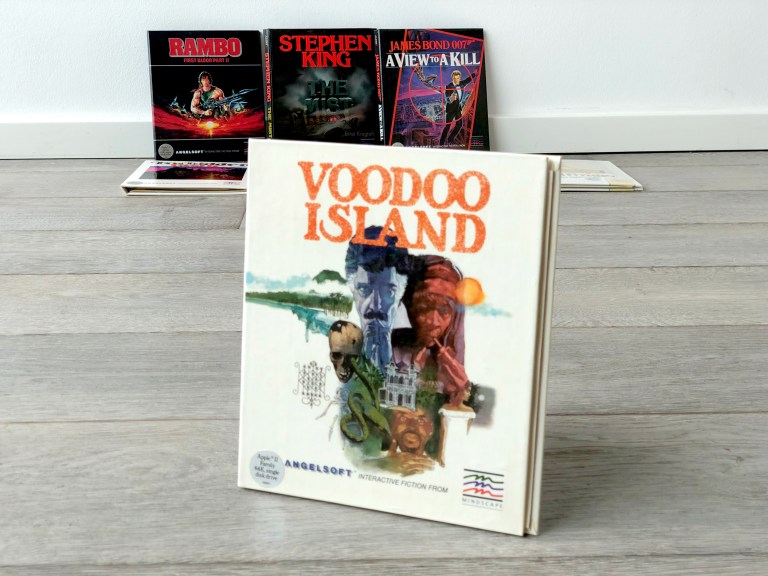
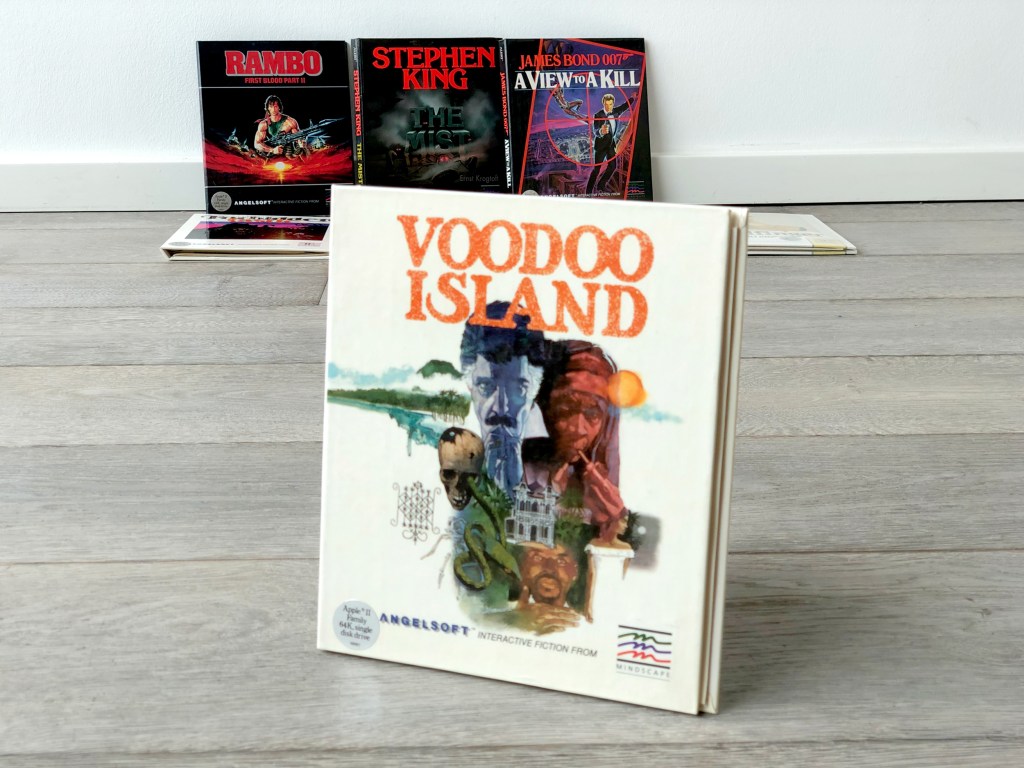
Like Forbidden Castle, Voodoo Island, also from 1985, was not licensed. It was written by founder M. J. Sayer.
On Voodoo Island the player’s task is to destroy the evil plot Dr. Beauvais is preparing, unlike other games by Angelsoft, the puzzles here do not need to be solved in a limited number of turns, giving players all the time in the world to explore the island they’re on.
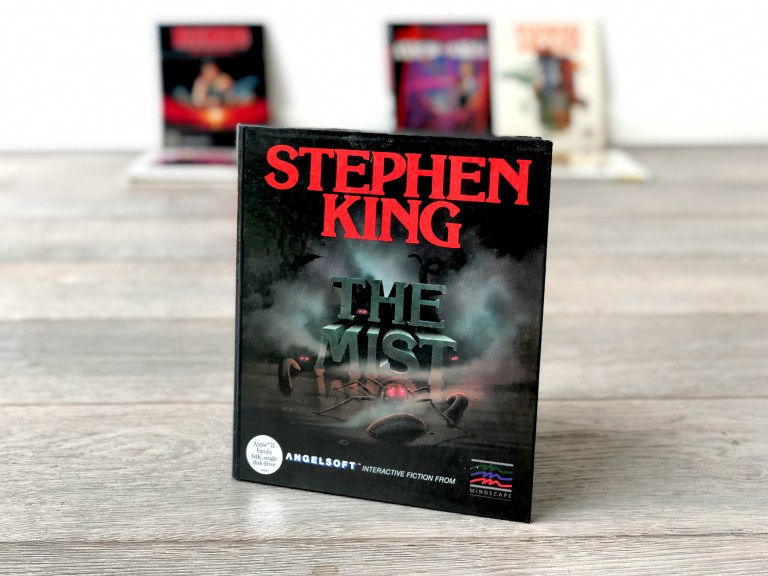
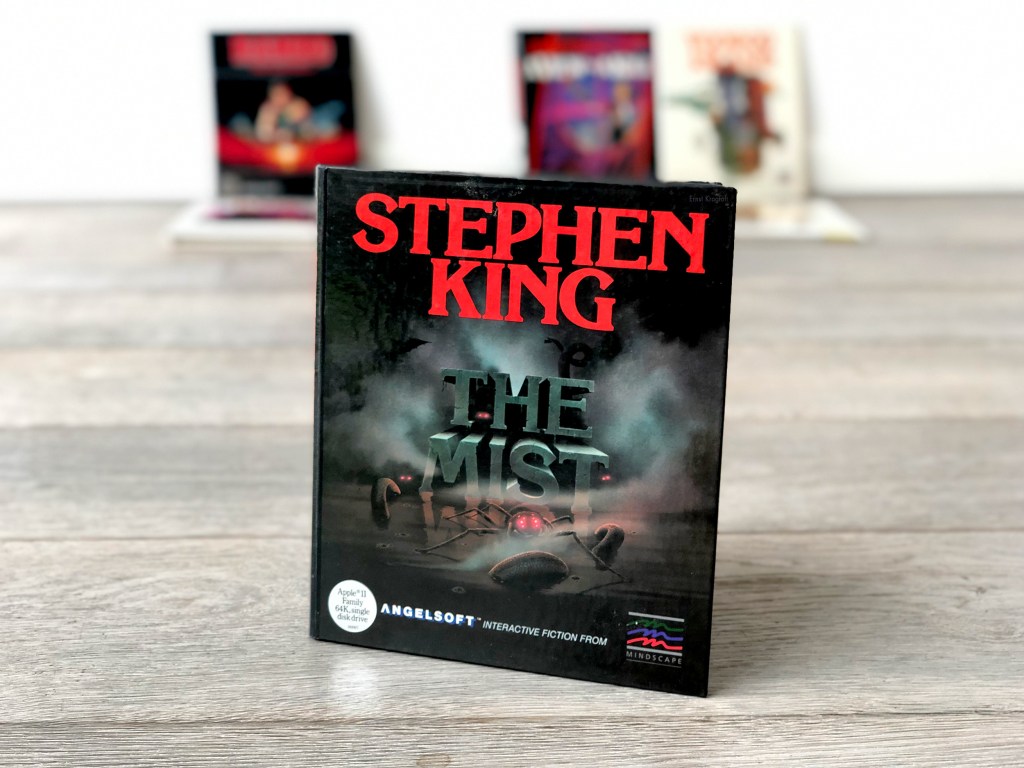
The Mist, from 1985, adapted from the novella of the same name, which is seen as one of King’s best stories. The game follows King’s story quite closely.
For the first time ever, King fans could interact with his work in an unprecedented way, putting themselves firmly at the center of his chilling stories.
The player is one of the unlucky New England residents standing in the checkout line at Federal Foods as The Mist appears. As people begin to panic in the supermarket you must survive monsters and other panicking characters while trying to get back to your son Billy who was elsewhere when the mist began to appear.
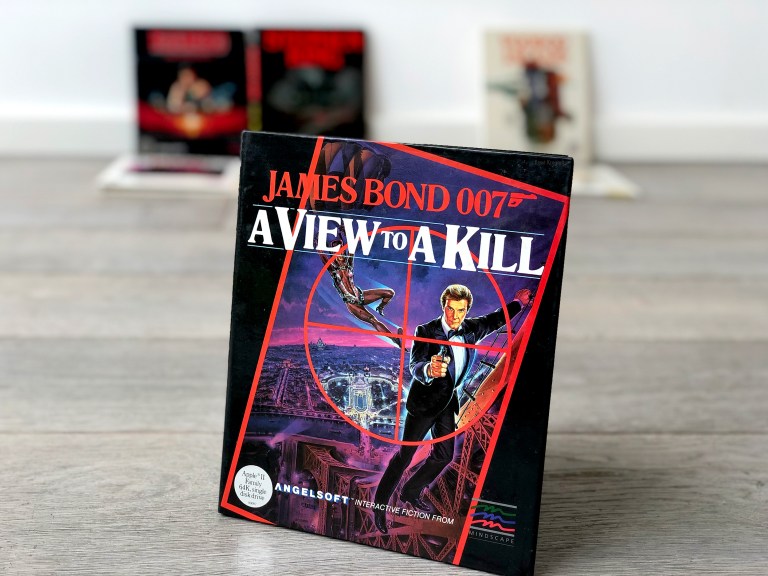
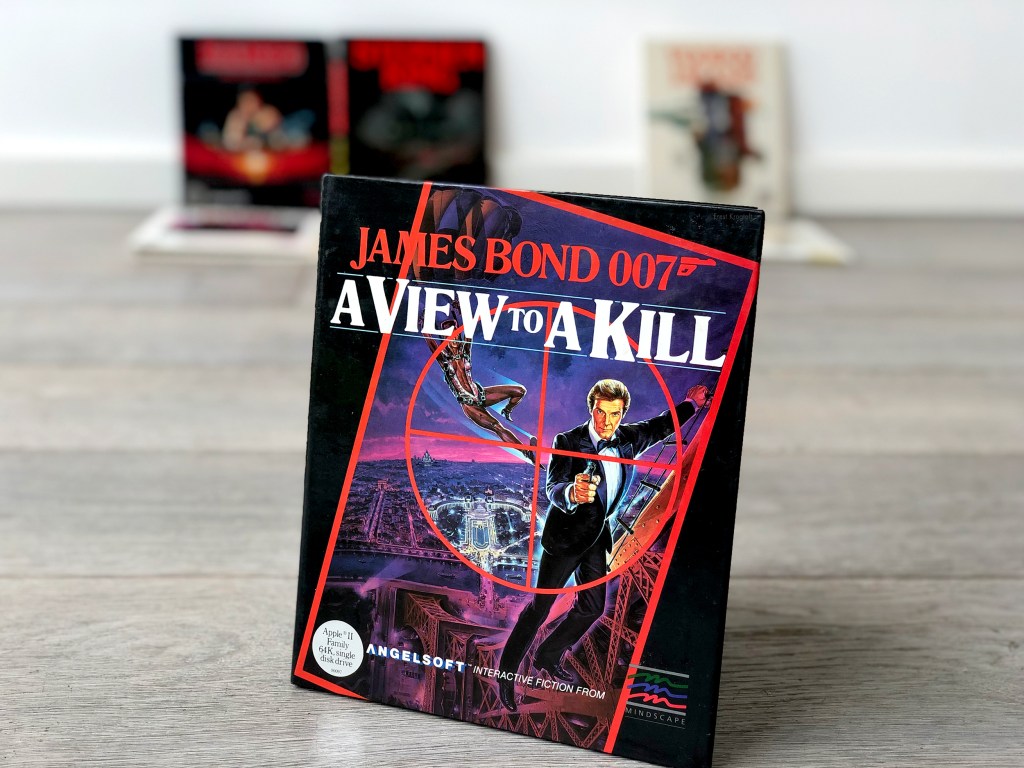
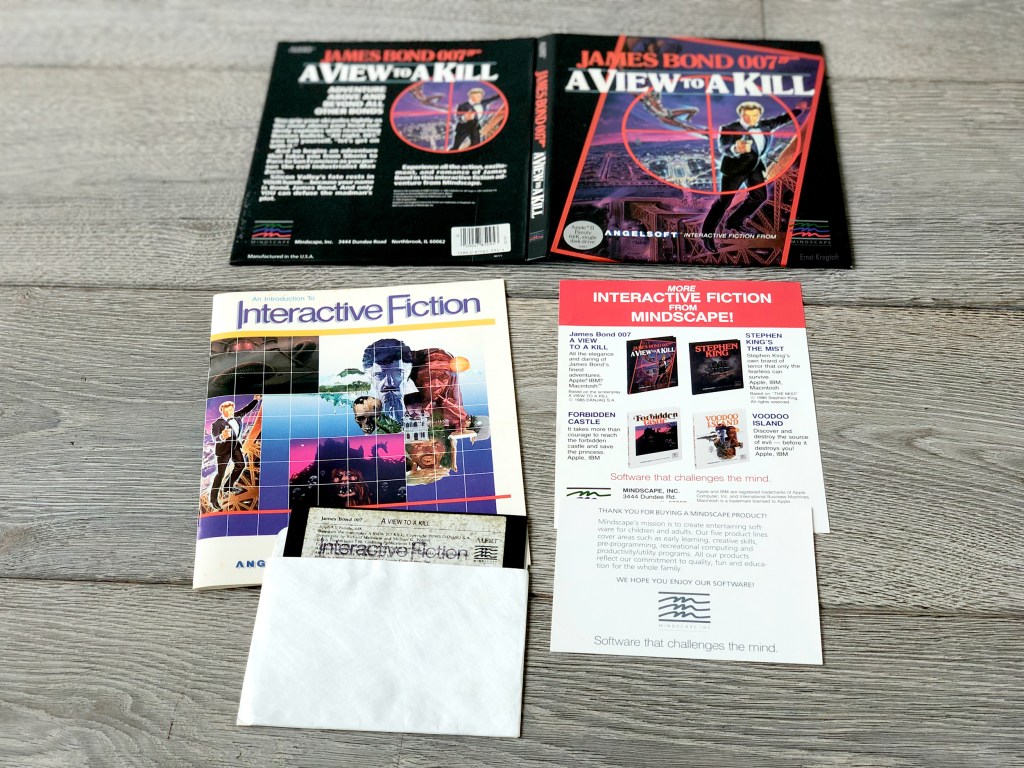
James Bond 7 – A View to Kill from 1985, follows the movie of the same title somewhat closely. You are James Bond and must stop Max Zorin from destroying Silicon Valley and dominating the microchip market. If you fail, Max Zorin will flood Silicon Valley by creating a major earthquake. The game will take you to the Siberian Mountains, Paris, and San Francisco.
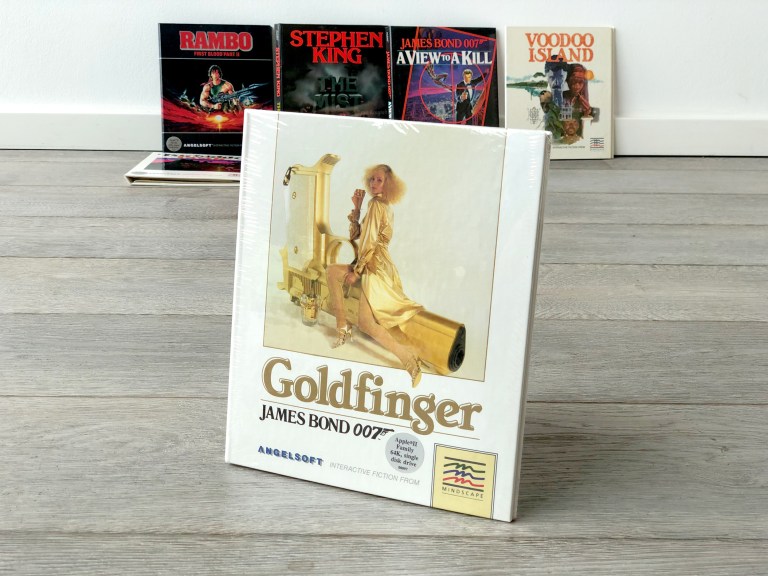
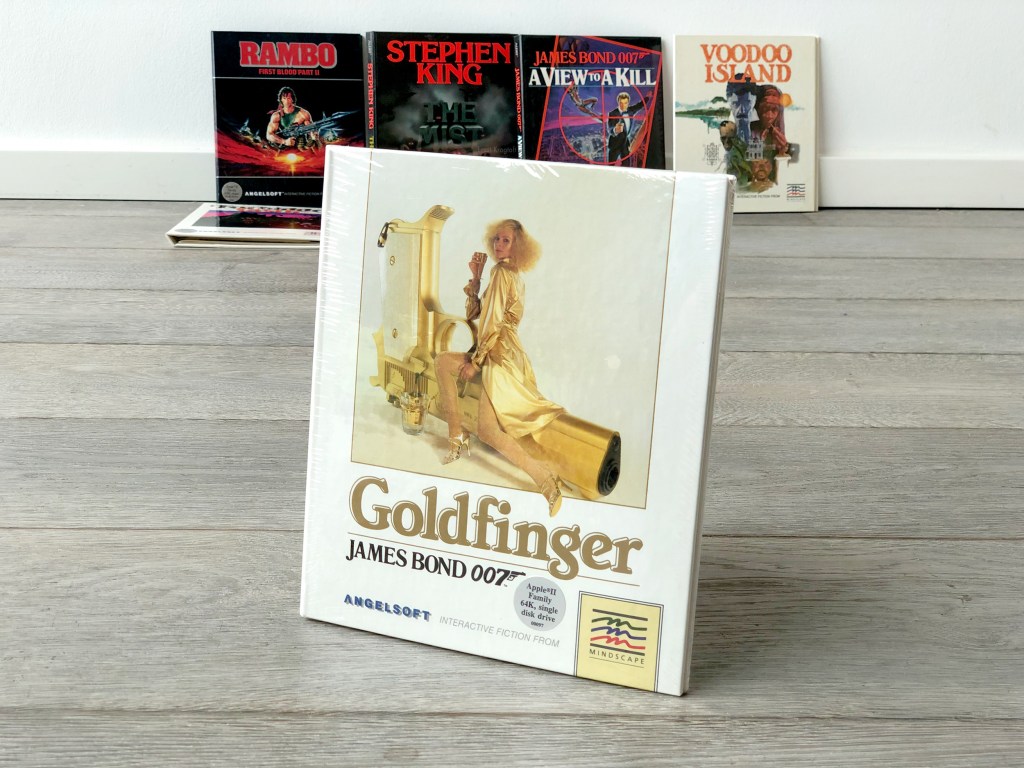
James Bond 007 – Goldfinger from 1986, based on the screenplay of EON Productions’ 1964 James Bond film Goldfinger, with some notable changes. It was penned by future Bond author Raymond Benson, who contributed towards the initial story plot/design but left the project before its completion.
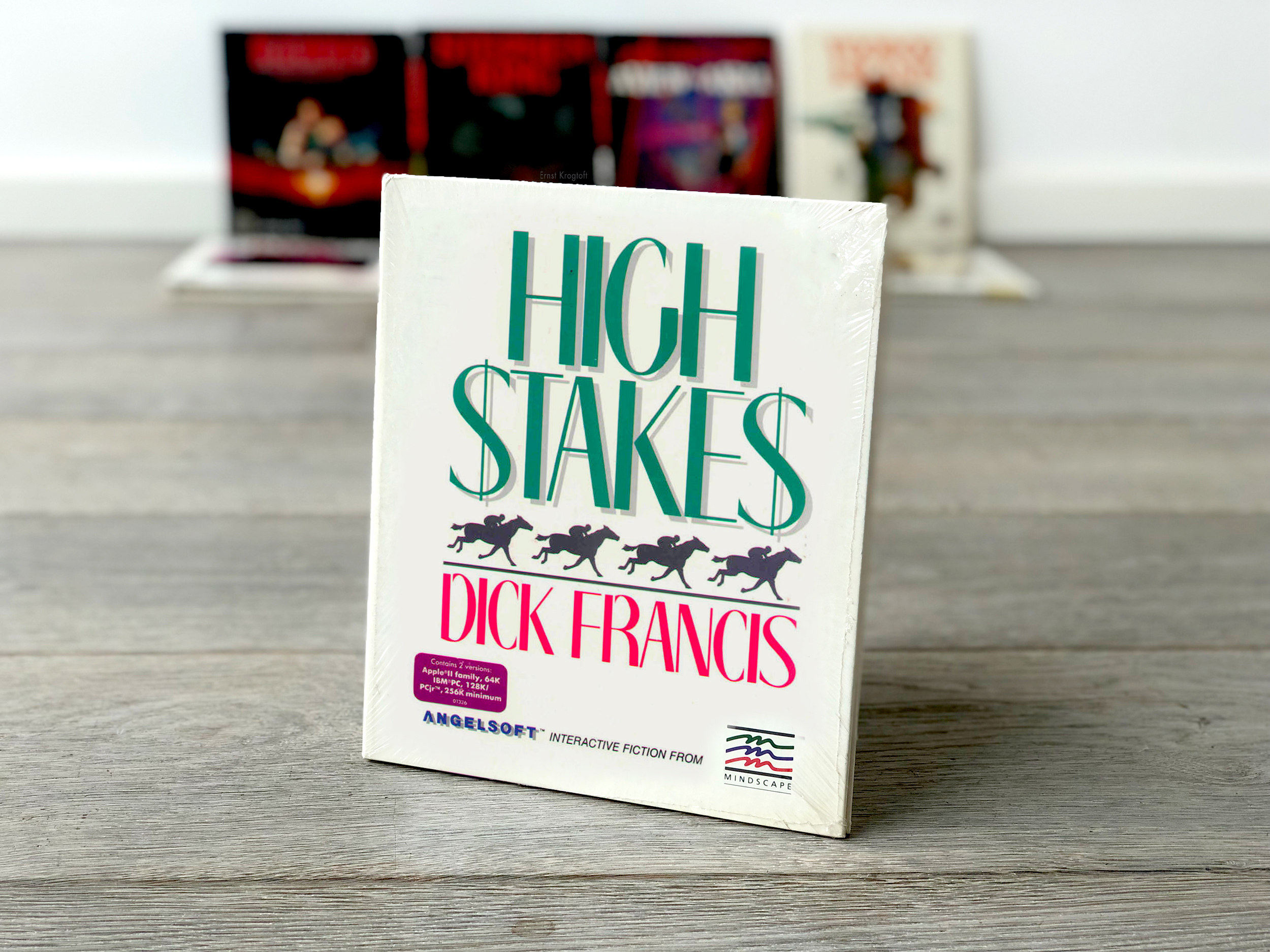
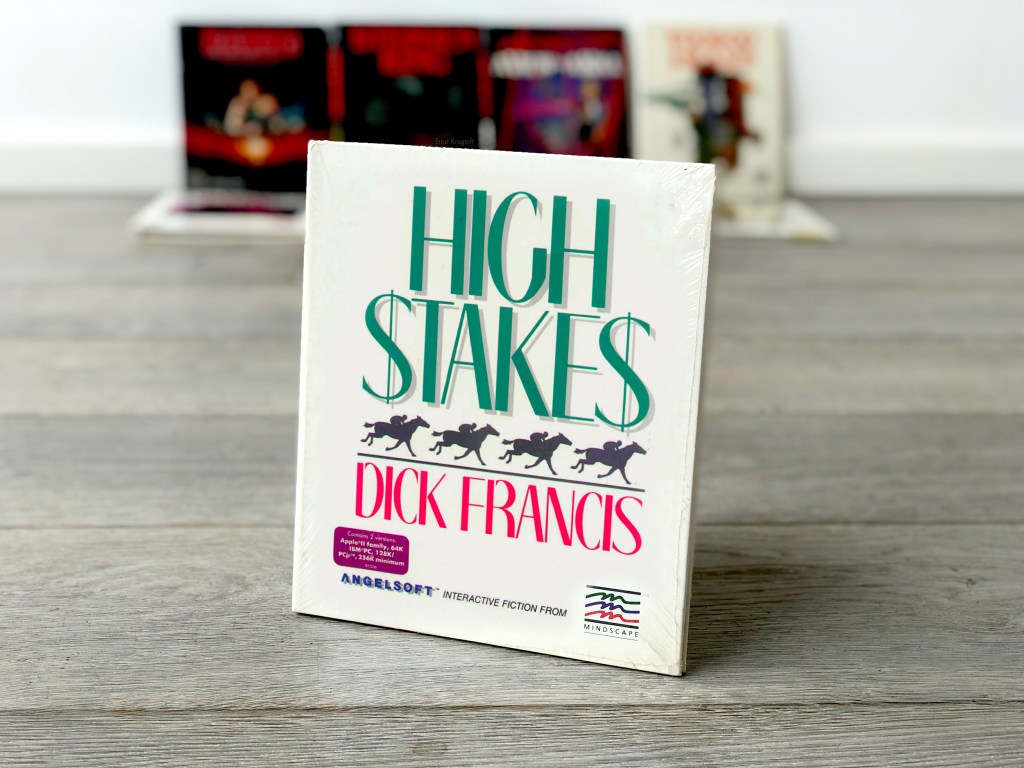
High $take$ from 1986, was the computer game adaption of Dick Francis’ High Stakes. The story centers around horse racing, a common theme through Francis’ books, and is chock-full of mystery and suspense.
The book itself is one of Francis’ biggest sellers in the U.S., and a lot of adventure fans rate this as Angelsoft’s best title.
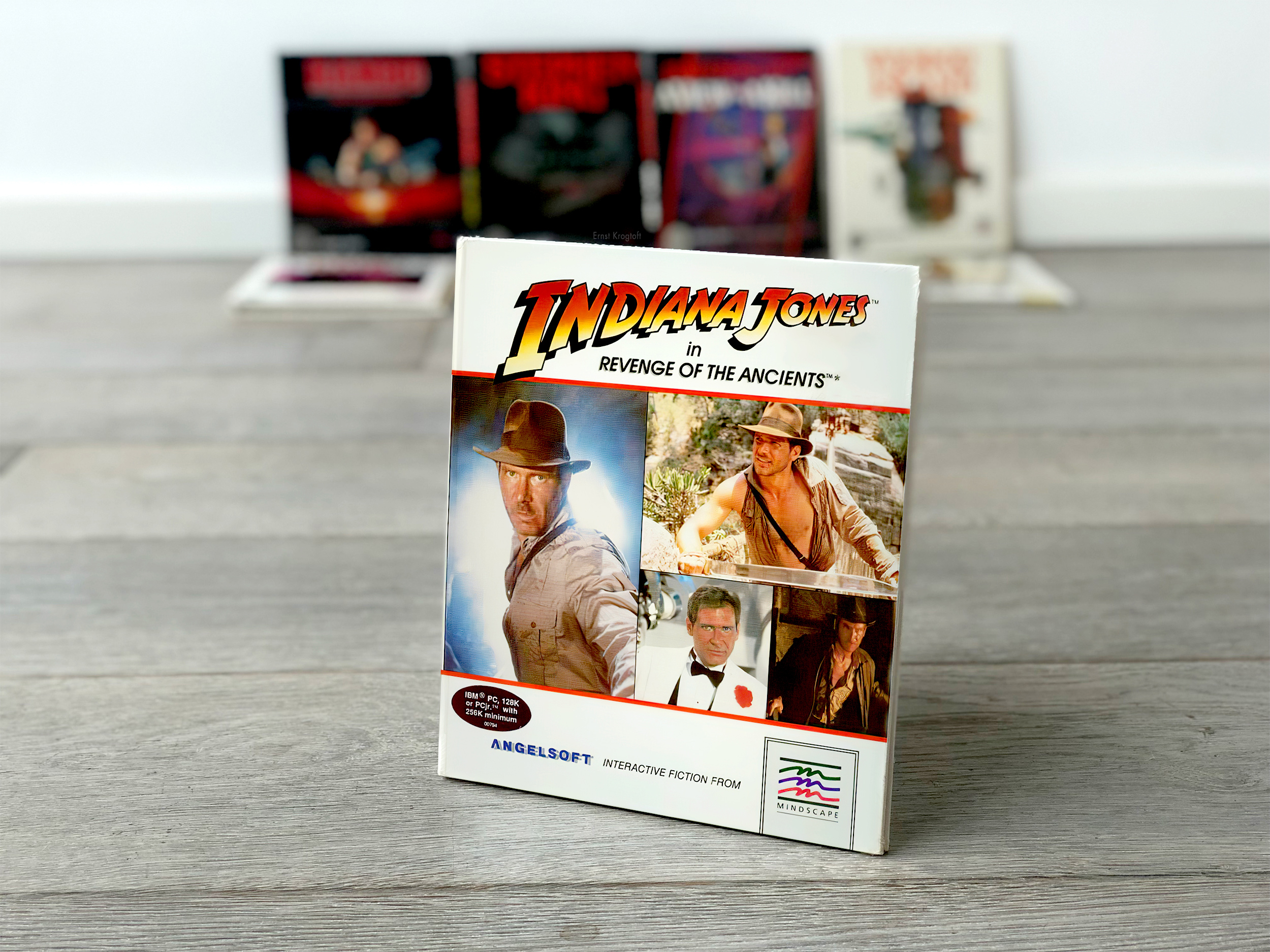
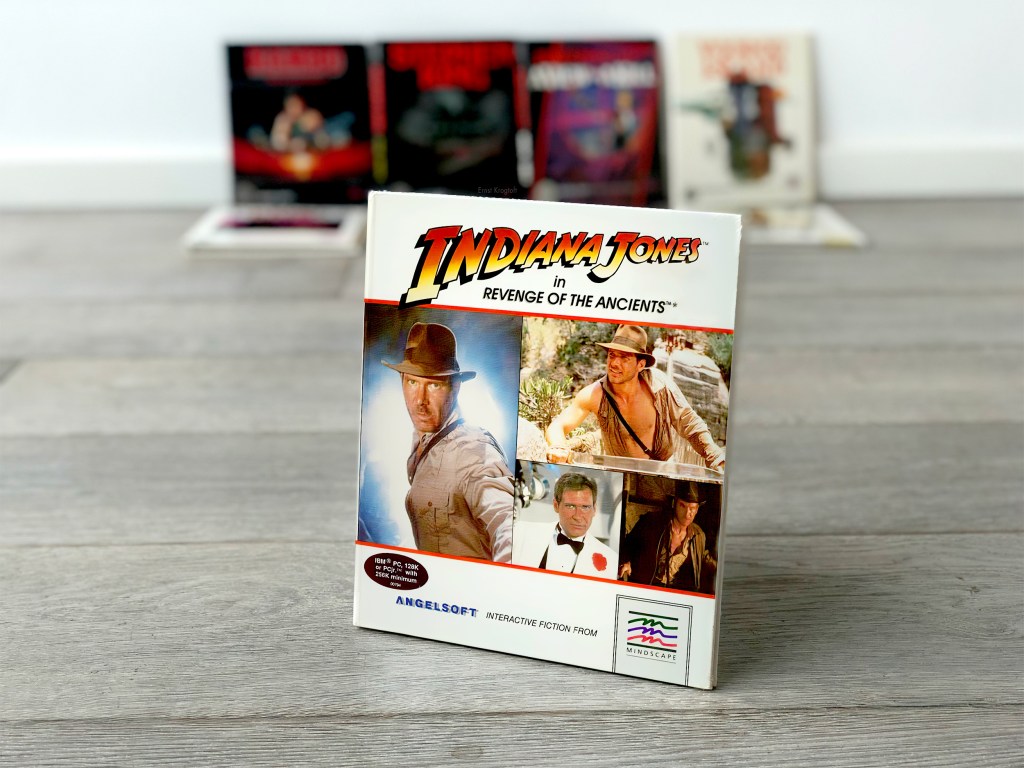
Indiana Jones in Revenge of the Ancients from 1987, was Angelsoft’s last game.
The game took our favorite archaeologist into the Mexican jungle, fighting off the onrush of vertigo as you grope through the treacherous, tunnel maze in the treasure-laden Tepotzteco Pyramid. Tighten your grip as you dangle from the wing of an airborne World War I DeHavilland. Whatever it takes, Indiana Jones must stop the cruel Nazi, Plebinheim, and his SS thugs from unleashing the power of the Mazatec Power Key against the world. Vicious bats, venomous snakes, marauding bandits.
Some of the above descriptions are taken from MobyGames...
 Retro365
Great article as always. I love the 007 Goldfinger cover. I must now hunt down that game.
Thanks Yazid:) They really did some awesome covers. Unfortunately some of these titles are nearly impossible to dig up – Good luck on the hunt, I’ll keep you posted if I find another one.
If you want to write an article about the publisher Mindscape you need to step out of your comfort zone of Apple II titles. They released for many other systems.
I’m not sure I follow, I have a complete set of US Mindscape titles, barely any are Apple II. these are Angelsoft released titles, these were released only in the US in the mid-’80s where the Apple II still was extremely popular.
You can see some of my Mindscape titles here. Bear in mind I collect original US titles so no EU rerelease from UK Mindscape.
https://retro365.blog/2019/12/01/bits-from-my-personal-collection-mindscape-a-family-portrait/