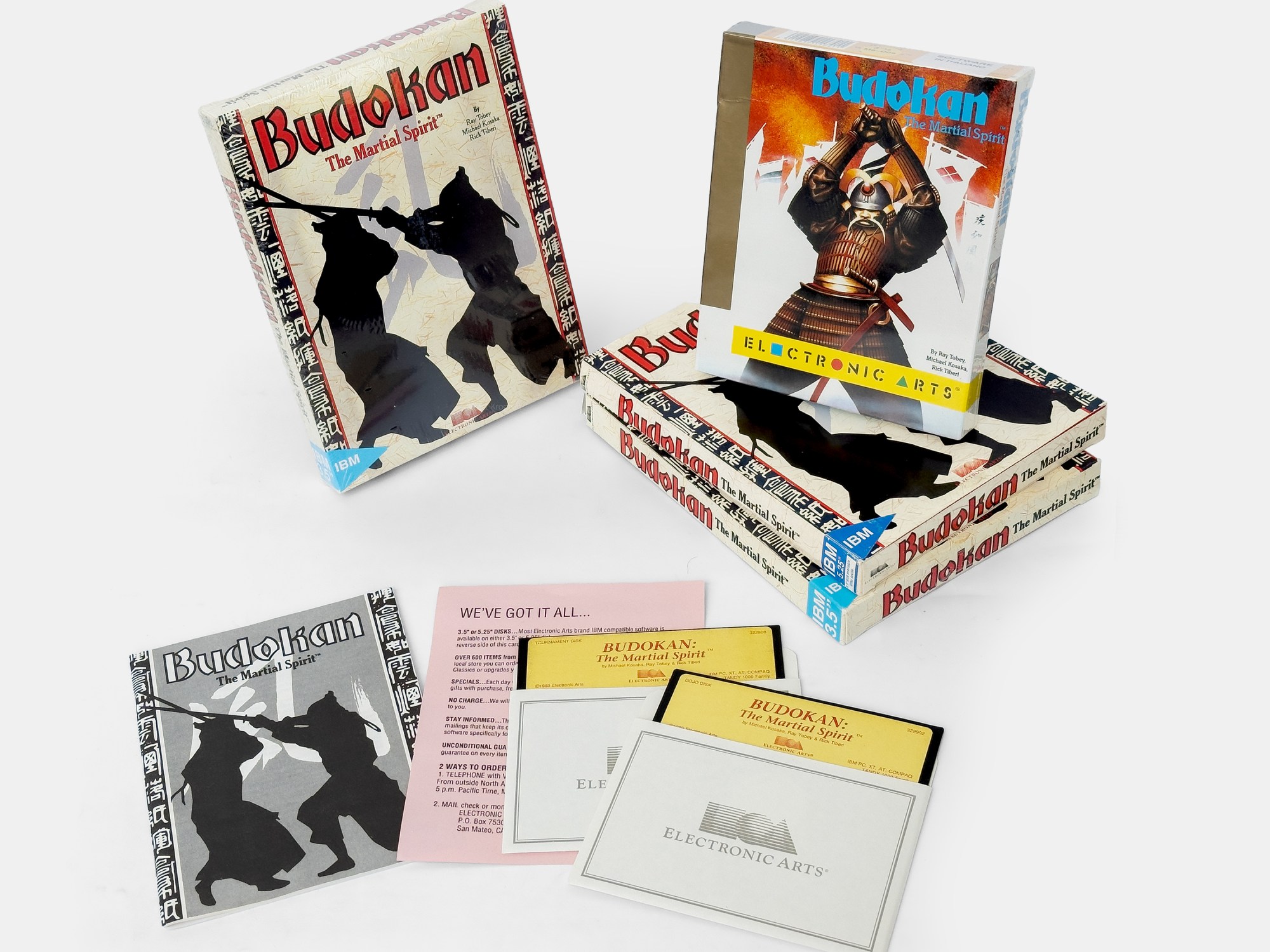
It is the late 1980s, and Michael Kosaka, a black belt and instructor of Aikido, has been tinkering with an idea for some time. As both a practitioner of Japanese martial arts and an experienced game designer, now with Electronic Arts, he envisions a comprehensive martial arts game that not only reflects the real-world techniques he knows so well, but just as importantly, manages to convey the underlying philosophy, the very spirit of the art itself.
It is an ambitious idea, one that seems, at least on the surface, at odds with the limitations of contemporary home computers. Real-world martial arts encompass a wide range of disciplines and techniques, far more than can easily be mapped to a joystick or keyboard without becoming unwieldy. At the same time, character sprites must be large enough to convey believable movement, each requiring its own set of animations, and all of it needing to translate seamlessly from input to action. It is a tall order for the time, one that has, until now, kept his ambitions at bay.
In the early years of the IBM PC, action games had often been defined by limitations. The platform, powerful in some respects, was anything but uniform. Systems varied in graphics and performance, and input relied heavily on the keyboard rather than specialized controllers. For developers aiming to create fast, responsive gameplay, it presented a constant challenge, and for players, the results often felt inconsistent and frustrating. Fighting games proved especially difficult to realize as they demanded precision and responsiveness, with little room for delay, as timing was crucial.
Bushido: The Way of the Warrior by Ebenel Enterprises, released in 1983 by Advanced Computer Products, introduced the idea of martial arts combat to the PC. While ambitious and impressive, movement was rigid, feedback slow and uneven, and the connection between player input and on-screen action felt disconnected. Even so, it demonstrated that fighting games were not confined to arcades or to the era’s dedicated game-oriented systems like the Atari 8-bit or the newly introduced Commodore 64.
Created by John and Robert Lee as the first martial arts fighting game for the business-oriented IBM PC. Bushido was impressive for its time, but its lack of responsiveness and awkward control scheme made it difficult to master. It was released by Advanced Computer Products, a computer business founded by Dave Freeman in the summer of 1976. Freeman had a background from Fairchild and National Semiconductor and had experienced the microprocessor revolution firsthand. In November of 1976, he opened up one of the earliest computer retail stores in the US to join the personal computer revolution.
As the 1980s progressed, advances in hardware, combined with a growing understanding of the IBM PC’s strengths and limitations, began to shape a new generation of action titles. Many leaned toward faster, more arcade-like experiences, while a few explored a slower, more deliberate approach. Within the latter, Kosaka’s idea found its place, and by 1988, his prospect of a true martial arts simulation seemed within reach.
With more than 20 titles to his name as a designer, artist, and animator, having worked with companies such as Atari and Epyx, Kosaka possessed a skill set that extended well beyond gameplay and mechanics into visual style and presentation. In 1987, when he joined Electronic Arts, he became the company’s first in-house designer and helped contribute to its first wave of internally developed titles.
Founded by Trip Hawkins in 1982 with a philosophy of treating developers as “software artists,” Electronic Arts had initially operated more like a label than a traditional studio. The company acted as a publisher, curating and distributing the work of independent creators. But by the middle of the decade, as games grew more complex and new, more capable platforms emerged, the company had begun building internal development teams. The lone programmer working from a bedroom was gradually giving way to structured development groups, where designers, artists, and programmers collaborated under the same roof.
Electronic Arts continued to value individual vision and experimentation, and was increasingly willing to back projects that diverged from established formulas. Kosaka’s martial arts project, to become Budokan: The Martial Spirit, quickly found support within the growing company, and a team was assembled.
Designer and programmer Ray Tobey joined the project, bringing the technical expertise necessary to realize Kosaka’s vision. Tobey’s career traced the arc of the early game industry itself. He had entered the scene as a teenager, part of a generation for whom computers were not tools of business, but instruments of creation. His breakout success came with Skyfox in 1984, a fast-paced flight game that demonstrated both technical skill and an intuitive sense of gameplay. The title, picked up and published by Electronic Arts, became one of the company’s early hits, selling hundreds of thousands of copies and establishing Tobey as a rising talent.
By the time work began on Budokan in the summer of 1988, Tobey was no longer an external developer submitting projects from afar. He was part of Electronic Arts’ internal development core. Alongside Tobey and Kosaka was Rick Tiberi, contributing additional programming.
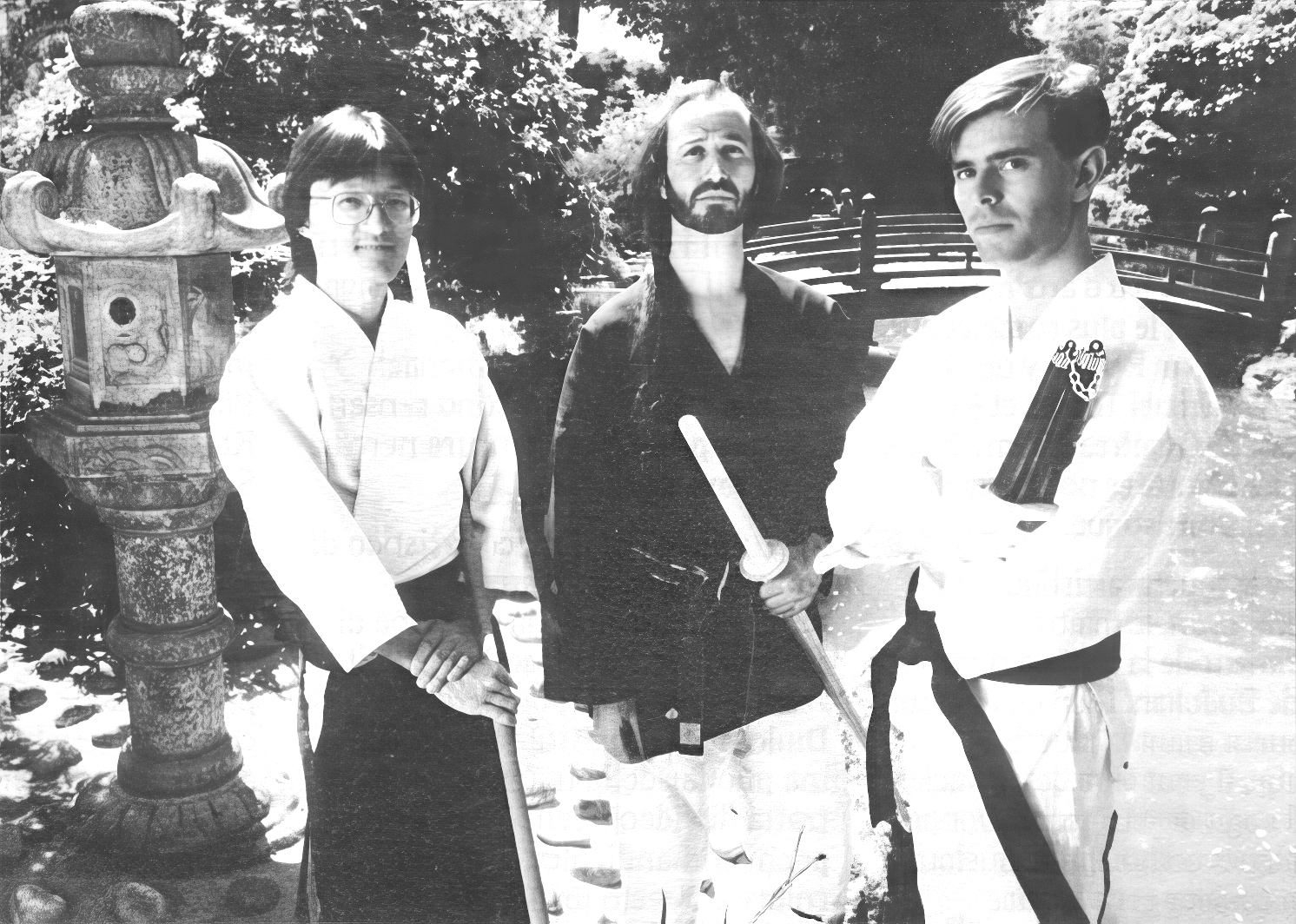
Michael Kosaka, Rick Tiberi, and Ray Tobey.
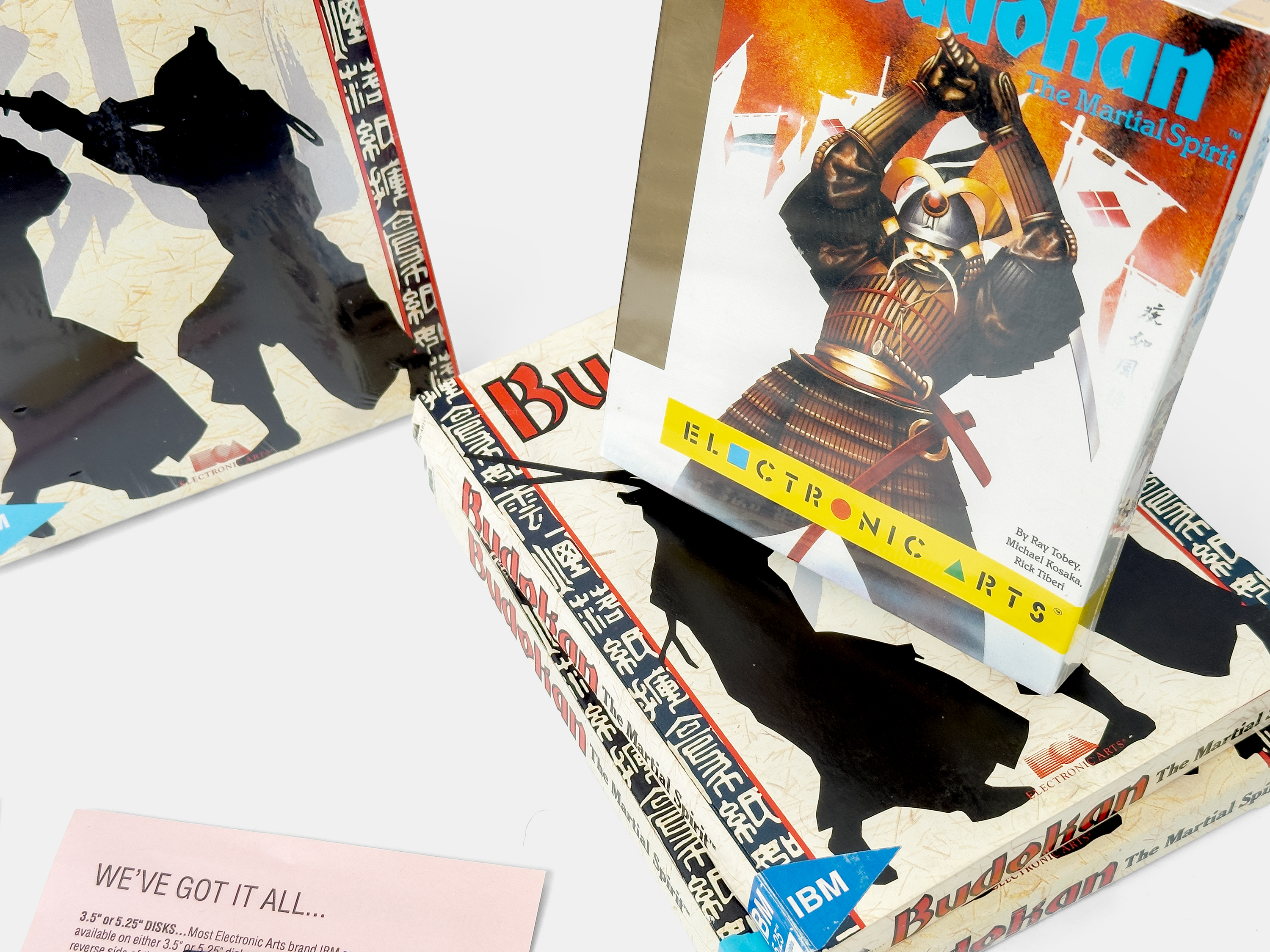
Image from the 1990 Sega Mega Drive manual (the same image, in color, was used for the packaging of the IBM PC version).
Drawing from his own years of martial arts practice, Kosaka wanted to create a game defined by authenticity. He didn’t want a simple sequence of disconnected fights, as many arcade-style titles offered. Instead, he envisioned a structured journey, a progression that mirrored the discipline and dedication of real-life training. Designed in a way so mastery could only be achieved through practice and persistence. Techniques had to be learned and perfected, timing and positioning understood, and stamina and energy carefully managed. Repetition and gradual improvement were central to the experience, a philosophy grounded in the very principles of the art.
Kosaka and a small team of artists created a calm, orderly visual style, rendering the Japanese dojo in harmonious colors and balanced composition. The environment felt serene and purposeful, and reinforced the sense of discipline and respect. Character sprites for each of the four martial arts disciplines included around 30 moves and between 60 and 70 animation frames.
From a technical standpoint, the development of Budokan reflected Electronic Arts’ commitment to staying on the cutting edge of technology. The IBM PC platform was notoriously fragmented, with systems ranging from monochrome and CGA to EGA, and now, the emerging VGA standard, introduced by IBM in 1987 with its PS/2 line of computers. The company wanted its titles to leverage new technology without leaving existing users behind. Budokan was developed to scale across standards, ensuring accessibility while also taking full advantage of the newest technology on the most capable systems. The result was one of the earliest PC games to offer 256-color VGA graphics.
The game’s fitting score was composed by Rob Hubbard, who had crossed the Atlantic to join Electronic Arts in 1988 as the company’s first employee devoted primarily to music. Already renowned for his work in the British Commodore 64 scene, Hubbard created a soundtrack that drew from traditional Japanese music, complementing the game’s atmosphere and setting. He also produced the game’s digitized sound effects, which underpinned movements and actions.
When Electronic Arts published Budokan: The Martial Spirit in November 1989, it was both a technical achievement and a thoughtful simulation with great attention to detail. The game managed to bridge the gap between authentic martial arts (and fighting games in general) and the evolving capabilities of home computers, offering players not just combat, but a journey of learning, discipline, and mastery, all in glorious 256-color, if you had the hardware to support it.
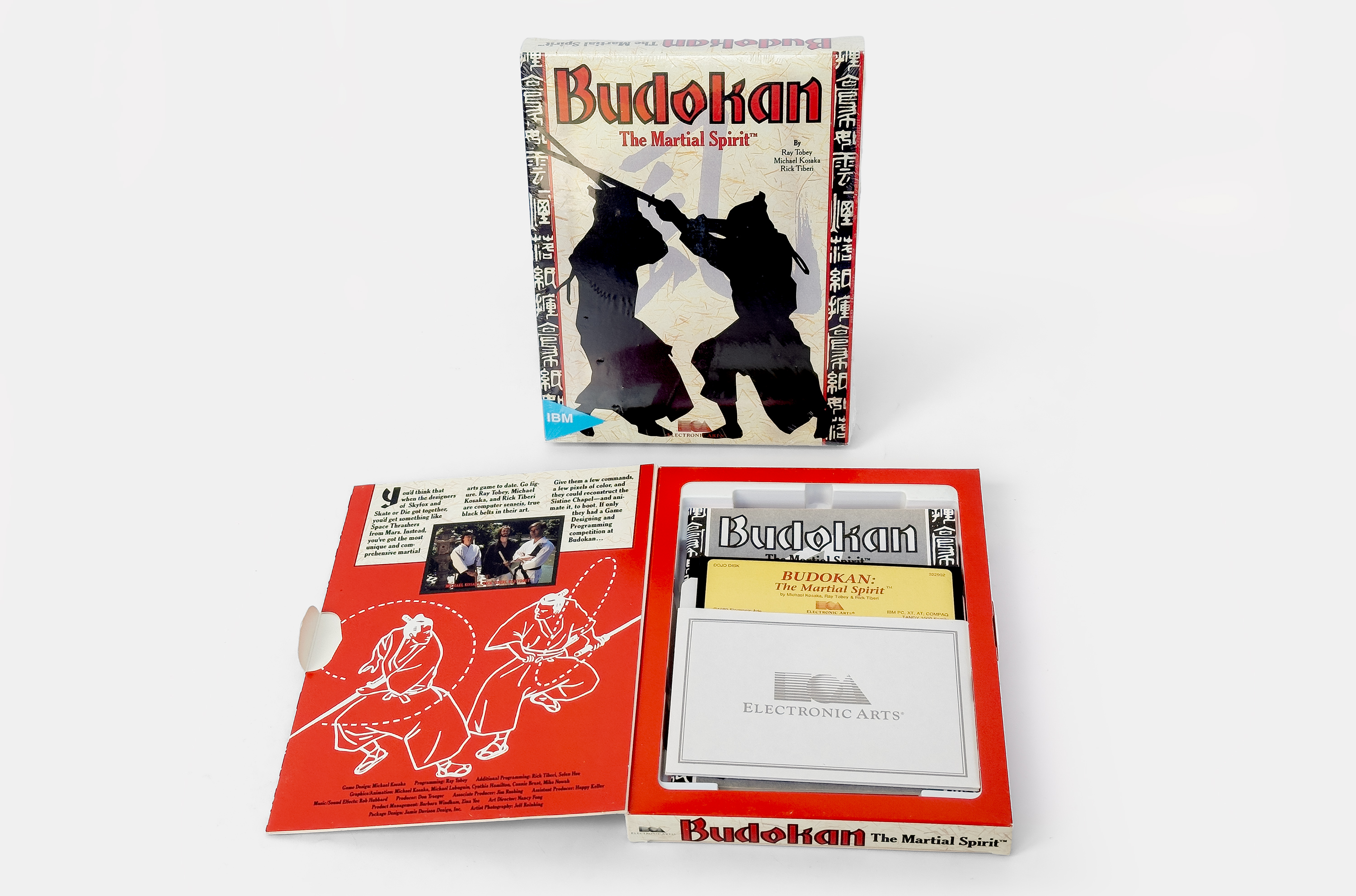
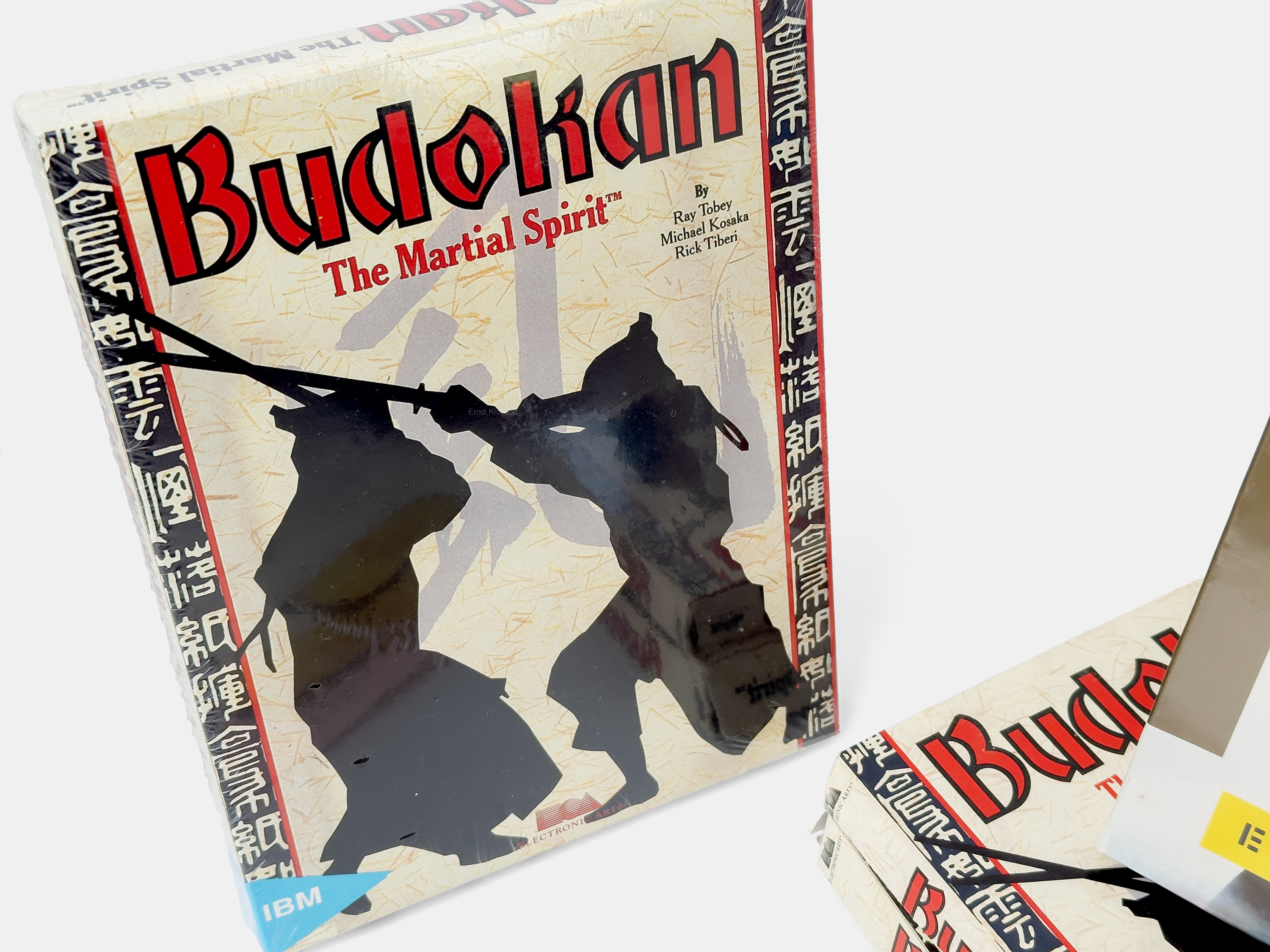
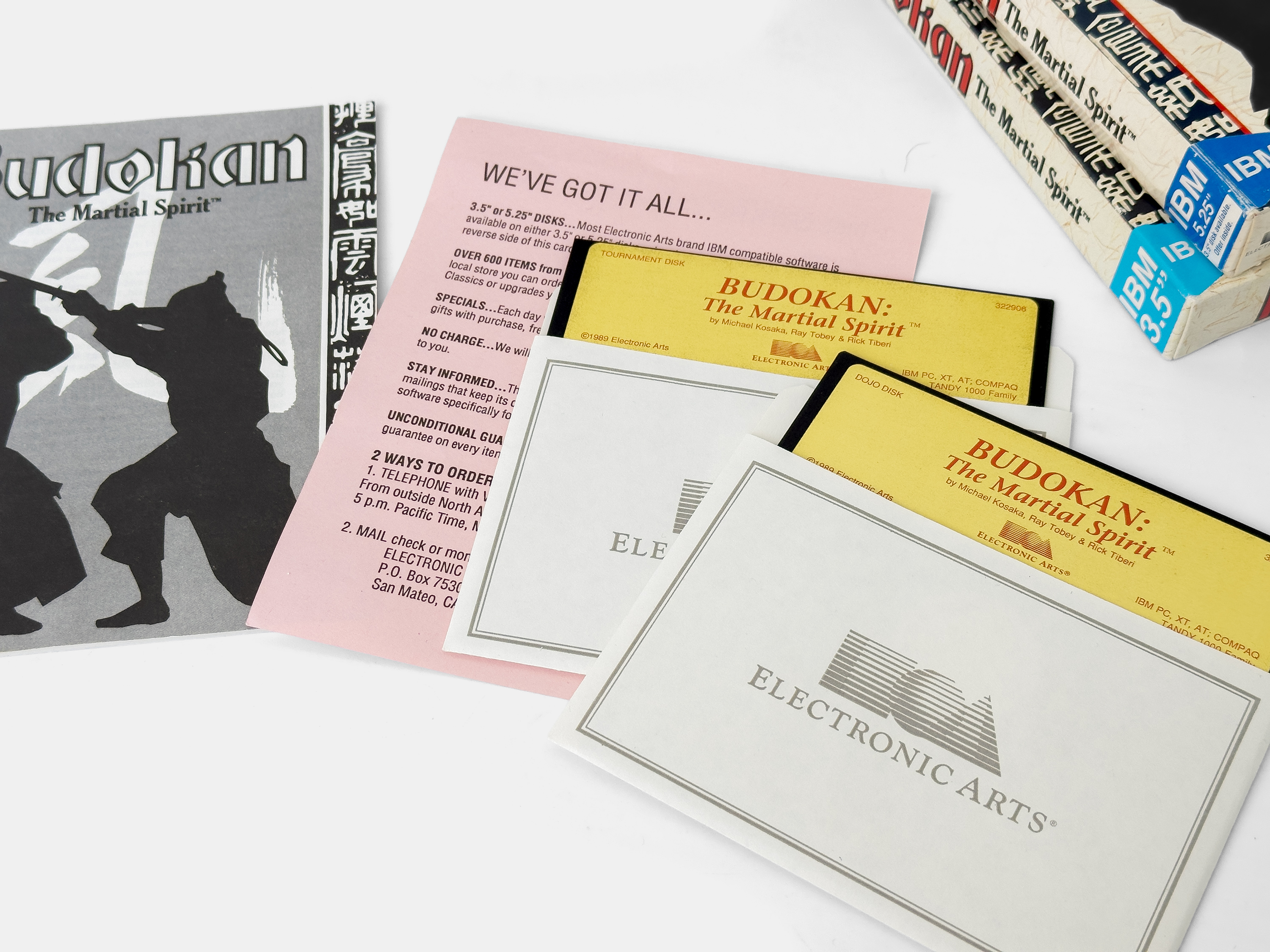
Electronic Arts published Budokan: The Martial Spirit for the IBM PC in November 1989.
It was positioned as a distinctive offering, something different from the arcade-inspired titles that dominated the market.
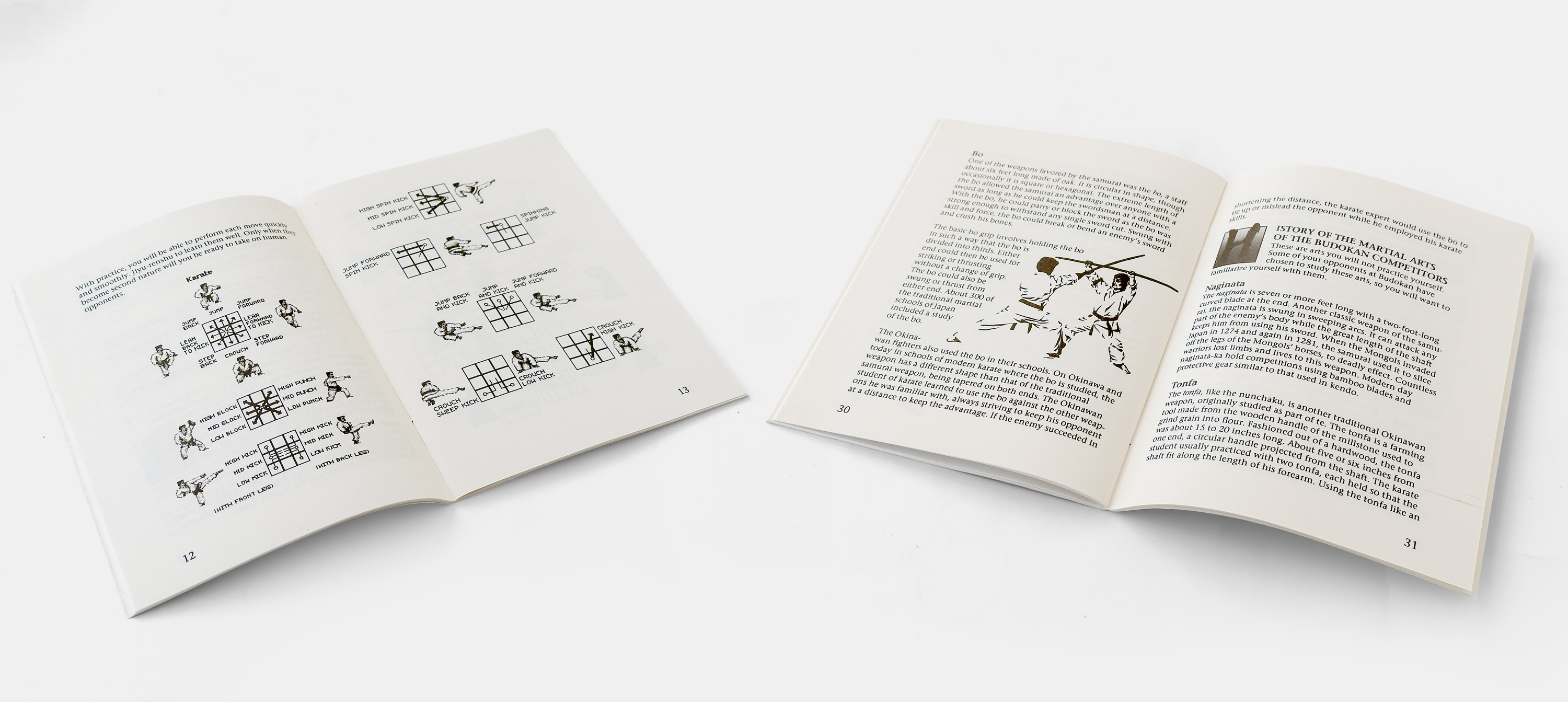
Budokan features four distinct disciplines: Karate, Kendo, Bo, and Nunchaku. Each requires a different approach, not only in terms of available moves, but in pacing and strategy. Weapons add reach and power, but also demand precision. Stamina affects speed and responsiveness, while ki governs the energy behind actions.
The structure provides a sense of progression, leading the player from training and sparring toward the Budokan arena itself.
Versions for other platforms followed in the years to come. In 1990, alongside a Commodore Amiga version, Budokan appeared on the Sega Genesis, marking one of Electronic Arts’ early ventures into the console market. It was a period defined by negotiation and experimentation, as the company sought to establish itself beyond home computers.

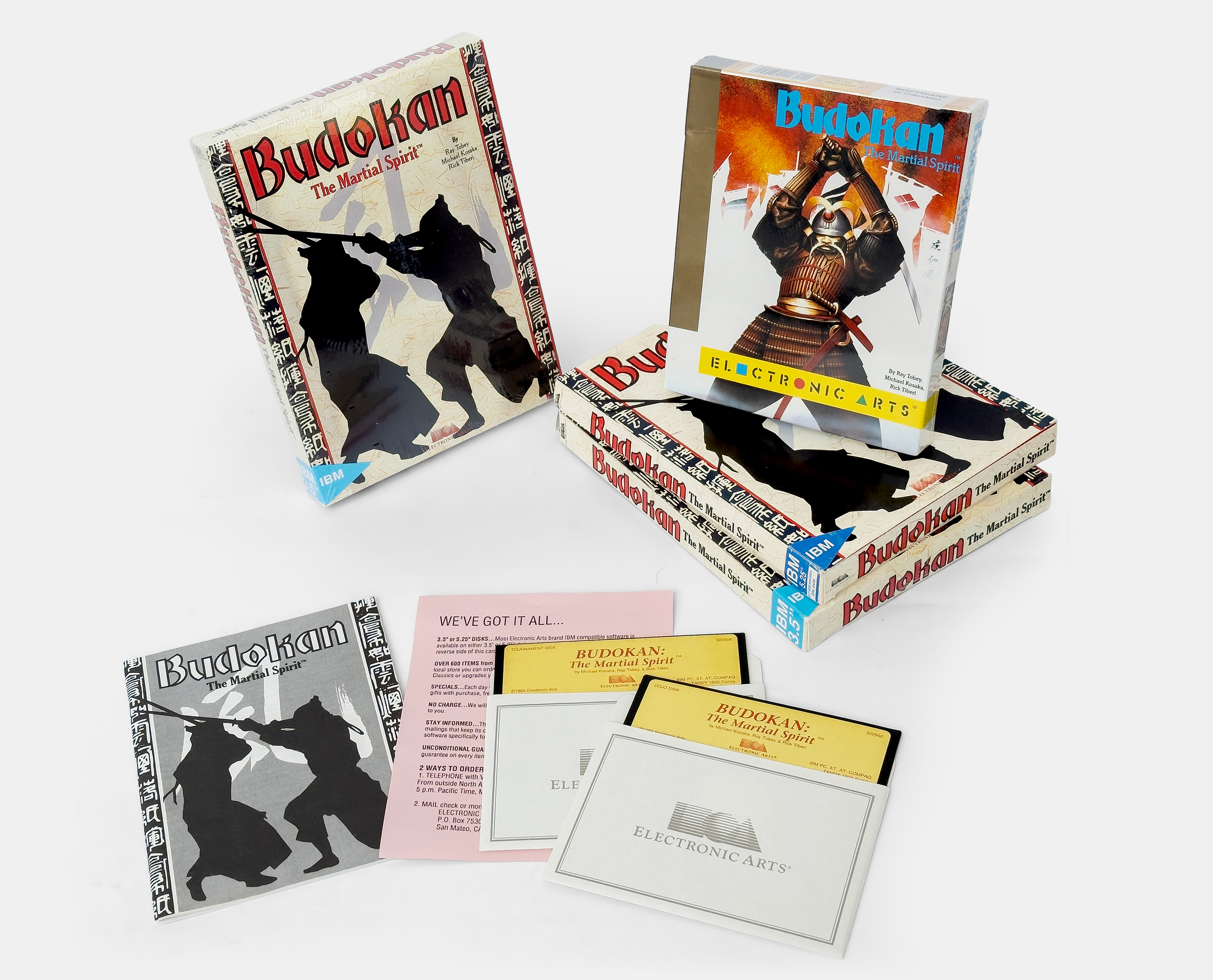
Budokan was released in Europe, both the original IBM PC version (seen here) and ports for other, less capable systems.
Budokan was met with a mixture of praise and hesitation. Critics recognized its ambition, hailed its art and animation, and appreciated its attempt to move beyond genre conventions, exploring a more reflective, measured approach to fighting games. Many reviews highlighted its atmosphere and depth, describing it as a rare intellectual take on a field often defined by fast-paced action. At the same time, the game’s deliberate pacing proved divisive.
Players accustomed to fast, immediate action often struggled with its controls and rhythm. It could feel slow or even frustrating, but for those willing to adapt, Budokan offered a level of mastery and nuance that was quite exceptional for the era (and still is). In this way, the very qualities that set it apart also limited its mass appeal. As the 1990s took off, the fighting genre would increasingly favor titles like Street Fighter and Mortal Kombat, leaving Budokan as a distinctive, thoughtful outlier.
Kosaka remained part of Electronic Arts’ evolving creative environment, contributing to the company’s ongoing transformation. He stayed with the company until 2001, holding various positions as designer, art director, and producer. That same year, he launched Kosaka Interactive, Inc., which operated briefly. In the years that followed, he continued his career across a range of companies, including LucasArts.
Sources: Wikipedia, LinkedIn, BionicLoad, DosDays, PocketMags, Tales From The Collection, Internet Archive…

 Retro365