
Another year is winding down. As it has become a small Christmas tradition, I like to take a moment to reflect on the year that has passed. I’ve always kept the blog subjective, focusing on the games, the developers, the times, and the technology, and never really on myself. This year, I felt it was time to share a bit more of my own background. Not because I enjoy talking about myself, but because I think people increasingly appreciate seeing the human side of the passion. In the end, I found myself writing less about me and more about my family’s history, because without it, this site would be little more than a 404.
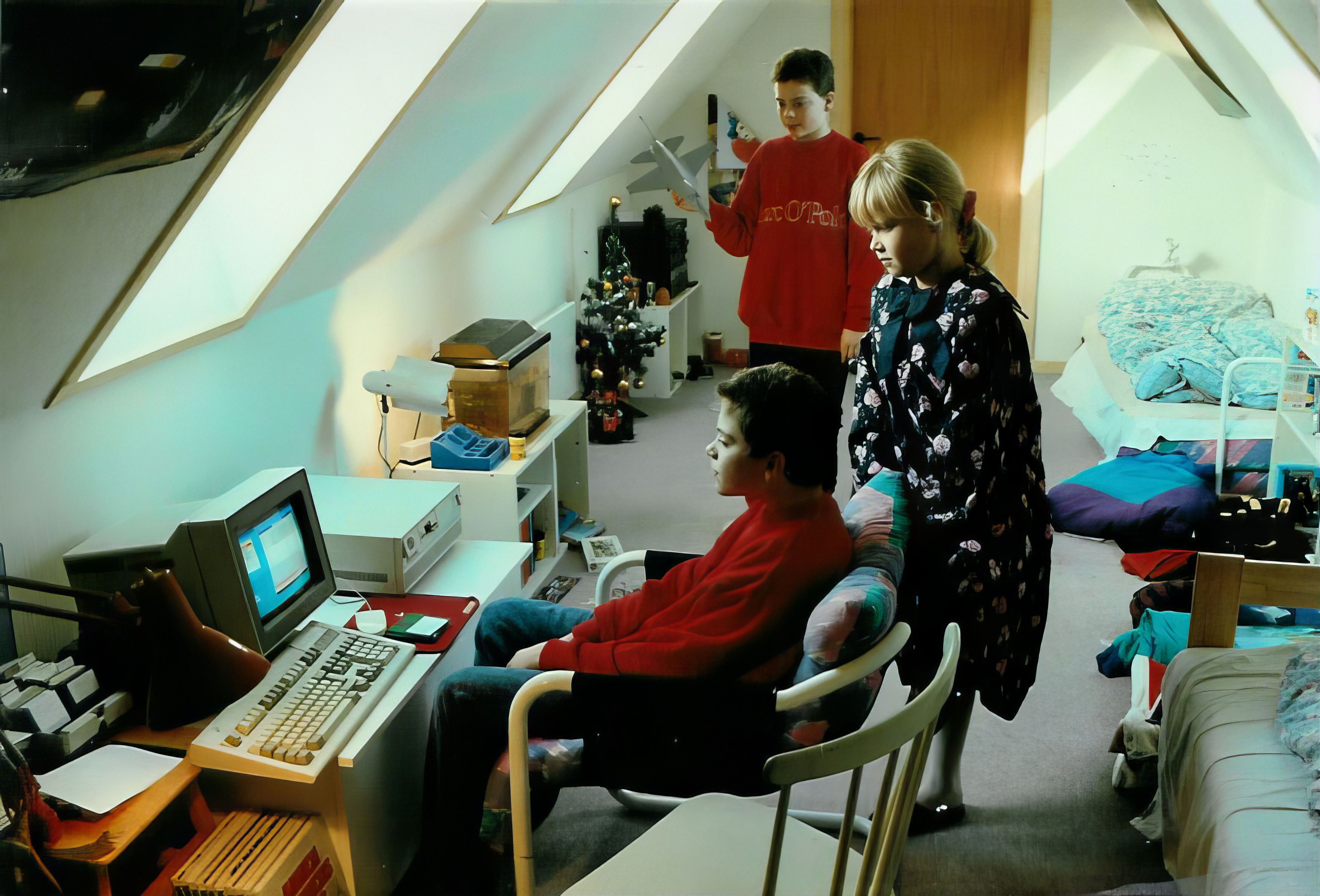
A picture from my article “Retro365 and me, a very personal story”, done earlier this year.
Our room around Christmas 1991, with me in front of our Intel 286–based IBM PS/2 Model 50.
I managed to publish 36 articles this year, more than I’d hoped for. Around 35,000 have stopped by, some leaving kind messages and others sharing new stories and facts that now live on the blog for everyone to discover. My hope is that anyone who visits will leave with a deeper understanding of the early home-computer industry, the games, the companies, and the pioneering individuals who helped shape it.
I always try to end the year with something Christmas-related, so why not revisit the decades-old debate: Is Die Hard a Christmas movie or not?
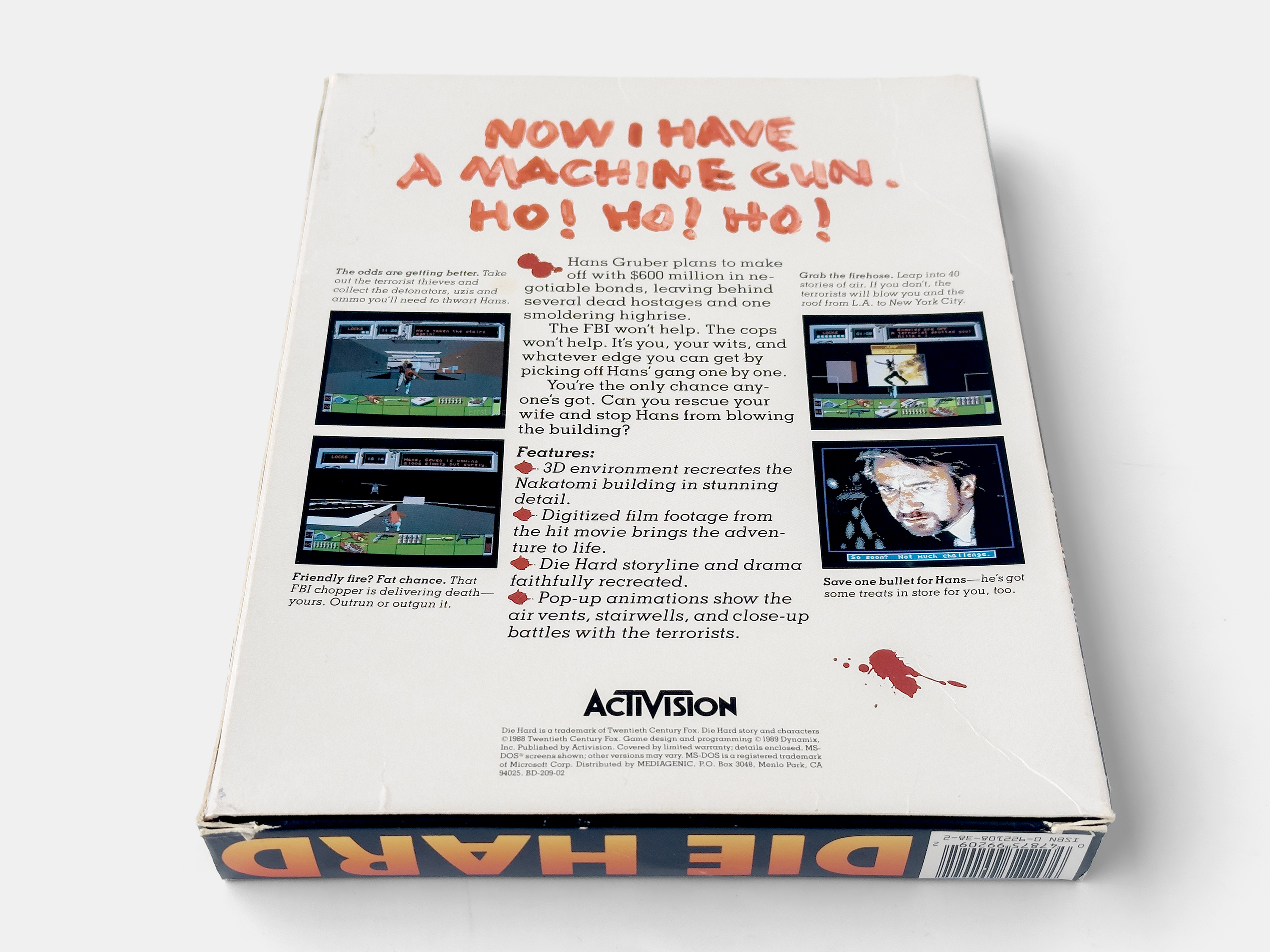
Even writer Steven E. de Souza and lead actor Bruce Willis, who plays NYPD detective John McClane, don’t agree, and I suppose it really is in the eye of the beholder and how one defines a Christmas movie. On one hand, it’s an action thriller about a cop taking on a group of terrorists. On the other hand, it takes place during a Christmas office party, on a particularly tense Christmas Eve, and features a distinctly holiday-tinged score. And of course, it gives us the iconic “Now I have a machine gun. Ho-ho-ho”, perhaps the most festive ‘gift tag’ of the 1980s. And yet, the story could just as easily have unfolded at any other time of year.
Over time, however, the movie has become a holiday tradition in many families, including mine. Broadcasters have shown it around Christmas for decades, and for many of us, watching Die Hard is now just as much a part of the season as carols, gingerbread, and Christmas pudding.
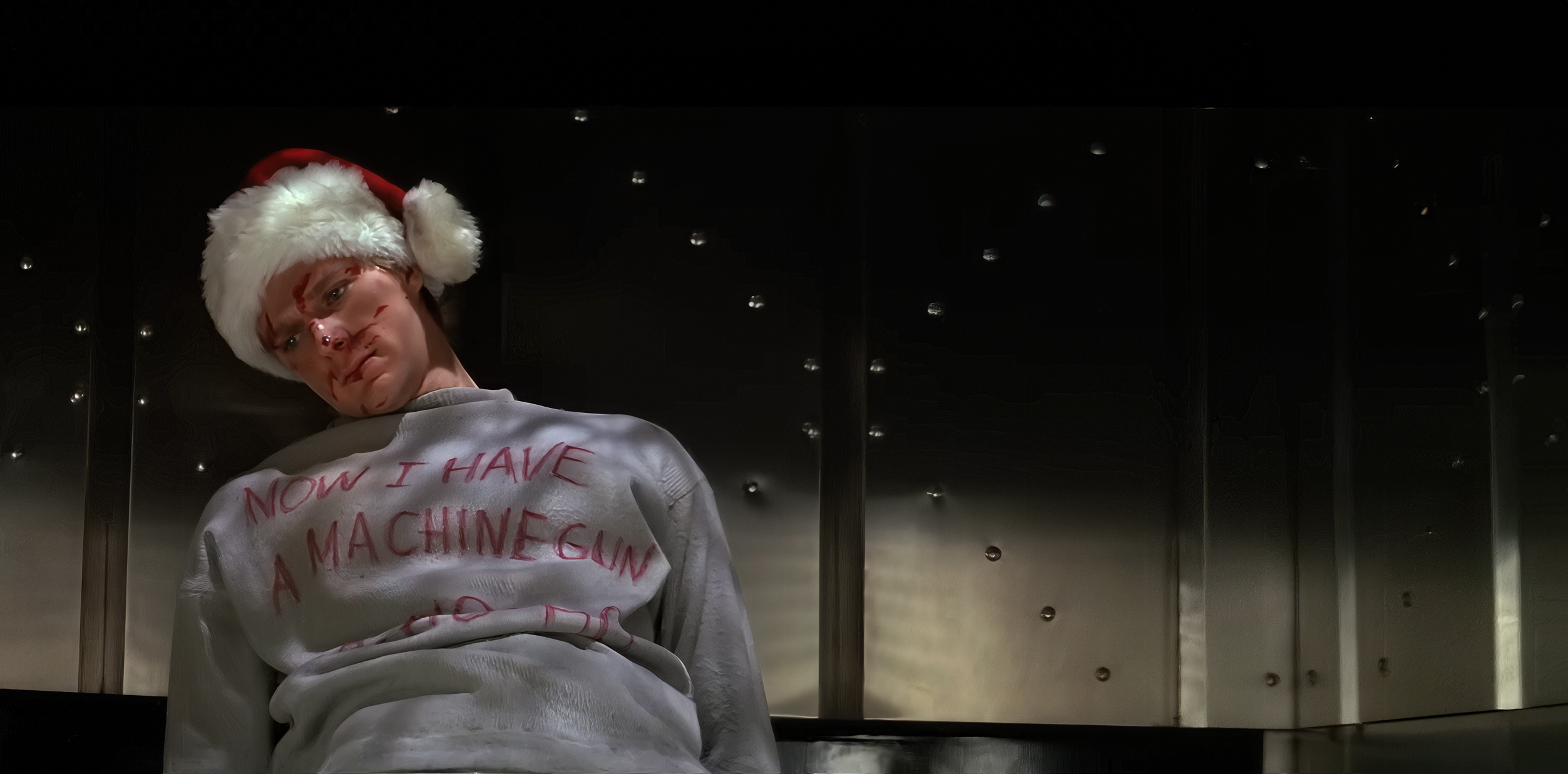
That’s one way to get someone’s attention.
Subtlety was never the Die Hard franchise’s strength.
When John McTiernan’s Die Hard hit theaters in the summer of 1988, it changed the language of action cinema. Bruce Willis wasn’t a muscle-bound, hip-firing minigun-wielding superman, but a quick-thinking, battered, everyman cop. Arriving in Los Angeles to spend Christmas with his estranged wife, aptly named Holly, McClane finds himself facing a team of terrorists led by the charismatic Hans Gruber, played by the late Alan Rickman in his breakout role.
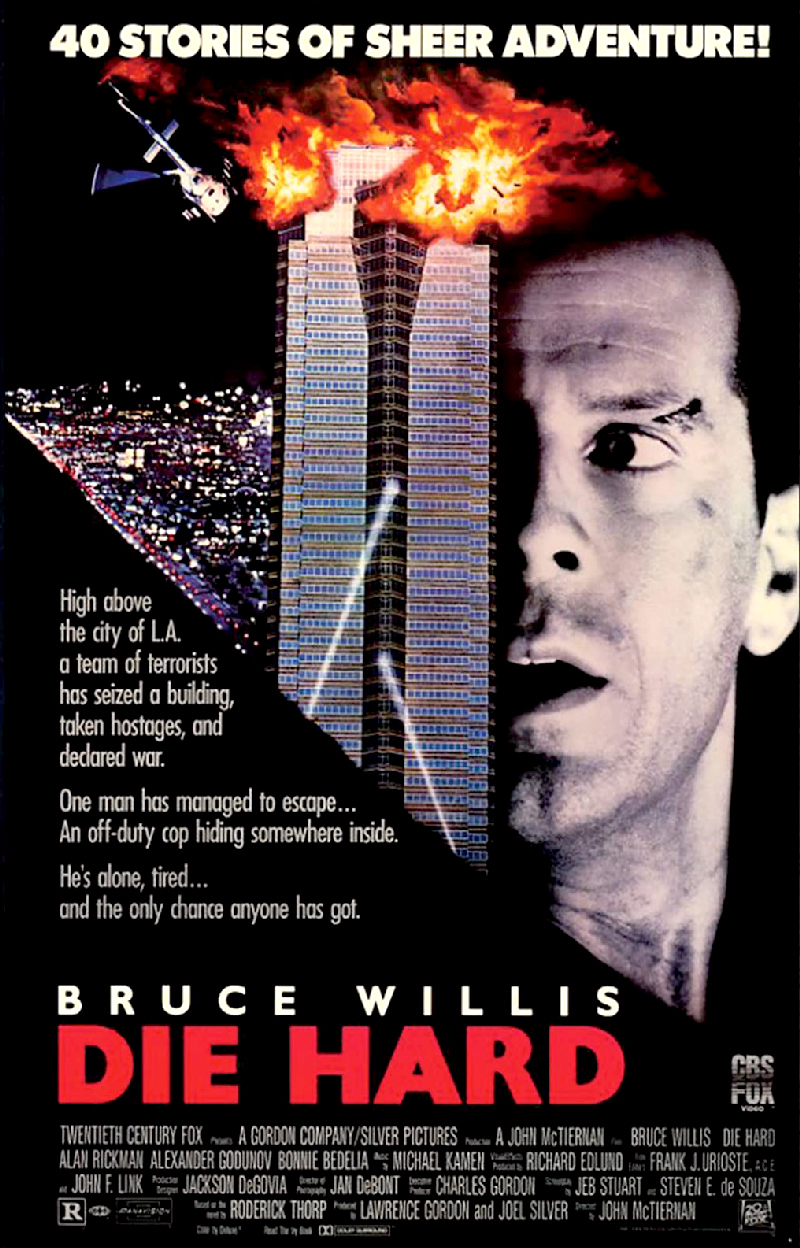
Die Hard starring Bruce Willis as John McClane and Alan Rickman in his film debut as Hans Gruber. McClane, an NYPD officer, attempts to save his wife and other hostages taken during a Christmas party, though the poster gives no hint of the holiday setting.
Expectations for Die Hard were low, and upon its release in July 1988, early reviews were mixed. Critics questioned its violence, its plot, and even Willis’ casting, though McTiernan’s direction and Rickman’s performance were widely praised. Against all predictions, the film grossed around $140 million worldwide, becoming the year’s tenth-highest-grossing film and its top-grossing action movie. It earned four Academy Award nominations, elevated Willis to leading-man status, and turned Rickman into a star.
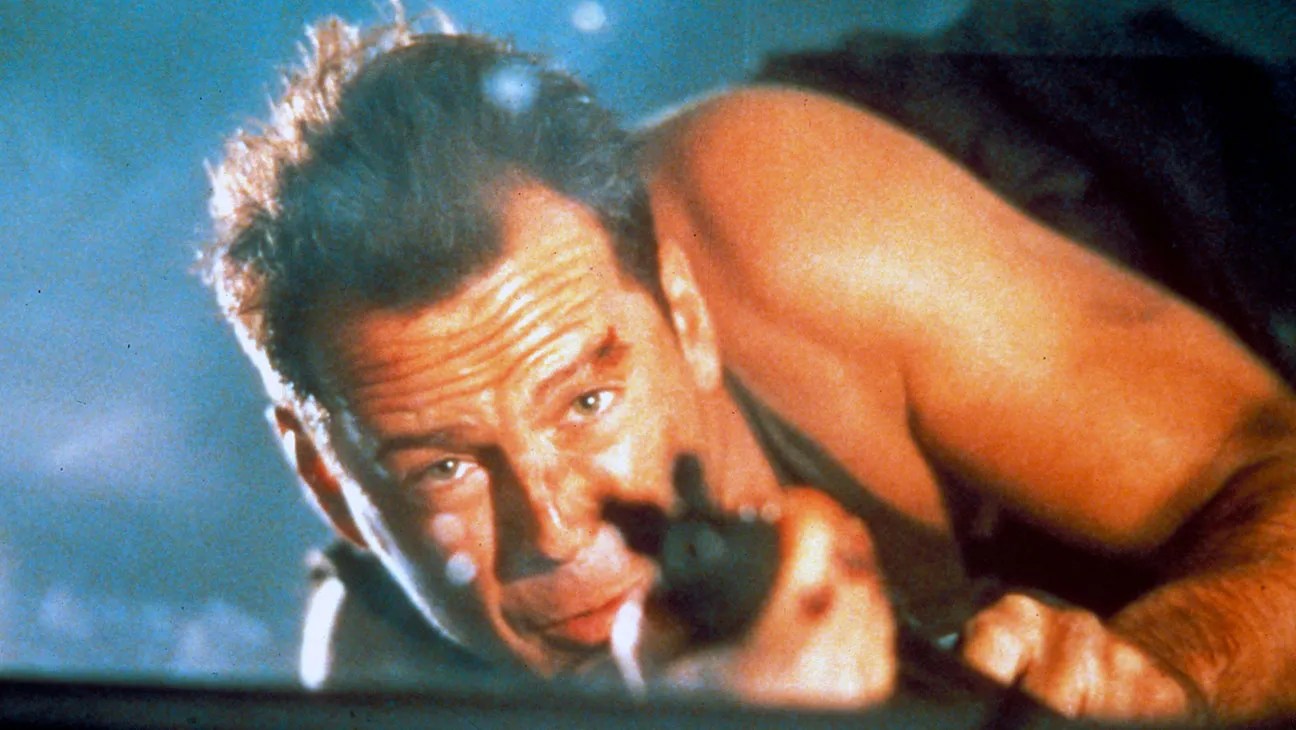
Christmas is about family, hope, and joy. Look past the explosions and gunfire, and Die Hard taps into all three, capturing the Christmas spirit in its own unmistakable way.
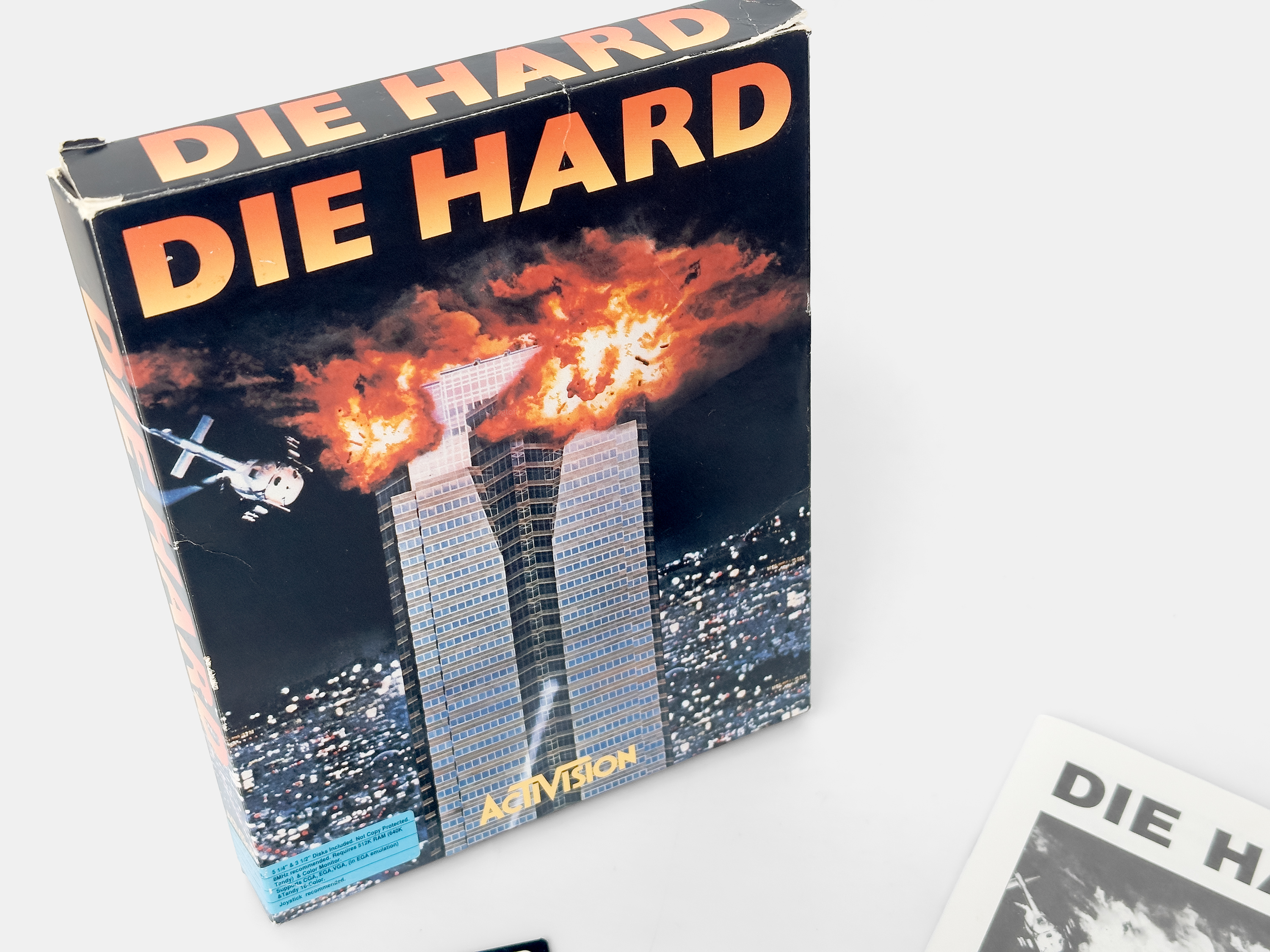
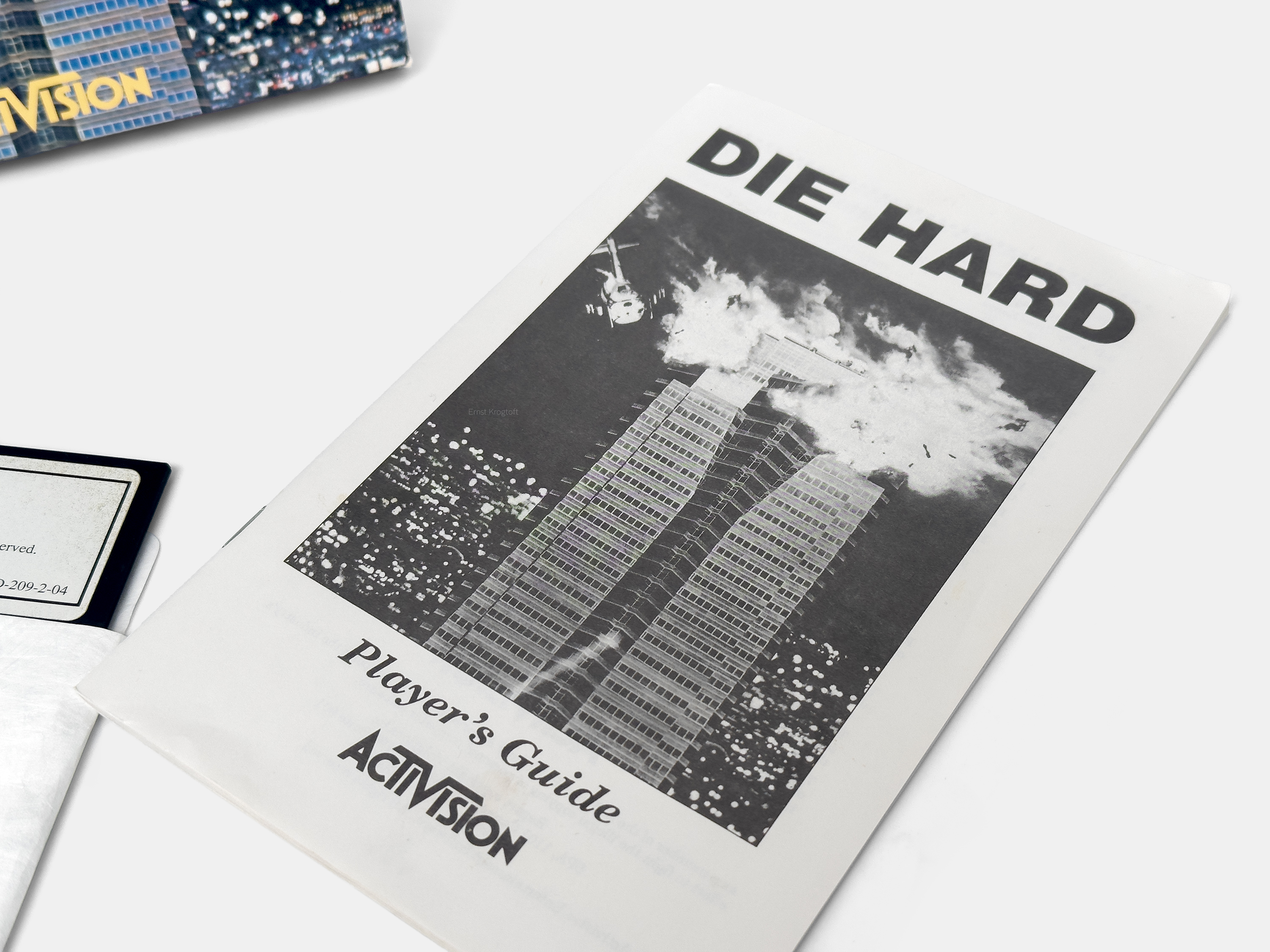
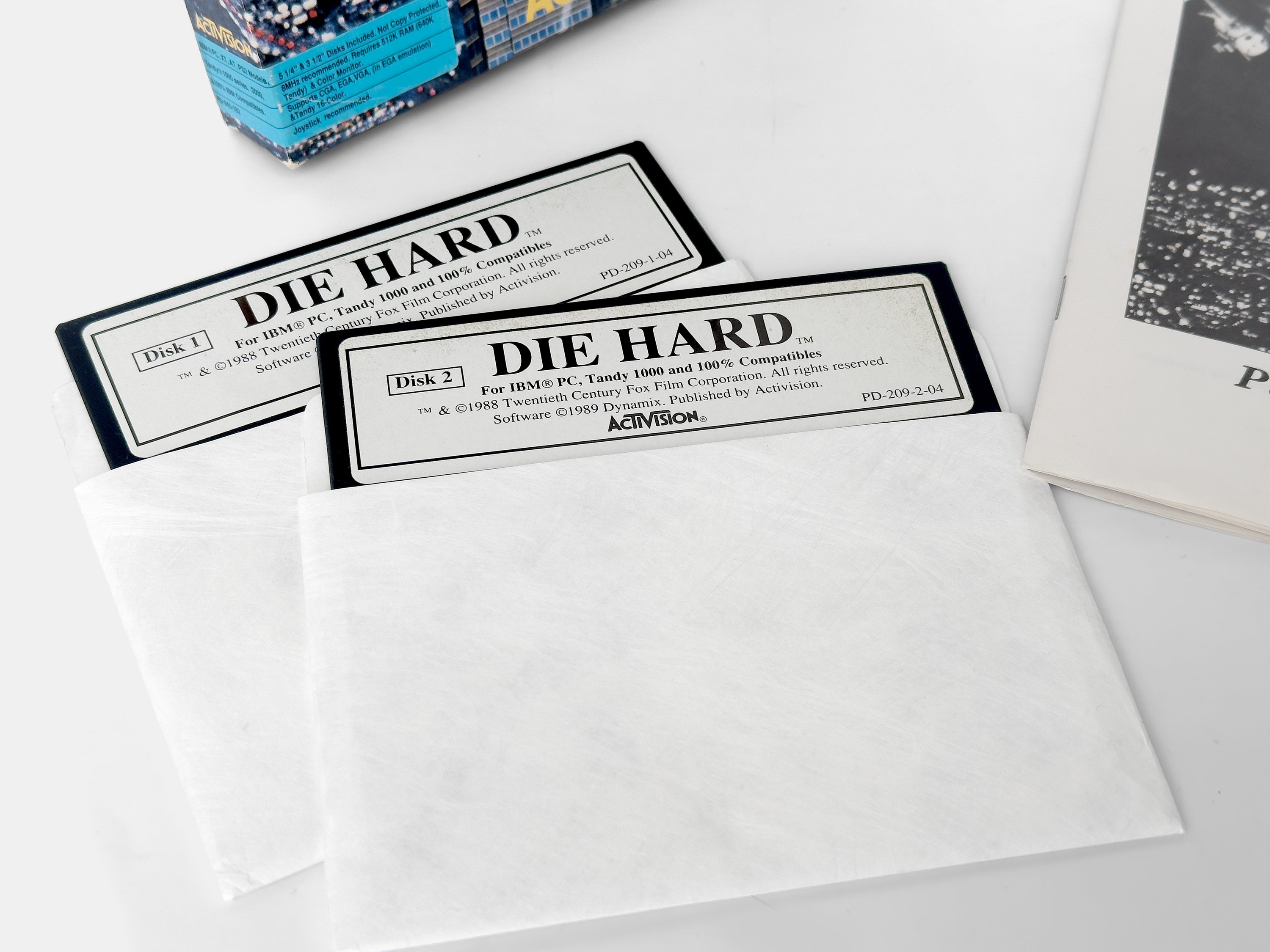
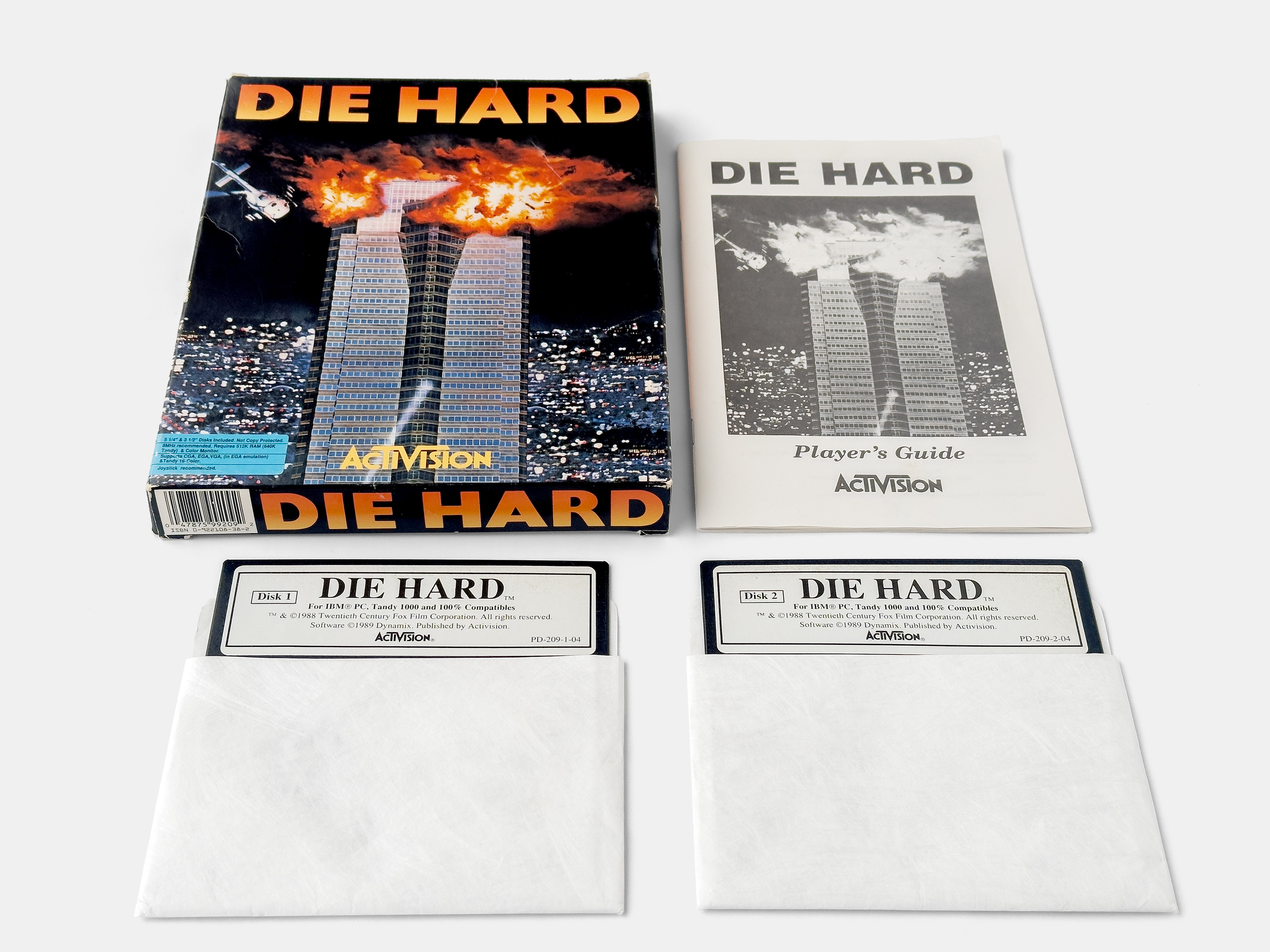
It didn’t take long for Hollywood’s new action classic to find its way into the world of computer games. In 1989, Activision published Die Hard, developed by Oregon-based Dynamix. Unlike many rushed film tie-ins of the late 1980s and early 1990s, Dynamix’s adaptation effectively captured the movie’s tense, cat-and-mouse pacing, rather than reducing it to simple arcade action. Played from a third-person 3D perspective, the game lets you explore Nakatomi Plaza, search for useful items, and fight terrorists with a range of weapons, or your fists. The game was released for the IBM PC in December 1989, as Dynamix was refining its proprietary 3D development technology, 3Space, which had already drawn the attention of Sierra On-Line, which would soon acquire the company.
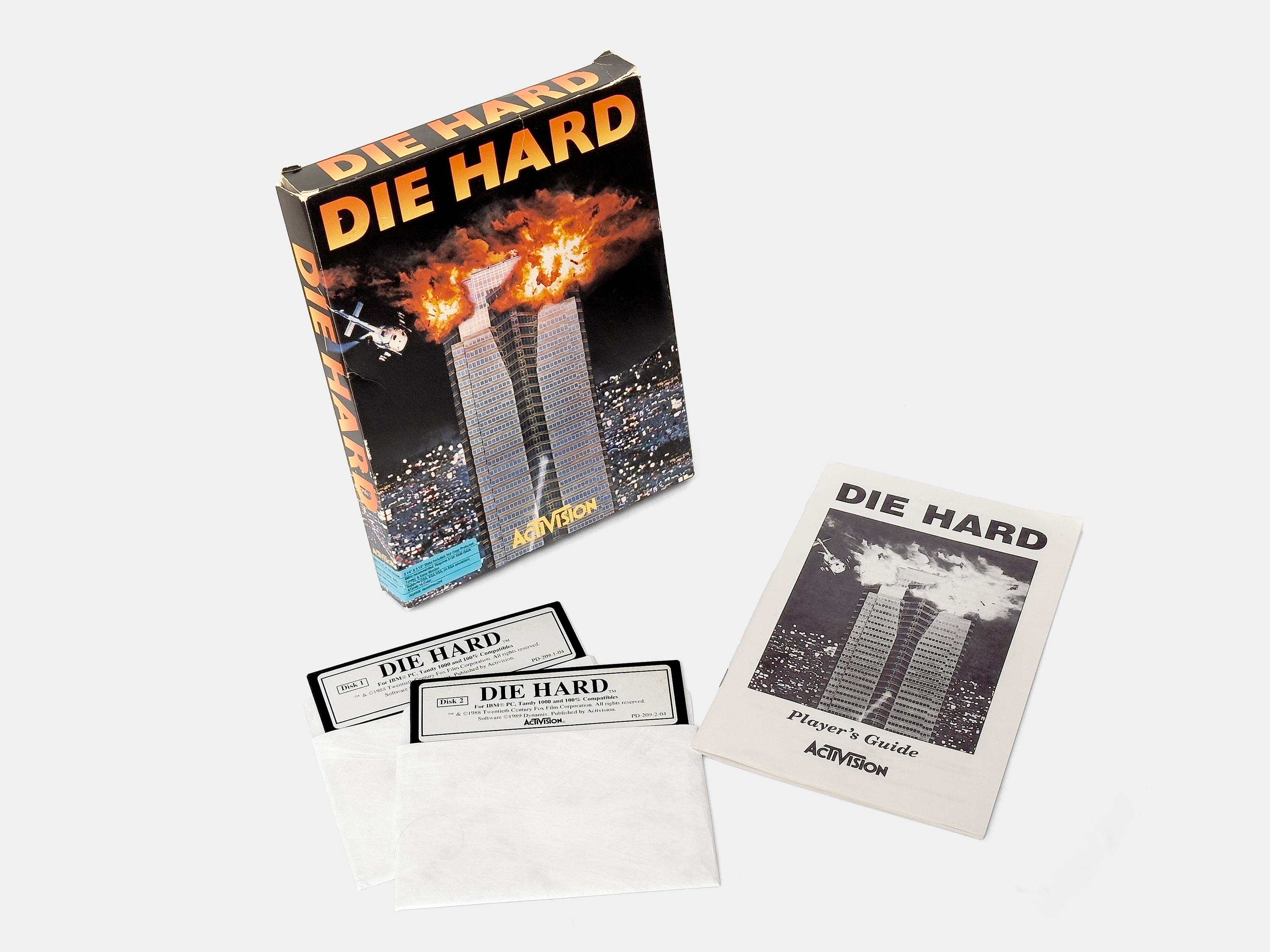
Developed by Dynamix and published by Activision, Die Hard arrived on IBM PCs in time for Christmas 1989, just as the studio was about to become part of the Sierra On-Line family.
A Commodore 64 version followed in 1990, as a classic 2D side-scroller.
Thanks for stopping by the blog this year, for reading, for commenting, and for keeping the spirit of retro computing alive.
Thank you for following along!
A very merry Christmas to you and yours, and all the best for 2026.
 Retro365