In the late 1970s, wargaming was little more than an idea waiting to be realized on home computers. The hobby was popularized by companies like Avalon Hill and SPI, whose boxed sets of maps, counters, and thick rulebooks recreated conflicts ranging from ancient battlefields to hypothetical nuclear wars. For many, the appeal lay in the scope and detail, entire armies moving across vast fronts, but the depth came at a cost. The games often demanded patience, meticulous record-keeping, and an opponent equally willing to commit hours to a single campaign. Bringing that level of complexity to home computers was uncharted territory, but it offered a way to offload the paperwork and let players focus on strategy.
One of the first to see the potential was Joel Billings, a young economics graduate from Claremont Men’s College in California. Billings had been fascinated by board wargames since his young years, studying troop movements and supply lines with the same devotion that others reserved for sports. He recognized that home computers could be used to crunch the endless tables of numbers, do the record-keeping, and serve as an impartial referee.
SSI’s debut came in 1980 with Computer Bismarck, a detailed simulation of the famous North Atlantic naval hunt and engagement between the British fleet and the mighty Bismarck. Packaged in a large box with map inserts and a rulebook that echoed traditional board wargames, it set the template for the company’s future releases. Titles like Computer Ambush and Computer Napoleonics soon followed, each proudly bearing the “Computer” prefix to underline that these were digital heirs to the tabletop tradition.
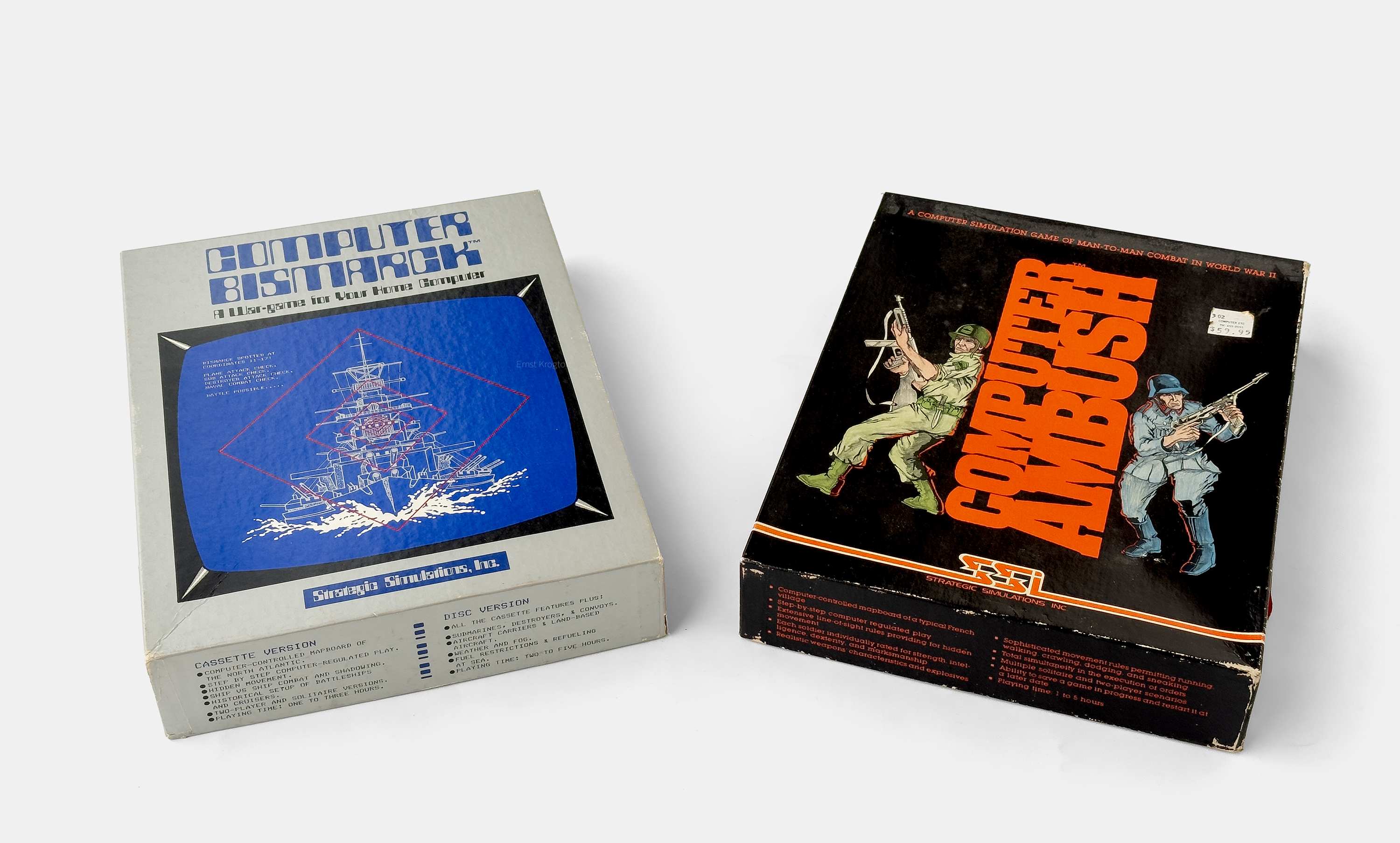
Strategic Simulations’ first two releases, Computer Bismarck and Computer Ambush from 1980, established the company in the young home computer market by offering serious wargamers a new medium for strategy.
Computer Bismarck, designed by Joel Billings and John Lyon, was the first commercially published computer wargame.
Computer Ambush, designed by Ed Williger, was a squad-level tactical wargame focused on World War II infantry combat.
By 1983, SSI had established itself as the premier publisher for strategy-minded computer owners, offering a catalog that spanned tactical ground combat, naval encounters, and aerial warfare.
The Battle of Britain was a natural subject for the medium. Long celebrated in history books and on the tabletops of wargamers, the clash between the Luftwaffe and the Royal Air Force offered both a compelling narrative and a rich strategic puzzle. The drama of August and September 1940, when the fate of Britain arguably hung on the decisions of Fighter Command, combined radar intelligence, squadron management, and high-stakes aerial combat in a way that seemed ideally suited for a computer adaptation.
The idea was championed by Charles Merrow and Jack T. Avery, two designers already familiar to SSI players. Their first collaboration, Computer Air Combat, had been picked up by SSI in 1980 and became the company’s earliest attempt to bring the mathematics of aerial dogfighting onto home computers. Players juggled aircraft performance tables, altitude, and maneuver choices, while the Apple II handled the bookkeeping that would have been impractical on a tabletop. It was a dense, number-driven simulation, but it showed that computers could capture the complexity of air warfare.
The following year, the pair took a detour with Computer Baseball. Far removed from battles in the skies, it nonetheless reflected the same fascination with probability and statistics. Batting averages, pitcher fatigue, and run expectancy were translated into a simulation that fans found both realistic and accessible. Reviews praised it as one of the first sports games to model the managerial side of baseball rather than just arcade-style action.
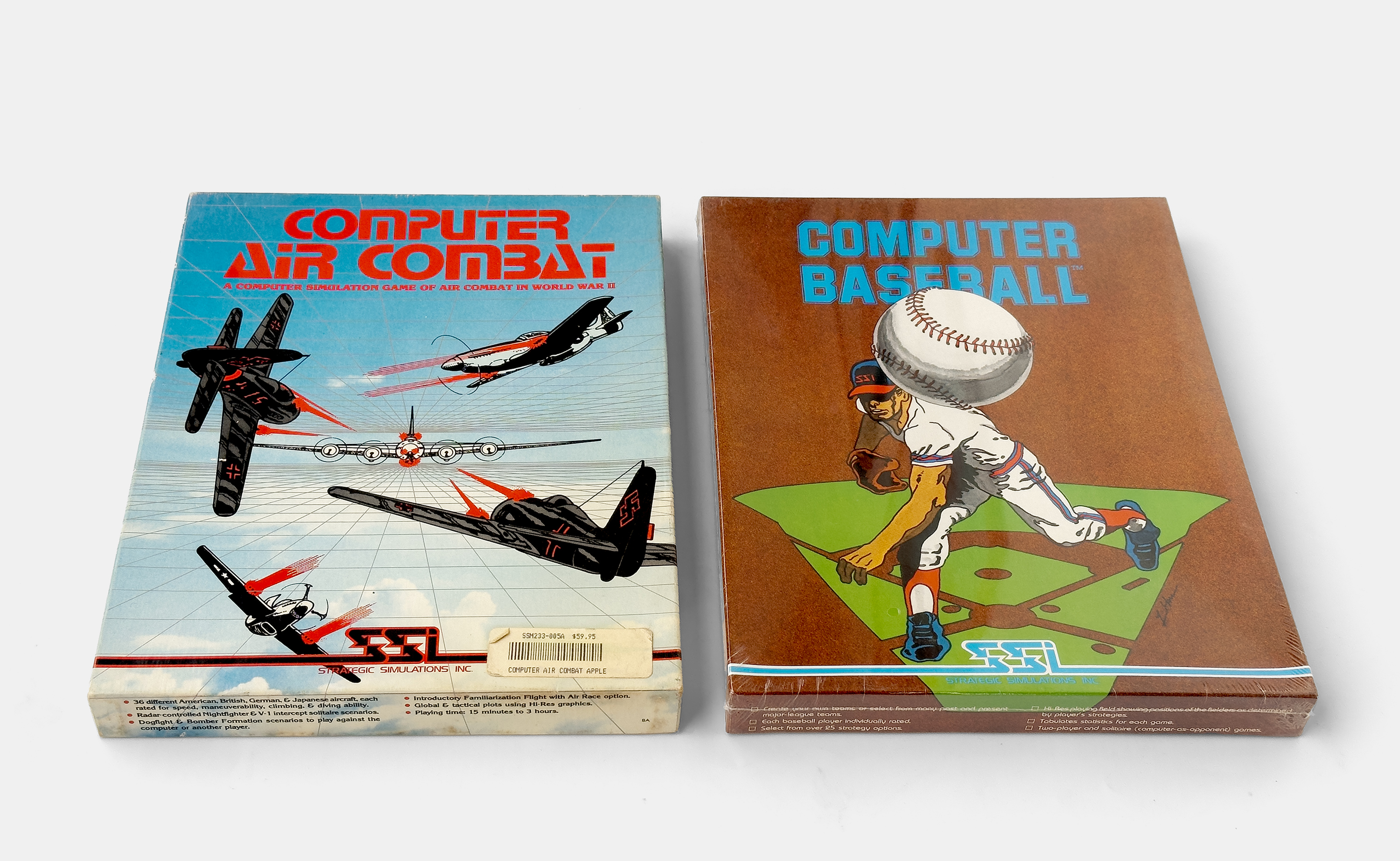
Computer Air Combat and Computer Baseball, from 1980 and 1981, respectively, were designed by Charles Merrow and Jack T. Avery.
In 1983, Merrow and Avery returned to aerial strategy but shifted from individual encounters to the grand scale of an entire historical campaign. Rather than putting players in the cockpit of Spitfires and Messerschmitts, they raised the perspective to the level of Fighter Command itself. Players stepped into the operations room, the nerve center of Britain’s air defense, where squadrons were directed, interceptions plotted, and the balance between weary pilots and fresh replacements was weighed with every decision. The game asked players to think like Air Chief Marshal Hugh Dowding and the web of choices that determined whether the German forces were met in force or slipped through undefended.
Merrow and Avery’s Fighter Command: The Battle of Britain stood out as the most ambitious attempt yet to model a modern air war at the operational level when released for the Apple II in 1983.
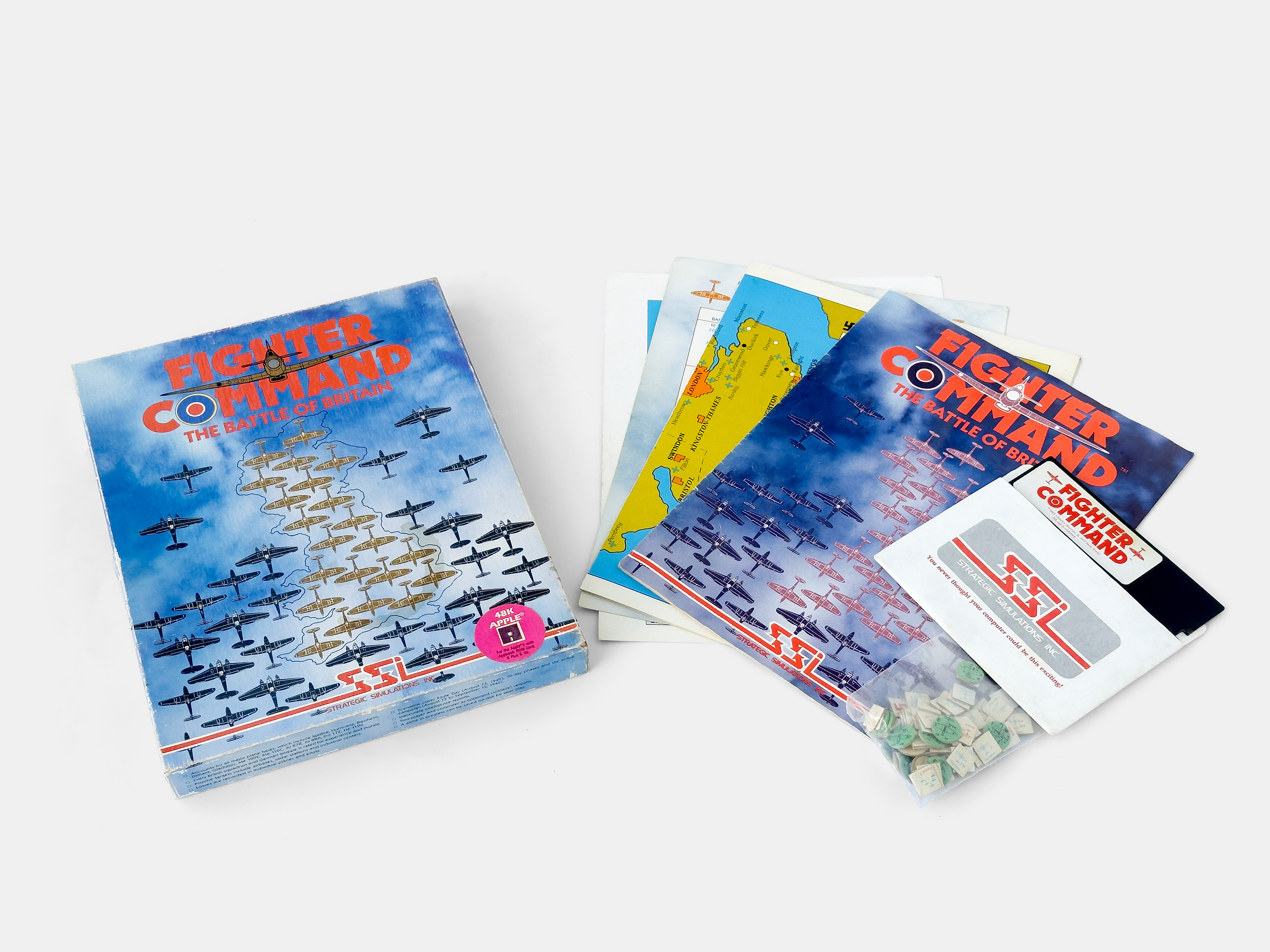
Charles Merrow and Jack T. Avery’s Fighter Command: The Battle of Britain was published for the Apple II by SSI in 1983.
Contemporary ads and catalog listings placed it in the “advanced” category of the company’s lineup, marketed toward hobbyists already comfortable with complex strategic titles.
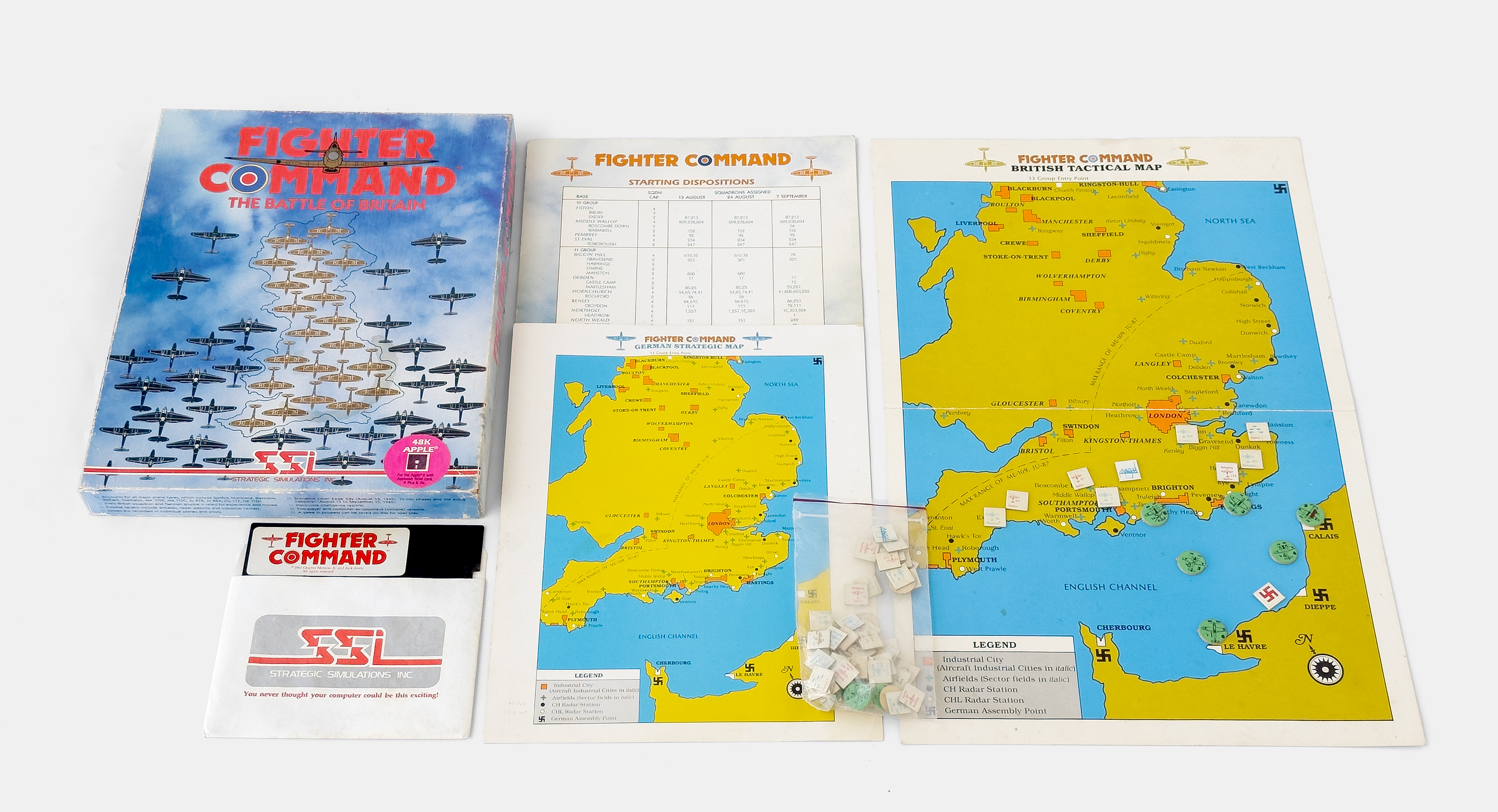
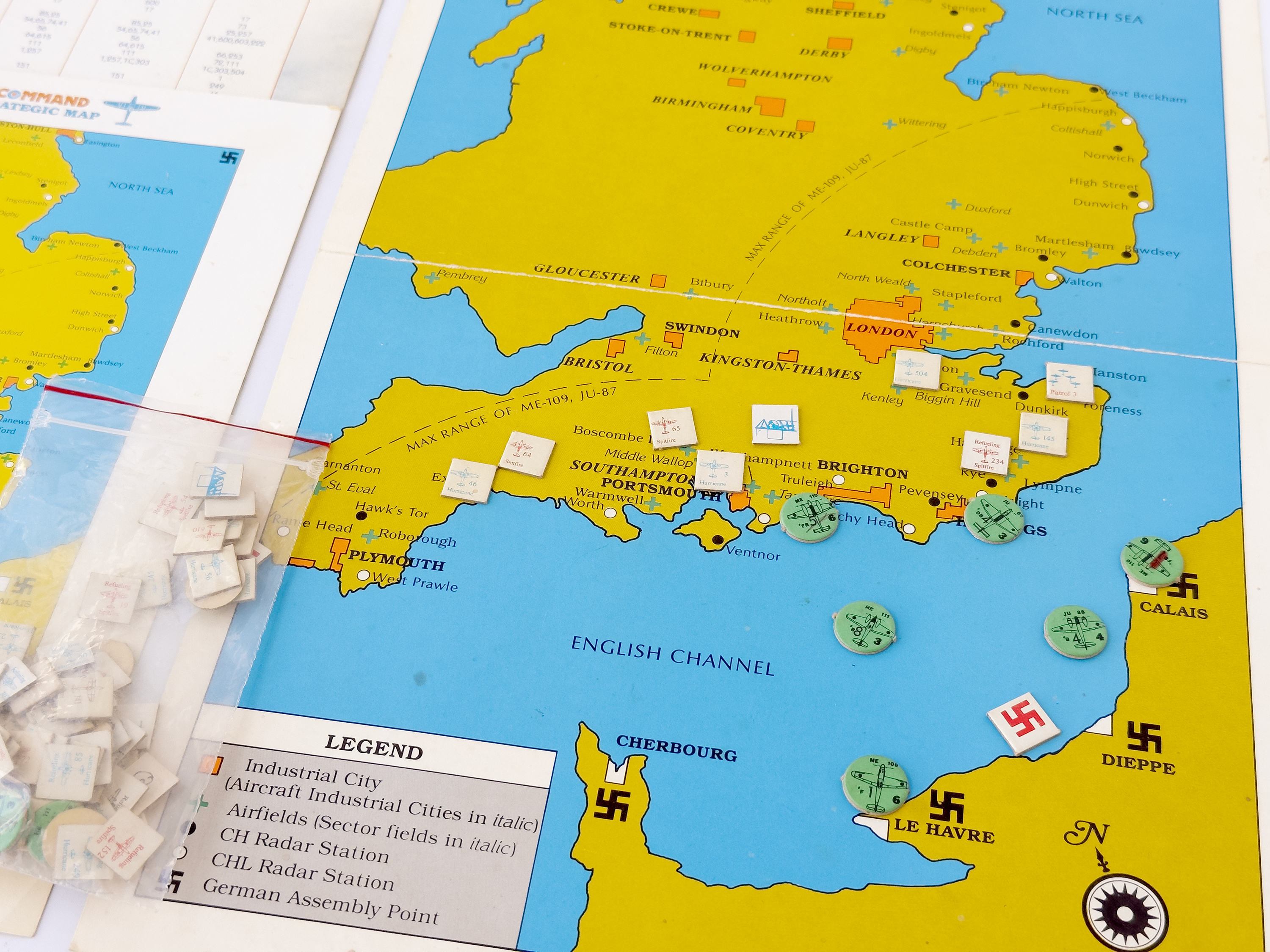
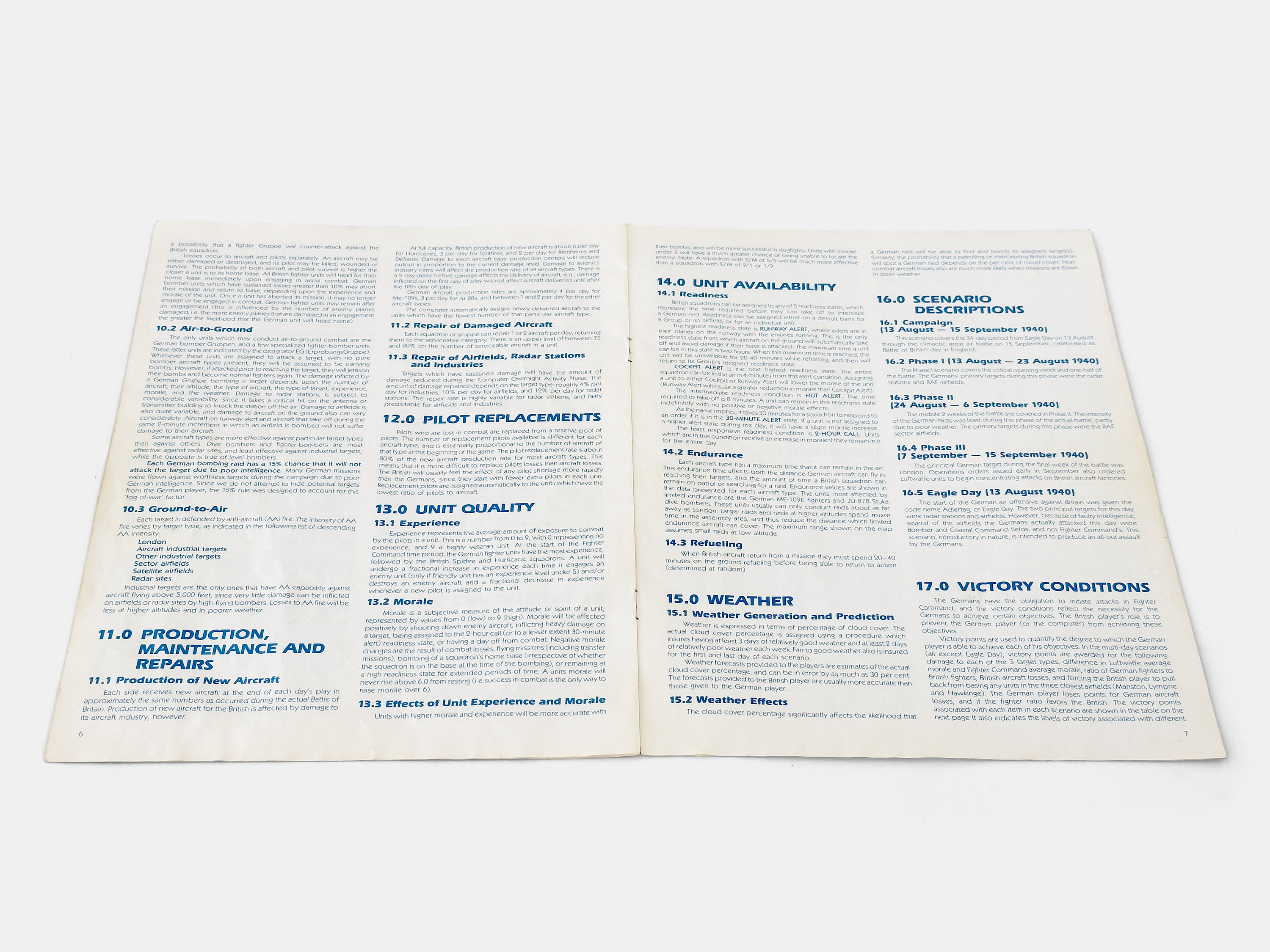
True to SSI’s style, the box came with documentation that set the historical scene and guided players through the rules and mechanics. The box also included a printed map of southern England and northern France, along with counters to represent squadrons and raids. Players were encouraged to use these pieces alongside the computer, plotting movements and keeping track of positions during play. It mirrored the way the real British Fighter Command had worked during the summer of 1940, with women of the Women’s Auxiliary Air Force, WAAF, pushing squadron markers across plotting tables at Bentley Priory and other sector headquarters while controllers directed pilots into the air.
Fighter Command provided three modes of play: The single-day “Eagle Day” scenario, the full 34-turn campaign stretching from August to September 1940, or shorter 10-day episodic engagements. Each turn represented a day, beginning with weather and intelligence briefings and followed by decisions on squadron readiness, raid targets, and interceptions. The execution phase brought the tension to life, as radar plots resolved into raids and the player’s carefully placed fighters scrambled to meet them.
Reception in the gaming press was measured, but positive. Computer Gaming World praised the campaign mode as the title’s strongest feature, noting how well it conveyed the tempo of the real 1940 struggle. Other magazines such as Softalk, Family Computing, and Compute!’s Gazette commented on the strategic tension of intercept planning, even if the game’s pace felt slow to those accustomed to arcade-style action.
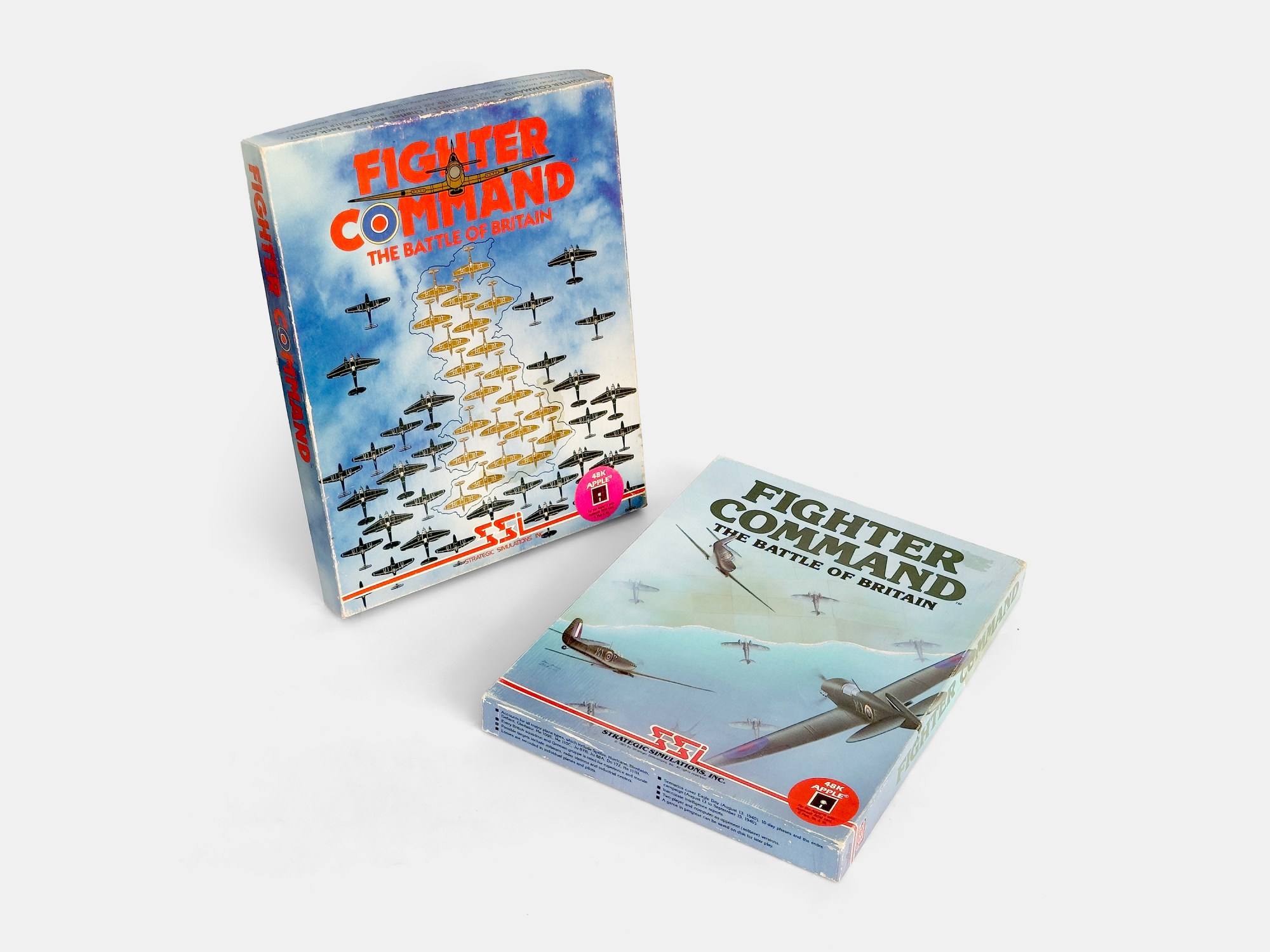
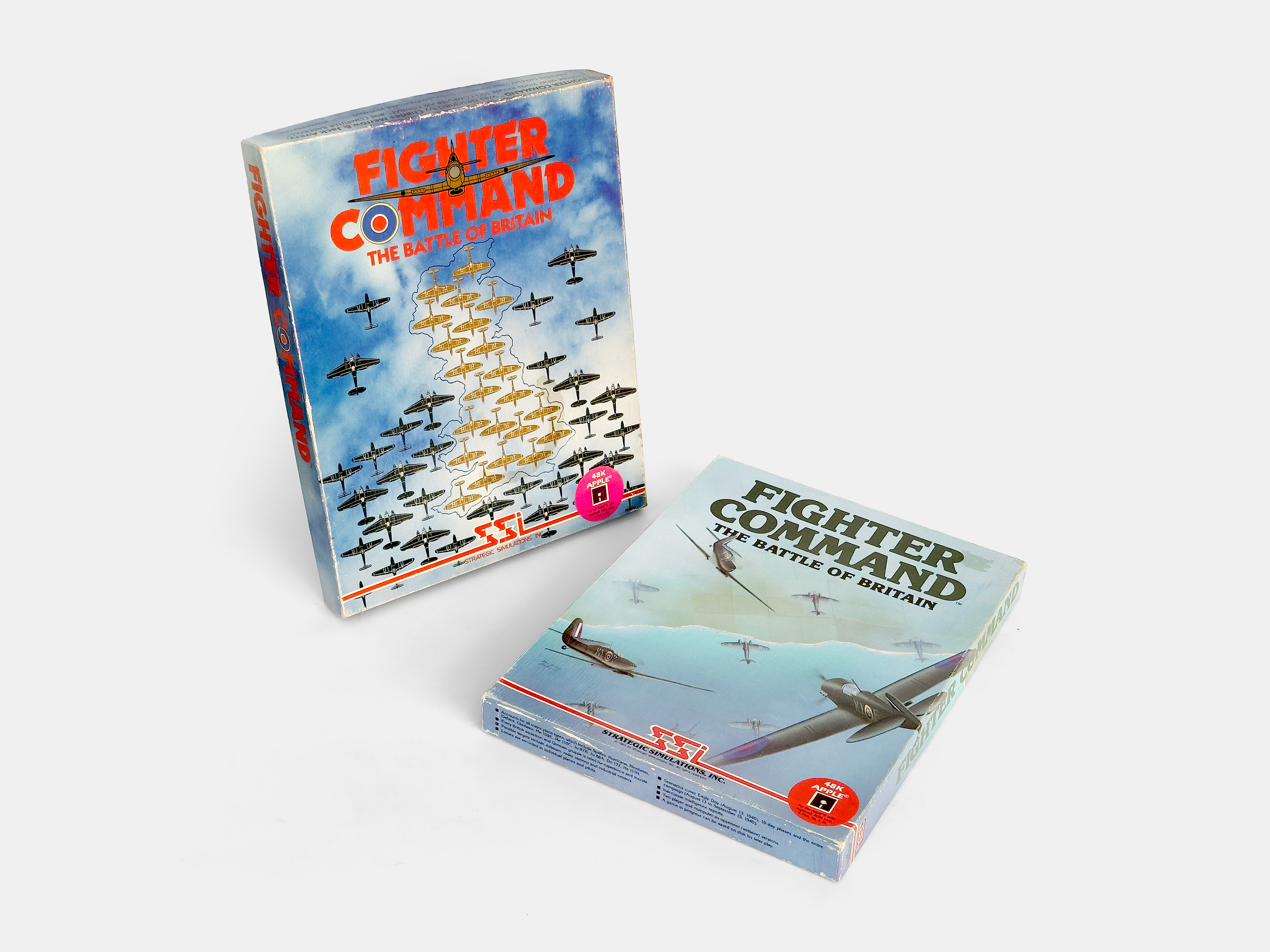
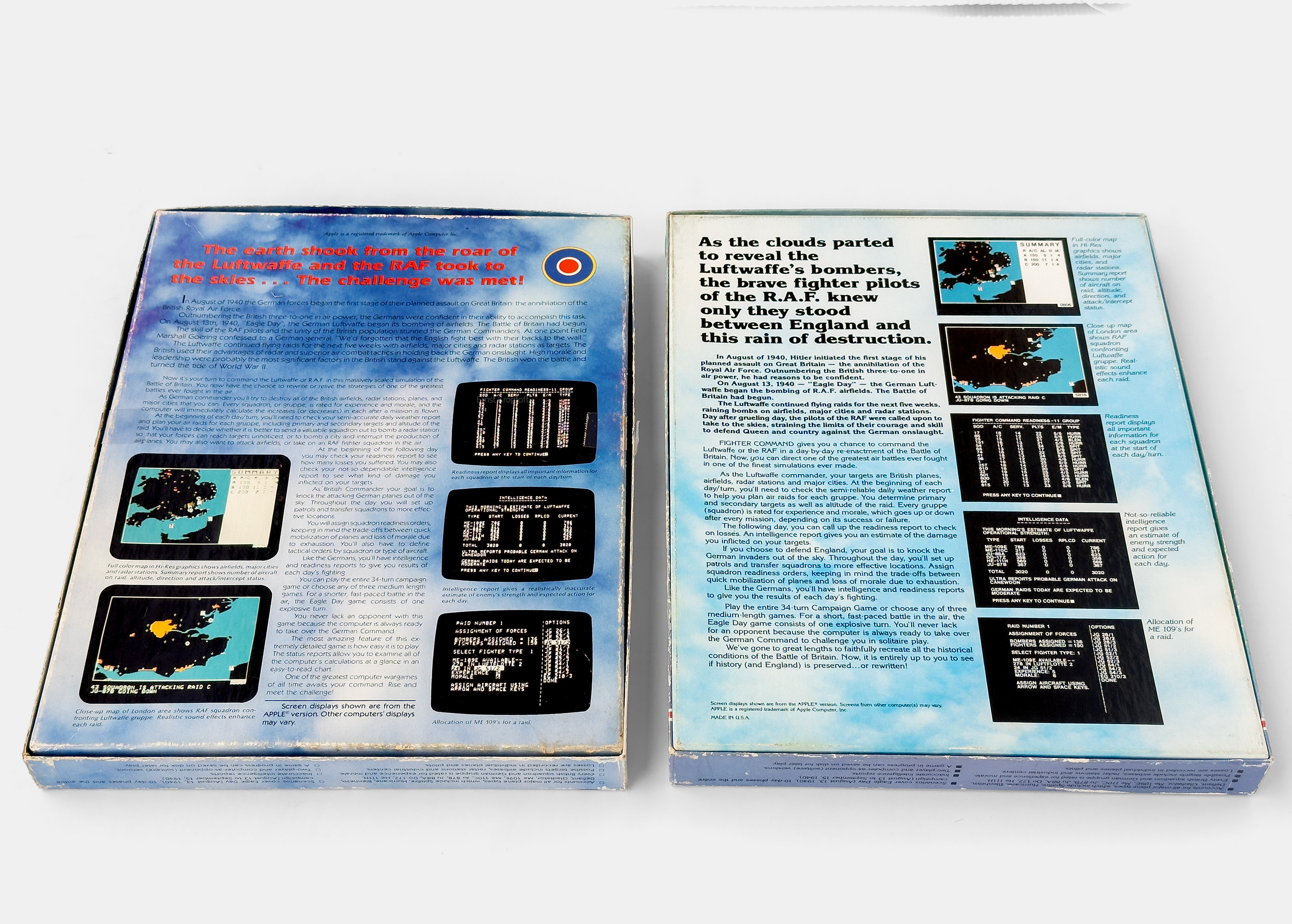
In 1985, Fighter Command returned when the game was ported to the Commodore 64, accompanied by redesigned box art that gave the title a fresher, more contemporary look. SSI also used the new packaging to reissue the Apple II version, keeping the two platforms visually aligned in its catalog. An Atari 8-bit port was announced in catalogs around the same time, but never materialized.
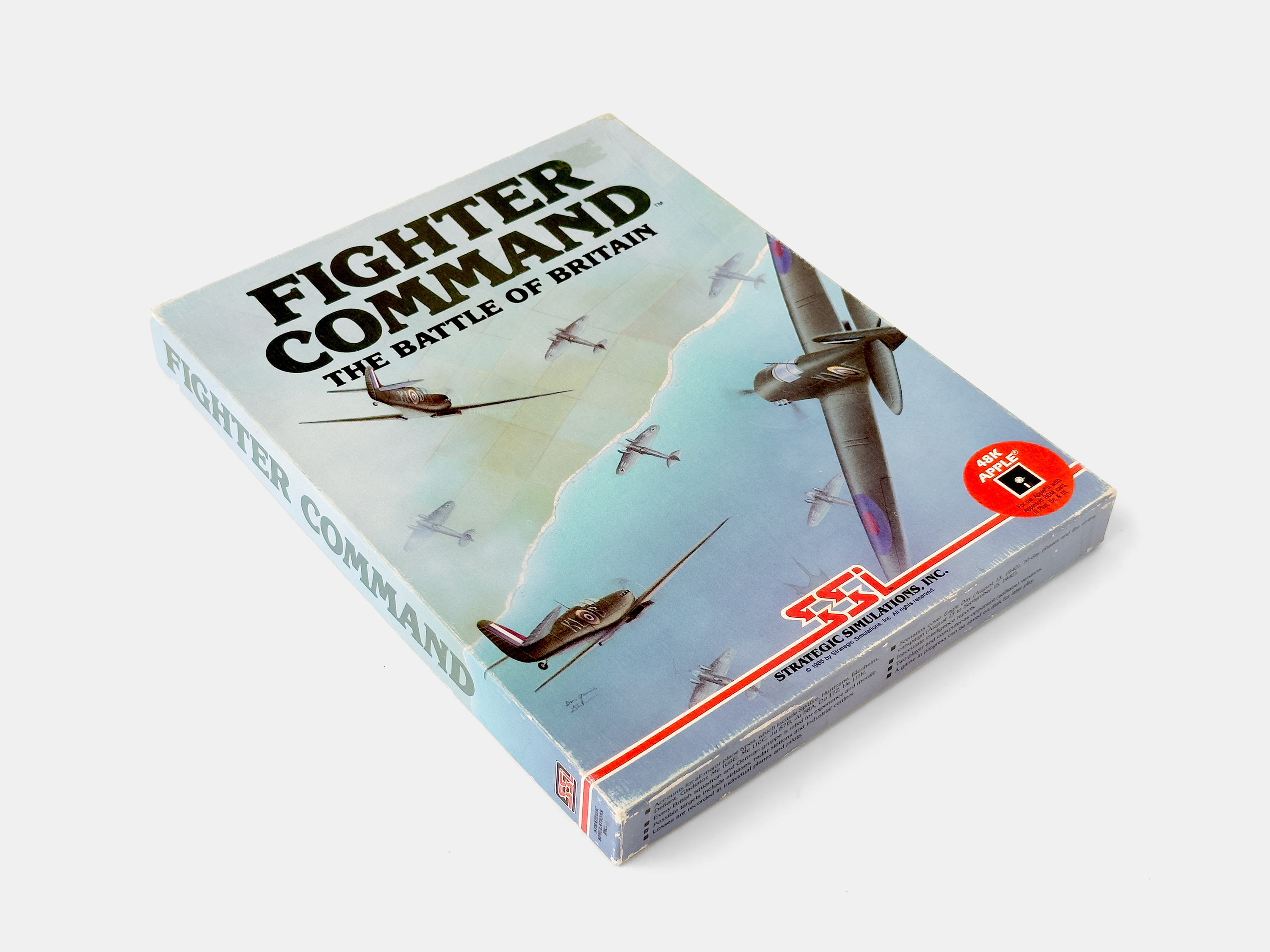
In 1985, SSI reissued Fighter Command with newly designed cover art.
The updated box housed both a new Commodore 64 version and a rerelease of the Apple II version.
Sources: Wikipedia, SSI Game Catalogs, MobyGames, The Digital Antiquarian, The Wargaming Scribe…
 Retro365