By the early 1980s, the Apple II had emerged as the centerpiece of the growing software boom. One of the new companies capitalizing on the momentum was Datamost, founded in 1981 by Dave Gordon following his departure from Programma International. Datamost quickly carved out a niche for itself with a blend of technical books and colorful, fast-paced games aimed at the expanding home computer market. Among its early contributors was Dan Illowsky, a computer science and education graduate from Lehigh University and the University of Pennsylvania, whose energetic, arcade-style programming gave the platform some memorable hits.
Illowsky’s first breakout success was Snack Attack from 1981, a Pac-Man-inspired maze game with a personality of its own. It struck a chord with Apple II owners, becoming a mainstay on Softalk’s Top 30 list for over a year and peaking in the top five.
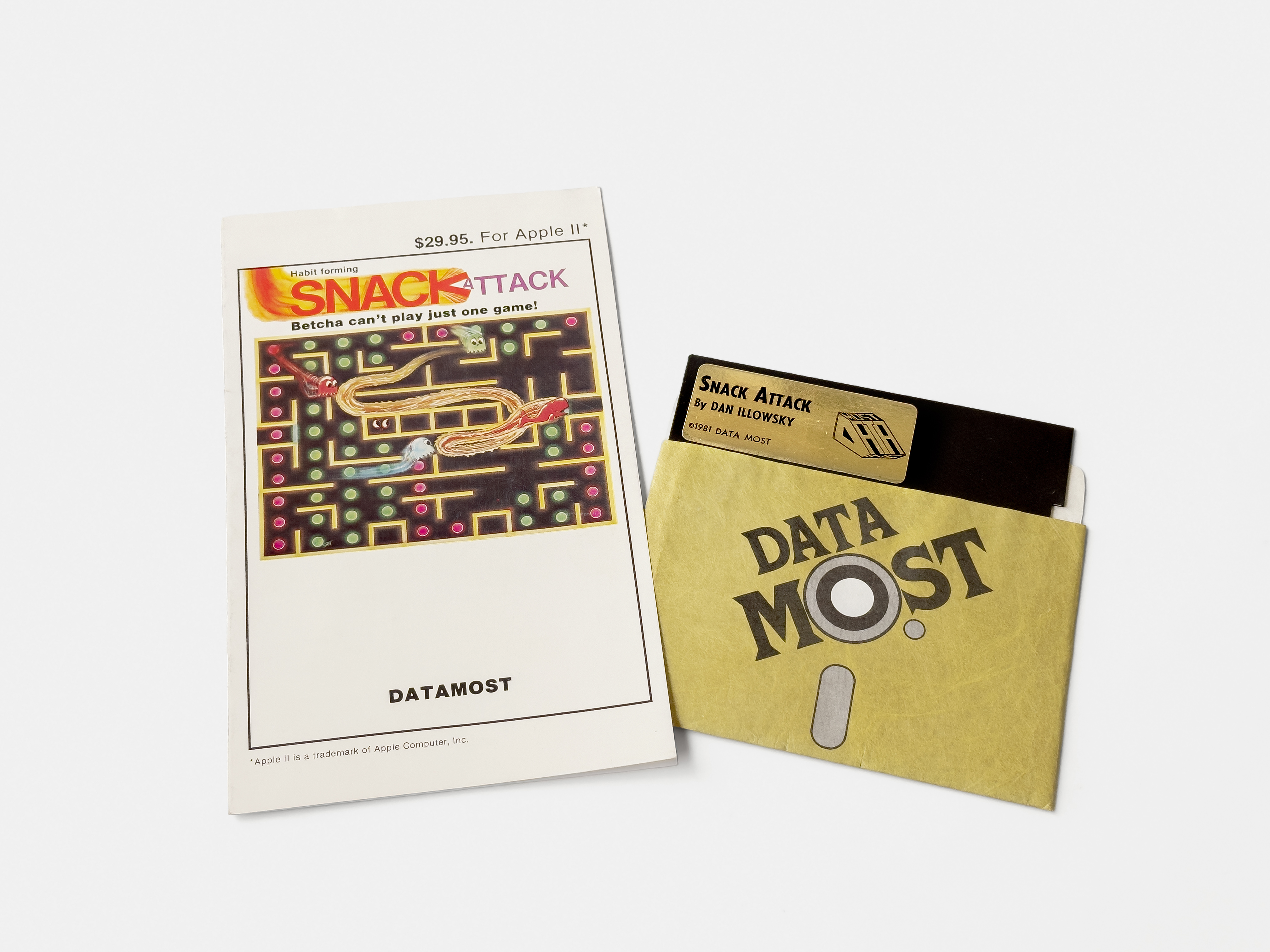
Dan Illowsky’s second game, Snack Attack, was, like his first game, published for the Apple II in 1981 by Dave Gordon’s Datamost.
The game became one of, if not the, bestselling Pac-Man clone for personal computers at the time.
Encouraged by the success of remixing proven arcade concepts with original mechanics, Illowsky began work on a new game, one that combined the tension of a cat and mouse maze game with the twitch reflexes of arcade shooting. The game became Space Kadet, a top-down grid-based space shooter that owed something to the likes of Berzerk and Jay Sullivan‘s Crossfire, yet layered on new mechanics such as directional shields and torpedoes that interacted uniquely with each ship’s environment.
Development was completed in 1982, and Datamost began preparing it for release when Illowsky made the decisive break to leave Datamost behind. Together with fellow programmer and IBM PC pioneer Michael Abrash, he formed his own company, Funtastic, Inc.
Following Illowsky’s departure, Datamost reportedly withdrew Space Kadet from publishing. Interestingly, the same cover art visuals, with a few changes, also appeared on the packaging and advertising for Datamost’s Spectre, a 3-dimensional maze action game developed by Bob Flanagan and Scott Miller. The reuse of assets could suggest that Space Kadet might have been pulled from the market early on.
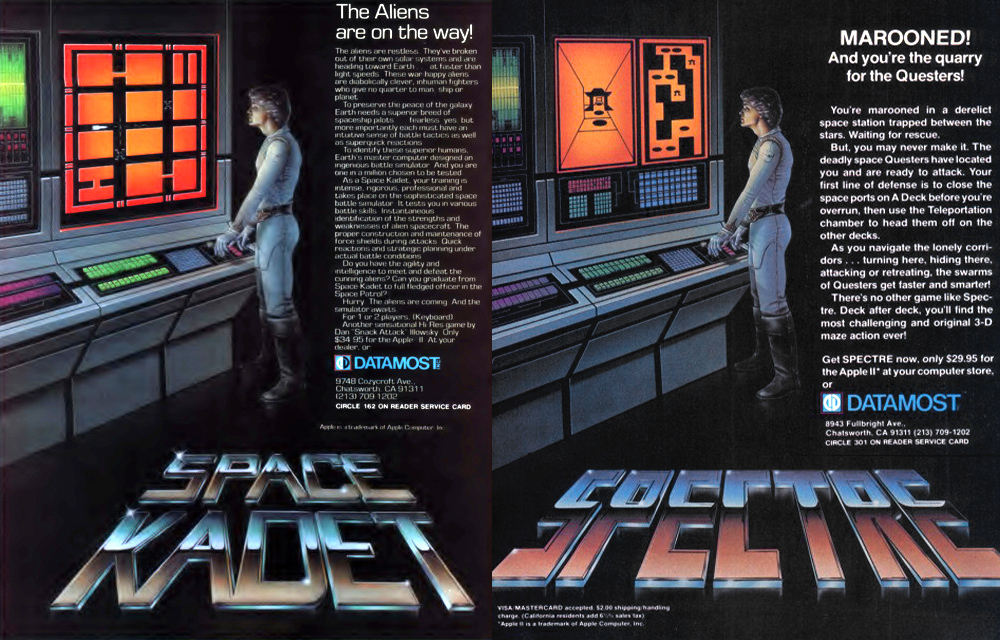
Datamost advertisements.
On the left, an ad for Space Kadet; on the right, an ad for Spectre.
The artwork was also used for both games’ packaging.
Datamost had already been using the “Funtastic” branding as a publishing imprint for several of its early games and software, including Illowsky’s first game, Country Fair, and his immensely popular Snack Attack. Now, the imprint would become a real company, wholly independent, with Illowsky and Abrash at the helm, and with no Dave Gordon to interfere with operations.
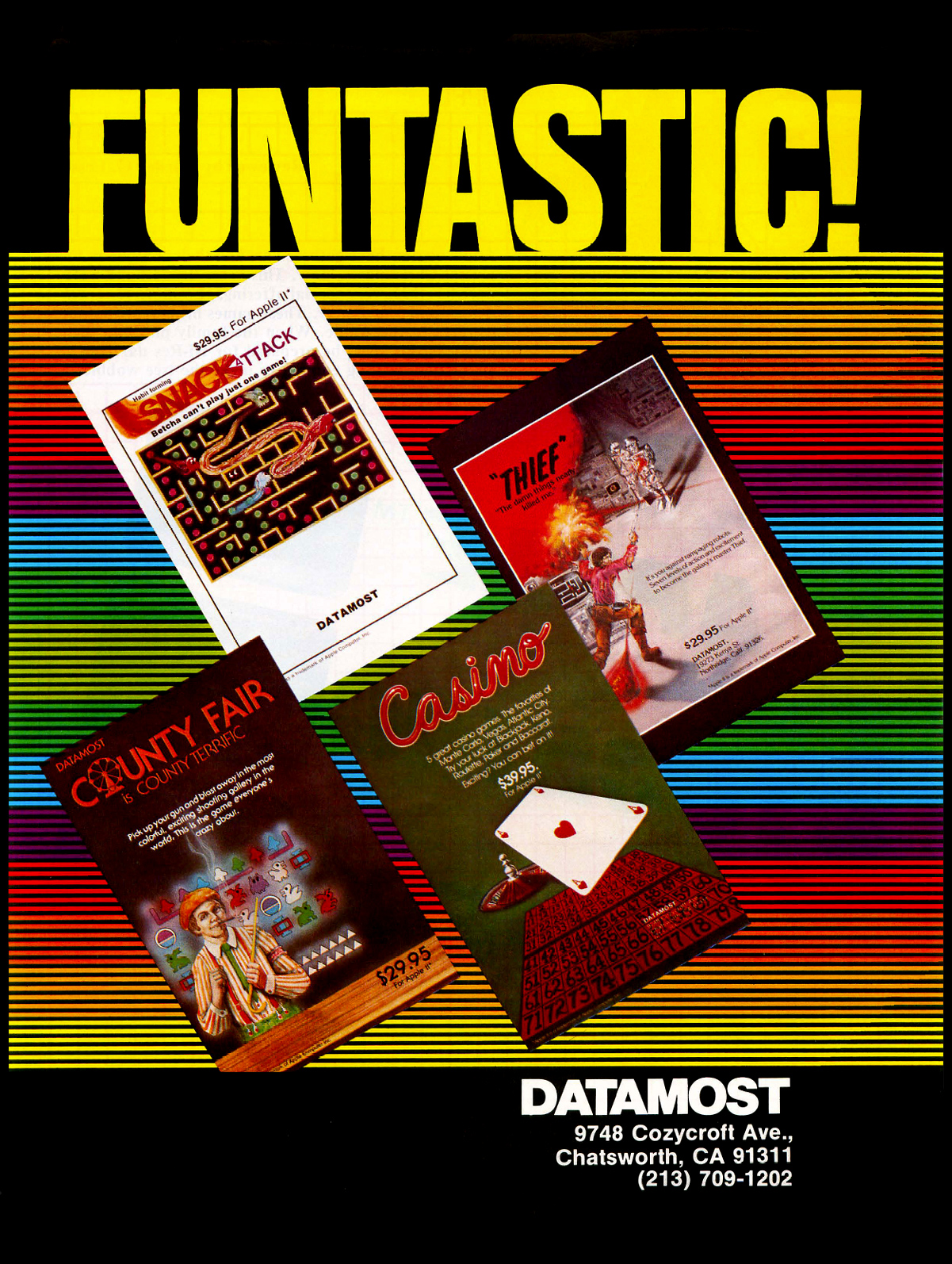
Datamost’s Funtastic! served as the heading for its 1982 “Games & Beyond” product catalog and appeared in print ads promoting its early software lineup, including Snack Attack and Country Fair. Ironically, the name would soon be repurposed by Dan Illowsky and Michael Abrash for their independent label after departing the company.
Image from Softside Magazine Vol. 6 No. 2 (PDF via Atarimania).
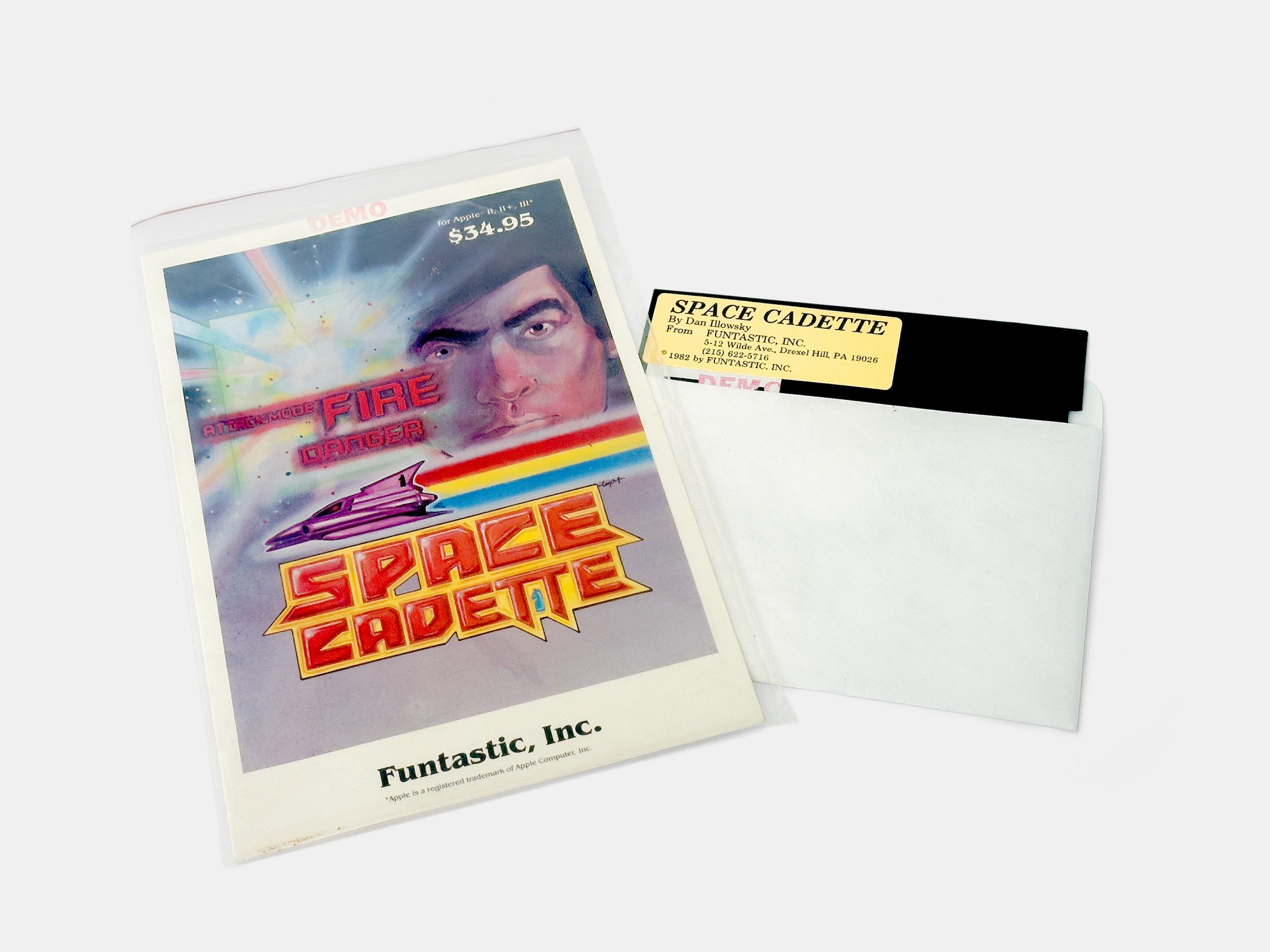
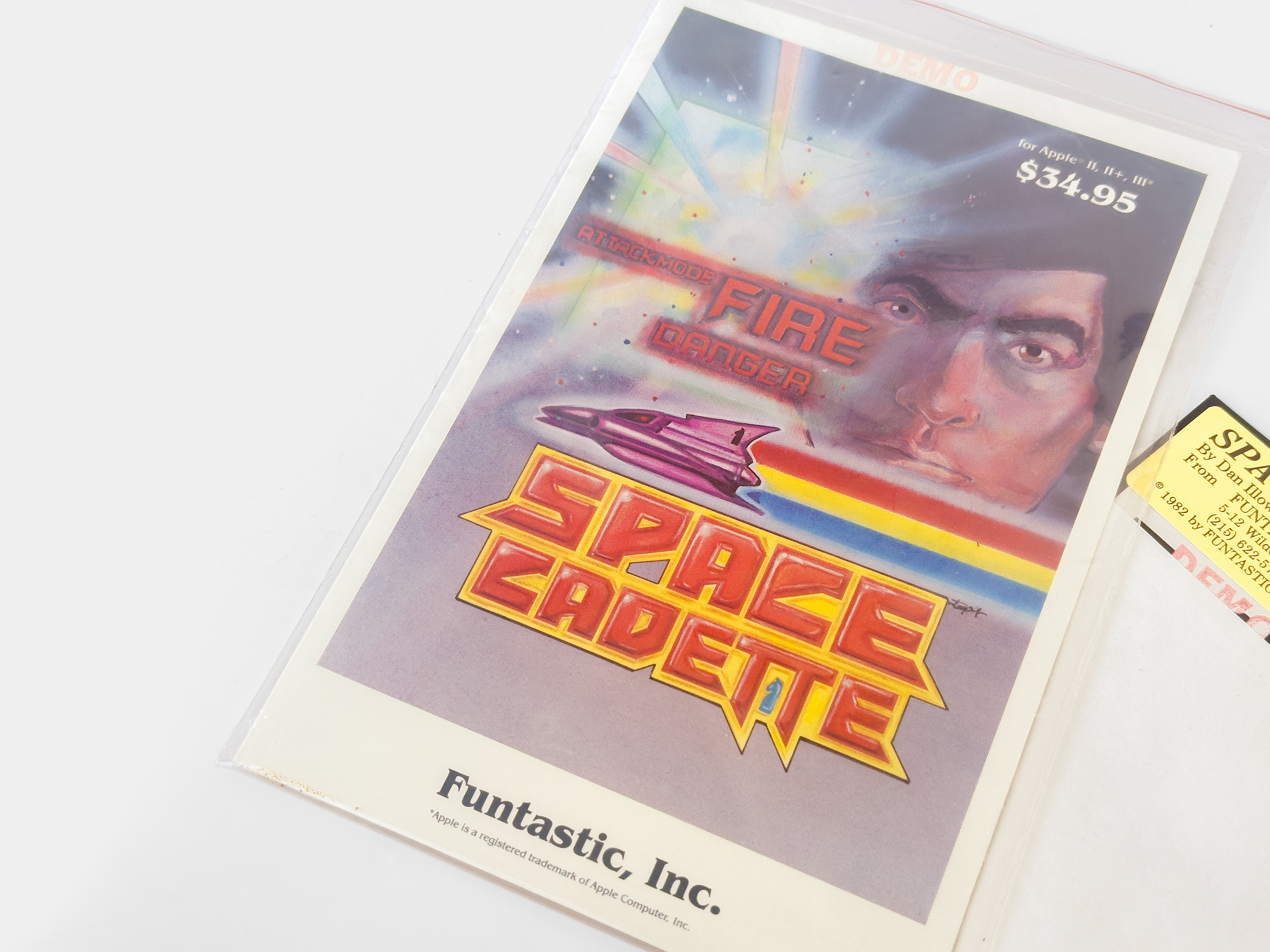
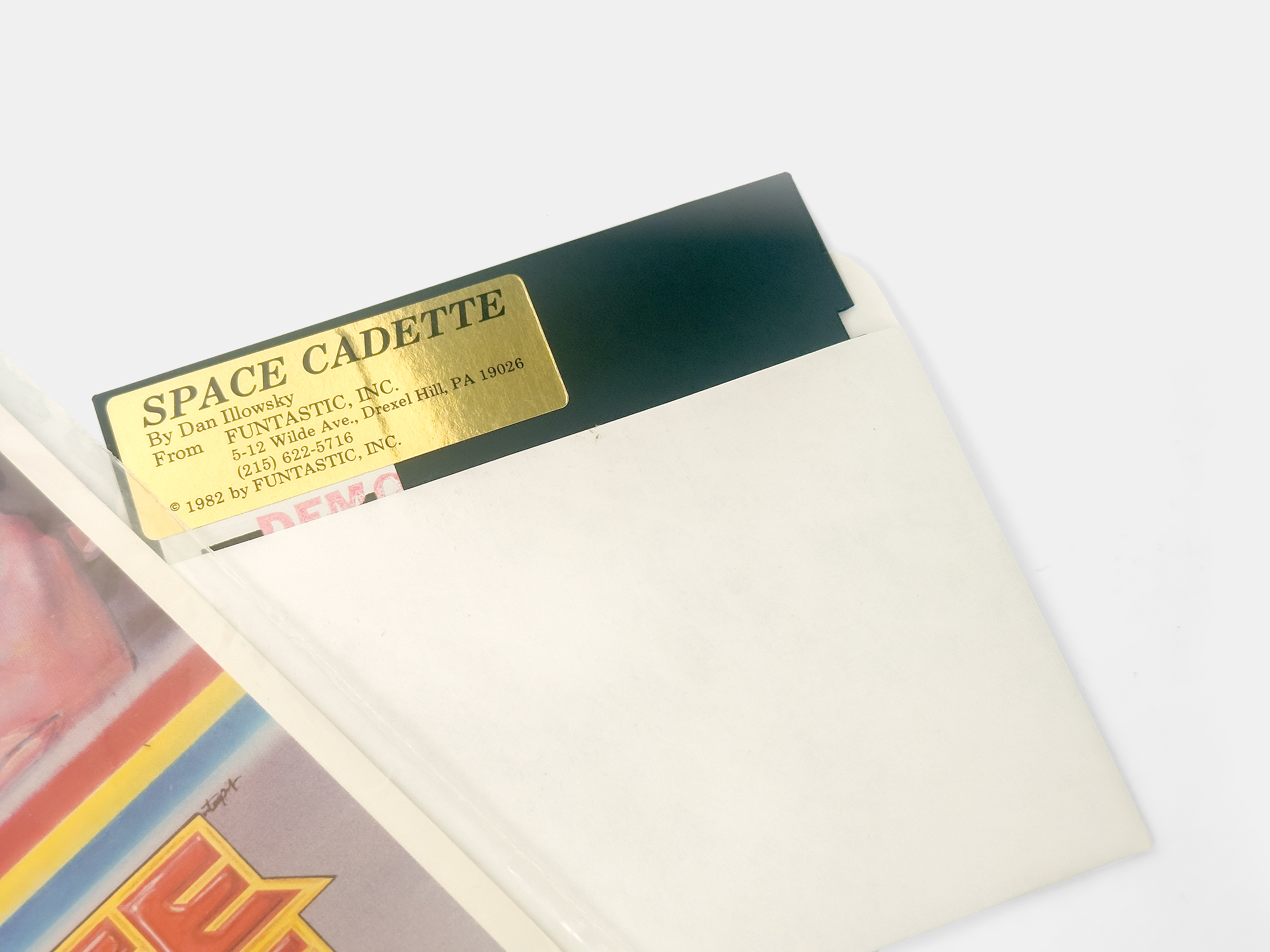
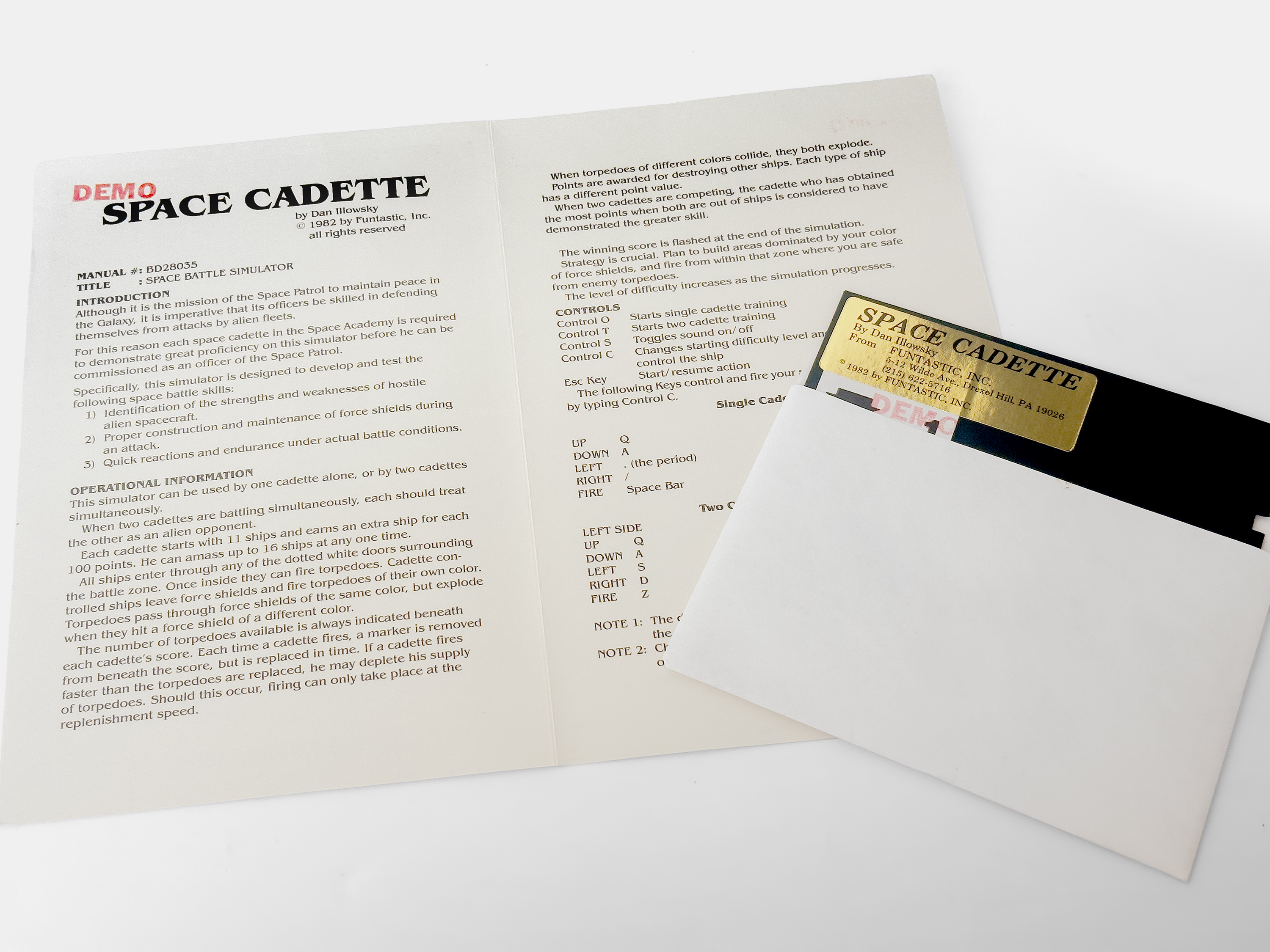
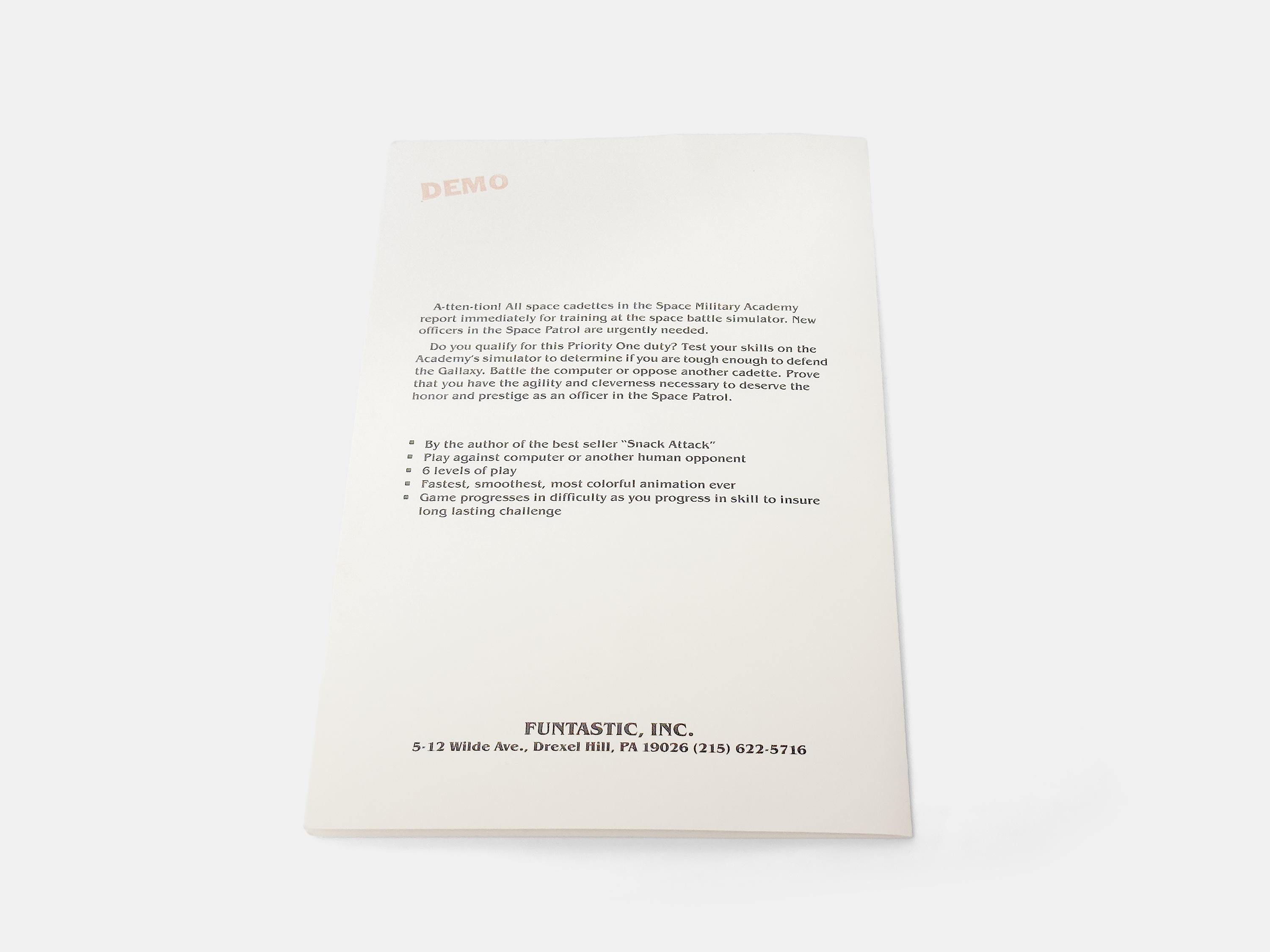
The newly founded Funtastic quickly published Space Kadet under the new title Space Cadette. The game itself was identical, but gone was the Datamost intro screen and branding, effectively erasing the game’s first publishing trajectory.
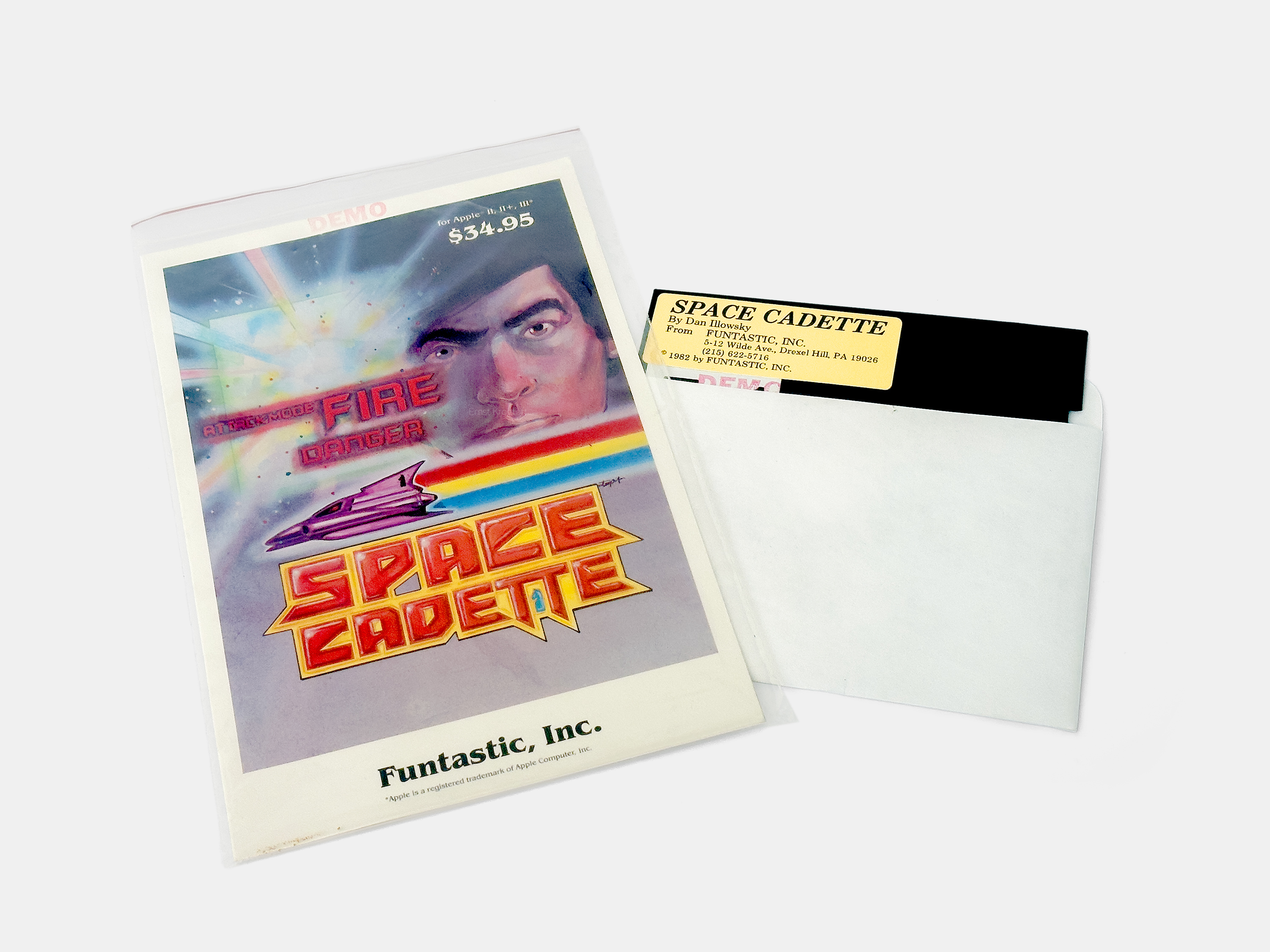
Dan Illowsky’s Apple II game Space Cadette began life as Space Kadet under Dave Gordon’s Datamost, but after parting ways with the company in 1982, Illowsky published the game under his newly formed Funtastic label in the final weeks of the year.
With Space Kadet, Illowsky continued to explore fast-paced, arcade-style design. Set in a grid of corridors, the game challenged one or two players to outmaneuver alien foes while navigating a maze of force shields, color-coded barriers that selectively blocked or allowed incoming fire. As players advanced, enemy speed and tactics intensified, steadily ramping up the challenge.
In the September 1983 issue of Electronic Games, Rick Teverbaugh praised Space Cadette as an inventive twist on the grid-based shooter, likening its originality to how Snack Attack had stood out from Pac-Man. While the gameplay invited comparisons to titles like Crossfire, Illowsky’s clever mechanics, such as shield-laying ships, strategic grid entry points, and torpedoes affected by the shields, set it apart. Reviewers appreciated the above-average graphics and rewarding score-chasing loop, though the lack of joystick support pulled it down. Still, they concluded that the game had just enough depth and replayability to keep players coming back for one more try.
Space Cadette never achieved the popularity of Snack Attack. Its release came with little fanfare, and sales were less than modest. By the time it was reviewed, the key avenue for recognition in those days, the game was a year old, and the market was already shifting away from simple shooters toward more complex and graphically ambitious titles.
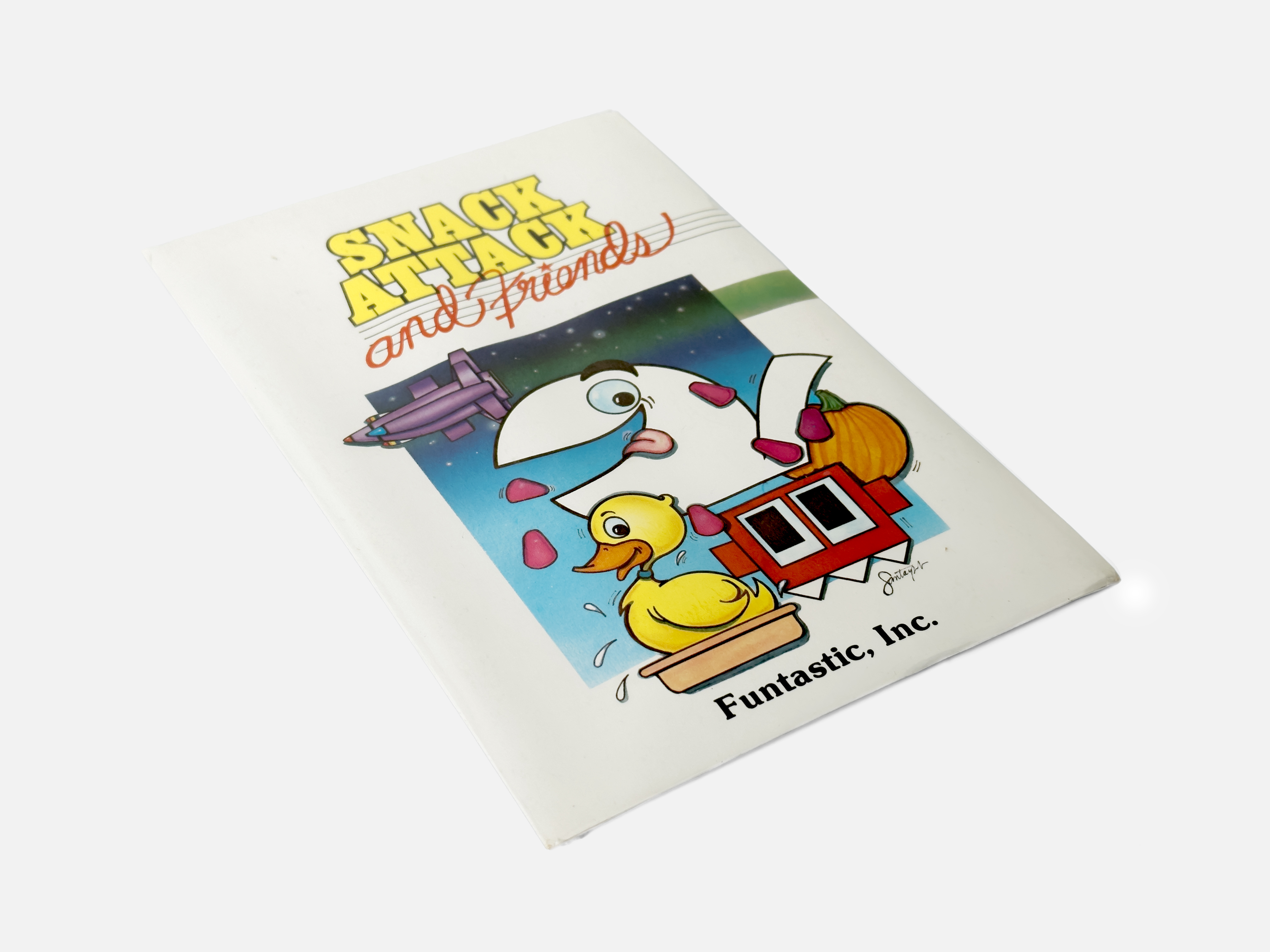
Funtastic re-released Space Cadette in 1983 as part of the Apple II compilation Snack Attack and Friends. Alongside Cadette and the hit maze game Snack Attack, the collection also included Illowsky’s earliest title, Country Fair, originally published by Datamost in 1981.
Funtastic would go on to publish six games in quick succession, including Snack Attack II for the IBM PC, a bold move at a time when most considered the PC strictly a business machine. Illowsky and Abrash showed that with the right programming, even the clunky CGA graphics and piezo speaker of the early IBM PC could deliver arcade-like thrills. Their success helped nudge the PC closer to becoming a viable platform for entertainment software.
In 1984, the duo co-authored Graphics for the IBM PC, a practical guide to BASIC-based graphics programming on the platform. The book reflected their dual passions for accessible game design and deep technical understanding.
As the 1980s progressed, Illowsky and Abrash co-founded Mida Corp., writing technical articles and books on the x86 architecture, assembly optimization, and graphics. Illowsky would eventually contribute to the development of Windows 95, found multiple tech companies, and remain active in the industry for decades.
Abrash became one of the most respected technical voices in computing. Throughout the ’80s and ’90s, he wrote extensively on performance optimization in Programmer’s Journal and Dr. Dobb’s Journal. He worked on the first two versions of Windows NT at Microsoft, and later helped develop the groundbreaking rendering engine for Quake at id Software. In the 2000s, he returned to Microsoft to work on the original Xbox and Xbox 360. In 2014, he joined Facebook as Chief Scientist for its AR/VR initiatives, reuniting with Quake’s John Carmack in yet another evolution of the digital frontier.
Sources: Arcade Express Newsletter, Wikipedia, PC Magazine, Softalk, OldComputers.net, NY Times, Electronic Games September 1983 issue, Atarimania..
 Retro365
Datamost was OK with the re-releases after he left them?
That’s an interesting question, which I haven’t been able to find any information on. Considering Dave Gordon’s strong personality and business sense, it’s hard to imagine he would have approved of it.
But then again, information traveled slowly in the early ’80s and maybe he didn’t even know.
My personal guess is that Gordon was aware of it and pulled Space Kadet from the market, stopping Illowsky from earning any royalties.
This is really cool. My father designed the artwork for the Funtastic games (Snack Attack and Friends, Snack Attack II, Masterminer, Big Top, Cosmic Crusader, Space Cadette). You can see his “Santaspirt” signature on some of them.
Wow, that’s amazing, thanks for sharing.
Can I ask what your father’s name was? Did he do other creative works (in other fields as well)? I would love to add some information as an image caption – I really do think it’s important we celebrate and acknowledge all the people who played a part in the early industry.
His name was Michael J. Santaspirt. Judging by the timeframe, that was when he was still doing freelance graphic design work. He taught at the Art institute of Philadelphia for most of his career before transitioning to the Chair of graphic design at Pittsburgh Technical Institute before retiring. He did a plethora of creative work for whatever community he was living in. He designed the logo for the town we grew up in (Merchantville, NJ) which is still in use today, as well as Venice, FL more recently, where he was retired. Too much to cover in a comment!
Thank you so much for sharing small pieces of your dad’s story. Sounds like he had an amazing career. I’ll definitely be adding some of the information in one of the image captions, so his name and legacy will live on in this small part of the Internet. I’m thinking of doing a more general write-up on Funtastic and its few games and will absolutely be adding your information there as well.
Again thank you for writing and the very best for the Holidays.