In the mid-1980s, Atari‘s Gauntlet was taking the arcade world by storm, devouring quarters at a near-unprecedented pace as players lined up to brave its relentless dungeons. With its frantic multiplayer action, endless waves of enemies, and emphasis on cooperative survival, the game became a massive hit, ranking as the second-highest-grossing arcade video game in the United States in 1986. Its success sent ripples through the industry, expanding onto countless platforms and inspiring a wave of imitators and innovators eager to carve their own paths through the genre’s dark and treacherous corridors.
Among those looking to put their own spin on the concept was Micro Forté, a young Australian game company with ambitions reaching far beyond its home country. Founded in 1985 by John De Margheriti, Micro Forté was one of Australia’s earliest developers to gain international recognition. Its partnership with rising star in the publishing world, Electronic Arts, was a major opportunity to showcase Australian talent on the global stage at a time when the country’s gaming industry was still finding its footing.
With a four-man team, Micro Forté set out to create Demon Stalkers: The Raid on Doomfane, a game that blended Gauntlet’s fast-paced, arcade-style action with deeper narrative and role-playing elements. Like its inspiration, Demon Stalkers featured cooperative dungeon crawling, where up to two players battled through increasingly perilous labyrinths filled with monsters, traps, and treasure. Players were tasked with descending through Doomfane’s 100 levels to defeat the evil demon lord, Calvrak.
Many of the levels incorporated puzzle-solving elements, with clues provided through scrolls scattered throughout. These scrolls also unraveled the fate of an earlier and doomed adventuring party led by archmage Arthur and his companions, who had failed in their quest. Along the way, they encountered Mellack, a mage whose story intertwined with their ill-fated expedition. Players could earn bonus health by correctly answering questions after each story segment, reinforcing the game’s narrative focus while adding a unique twist to the dungeon-crawling experience. To set the game apart and extend its longevity, Micro Forté included an elaborate Construction Set Editor, allowing players to design and modify their own levels, complete with enemies, traps, treasure, and defined objectives.
In 1986, Electronic Arts published Micro Forté’s debut title, America’s Cup Challenge, in North America. As the official sailing simulation of the America’s Cup, the game allowed players to race the real 24.3-mile course off the coast of Perth, Western Australia. Though a niche title, it helped establish a crucial relationship between Micro Forté and Electronic Arts. In 1987, Electronic Arts published Demon Stalkers: The Raid on Doomfane for the Commodore 64, with an IBM PC version released the following year.

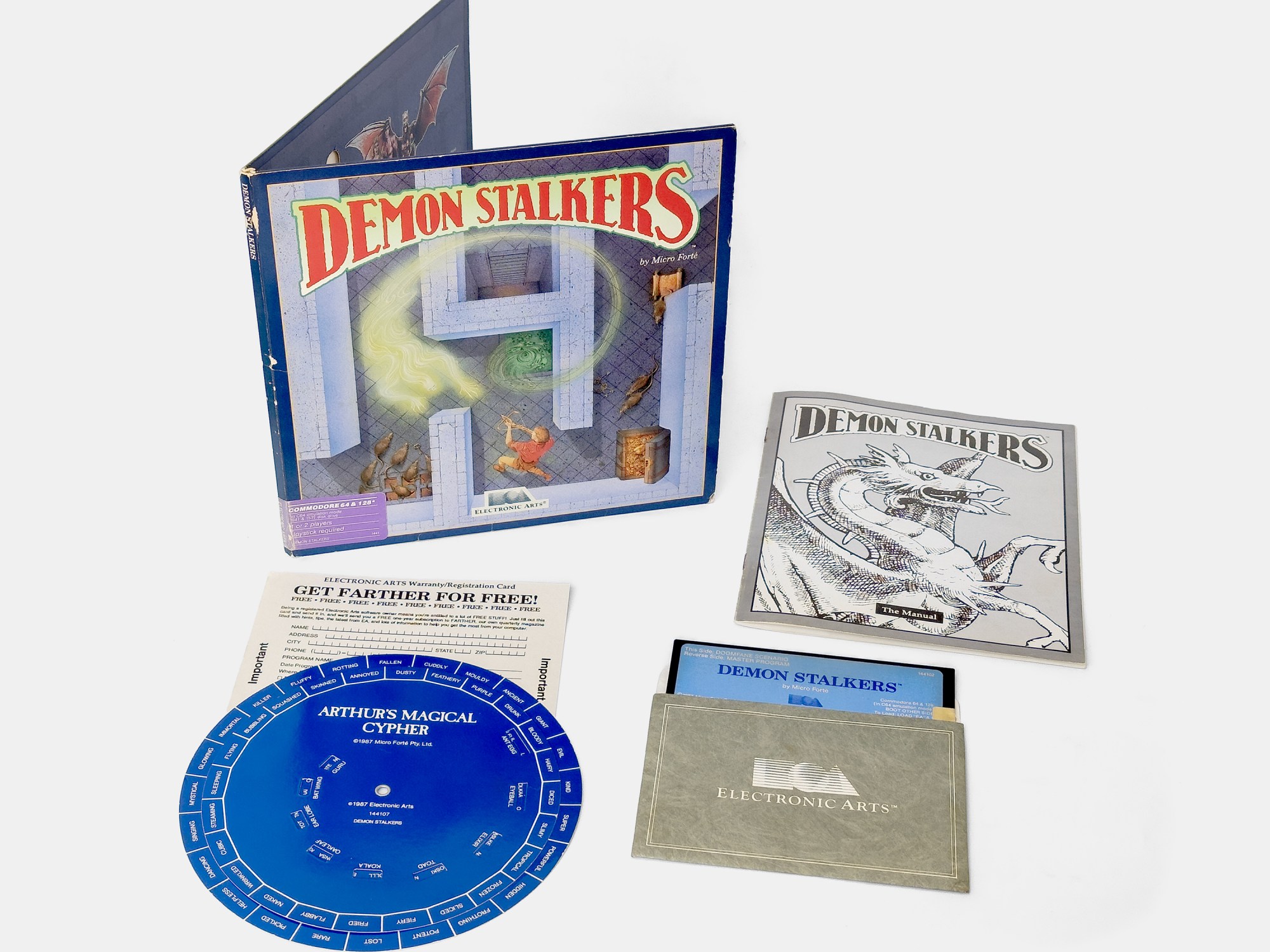
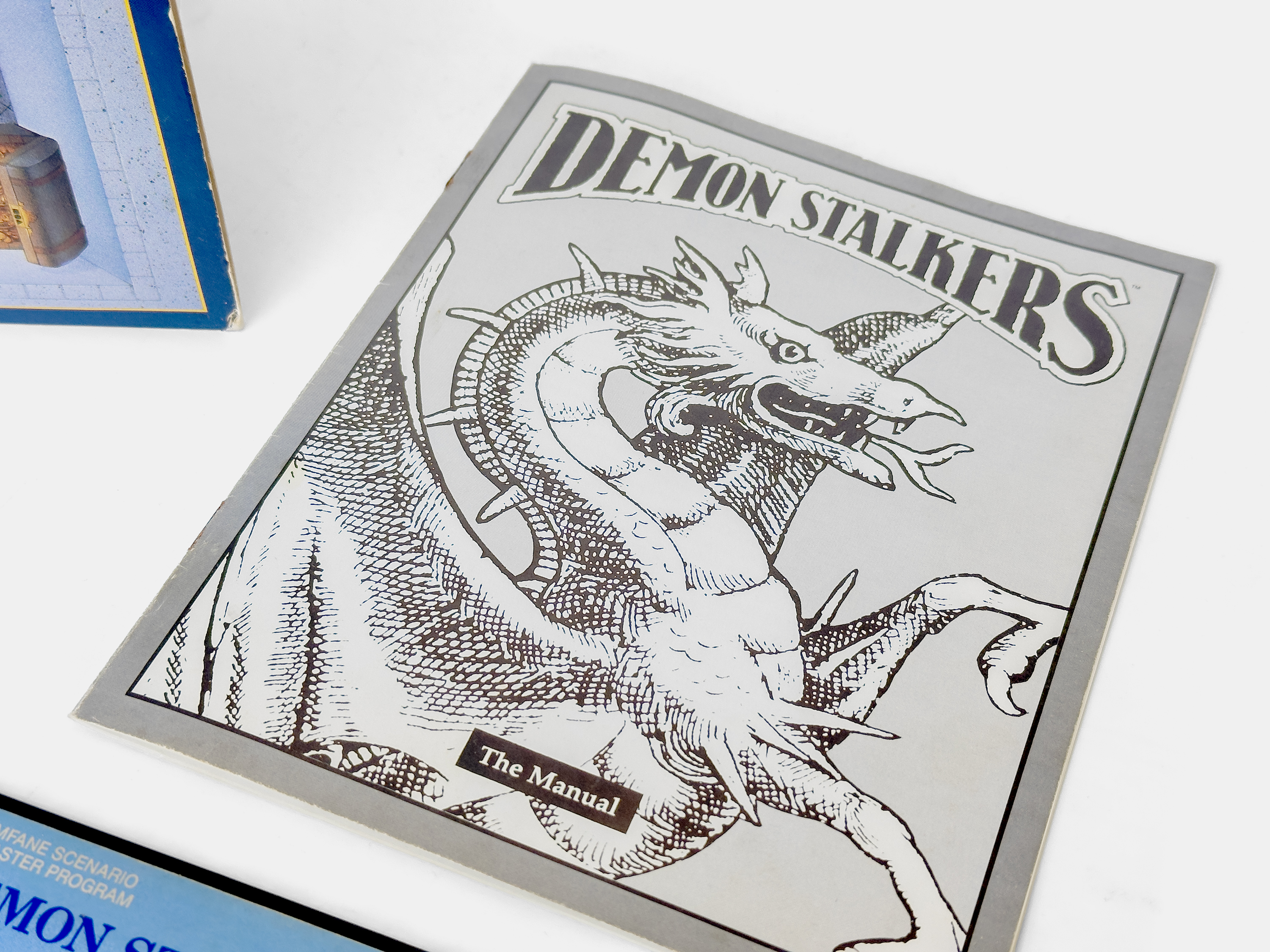
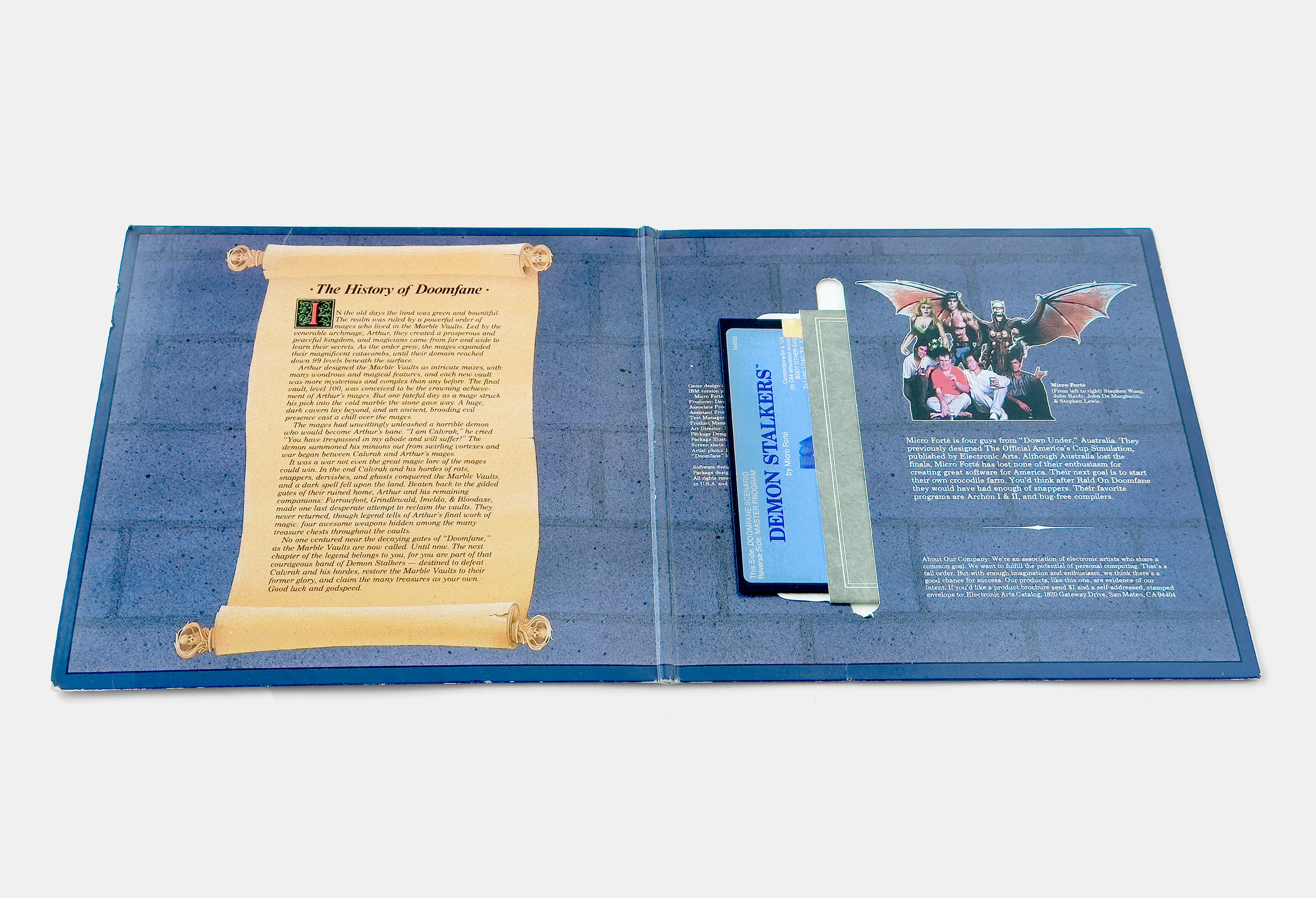
Demon Stalkers: The Raid on Doomfane, developed by Australian-based Micro Forté and published by Electronic Arts for the Commodore 64/128 in 1987. The game was released in Electronic Arts’ signature album-style packaging, a distinctive design resembling a vinyl record sleeve.
Like Playboy, which hid its bunny symbol on their magazine covers, Electronic Arts hid its cube, sphere, and tetrahedron logo on the covers of many of its early games (from 1983 to 1992), including Demon Stalkers, where the logo can be seen on the lock on the treasure chest.
The game’s 100 levels became progressively more complex, incorporating unique missions and increasing enemy difficulty. Unlike Gauntlet, which emphasized pure arcade survival, Demon Stalkers introduced inventory management, keys, and power-ups that added a layer of strategy to the action. Players could also find and decipher fragments of an in-game journal that provided lore and clues, further reinforcing the role-playing-inspired storytelling.
Critically, Demon Stalkers was well received, praised for its cooperative gameplay, depth, engaging level design, and level editor. While it never achieved the same mainstream success as Gauntlet, it developed a loyal following and demonstrated how the genre could evolve by blending arcade gameplay with adventure and storytelling elements. Many consider Demon Stalkers the best Gauntlet-style game for the Commodore 64/128. The PC port suffered from more limited visuals and sound due to hardware constraints.
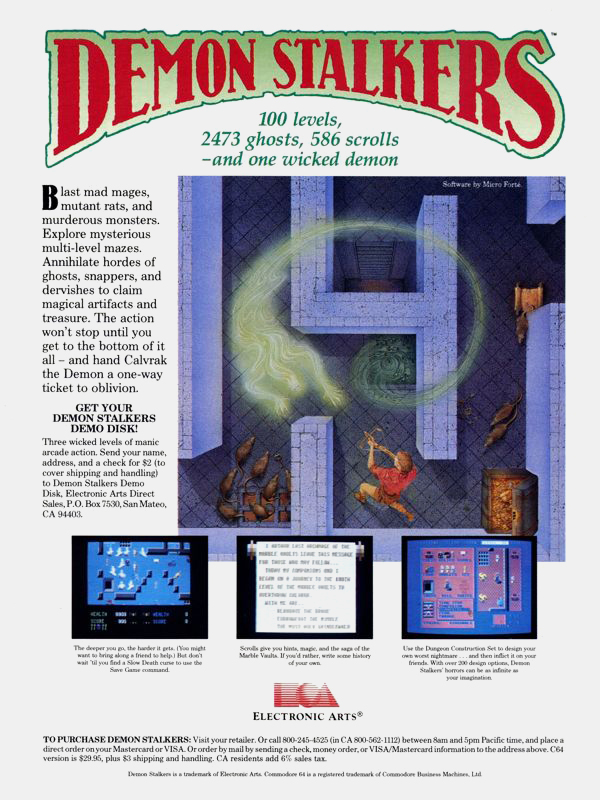
“100 levels, 2,473 ghosts, 586 scrolls—and one wicked demon.” An Electronic Arts magazine advertisement for Demon Stalkers, as featured in Computer Gaming World, December 1987.
Micro Forté followed up on Demon Stalkers with Fire King, a spiritual successor released in 1988. Published by Australian-based Strategic Studies Group and distributed by Electronic Arts, Fire King expanded on the formula by incorporating more robust role-playing mechanics and a greater emphasis on storytelling.
In the years that followed, Micro Forté continued developing increasingly ambitious titles, ultimately gaining broader recognition with Fallout Tactics: Brotherhood of Steel in 2001. Over time, the studio shifted its focus toward middleware technology and online game development, playing a key role in advancing multiplayer infrastructure. On 17 October 2022, Riot Games announced the acquisition of the studio, and Micro Forté became Riot Sidney.
Sources: Wikipedia, Mobygames, microforte.com, Lemon64 Allcorrect Games…




 Retro365