
By 1984, Indiana Jones had become a cultural phenomenon. The success of Raiders of the Lost Ark from 1981 had turned the whip-cracking archaeologist into a household name, and with Indiana Jones and the Temple of Doom slated for the following year, anticipation was high. The adventure and action-packed spirit of Raiders of the Lost Ark had already influenced a wave of game developers. A year after the movie’s release, famed designer Howard Scott Warshaw created the first video game to feature Indiana Jones with Raiders of the Lost Ark for the Atari 2600 console. Warshaw’s creation earned recognition in the Guinness Book of World Records as the first video game adapted from a movie. While a multitude of games drew inspiration from the movie’s adventurous theme, it wasn’t until 1984 that Indiana Jones made his official debut on home computers.
Mindscape, a young software company founded in 1983 in Northbrook, Illinois, by Australian entrepreneur Roger Buoy, aimed to capitalize on the booming home computer market. Buoy had previously worked as a computer analyst for Rolls-Royce before joining the software division of Scholastic Inc. He later moved to SFN Companies, a major U.S. educational publisher with nearly a century of history, which wholly owned Mindscape as a subsidiary.
Initially focused on educational and entertainment software, Mindscape structured its catalog under different labels to target specific audiences. One of these, the Alert label, was dedicated to recreational software for teens and adults. In the spring of 1984, the company’s first product hit the market, and as part of its early expansion, Mindscape secured the right to use elements of Lucasfilm’s Indiana Jones trademark for an upcoming game.
At the time, Lucasfilm was preparing for the release of Temple of Doom and was eager to extend Indiana Jones’ presence beyond the silver screen. While Lucasfilm had launched its own games division in 1982, the studio initially focused on original titles and did not produce its first Indiana Jones games until years later. This left an opportunity for third-party developers like Mindscape to bring the world of Indiana Jones to the rapidly expanding home computer gaming market.
Licensing deals were a common practice in the 1980s as film studios sought to monetize their intellectual properties in the emerging video game industry. While protective of its brand, Lucasfilm granted Mindscape the rights to develop an original Indiana Jones game for home computers, allowing the company to leverage Indy’s popularity while giving Lucasfilm a presence in the growing Commodore 64 market without diverting its own internal resources.
Unlike the action-packed and adventure-driven Indiana Jones games that would follow, Mindscape took a different approach, emphasizing intuition, logic, and problem-solving skills. Developed by Michael J. Hanson, Indiana Jones in the Lost Kingdom placed players in the shoes of Indy across six levels, each with cryptic puzzles and deadly elements. The design was intentionally minimalist, there were no explicit instructions, leaving players to rely on observation, experimentation, and subtle hints, such as changes in the musical score triggered by in-game actions.
Indiana Jones in the Lost Kingdom emerged at a pivotal moment for the industry. By 1984, the video game market had begun to recover from the North American video game crash, and the newly released Commodore 64, both affordable and powerful, had become a hotbed for innovation. Mindscape saw an opportunity to blend the cerebral puzzle-solving of early computer games with the mystique of Indiana Jones, creating an experience apart from the torrent of contemporary action titles.
Released in late 1984 under Mindscape’s Alert label, Indiana Jones in the Lost Kingdom was marketed as “The Ultimate Computer Challenge.” An action-adventure hybrid, that required players to rely on intuition, logic, and problem-solving skills, reflecting the educational roots and Mindscape’s philosophy of engaging players’ intellects as much as their reflexes.
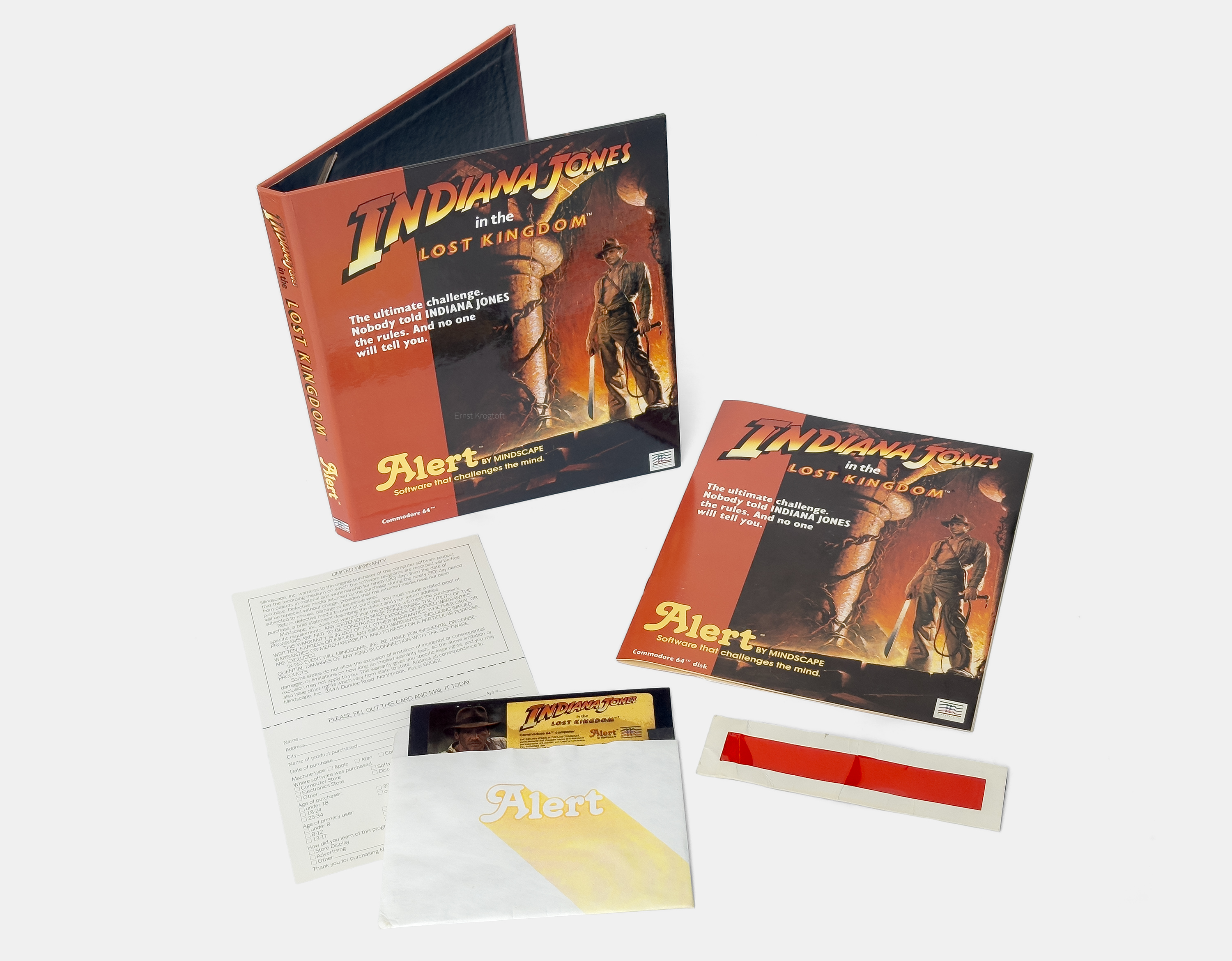
Indiana Jones in the Lost Kingdom, the first home computer game to feature the iconic name and character, was released by Mindscape in North America in late 1984. The game was exclusive to the Commodore 64, with U.S. Gold handling its European release in early 1985.
The cover boldly states: “Nobody told INDIANA JONES the rules. And no one will tell you.”
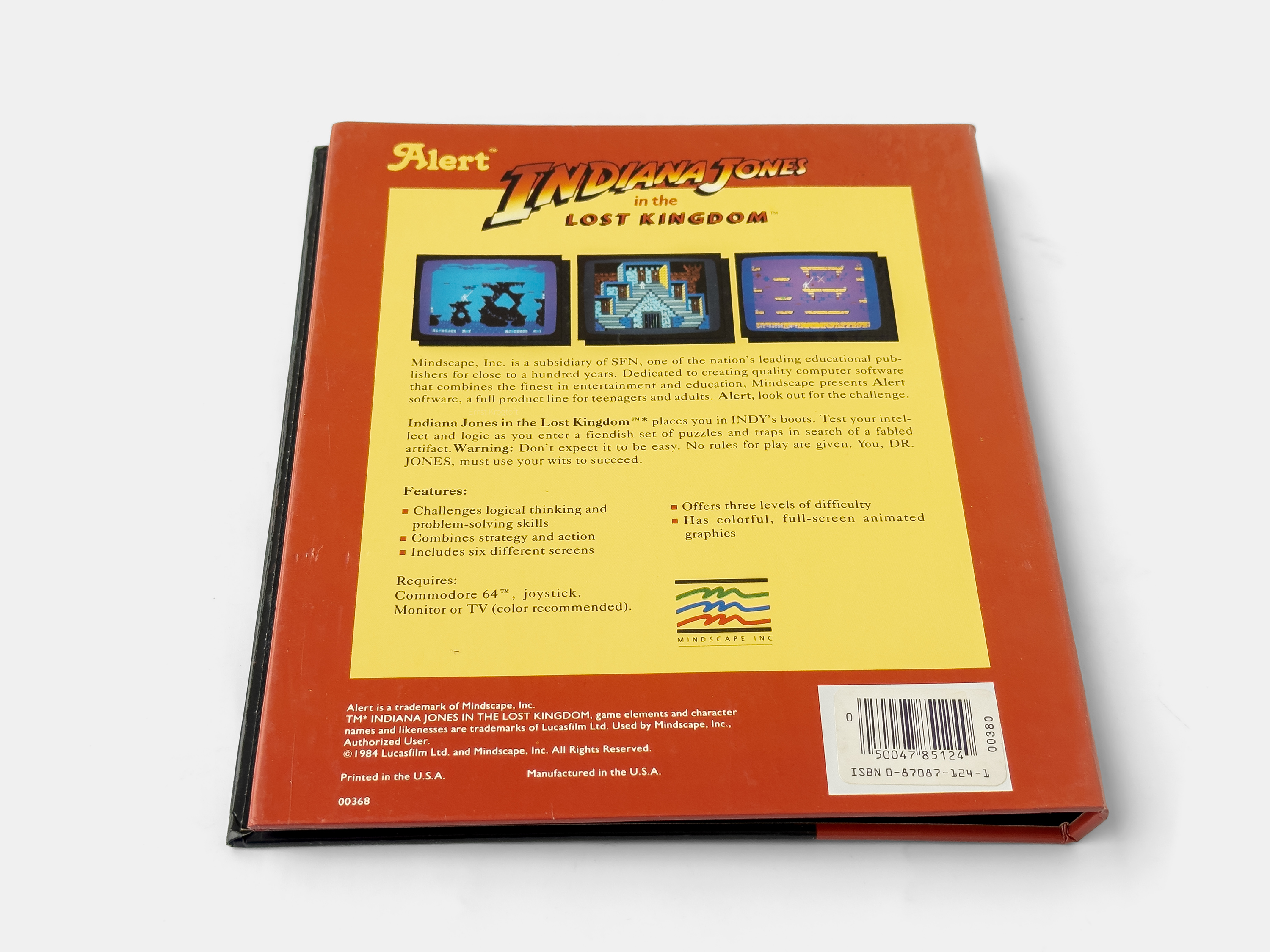
Indiana Jones in the Lost Kingdom features six levels, each with three difficulty settings, challenging players not only to solve puzzles but to first decipher what those puzzles are, without any hints to guide them. Quick reflexes are essential, all while your Indiana Jones Quotient, IJQ, is put to the test. Adding to the experience, the game includes John Williams’ unforgettable Indiana Jones theme, along with subtle sound design cues to aid players in their quest.

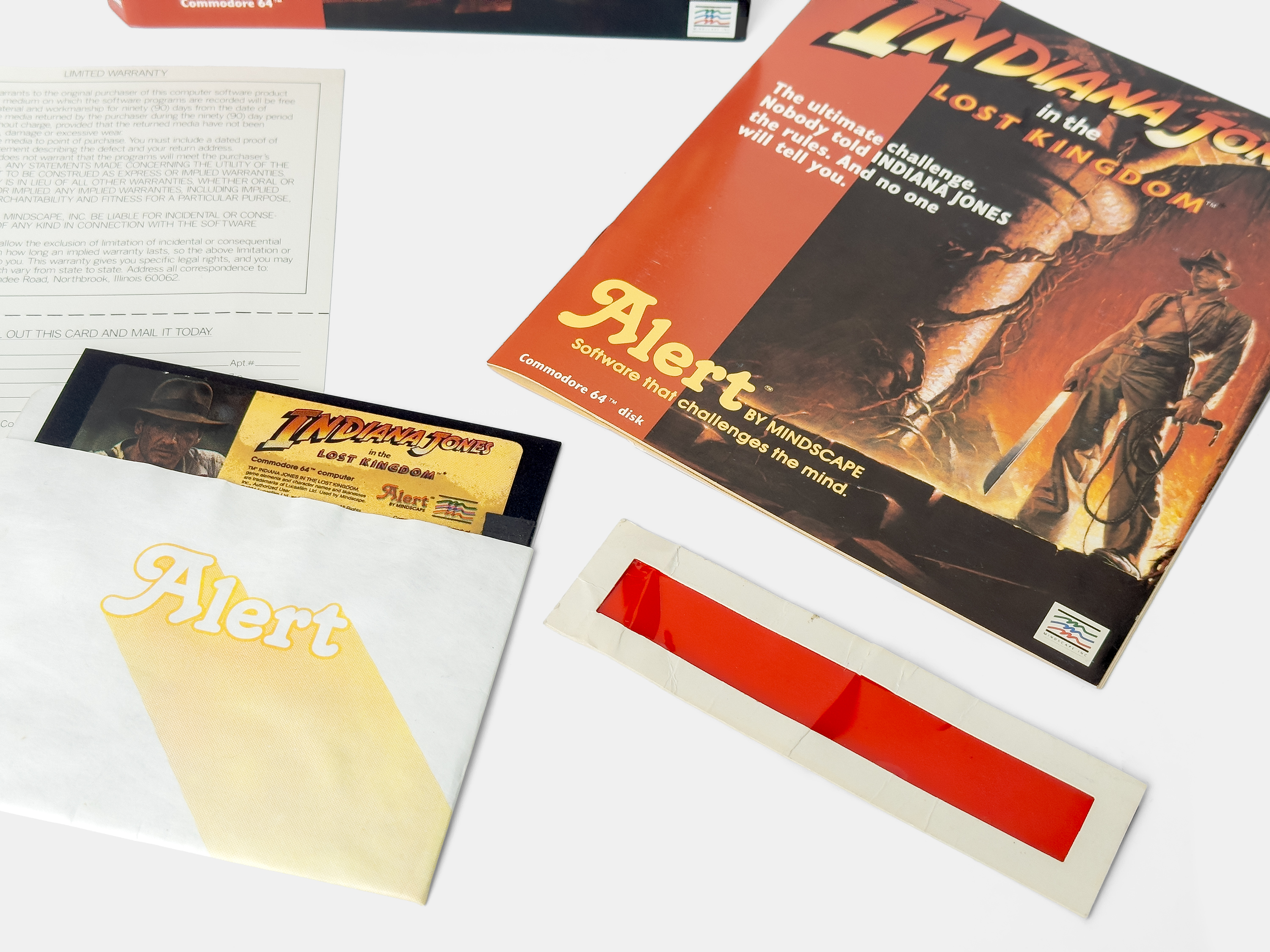
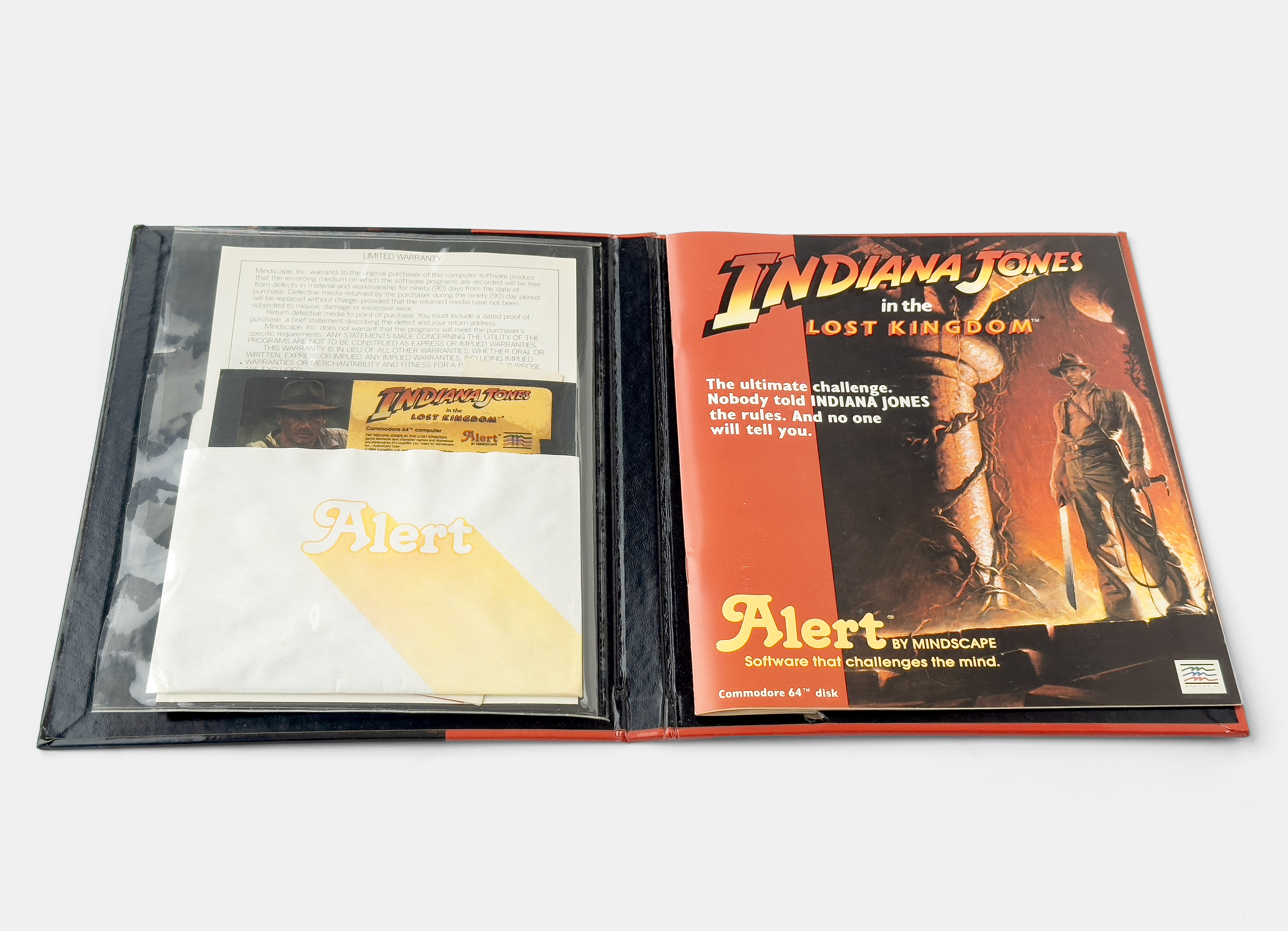
The manual provided no instructions on how to play or complete the six levels. However, small hints were hidden at the bottom of the pages, written in the red pattern that could only be deciphered using the included Magic Viewer (red glasses).
For those truly stuck, the final page of the manual, titled “Help!”, listed a non-toll-free helpline that players could call for assistance.
Upon its release, Indiana Jones in the Lost Kingdom received mixed reviews. Some critics appreciated its inventive puzzles. Robert J. Sodaro of Ahoy! magazine called it rewarding for patient players despite its difficulty. Others, such as Computer and Video Games magazine, criticized its opaque structure and unforgiving design, arguing that it failed to fully capitalize on Indiana Jones’ star power.
While Lost Kingdom never achieved the legendary status of later Indiana Jones titles like Indiana Jones and the Last Crusade or Fate of Atlantis, both developed by Lucasfilm’s own games division, it remains an interesting footnote in gaming history. It represents an early attempt to translate the adventurous spirit of Indiana Jones into an interactive experience, shaped by Mindscape’s design philosophy and unconventional take on an action-puzzle game.
Mindscape would, a year later, in 1985, release yet another original Indiana Jones game, but that’s a story for another day.
Sources: Wikipedia, IGN, Mindscape’s 1985 product catalog, Guinness Book of World Records…

 Retro365