
The 1980s saw a surge in post-apocalyptic action films, with movies like Mad Max and Escape from New York shaping a vision of dystopian futures dominated by wasteland survival, ruthless gangs, and heavily armed vehicles. The era’s fascination with high-octane chaos and lawless landscapes made it a natural fit for video games across arcades and home computers.
Games such as Origin’s Autoduel from 1985, based on Steve Jackson Games‘ Car Wars, were particularly influential. Set in a dystopian world, it blended vehicular combat with RPG elements, allowing players to customize cars, take on missions, and engage in arena battles. Atari Games‘ arcade title RoadBlasters from 1987 brought fast-paced, shoot-’em-up driving action to the forefront, offering a more straightforward but exhilarating take on armed car battles. The titles, among others, helped lay the groundwork for later games in the genre.
Chris Gray, best known for “co-developing” Boulder Dash in 1984, was an emerging figure in the mid-’80s gaming scene. In 1985, he founded Gray Matter, a Canadian studio that would go on to produce a variety of action and strategy titles. One of its early successes, Infiltrator from 1986, combined vehicular and on-foot action, mechanics that would later be adapted in Road Raider, Gray’s ambitious attempt at capturing the post-apocalyptic genre.
Road Raider placed players in the role of a lone survivor navigating a lawless wasteland, using an armored car to traverse ruined settlements, with two distinct gameplay modes, vehicle combat and on-foot exploration. While driving, players had to fend off enemy vehicles, conserve fuel, and locate key buildings. Once inside a structure, they could scavenge for supplies, battle enemies, and search for the crucial Arena Pass. Each of the game’s four settlements was completed by obtaining the pass, locating the Arena, and winning the ensuing destruction-filled battle, with the ultimate goal to destroy the evil Dr. A Noid, who has turned most of the post-holocaust humanity of the United States into zombies and mutants.
Originally developed for the 16-bit Commodore Amiga and Atari ST, Road Raider was ported to the Commodore 64 by Vancouver-based Distinctive Software, a prolific Canadian studio known for its expertise in racing and driving games. Founded by Don Mattrick and Jeff Sember, the company made a name for itself with the driving-focused title, Test Drive. Their work on Road Raider helped adapt the game to the more limited hardware of the Commodore 64, ensuring that its mix of driving and exploration remained intact, albeit with some compromises in graphics and performance.

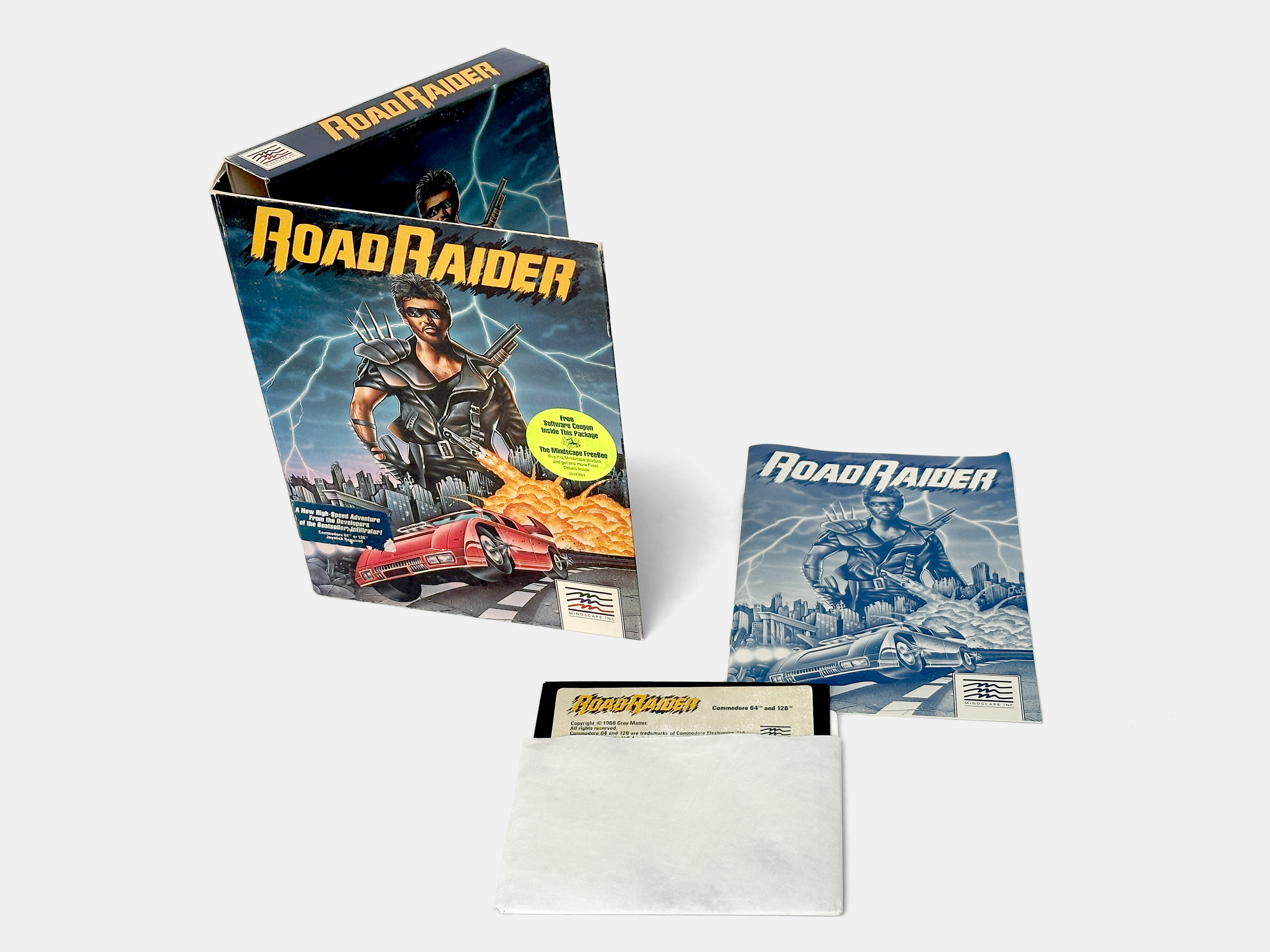
Road Raider, published in North America by Illinois-based Mindscape, was released for a range of popular home computers in 1988.
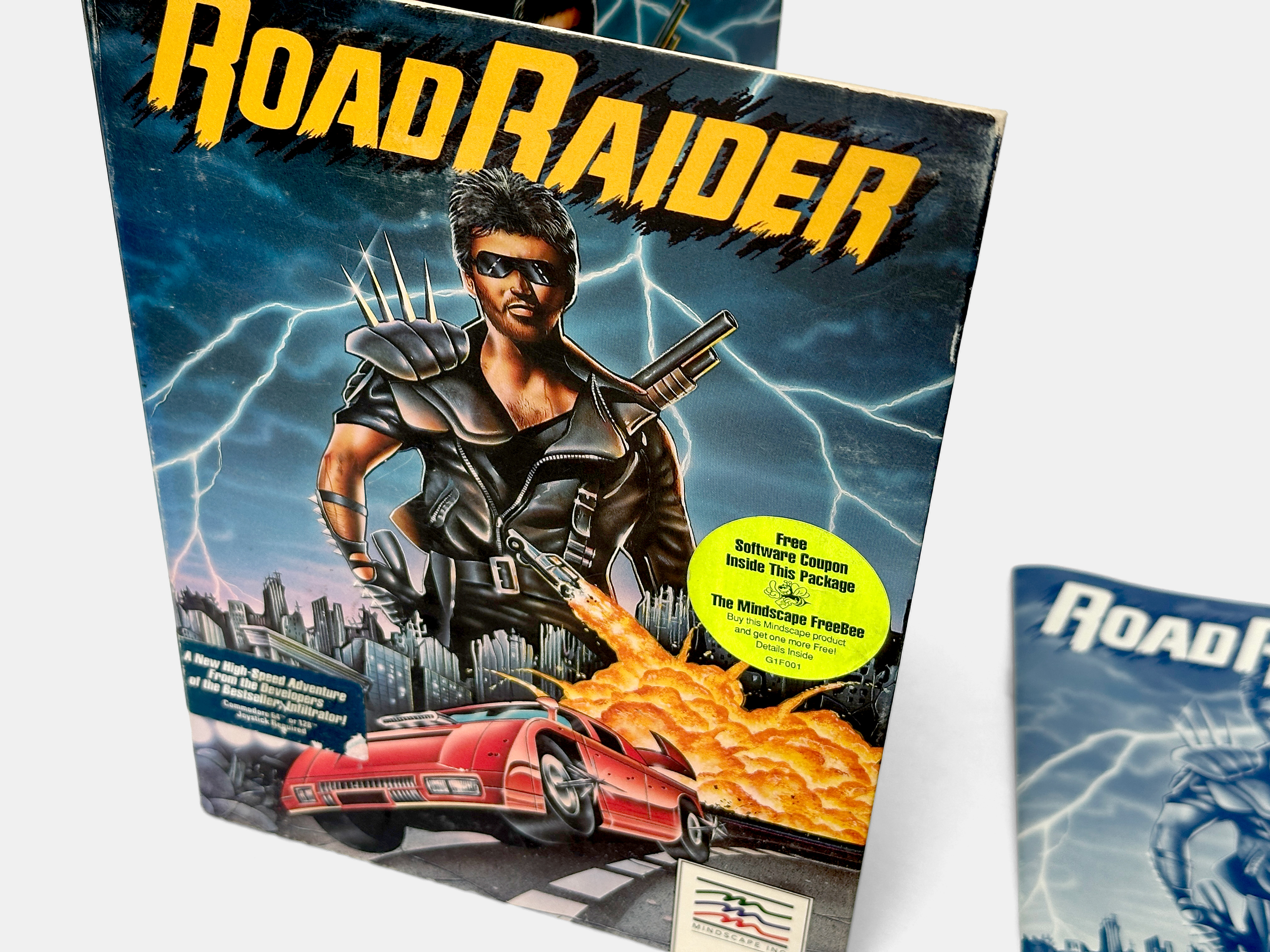
The great artwork was done by illustrator Ian Naylor and reflects the game’s gritty, post-apocalyptic theme, promising players an intense mix of vehicular combat and survival-driven exploration.
Road Raider featured a blend of top-down driving and action-oriented exploration. Players navigated hostile roads in their armored vehicle, battling enemy cars while managing fuel and ammunition. Entering buildings shifted the gameplay to a more methodical, on-foot perspective, where players had to search for supplies, eliminate threats, and locate the elusive Arena Pass to progress.
The title screen of the Commodore 64 version displays the name Road Raiders, with an “s,” which likely resulted from a miscommunication during development. Such inconsistencies were not uncommon in the 1980s, especially when multiple teams or companies handled different aspects of production, including ports to various systems beyond the original target platform.
Road Raider was ambitious in its attempt, but its execution was uneven. It was received with mixed reviews. Some critics praised its ambitious hybrid gameplay and atmospheric setting with great visuals and details, noting its attempt to combine vehicle-based combat with exploration. Others found the execution lacking, citing repetitive driving sequences, stiff on-foot controls, and an overall lack of polish. The game’s difficulty curve was also a point of contention, with some finding it overly punishing.
While an interesting artifact of its time, trying to translate the anarchic energy of films like Mad Max into a hybrid gaming experience, Road Raider remains relatively obscure today. Compared to genre contemporaries like Autoduel and RoadBlasters, it struggled to leave a lasting impression, ultimately becoming a lesser-known entry in the post-apocalyptic gaming landscape.
The title did not spawn any sequels or direct successors, but the game’s spirit arguably lived on in later post-apocalyptic titles such as GameTek’s Quarantine from 1995. The blend of vehicular combat and on-foot action also foreshadowed more expansive games like Rage from 2011, which would fully integrate these elements with modern technology.
In Europe, the game was released by Gremlin Graphics under the title Motor Massacre.
Sources: Wikipedia, Mobygames, Hall of Light, Lemon Amiga…


 Retro365