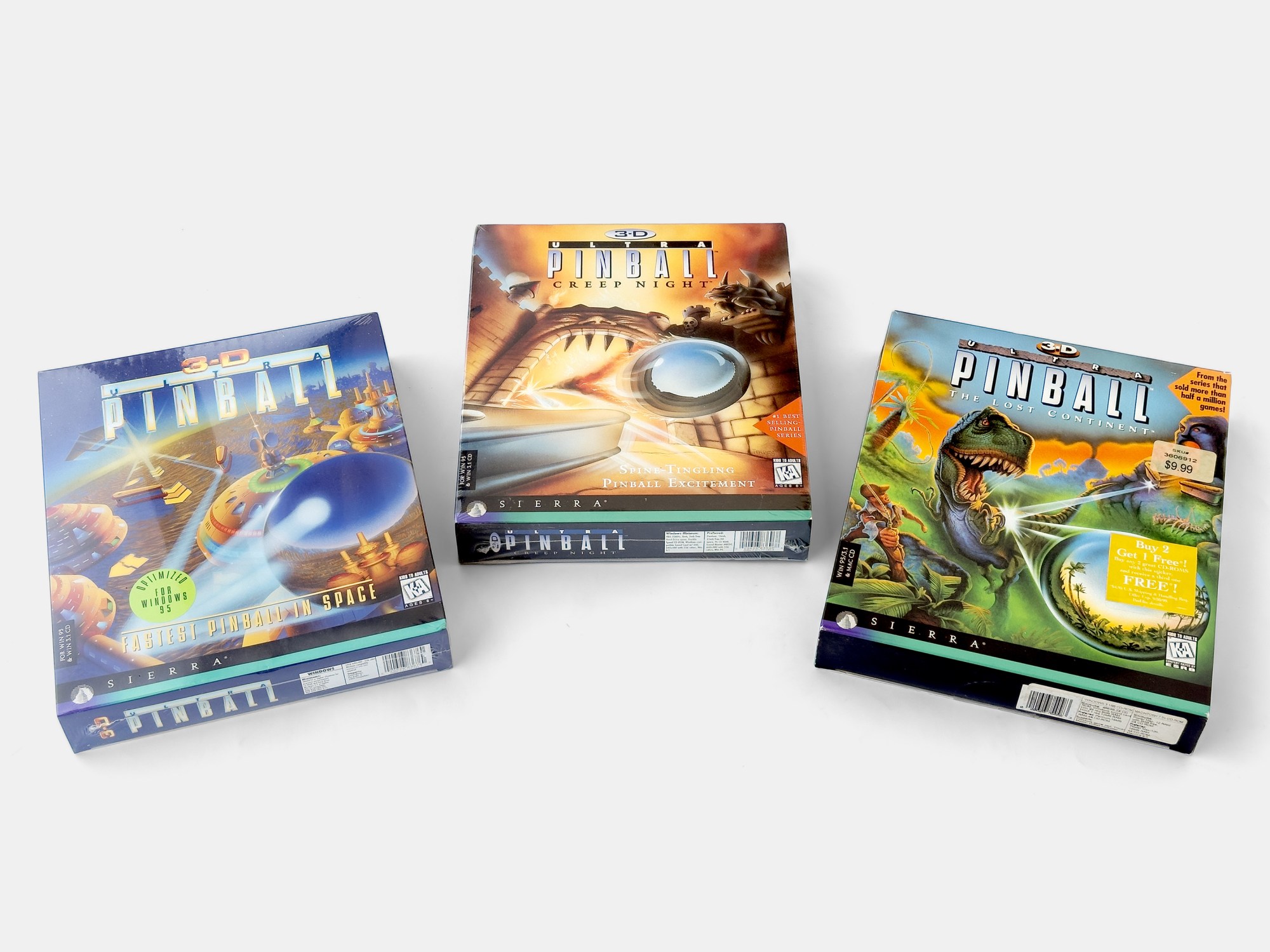
Sierra On-Line’s 3-D Ultra label, established in the mid’90s, demonstrated the company’s commitment to innovation, blending traditional gaming concepts with cutting-edge technology. The 3-D Ultra Pinball series was particularly successful, showcasing Sierra and its subsidiary Dynamix’s ability to transform a classic pastime into a digital phenomenon.
Flippers slinging and guiding a metal ball across a playfield has captivated generations. Pinball, originating from 18th-century French parlor games, grew into mechanical marvels of the 20th century, complete with flashing lights, ramps, and intricate rule sets. The 1970s introduced solid-state electronics, enhancing gameplay with digital displays and even more complex mechanics. Yet, as the golden age of arcades gave way to home consoles and computers in the 1980s, pinball’s popularity waned, only to find a parallel life in people’s homes.
At its core, pinball relied on simple yet engaging mechanics while its underlying physics, from momentum and gravity to friction and collision responses, posed a unique challenge for early developers trying to adapt it to a new medium. Crafting a convincing simulation required intricate calculations to mirror the unpredictability of a real table, making pinball an ideal testing ground for evolving game physics. As the genre evolved, it managed to preserve the spirit of the game and brought flipper-slinging magic to players who couldn’t afford or maintain the real machines.
Among the earliest attempts at digital pinball came in 1980 when pioneering figure, Bill Budge developed three games published by Al Remmer’s California Pacific Computer Company. One of them, simply titled Pinball, was a crude yet foundational adaptation of the game, laying the groundwork for his more advanced Raster Blaster in 1981. A breakthrough title for the Apple II, that pushed the limits of early computer hardware, simulating pinball mechanics despite the era’s graphical and processing constraints. Budge continued to refine his digital pinball concepts, culminating in Pinball Construction Set in 1982-83, the best-selling pinball game of the decade. The title allowed players to design and customize their own tables, fostering creativity and cementing digital pinball as a genre with both arcade-style gameplay and user-driven innovation.
As home computing advanced, other developers expanded on the formula, integrating more sophisticated physics engines and improved visuals. Night Mission Pinball by subLOGIC and David’s Midnight Magic by Brøderbund, both from 1982, introduced features like adjustable table settings, multiplayer options, and increasingly accurate ball physics, bringing a more authentic pinball experience to home users. True for all, they helped push digital pinball beyond novelty, bringing it closer to the feel of real machines while embracing the creative potential of personal computers.
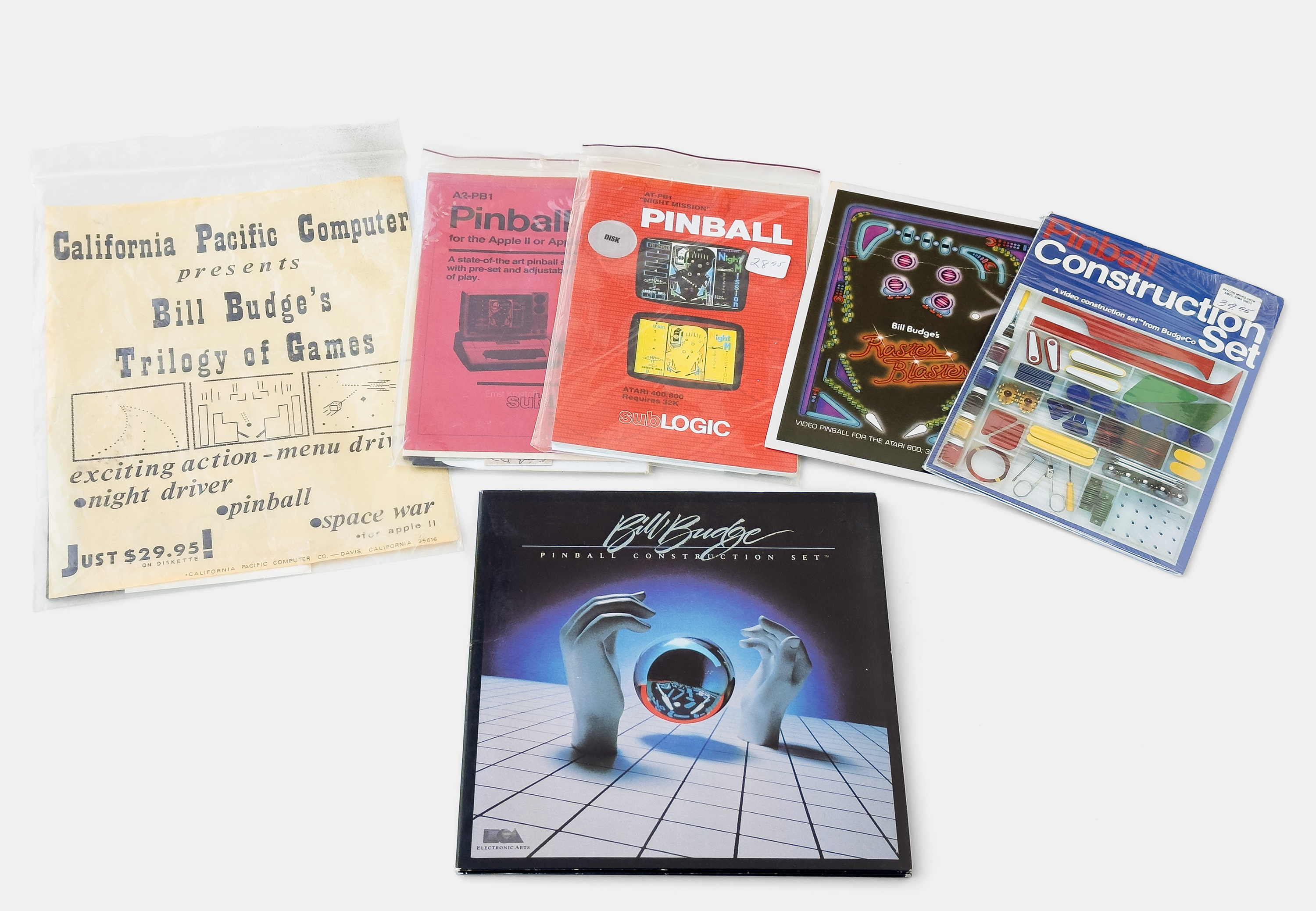
A lineup of early digital pinball games, starting with Bill Budge’s 1980 Pinball for the Apple II, a simple yet foundational effort. Night Mission Pinball by subLOGIC, released for the Apple II and Atari 8-bit followed in 1982. Budge refined his work with Raster Blaster, leading to his groundbreaking Pinball Construction Set, initially released by his company, BudgeCo, in late 1982. Recognizing its potential, Electronic Arts acquired the rights and re-released the game in 1983, leading to significant commercial success. By November 1989, the game had sold over 250,000 copies, eventually surpassing 300,000 units across all platforms. Steve Wozniak, co-founder of Apple, praised it as “the greatest program ever written for an 8-bit machine.”
As the 8-bit machines of the ’80s gave way to more powerful 16- and 32-bit systems in the ’90s, digital pinball experienced a renaissance. The rise of advanced multimedia PC platforms and 3D rendering technology allowed the genre to reach new heights. The innovations enabled developers to incorporate advanced physics models, high-resolution graphics, and immersive soundtracks, setting the stage for the 3-D Ultra Pinball series, developed by Jeff Tunnell Productions/Dynamix and published by Sierra On-Line in the latter half of the ’90s.
Back in 1984, Jeff Tunnell co-founded Dynamix, a company that would become renowned for its innovative development throughout the decade. By 1990, the company had been acquired by Sierra On-Line in a deal valued at $1.5 million. The acquisition granted Dynamix nearly full autonomy, allowing them to set their own creative agenda while continuing operations from their Eugene offices. The influx of capital from Sierra transformed Dynamix, shifting it from a company often constrained by limited funding to one with the resources to bring ambitious projects to life. In just two short years, the company developed three unique, complex, and visually striking adventure titles. By the time the third, Willy Beamish, was released in 1991, Dynamix had grown to over 100 employees. Feeling burned out from the large-scale productions, Tunnell yearned for the days of working with smaller teams. Consequently, he established Jeff Tunnell Productions, a smaller development studio located a few blocks away from the main offices of Dynamix.
While Tunnell and his team developed Quarky & Quaysoo’s Turbo Science, an educational title designed to teach scientific concepts to children, Dynamix created its Take a Break! series. Two games were designed as bite-sized experiences for Windows users looking for quick, engaging diversions. The first was a crossword puzzle game, released in 1992, followed by Take a Break! Pinball in 1993, the studio’s first foray into the pinball genre. Unlike traditional pinball simulations, Take a Break! Pinball featured themed tables inspired by some of Sierra and Dynamix’s most beloved franchises.
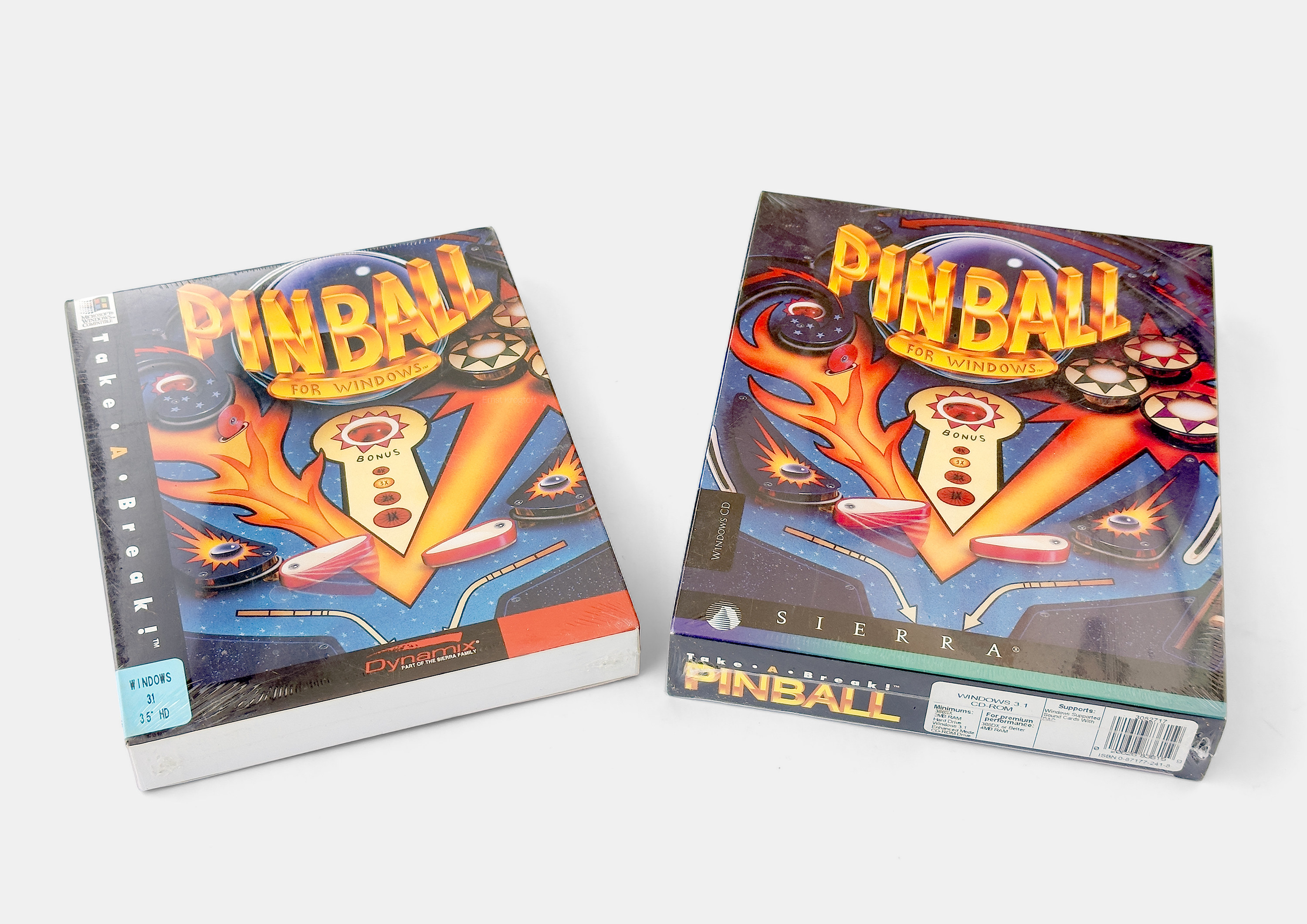
Take a Break! Pinball was the second and last entry in Dynamix and Sierra’s Take a Break! series, designed as bite-sized experiences for Windows users. The game was initially released on floppy disks for Windows 3.1 in 1993 featuring the Dynamix logo on the cover. A Sierra-branded CD-ROM release followed in 1995.
Take a Break! Pinball featured themed tables based on popular Dynamix and Sierra games, incorporating many familiar and beloved elements.
The overall execution was lacking, with clunky gameplay and simplistic table designs that failed to capture the depth of traditional pinball simulations -and the charm of the games it portrayed.
With the rise of systems capable of delivering high-quality graphics, sound, and music allowed for a reimagining of pinball. Visually immersive pinball games began to emerge, elevating the genre with richer, more dynamic experiences. The most successful of these was the 3-D Ultra Pinball series which blended classic pinball mechanics with Dynamix and Sierra’s signature flair for storytelling and innovative gameplay.
The series debuted in 1995 with 3-D Ultra Pinball, which was inspired by Sierra’s 1994 title Outpost. A game that initially received high praise for its time, with some of the highest ratings available but later became famous for all the wrong reasons. Despite the controversial origins, 3-D Ultra Pinball was a massive success, with sales surpassing 250,000 copies by the end of March 1996. The game introduced players to an interstellar sci-fi adventure, featuring interconnected tables set in space with unique challenges and missions. Its vibrant visuals, seamless transitions between tables, and inventive mechanics earned widespread acclaim, setting a new standard for digital pinball and showcasing the full potential of the multimedia systems of the era.
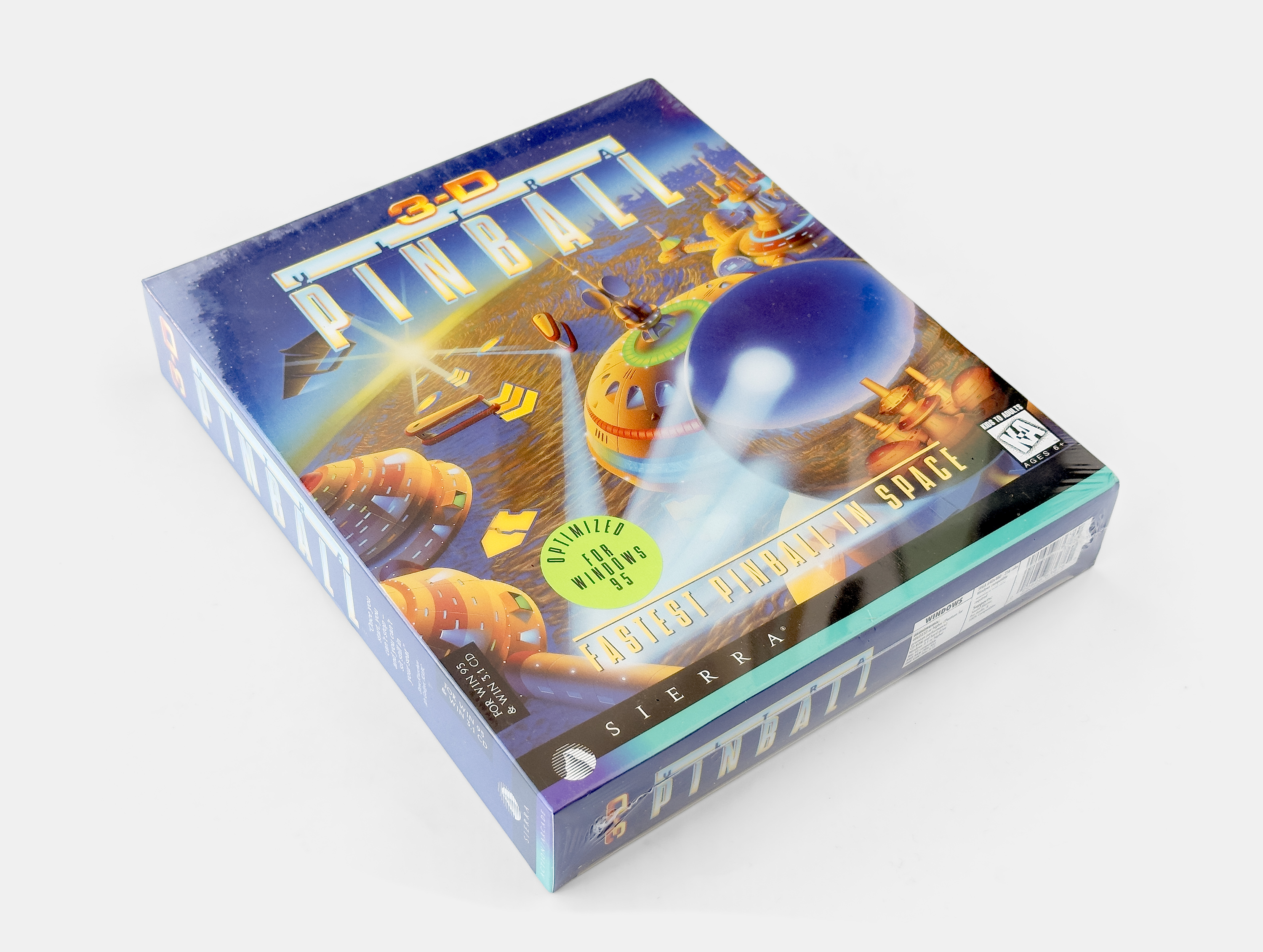
The first entry in the 3-D Ultra Pinball series, from 1995, was based on Sierra On-Line’s 1994 title Outpost, a game that initially received one of its highest ratings for its time but was later, by Computer Gaming World, declared the worst computer game ever released due to general bugginess and mediocre gameplay, along with the lack of features described in most of the game’s reviews and the game’s own documentation.
3-D Ultra Pinball blends classic pinball mechanics with dynamic, space-themed tables, enhanced by the use of pre-rendered 3D graphic elements, high-resolution visuals, and immersive sound.
Building upon the success of the original 3-D Ultra Pinball, Sierra released 3-D Ultra Pinball: Creep Night in 1996. The installment broadened the series’ appeal by introducing a fresh thematic direction, while still maintaining the engaging gameplay that fans had come to expect. As the title implies, the game embraced a haunted theme, immersing players in a spooky world filled with animated skeletons, ghosts, and creepy crawlies. It featured three tables, each offering unique challenges and missions.
Critically, Creep Night was well-received for its atmosphere and creativity. Charlotte Panther of Computer Gaming World praised the game, recommending it for both beginners and experienced players, and noting that the game offered “plenty of scope for replayability.” The game was also released for Macintosh computers, where it was hailed as “one of the finest pinball simulators available.”
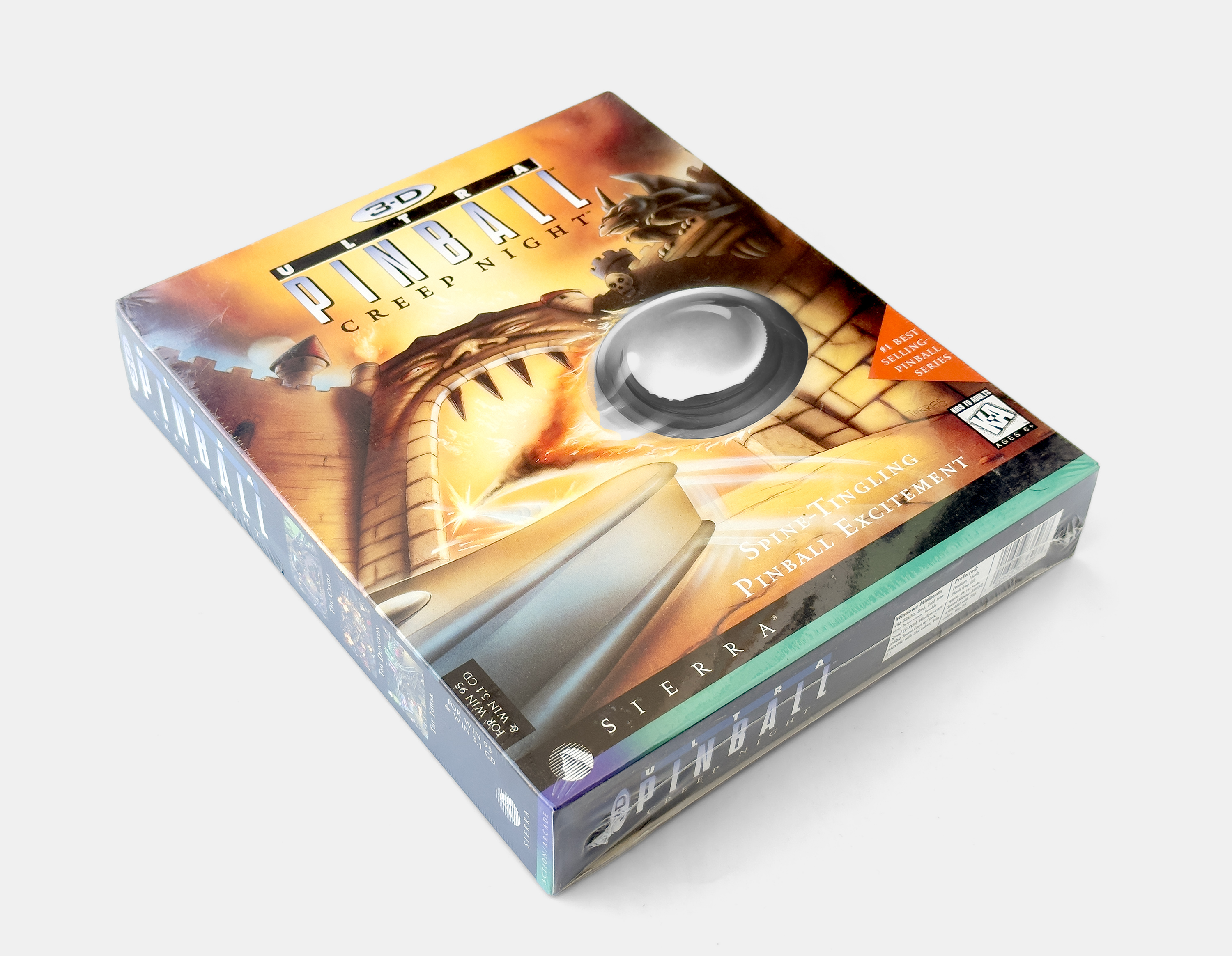
Released in 1996, 3-D Ultra Pinball: Creep Night leaned into a haunted theme and was praised for its atmosphere and creativity, becoming a favorite among fans of the series.
3-D Ultra Pinball: Creep Night featured three creatively designed tables, the Castle, the Tower, and the Dungeon, each filled with animated skeletons, ghosts, and other eerie elements.
The success of Creep Night paved the way for the series’ continued growth, and in 1997, the next installment, 3-D Ultra Pinball: The Lost Continent, was released. The haunted settings were switched for a pulp adventure theme, featuring interconnected tables set in a world of dinosaurs, volcanoes, and ancient temples. Players embarked on an Indiana Jones-style adventure, navigating challenges that blended classic pinball mechanics with a cinematic narrative, offering a more story-driven experience than earlier entries.
Critics praised The Lost Continent for its ambition, creativity, and seamless integration of adventure elements into the pinball format. The game’s design and engaging gameplay placed it as one of the most memorable entries in the series. Its success further cemented the 3-D Ultra Pinball brand as a standout in the genre, earning accolades for its bold step into the realm of thematic, narrative-driven pinball gameplay.
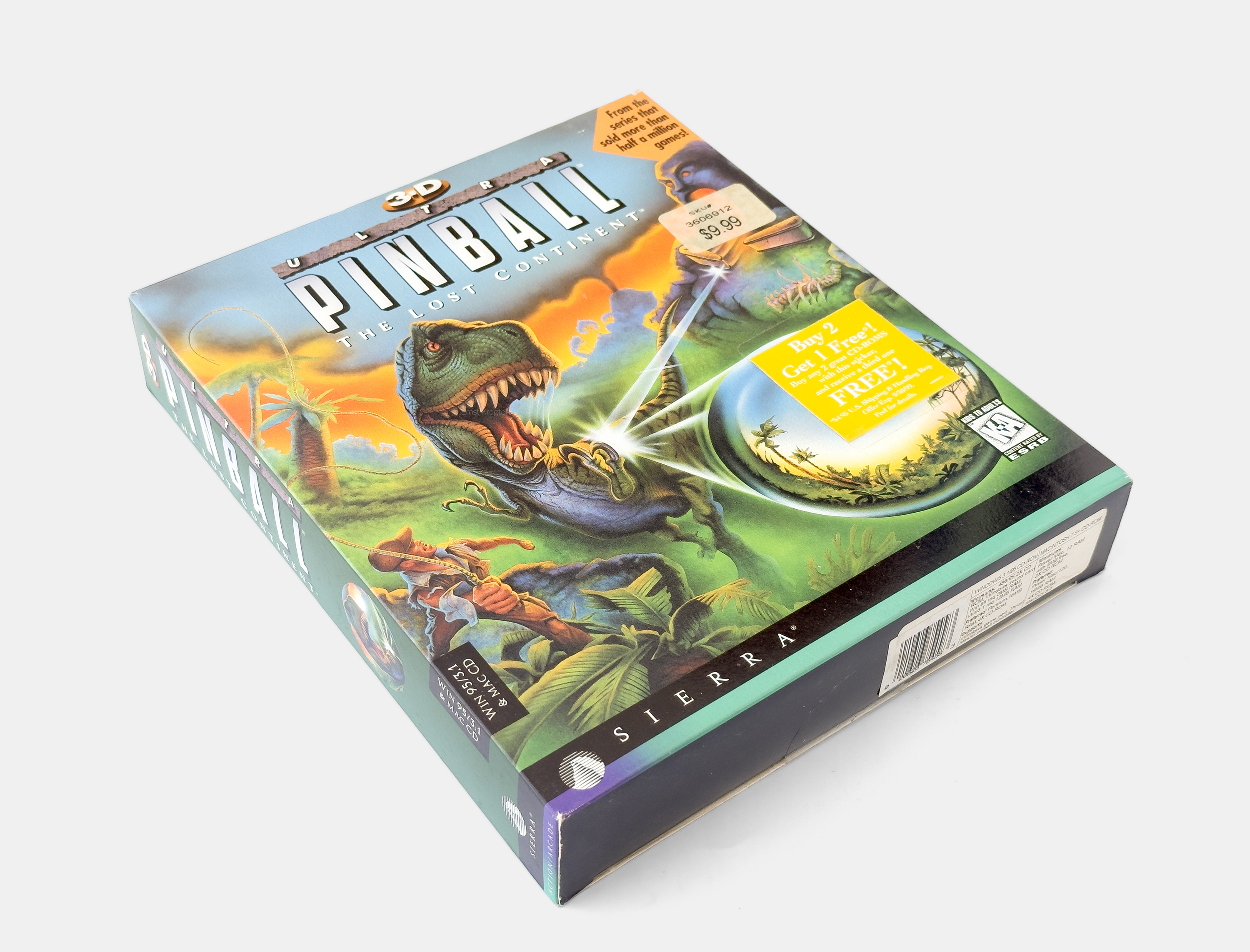
The third entry in the 3-D Ultra Pinball series, The Lost Continent, was released in 1997. The game takes players on a thrilling adventure through ancient temples, volcanoes, and dinosaur-filled jungles. The game combines traditional pinball mechanics with cinematic storytelling, offering a more narrative-driven experience.
(I had some issues while recording gameplay and will add a video sometime in the future.)
The development and design of the first three 3-D Ultra Pinball titles leveraged the technological advancements of the time, offering 3D pinball experiences that stood out in the competitive mid-1990s multimedia gaming landscape. With sales reaching 500,000 copies by 1998, the series proved that digital pinball had a significant place in the market, capturing the essence of the arcade experience while bringing it into homes across the world.
Building on the success of the first three entries, 3-D Ultra Pinball: NASCAR was released in 1999, bringing the speed and spectacle of auto racing into the realm of pinball. The title combined the high-energy thrills of NASCAR with fast-paced pinball gameplay, allowing players to choose from licensed drivers, complete racing-themed objectives, and experience a unique fusion of two gaming worlds. That same year, 3-D Ultra Pinball: Thrillride took the series into the heart of the amusement park, offering roller coasters, carnival games, and themed tables full of exciting twists and turns.
In 2000, 3-D Ultra Pinball: Power served as the final entry in the series, compiling the best tables from its predecessors while optimizing them for modern systems. The collection provided a fitting conclusion to the series, offering fans a nostalgic journey through the rich history of 3-D Ultra Pinball.
As the genre evolved, digital pinball continued to mirror the technological advancements of its era, from simple ball-and-paddle simulations to intricate 3D experiences. The adaptability ensured that the genre remained a popular and accessible form of entertainment for gamers of all ages up through the ’80s and ’90s, all while preserving the spirit of the arcade in a digital format.
Sources: Hardcore Gaming 101, TV Tropes, Wikipedia…
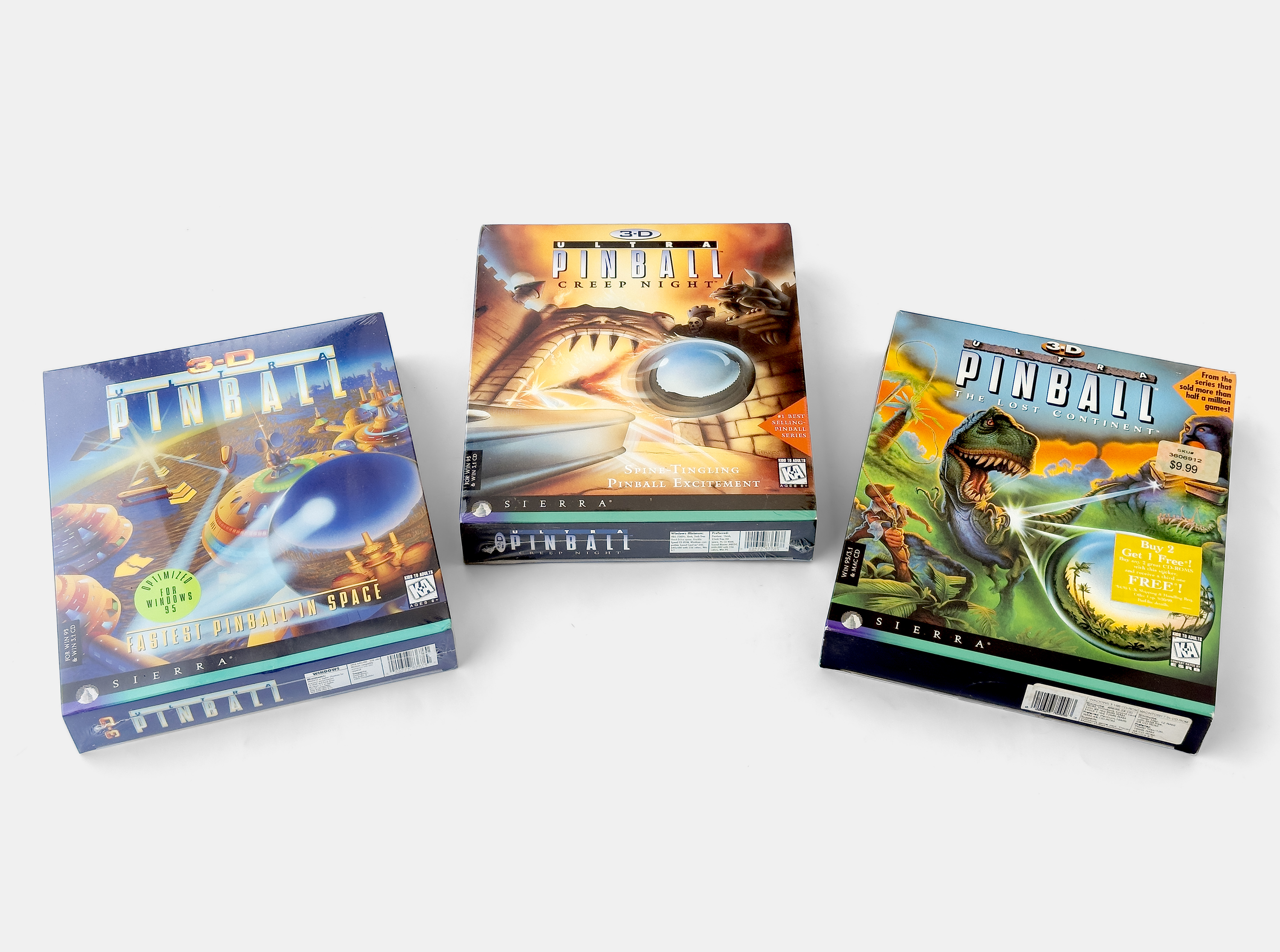
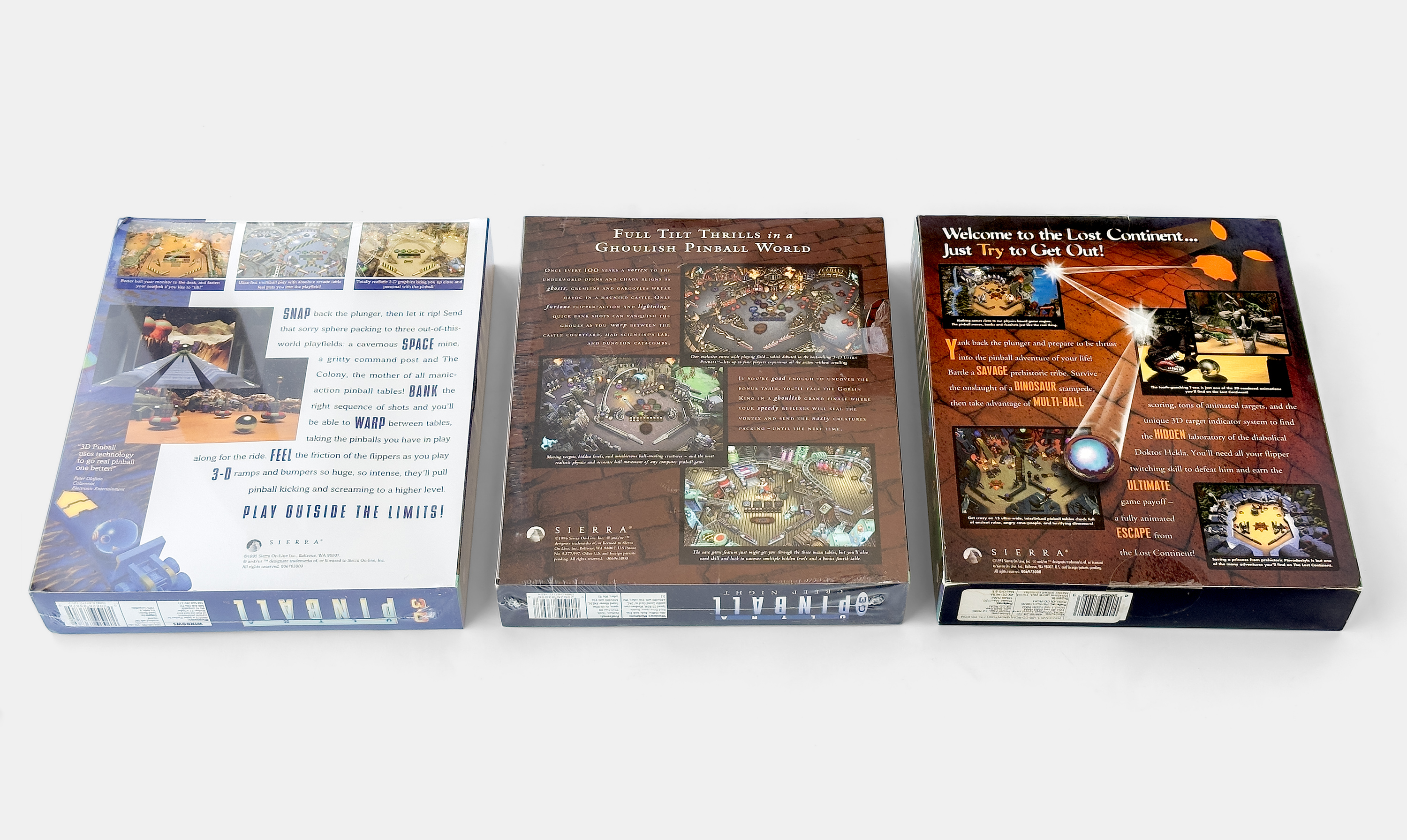
 Retro365
Great topic. Always had an interest in pinball and digital ones.
Bill budge stuff was amazing. Missing only Night Mission which is hard to find nowadays.
Thx
Thanks:) Yeah, me too, I have always loved pinball…
Pinball Fantasies (1992) was my favorite for PC.
I hope this message goes through…
Last one: “Sorry, this comment could not be posted.”
Ze
I loved Pinball Dreams / Fantasies… great memories:)