As a kid and teenager, I was deeply involved in competitive swimming. Nearly every weekend, I traveled across the country for training and competitions. One weekend, around 1990-91, I was away at a two-day event in a different part of the country. During our downtime, a few of us went into the local arcade. Tucked away in a corner was a machine I had never seen before, surrounded by a crowd watching an older, cool kid play. The game’s graphics were striking, the monsters were wild and absurd, and the gameplay quite challenging, it was mesmerizing. The game was Toki, and I was immediately hooked.
The story of Toki, known as JuJu Densetsu in Japan, began in December 1988 when a freelance artist approached TAD Corporation, a relatively obscure Japanese video game developer, with a set of character designs featuring a humorous monkey. TAD, founded earlier in the year by former Data East employees, was intrigued by the concept and decided to develop an arcade game around it.
Development progressed quickly, and on September 15, 1989, the first public location test for the game was held simultaneously in Japan and at the University of Washington. A second test followed in October, and a month later, development was finalized.
On December 8, JuJu Densetsu was officially released in Japan. Being a small company, TAD Corporation lacked the capacity to distribute its games internationally. As a result, Washington-based Fabtek, Inc. took on the role of localizing and distributing the game for Western markets, including the United States, where it was released as Toki on February 22, 1990, reportedly named after the son of TAD’s owner.
FABTEK primarily worked as a distributor rather than a game developer. Their role was to localize and release games created by smaller Japanese studios in the United States and Canada. Many of the games they handled were from companies that didn’t have the resources or network to distribute their own titles overseas, so FABTEK provided a crucial service in expanding the reach of those games, including Toki, which found a small but devoted audience.

Toki advertisement flyer from FABTEK.
Image source: The Arcade Flyer Archive
Toki was housed in an upright cabinet, equipped with an 8-way joystick and two buttons, one for attacking and one for jumping. The game itself was a quirky, run-and-gun platformer with a wacky premise. The art design was a major draw for players, combining a whimsical yet grotesque tone with a light-hearted but challenging gameplay. The hand-drawn monsters were imaginative, ranging from the absurd to the alarming, like a giant snail boss, floating skulls, and ape-like demons.
As you went along, even the smallest mistakes would result in instant death. This trial-and-error structure was key to its addictive, yet frustrating nature and ensured players couldn’t simply breeze through. You had to learn the patterns, master the jumps, and dodge enemies with precision. It was unforgiving but addictive, like many arcade games of the era, designed to hook players while emptying their pockets.
The story begins with an introduction reminiscent of Tarzan and Jane. Your love, Miho, is kidnapped by an evil sorcerer, who transforms you, Toki, into a comical ape in the same instance. The gameplay is relatively unique for a run-and-gun platformer at the time. Instead of wielding guns or swords, Toki defeats enemies by spitting at them. TAD Corporation was known for taking creative risks, and Toki was no exception. Its mix of classic platforming elements with a distinctly bizarre storyline set it apart from more conventional arcade titles of the era.
The visuals were vibrant, with imaginative creature designs. Each stage concluded with a massive, offbeat boss battle. While you had unlimited continues for most of the game, the final level gave you only 10 chances, demanding skill, luck, and perseverance.
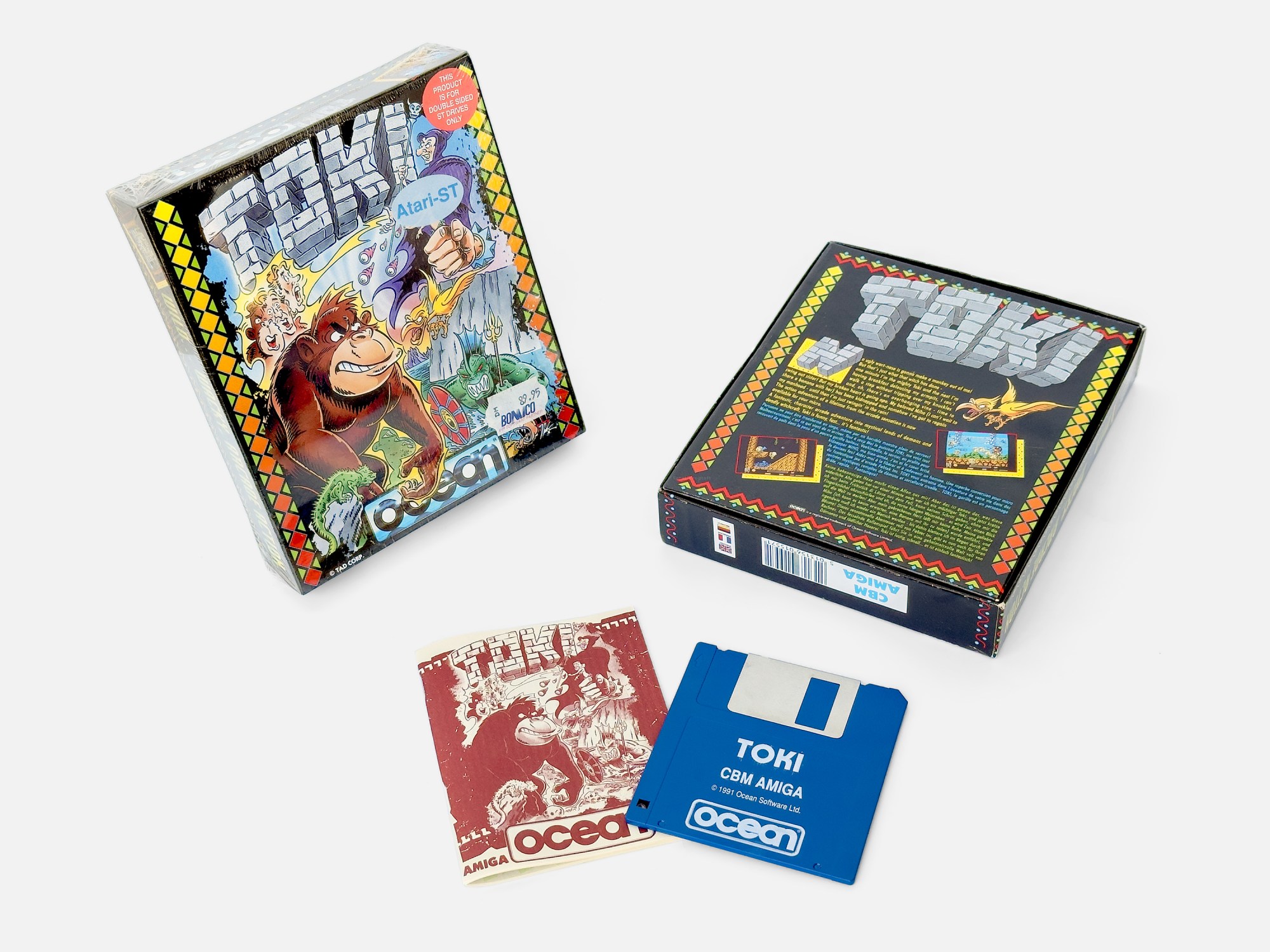
Given Toki‘s popularity in arcades, it was only a matter of time before it was ported to home computers. British powerhouse Ocean Software secured the rights to develop and publish conversions for the 16-bit Commodore Amiga and Atari ST, as well as for the 8-bit Commodore 64, ZX Spectrum, and Amstrad CPC, though only the Amiga, Atari ST, and C64 versions materialized.
Arcade-to-home conversions were notoriously hit-or-miss, and the results were often underwhelming. However, Ocean Software had a strong track record, having successfully adapted major titles like Rambo, RoboCop, and Batman. Ocean France was tasked with converting Toki for the Amiga and Atari ST. Both conversions were remarkably faithful to the arcade original, both in gameplay and aesthetics, but with even better use of colors.
To create the conversions, Ocean acquired an actual arcade machine and extracted the sprites directly from its ROM. The process involved cleaning up the visuals and reverse-engineering the gameplay to replicate the arcade experience as closely as possible.

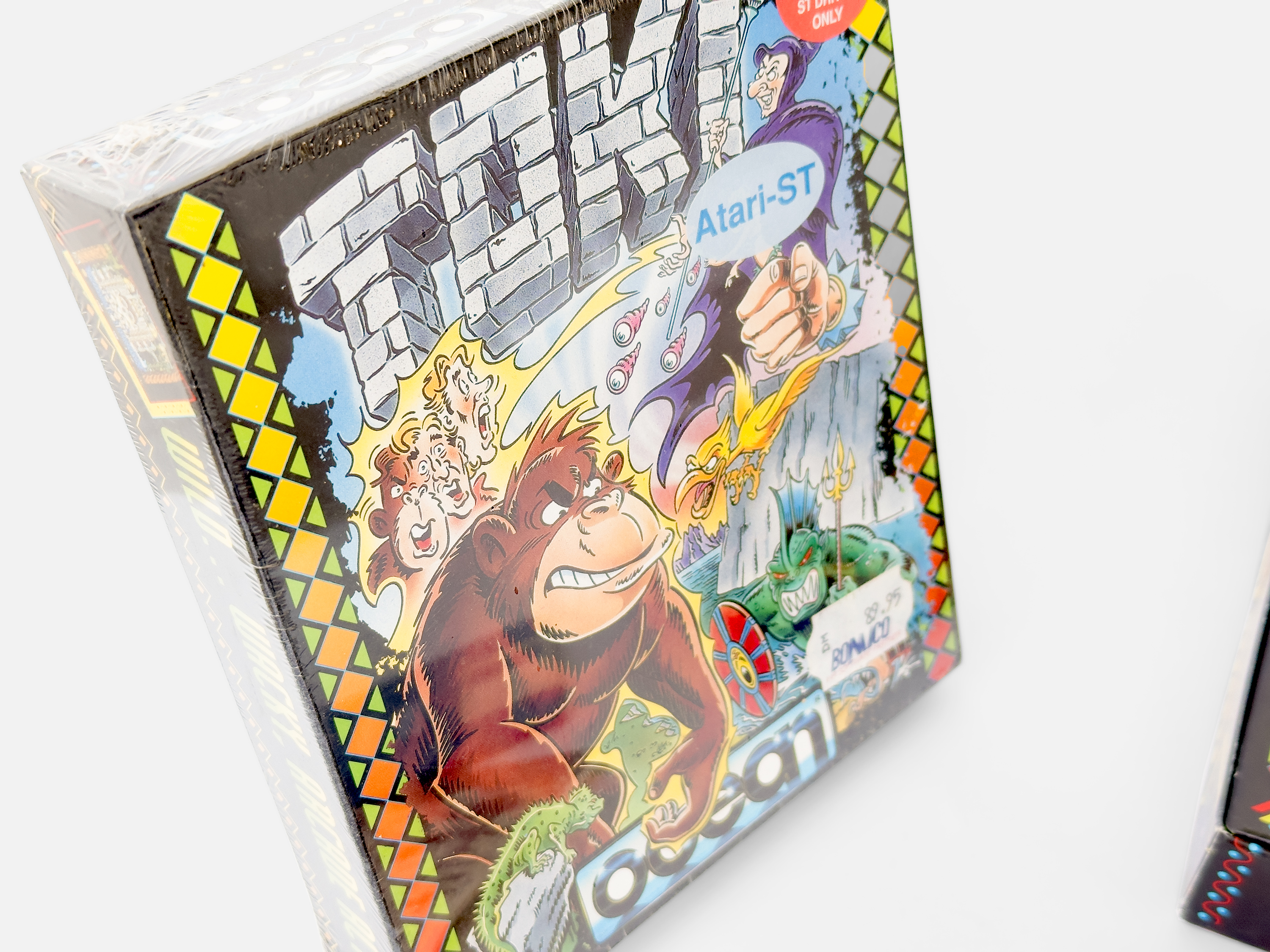
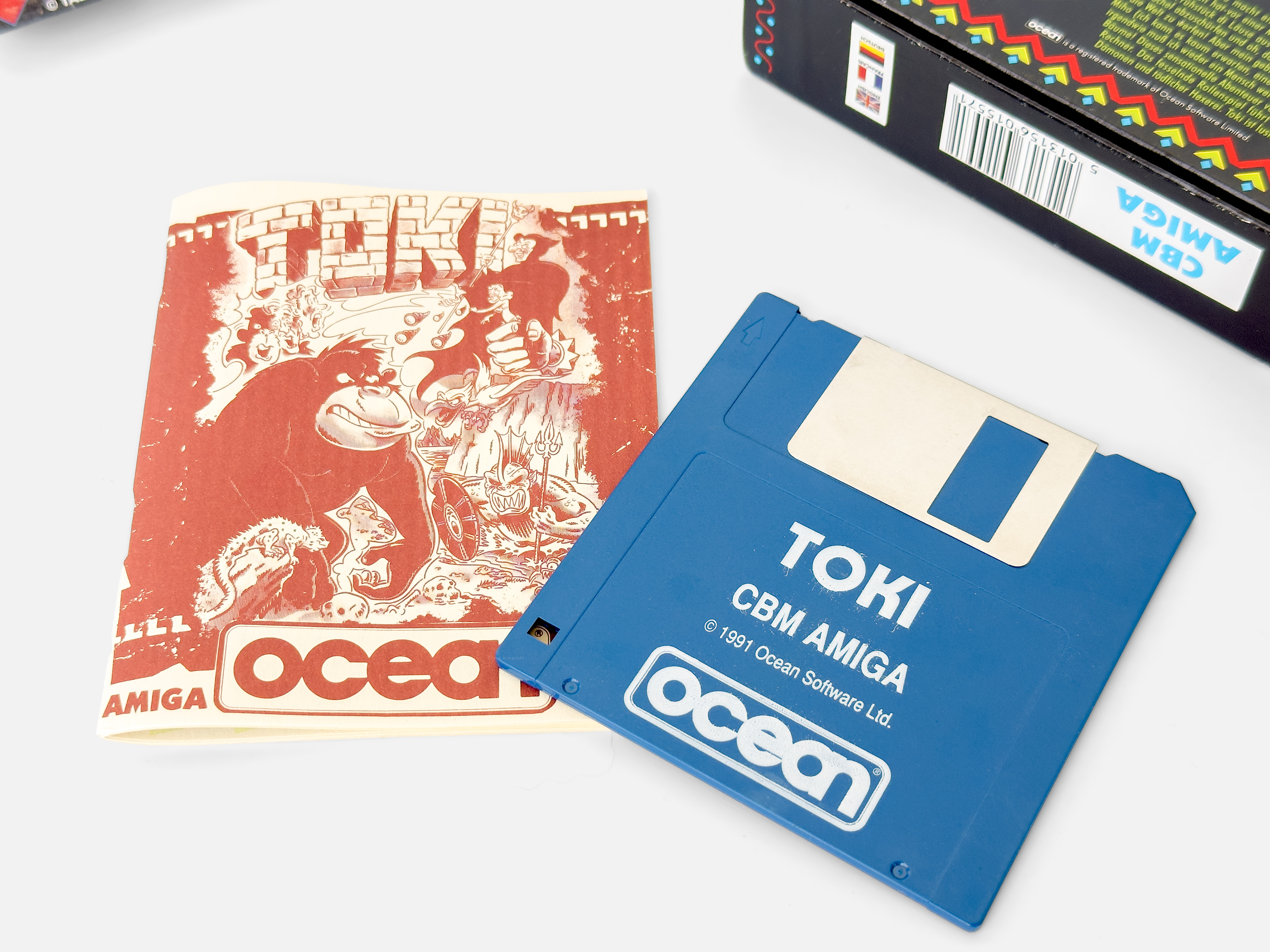
Ocean Software released home computer versions of Toki for the Commodore Amiga, Commodore 64, and Atari ST in 1991, with the impressive 16-bit conversions handled by Ocean France.
Toki was a visual delight, combining challenging yet rewarding gameplay with an array of creatively designed enemies.
The Atari ST and Commodore Amiga versions remained remarkably faithful to the arcade original, with the Amiga port standing out for its vibrant visuals and fantastic soundtrack.
Toki demonstrated the power of 16-bit computers, pushing those systems to deliver arcade-quality graphics and gameplay in the comfort of people’s homes.
After Toki hit the home computer market, I finally had a chance to reunite with the game, though I didn’t have an Amiga or Atari ST at home. Luckily, a friend of mine had an Amiga 500, and one day a pirated copy of Toki showed up. We played it obsessively, and to this day, I still revisit the game on my standup arcade machine or on our RetroPie setup connected to the living room TV.
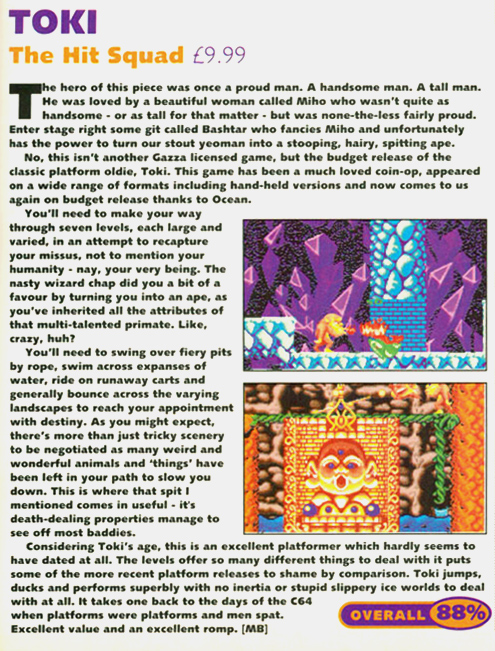
Toki received recognition for its quality, winning a Golden Joystick Award in 1992, an honor given to the year’s best video games, as voted for by the British public. The One magazine awarded the budget Amiga version released in 1993 an impressive 88% score, praising its unique elements, such as the ability to swim, climb, and ride trolleys, which helped set it apart from other arcade conversions of the time.
The magazine further praised the game’s well-balanced difficulty curve, which increased gradually, and highlighted the soundtrack, which “complemented the action perfectly.” The review concluded by calling Toki “an enjoyable conversion that’s as playable as it is pretty.”
While the arcade game’s difficulty and punishing mechanics carried over to the home conversions, the Nintendo Entertainment System port, released in 1991 by Taito, softened the challenge slightly by introducing a health bar instead of instant death. The subtle change made the game more approachable for home audiences but also removed a bit of the arcade’s brutal charm.
Toki was also ported to the Atari Lynx handheld in 1992 by Atari, with a planned version for the Atari 7800 that ultimately went unreleased. In 1992, Toki: Going Ape Spit was released for the Sega Mega Drive/Genesis, developed by Sega under license from TAD Corporation. This version was a semi-sequel/remake of the original arcade game and retained the core gameplay and premise but featured entirely new levels, many of which were expanded versions of the original stages. These stages were divided into three separate areas, with checkpoints at the beginning of each. Most of the enemies and bosses from the original returned, albeit with new names in this iteration.
In late 2018, Toki saw a revival on the Nintendo Switch with reworked art and sound. Then, in June 2019, a full remake was released for Xbox One, PlayStation 4, and PC/Mac. This modern remake, developed by French studio Microïds, featured beautifully hand-drawn artwork and re-orchestrated music, retaining the quirky charm of the original while modernizing it for contemporary audiences, ensuring that the quirky ape-man adventure could be appreciated by a new generation of gamers. The artwork was crafted by Philippe Dessoly, who also worked on the graphics for the Amiga and Atari ST versions in 1991, adding a layer of nostalgia for longtime fans.
Although Toki never had an official sequel, its legacy with bizarre worlds, unique enemies, and challenging mechanics can be seen in other run-and-gun platformers that emerged in the early ’90s.
Sources: Arcade History, Wikipedia, Arcade Museum, Fandom…



 Retro365