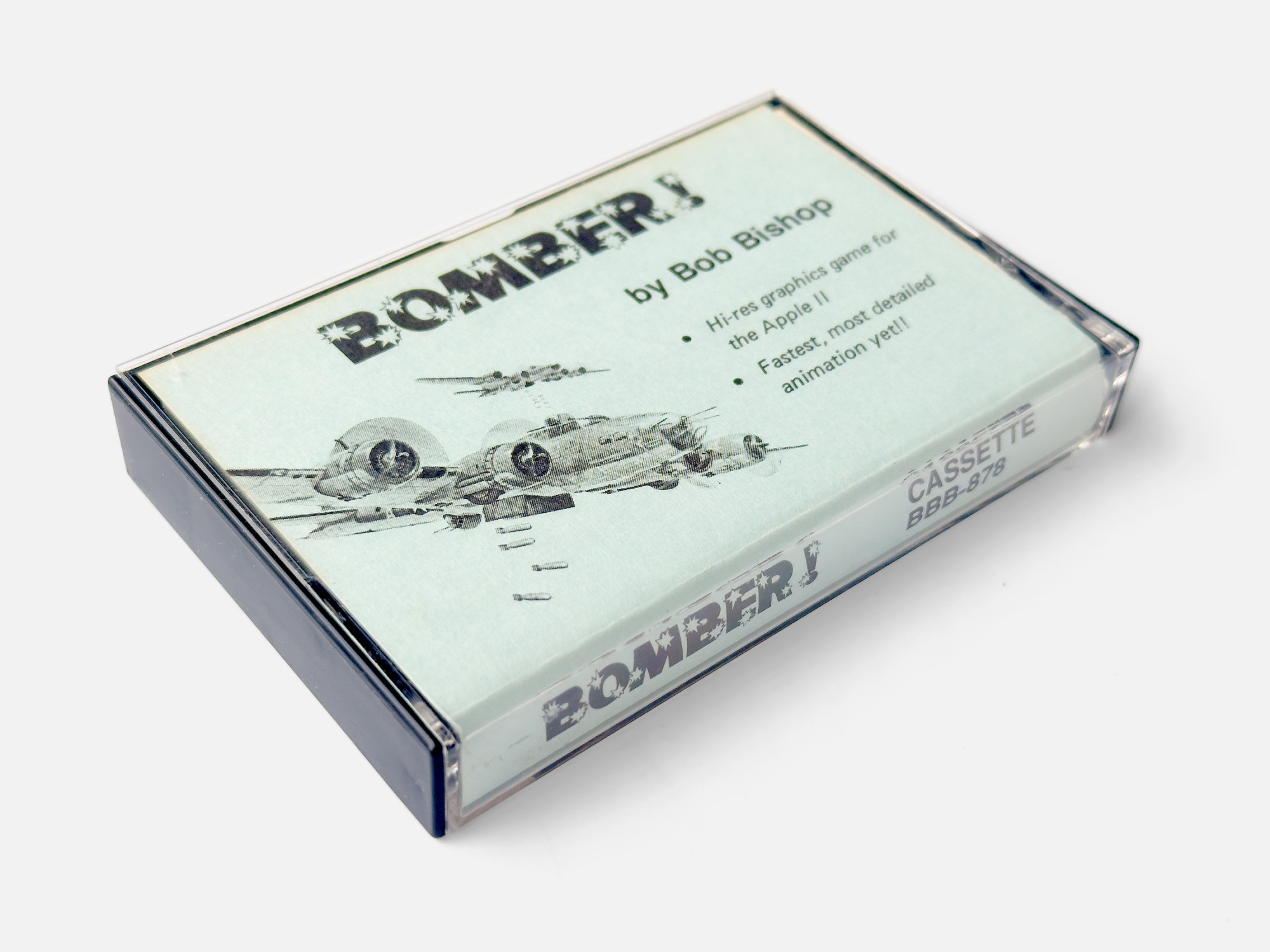
In the mid-1970s, long before home computers became household staples, Bob Bishop was already exploring the potential of the emerging technology. Working as a physicist at NASA’s Jet Propulsion Laboratory, Bishop had a front-row seat to the cutting-edge developments in computing. However, it wasn’t the hulking mainframes or early kit computers like the Altair 8800 that would catch his interest but the then-unknown Apple-1.
In October 1976, Bishop’s curiosity led him to an unassuming suburban home, Steve Jobs’ house. There, he first saw the Apple-1 in action, a device still in its infancy and plagued by technical glitches. Undeterred, Bishop bought one of the first Apple-1 machines sold, setting the stage for a pivotal relationship with Apple’s two founders, Jobs and Steve Wozniak.
By July 1977, Bishop had upgraded to the newly-released Apple II, a vastly more capable machine with 16KB of memory and cassette tape interface. With serial number 0013, Bishop’s new machine was one of the very first units made available. It didn’t take long for Bishop to hit some of the computer’s early design limitations as his computer’s ventless case began to sag from overheating, an issue he promptly brought to Apple’s attention, leading to a new vented design.
Bishop thrived in an environment with virtually no formal documentation and with little more than trial and error, he soon cracked the mysteries of the Apple II’s high-resolution graphics mode. The self-taught mastery allowed him to write assembly code for the system and create one of the earliest graphical games for the platform, Rocket Pilot which boasted animated high-resolution graphics at a time when most games were little more than text-based adventures. Bishop’s work with hi-res graphics led to the creation of several more titles, including Saucer Invasion, Star Warriors, and Bomber! released through Softape, one of the first software distribution companies in the microcomputer industry.
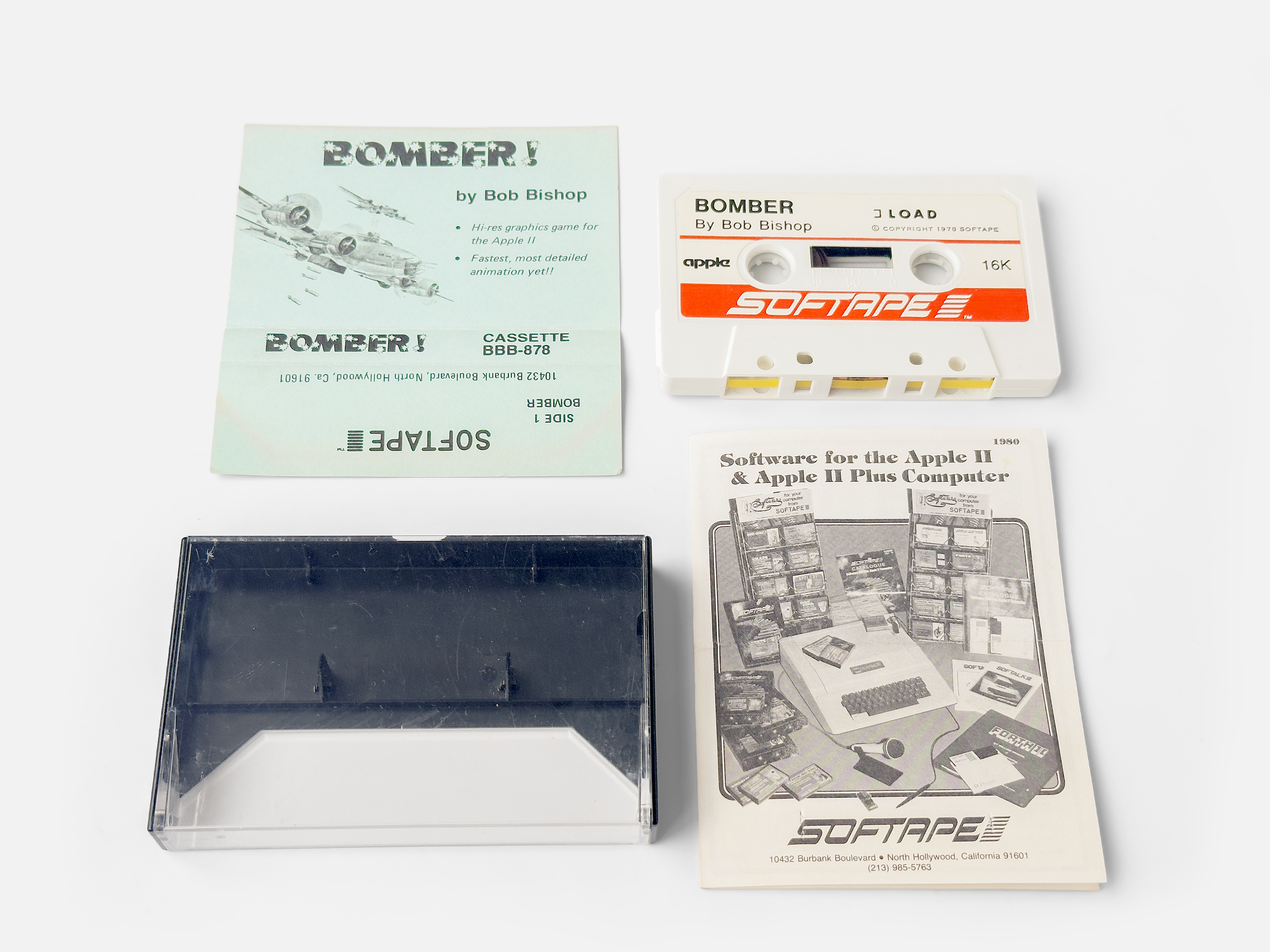
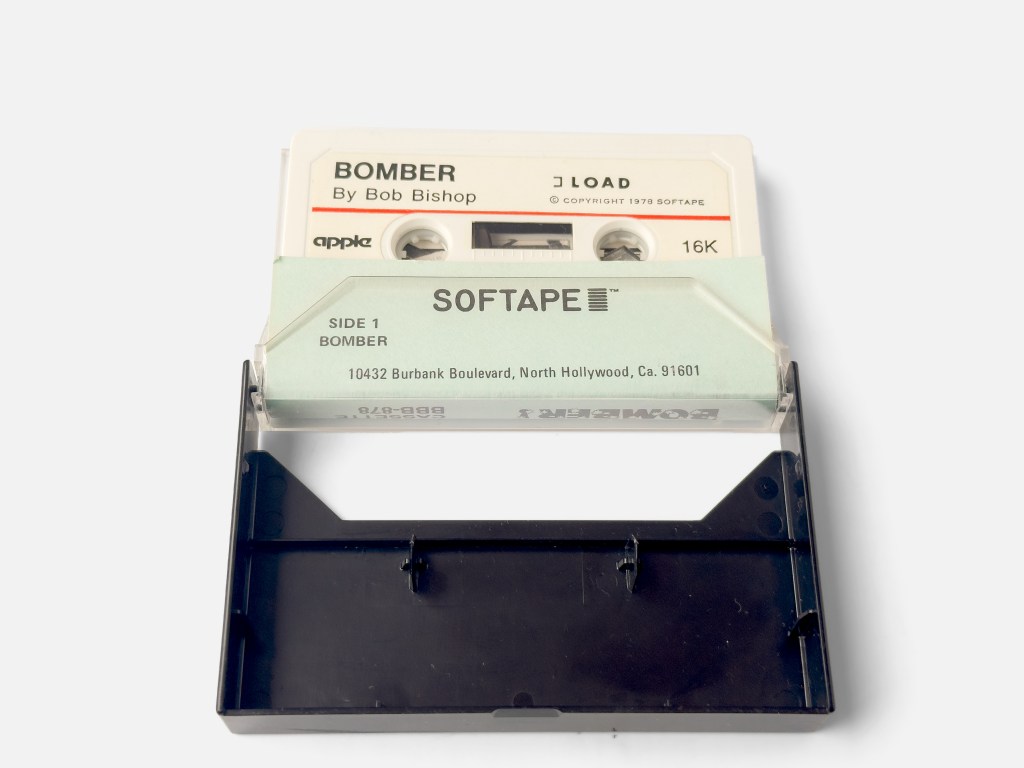
Bomber! by Bob Bishop was released in 1978 by Softape as one of the earliest animated Hi-Res games for the Apple II computer.
This copy seems to have been sold later on as the Softape software catalog is from 1980.
Despite his success as a software developer, Bishop’s career trajectory was about to shift dramatically. In October 1978, Atari, seeing his groundbreaking work on the Apple II, offered him a job. Bishop considered the offer but ultimately turned it down after an unexpected call from Wozniak, who persuaded him to join Apple instead, offering him a better salary and stock options. In December 1978, Bishop officially became Apple employee #187, working in Apple’s research and development division, which he co-founded with Wozniak.
At Apple, Bishop found himself in a unique position. He shared an office with Jef Raskin, who would later go on to create the early concepts for the Macintosh. Unbound by strict project assignments, Bishop pursued various innovative projects, including early experiments with speech recognition and synthesis. He also worked on the ill-fated Apple III alongside Wendell Sander. However, despite these contributions, Bishop’s most notable accomplishment during this time was the development of Apple-Talker and Apple-Listener, software that brought speech capabilities to the Apple II.
Bishop contributed to various projects, including developing software for CBS‘s game show Tic Tac Dough in 1978, where Apple II computers controlled the game board, a demonstration of how quickly personal computers were being integrated into mainstream applications.
In February 1981, Apple underwent a massive internal shake-up known as “Black Wednesday,” a day when then-CEO Michael Scott laid off nearly half of the Apple II engineering team, including Bishop. Despite having vested two-thirds of his stock options, Bishop found himself suddenly out of a job. Though Apple later offered him the chance to return (sans stock options), Bishop declined and moved on from the company, a decision that would mark the end of his direct involvement with Apple.
Though Bishop left Apple, his impact on the company and the computing world was far from over. His software continued to be distributed widely, including Apple-Vision, included on the DOS 3.3 master disks that showcased the graphical and sound capabilities of the Apple II. He also authored numerous articles and books on assembly language programming.
Bob Bishop’s journey from the early days of the Apple-1 to his software on the Apple II is quite a testament to the ingenuity and persistence that defined the early personal computing era. Working in a time when documentation was sparse and technology was still finding its footing, Bishop’s ability to create games, utilities, and innovative software helped define the Apple II’s success and paved the way for future developers.

 Retro365
Great retrospective on a pioneer.
Thanks a lot.