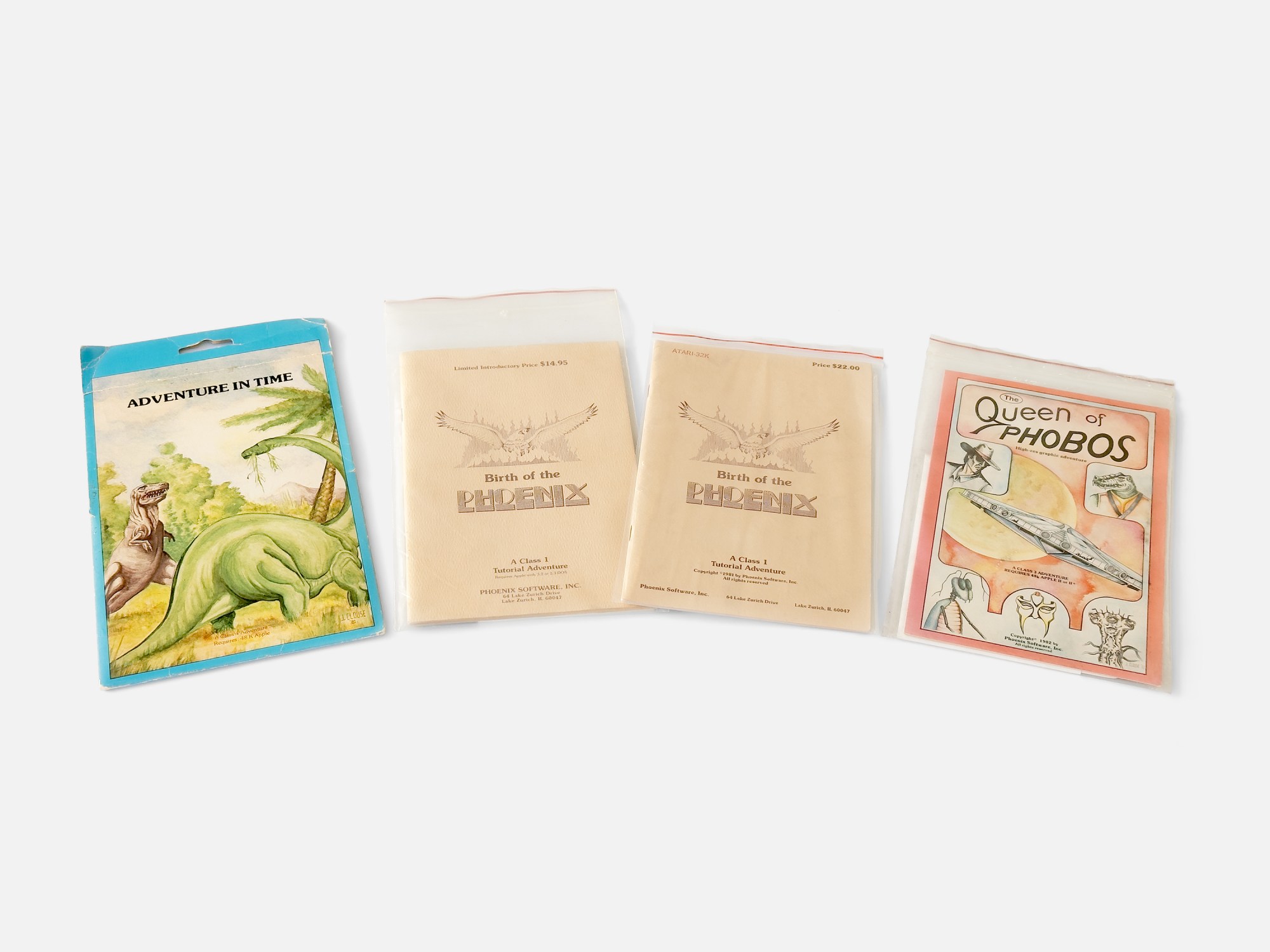
In 1980 Ronald Unrath was toying with the idea of entering the rapidly expanding home computer software market but acknowledged that he needed a trustworthy programmer who could turn his concepts into sellable products of ones and zeroes. To encompass his vision, Unrath established Phoenix Software, out of his home in Lake Zurich, Illinois, and started looking for a reliable freelance programmer to help develop an Apple II text adventure, in the style of the popular Scott Adams games.
Unrath quickly realized that finding someone fitting was harder than expected. Having exhausted most of his options, the name Paul Berker pops up from the small local Apple II community. Berker, a fellow Illinois resident, had recently returned from a short visit to California and while now engaged in contract business programming for various companies, he could be Unrath’s best bet.
Unrath contacted Berker and while Berker was doing well, earning enough to make a living from his business programming, he was intrigued by Unrath’s sales pitch. Berker, unlike most programmers of the time, was talkative, outgoing, creative, motivated, and business-minded, exactly what Unrath was looking for. Someone who could take his vague ideas, build upon them, and turn them into finished products all while understanding the vital aspects of doing contract business.
Berker had developed a fascination with computers and programming at a young age. In 8th grade, he was studying Fortran, and in high school, his math teacher, who had access to an IBM/360 mainframe at the local college, would process his code on punched cards and return the results. As a high school senior, Berker depleted the school’s science curriculum, prompting the school to arrange computer programming classes for him.
While attending community college, Berker took an IBM/360 Assembler Language class and found a job as a lab technician at the United States Gypsum Research Center. Dissatisfied with the long wait times for lab results arriving from the computer center, he converted the company’s Fortran programs to run on his Texas Instruments SR-52 programmable calculator. His skills and proficiency caught the attention of his superiors, leading to his transfer to the computer department, where he spent the next three years doing Fortran programming.
In 1978, Berker purchased his first home computer, an Apple II, and began programming various software solutions for different companies, earning a living from his work. In addition to his professional projects, he converted a version of the popular mainframe Star Trek game to the Apple II. When he went to visit his brother in California for a couple of months in late 1979, he started working on a 3D space game while selling his games out of the trunk of his car. In the spring of 1980, when Barker returned to Illinois, his name was now recognized in the local software community.
Unrath wanted to create a small, simple, and relatively cheap game that could serve as a guide to the adventure game genre, giving novice players a chance to learn the ins and outs of adventuring. Through the steady and skilled hands of Berker, Unrath’s tutorial idea built around the recovery of the mythical immortal bird, the Phoenix, slowly started to take shape.
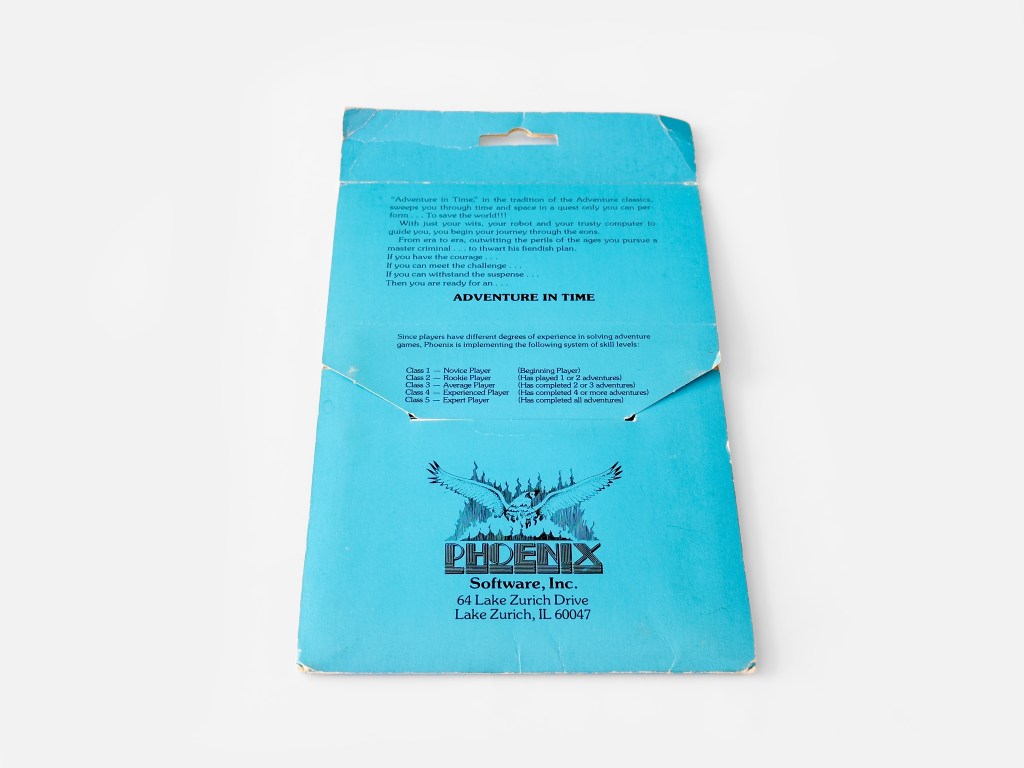
Adventure games of that era were often highly challenging due to illogical design choices, obscure puzzles, complex mazes, limited inventory space, sudden deaths, a crude text parser, and numerous dead ends. Most games were developed by hobbyists and programmers rather than professional writers or experienced game designers, leading to a focus on technical challenges rather than creating a non-frustrating player experience. To better target his products to the appropriate audience, Unrath introduced a five-level difficulty classification system, ranging from Class 1 for novices to Class 5 for expert players.
Unrath and Berker regularly met and discussed how an introductory adventure game should work and what popular elements from the genre to include, in the best effort to teach beginners the many aspects of becoming a seasoned adventurer. As Birth of the Phoenix was completed during the summer of 1981, Unrath commissioned Berker to create a Class 4 adventure game targeting more seasoned players using some of the source code developed for the first game. Unrath’s fuzzy ideas and sketches of traveling through time to save Earth from a master criminal turned into the larger and more complex Adventure in Time.
-There seem to be some discrepancies regarding the order of development and the order of publication. Berker mentions in his interview with ANTIC The Atari 8-bit Podcast that Birth of the Phoenix was developed first while several sources assert Adventure in Time as the first published title. The news section of Softalk magazine Vol. 2, September 1981, stated both titles would be available on the same date, September 15th, 1981. The previous issue shortly mentions Adventure in Time but not Birth of the Phoenix…
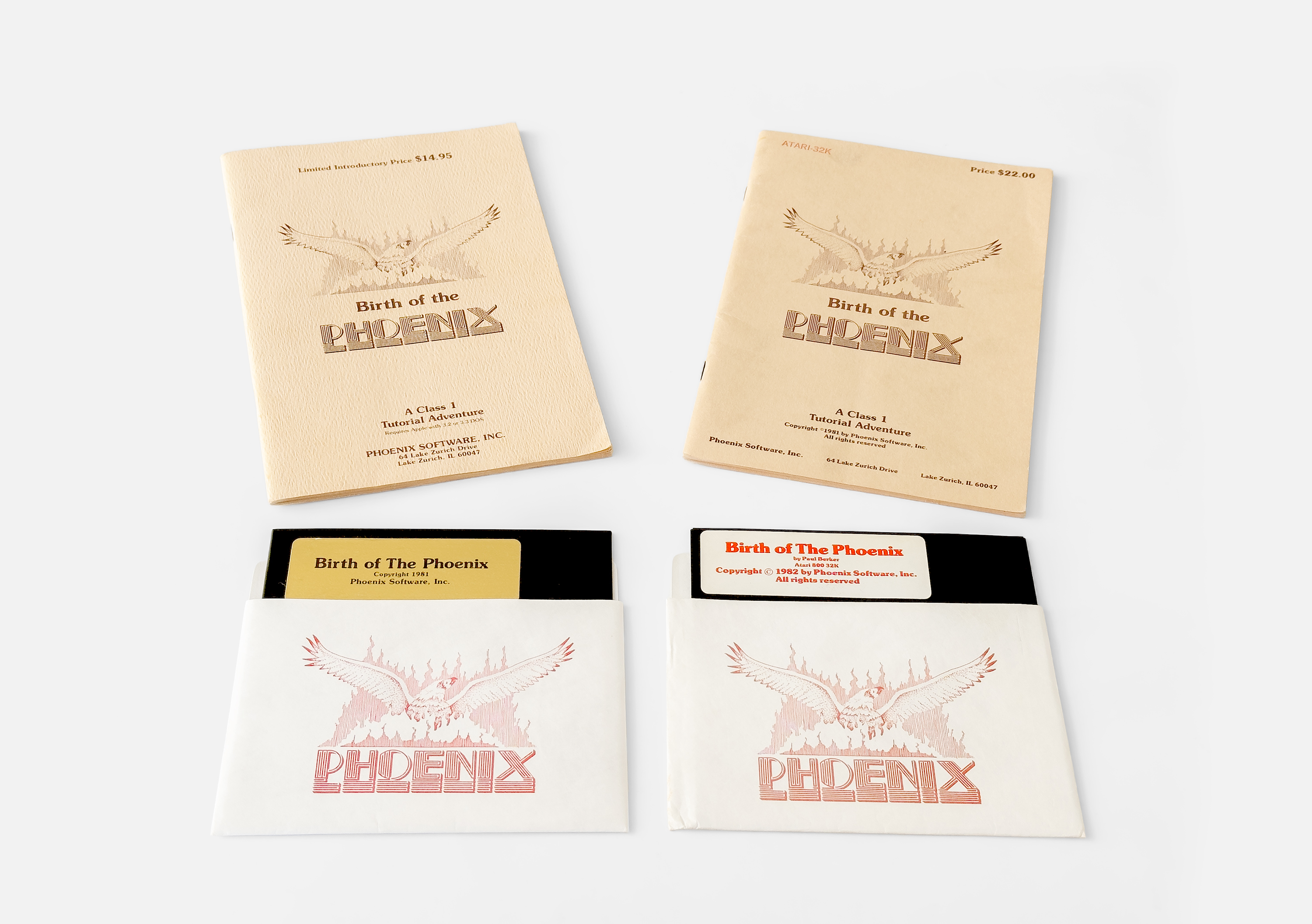
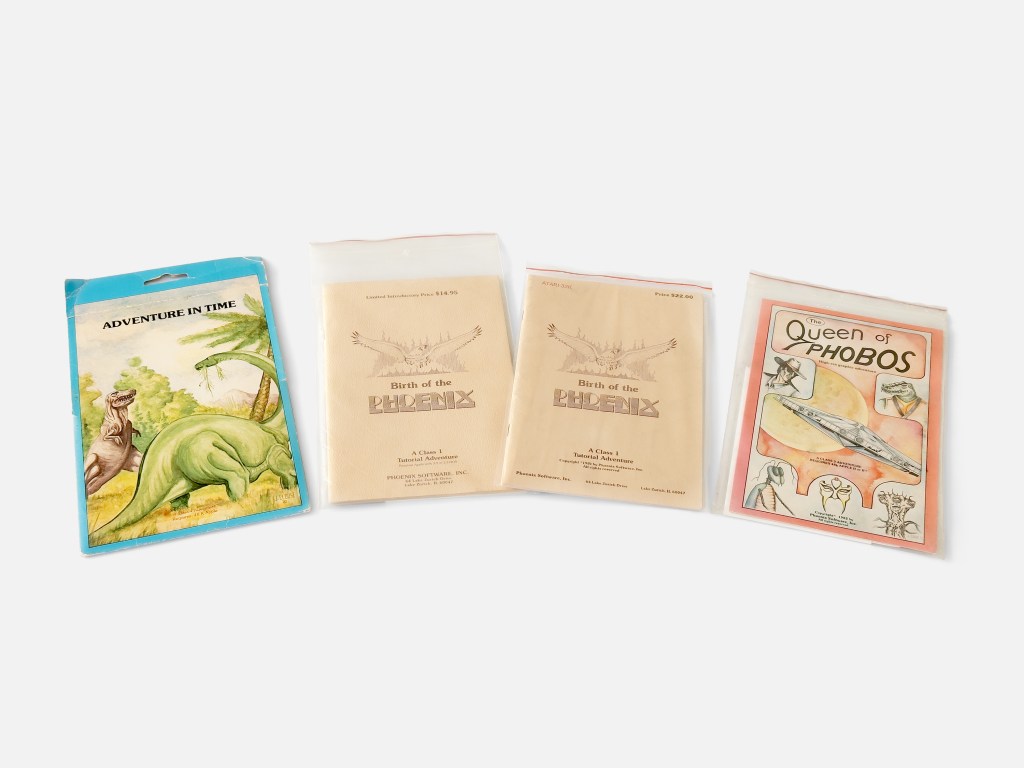
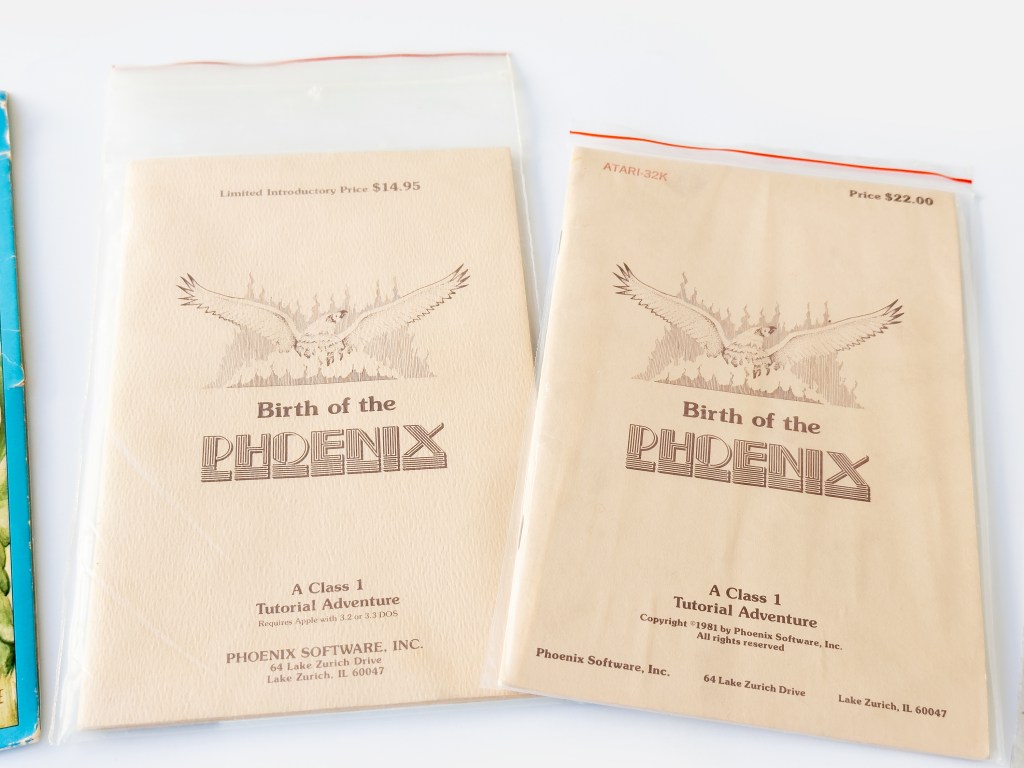
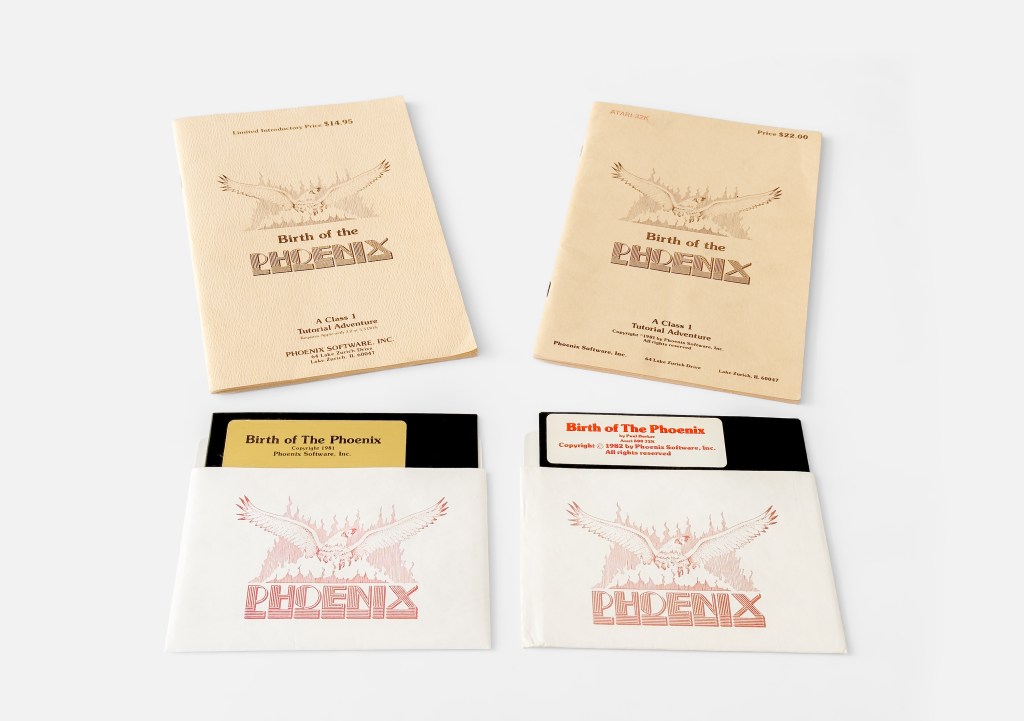
Birth of the Phoenix, released for the Apple II in 1981 was a Class 1 adventure, targeting novice players
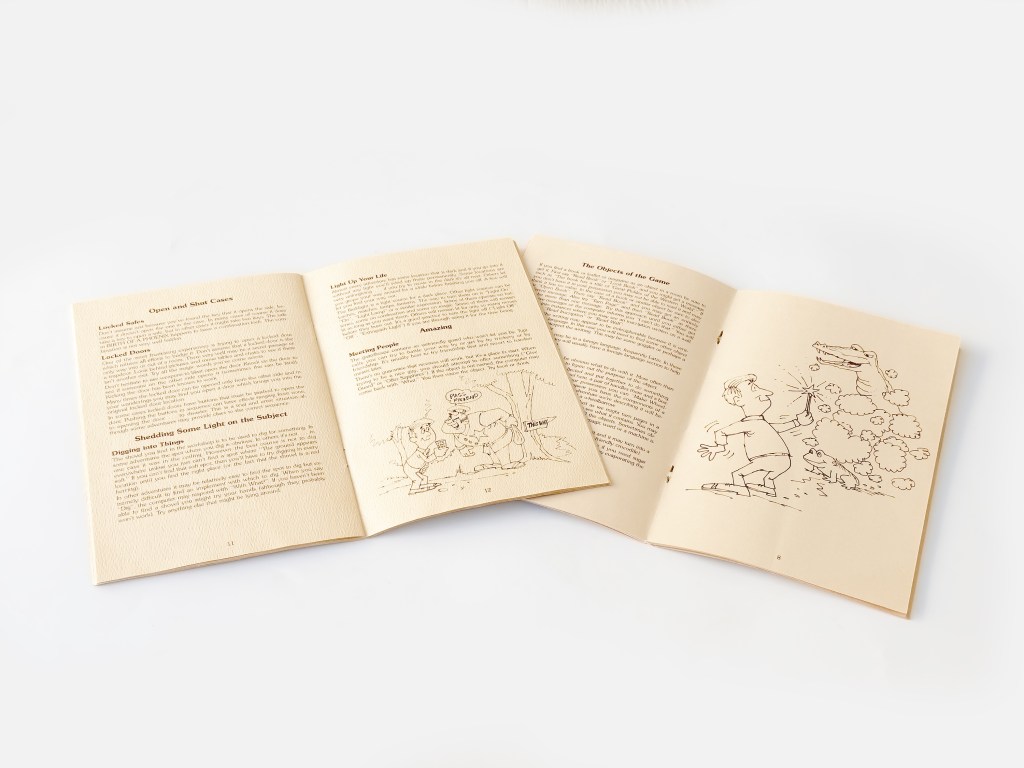
The game came with a 20-page illustrated manual, covering everything the player needed to know to become a true adventure.
The game was priced at only $14.95 at its introduction in 1981, later the price was raised to $22.00. The following year, Berker ported the game to the Atari 8-bit.
According to the Gallery of Undiscovered Entities, it’s estimated that Birth of the Phoenix sold less than 500 copies.
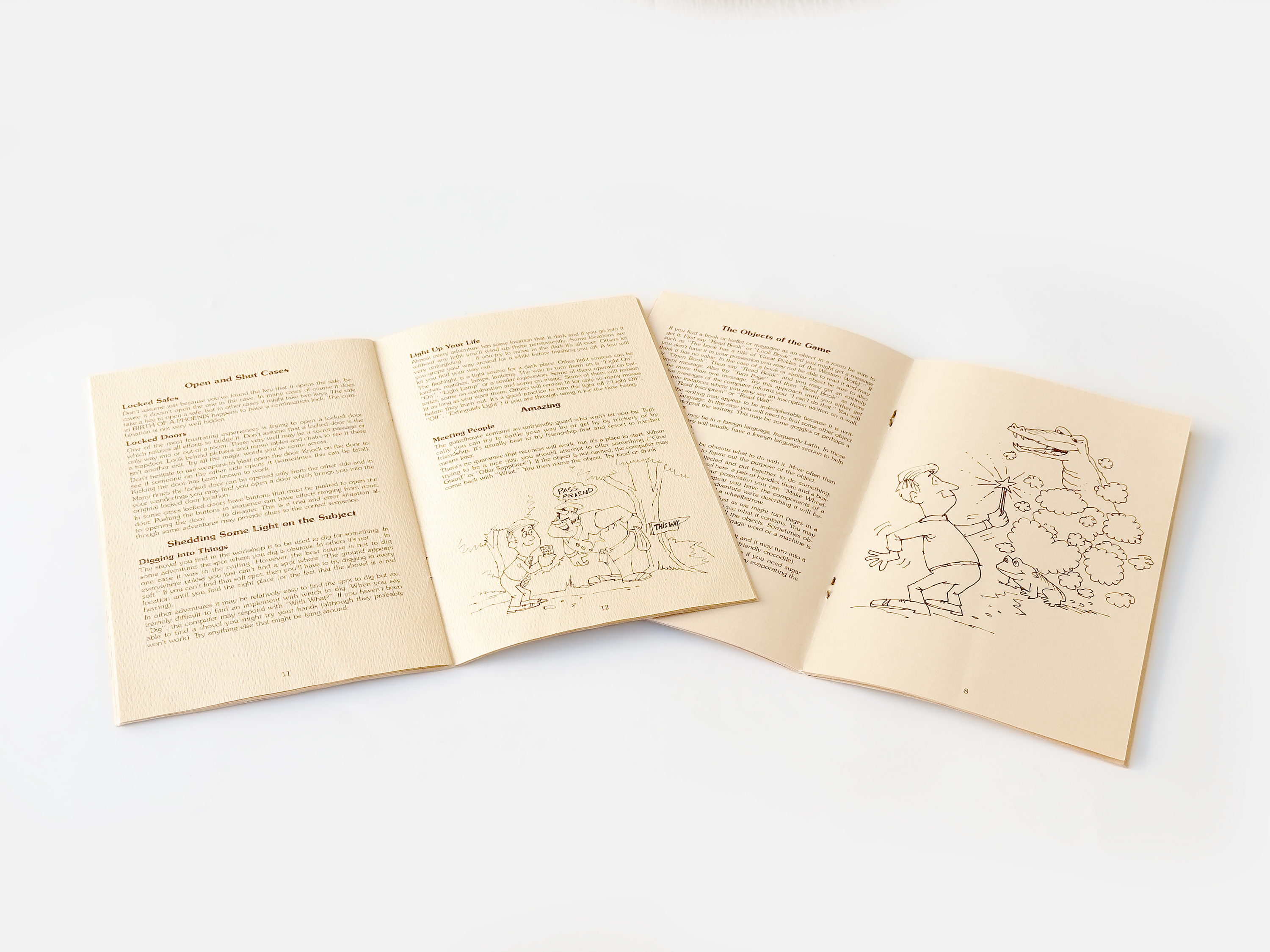
The illustrated manual, printed on parchment-like paper (the initial release), served as a guide to the novice adventurer.
Ron Unrath wanted to create a small and simple game that could serve as a guide to adventure gaming, giving novice players a chance to learn the ins and outs of adventuring.
You must bring the Phoenix to the Temple of the Sun, where it can be ignited and reborn. Along the way, you must recover a number of treasures including precious rubies and sapphires.
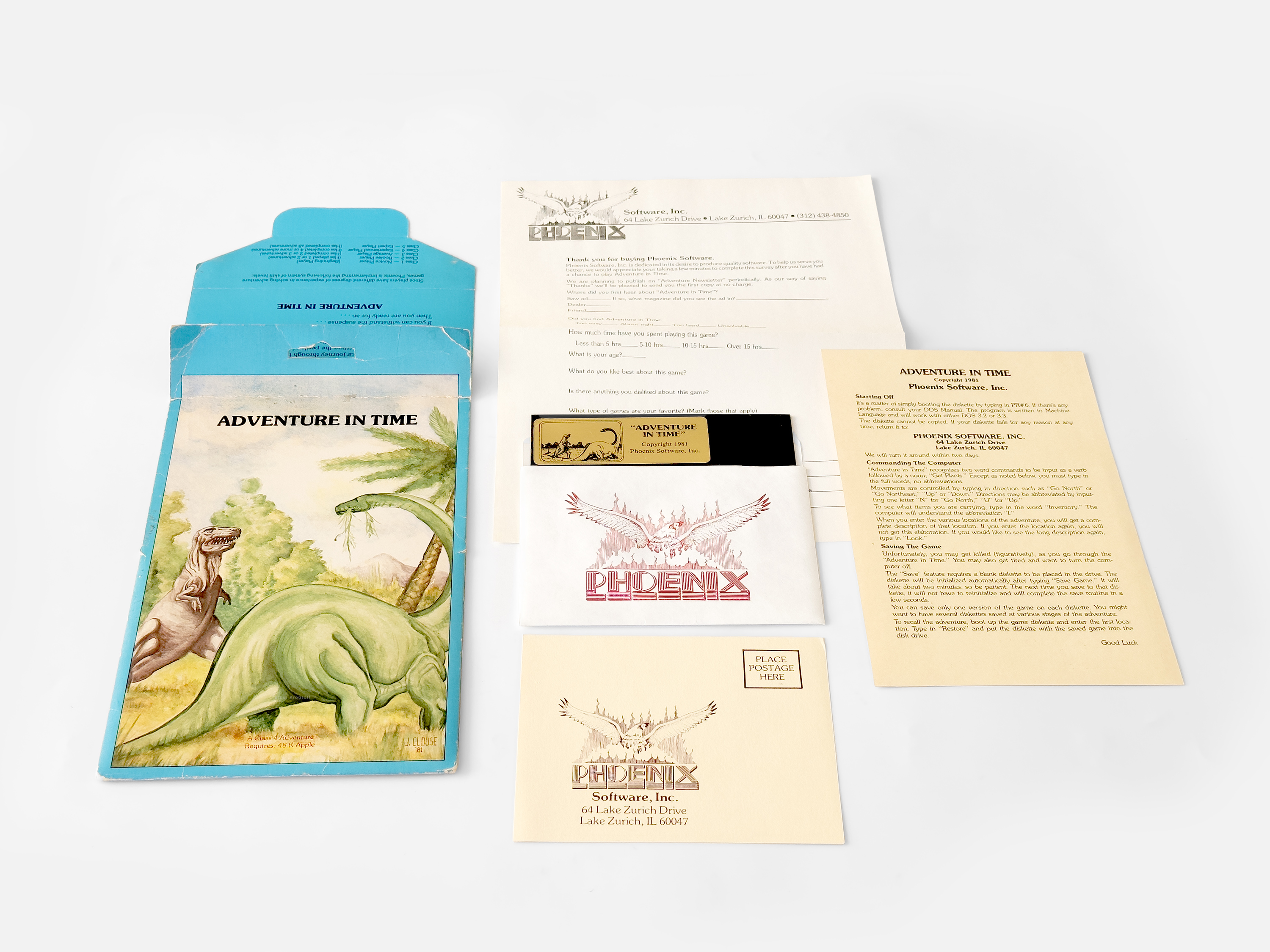
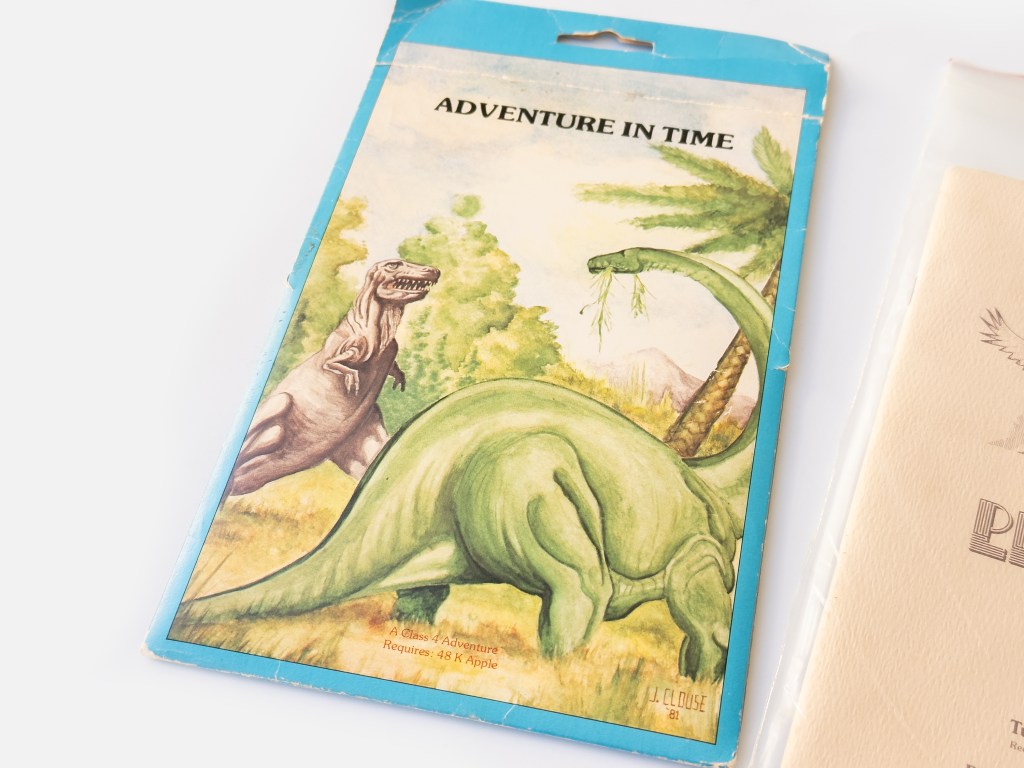
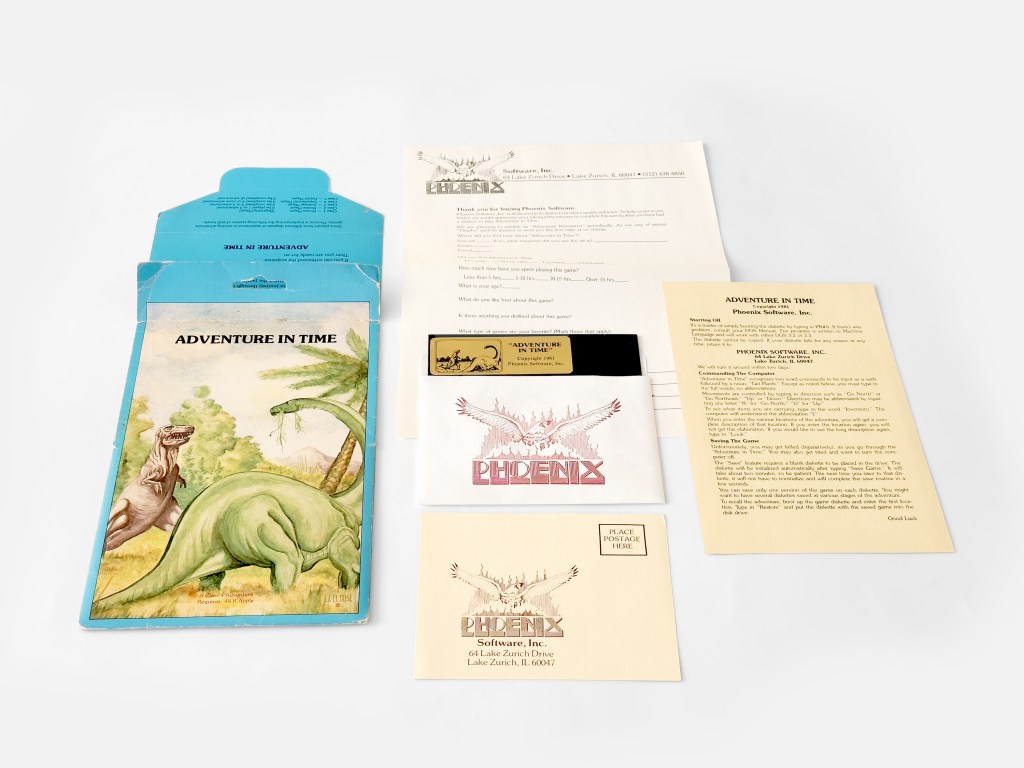
Adventure in Time, released for the Apple II in 1981 was a Class 4 adventure, targeting experienced players.
Berker ported the game to the Atari 8-bit in 1983.
According to the Gallery of Undiscovered Entities, it’s estimated that Adventure in Time sold in the neighborhood of 500 copies.
Adventure in Time was reusing much of Berker’s code for Birth of the Phoenix but was larger and more complex.
You must locate Nostradamus, who is somewhere in time, and kill him before he can assemble the ultimate weapon and destroy the world.
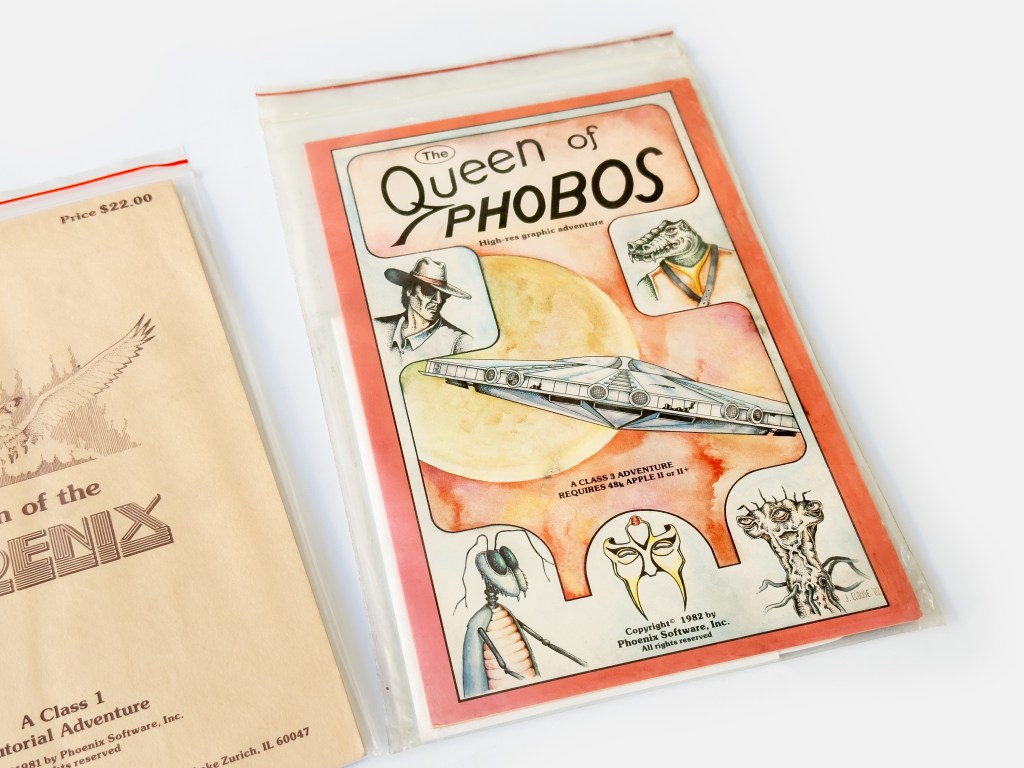
Having completed the first two games, Berker started programming work on The Queen of Phobos, a sci-fi-themed adventure written and designed by his friend Bill Crawford. The game would become Phonix Software’s first game to feature graphics. While Berker was no artist, he created a small program that allowed Crawford to digitize his excellent drawings, utilizing the Apple II’s Hi-Res graphic mode. The Queen of Phobos, a Class 3 adventure, was completed and released for the Apple II in 1982 but time would soon reveal that the game had the odds stacked against it.
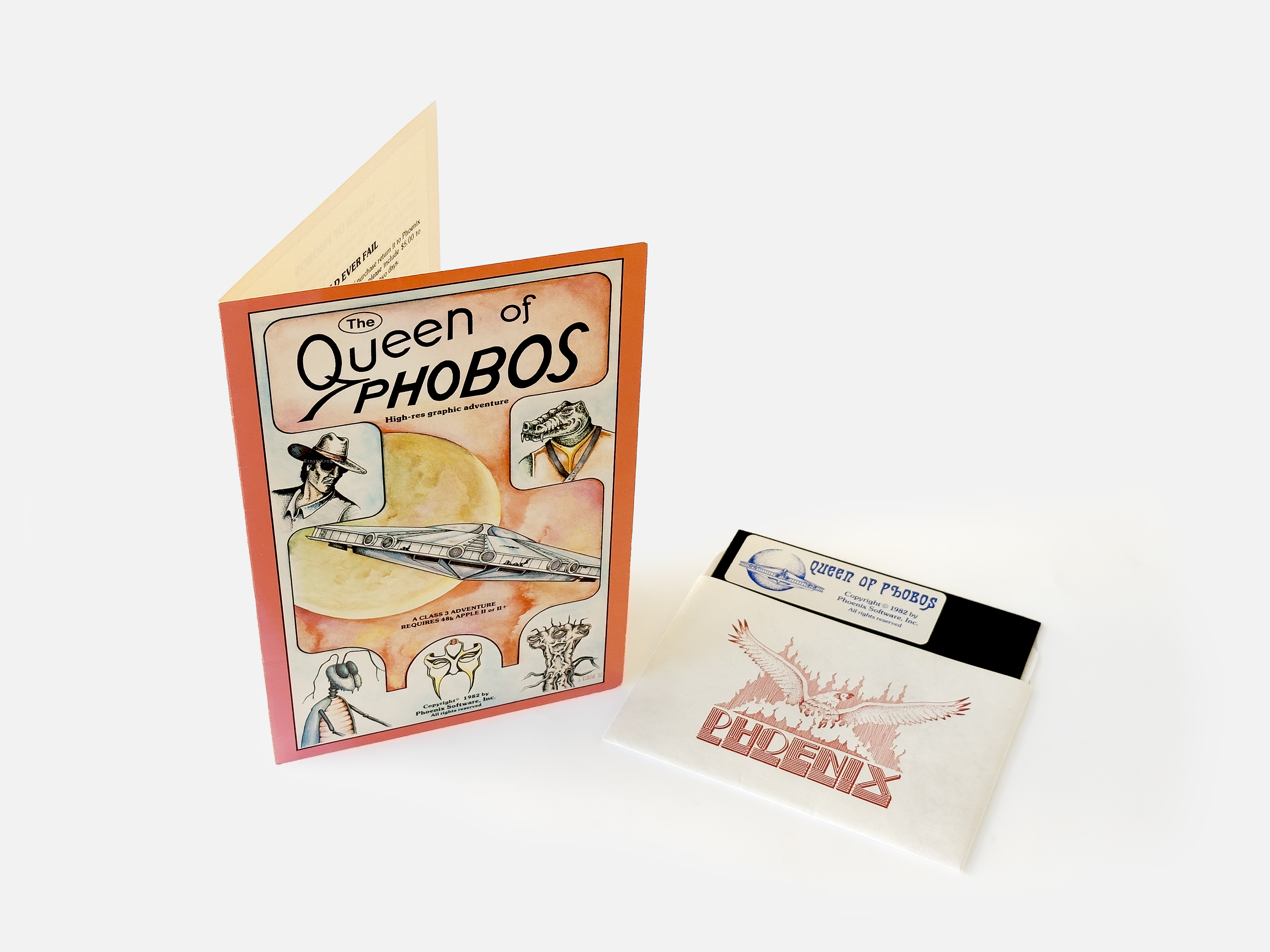
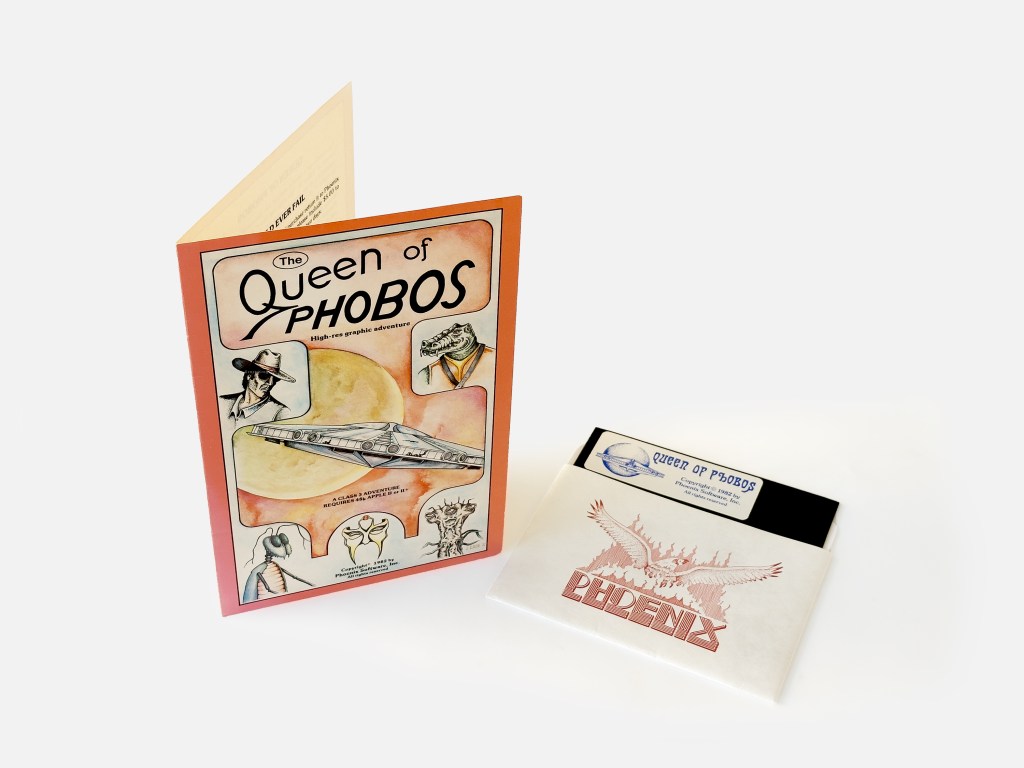
The Queen of Phobos, released for the Apple II in 1982 was a Class 3 adventure, targeting average players and would become Paul Berker’s last title for Phoenix Software.
The “High-Res Graphic Adventure” label on the front would prove an issue and partly seal the game’s fate.
According to the Gallery of Undiscovered Entities, it’s estimated that The Queen of Phobos sold less than 200 copies.
Unlike the earlier games, The Queen of Phobos featured graphics, albeit only in monochrome.
The line drawings were excellent and showed artistry not typically seen in the genre up to that point.
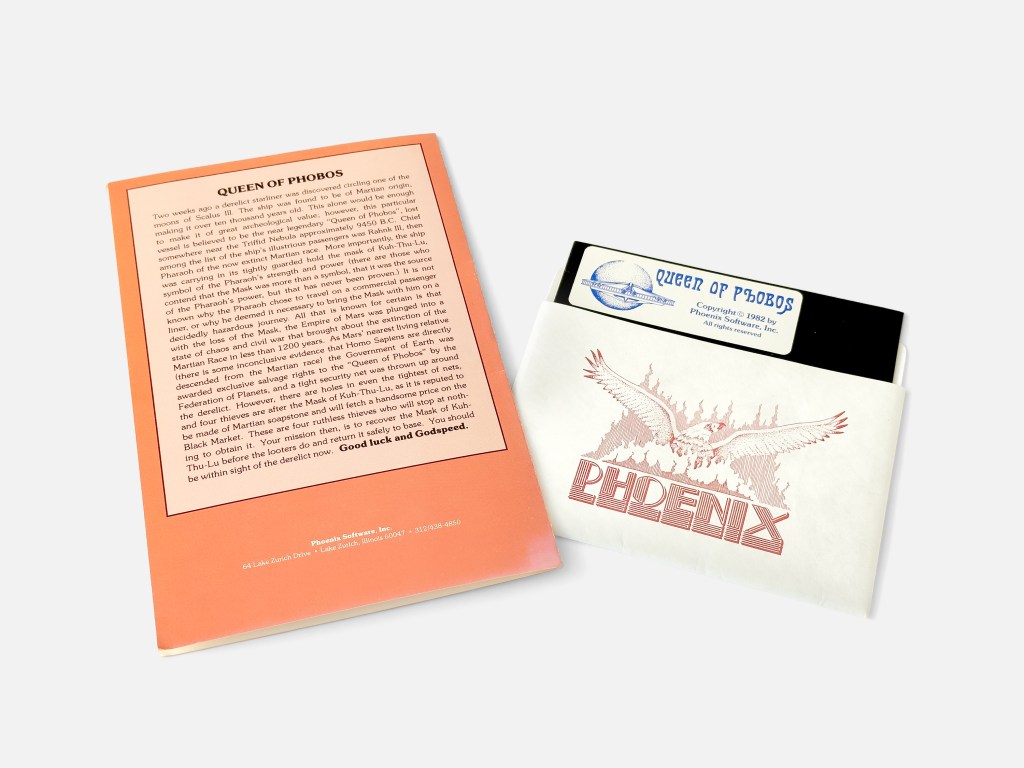
You play as a representative of the Federation of Planets tasked with salvaging the mask of Kuh-Thu-Lu from the Martian starliner “Queen of Phobos” a derelict vessel circling one of the moons of Scalus III. Unfortunately, four ruthless thieves have also heard rumors of the mask and have snuck onto the vessel, aiming to loot it before you.
Utilizing the Apple II’s Hi-Res graphics mode, The Queen of Phobos was marketed as a “High-Res Adventure Game“, more or less the same name Ken and Roberta Williams‘ On-Line Systems, now Sierra On-Line was using for its series of extremely popular adventure games. The Williamses had just sold part of their company to investor Jacqueline Morby of TA associates and with a million-dollar injection, the company soon went after competing software companies.
In October 1982 Sierra sued to stop Phoenix Software from using the term in connection with its games. The district court issued a temporary restraining order on October 28, 1982, and a preliminary injunction on February 3, 1983. In granting the injunction, the court held that “Hi-Res Adventure” is a “descriptive” term, that such a term can be a protected trademark only if it had acquired secondary meaning, and that Sierra had shown “a fair chance of success on the merits”. Although the court found that Sierra had not yet produced sufficient evidence to support an ultimate finding of secondary meaning, the court granted the injunction because the balance of hardships strongly favored Sierra. Phoenix Software voluntarily stopped using the term and would therefore not be injured by the injunction. The court did not explicitly discuss Phoenix Software’s principal contentions, that “Hi-Res Adventure” was a generic term incapable of trademark protection, and that it was protected by a “fair use” defense.
Unrath, lacking the resources to fight a legal battle 2,000 miles away in California, decided to pull The Queen of Phobos from the market. Additionally, Softsel Computer Products, one of the major wholesalers at the time, was not impressed with the game and wouldn’t carry it in its stock of software sold to retail dealers. While approximately 95% of all personal computer software was being sold by retail dealers, few were in a position to evaluate and select stock from the huge number of programs available. This was where Softcel came in, as the middleman between publishers and retailers. Ironically, Softcel originated from a small operation that Ken Williams had sold to Leff for $1,300 in 1980. Due to the turmoil surrounding The Queen of Phobos, fewer than 200 copies were sold.
The legal case was eventually settled out of court, as neither Phoenix Software nor Sierra On-Line used the Hi-Res terminology at that point.
Amid legal battles and without earning any royalties, Berker left game development and turned his focus back on business software. Bill Crawford, Sadly, died in 1984. Phoenix Software continued but was sold in 1984 and briefly changed its name to Zooom Software before becoming American Eagle but that’s a story for another day.
Sources: Gallery of Undiscovered Entities, ANTIC The Atari 8-bit Podcast, Wikipedia, CourtListener, Softalk magazine Vol. 1 August 1981, Softalk magazine Vol. 2 September 1981…
 Retro365
American Eagle is a more interesting story IMO. Get on that next please :)