Educational software, while having a historical presence since the dawn of computing, gained traction following the North American video game crash in 1983. With the console market collapsing, the market saw a shift in consumer preferences along with a growing concern surrounding violence and video game addiction. Additionally, games in the broader sense, were perceived as a trend that had already peaked. The stigma prompted many developers to redirect their focus toward educational software for the home computer market, catering to young’s entertainment needs and alleviating concerns voiced by parents and educators.
As the year drew to a close, parental expenditure on educational software had surged to $110 million.
Sierra On-Line navigated the turbulent waters, largely due to co-founder Ken Williams‘ earlier having secured agreements with industry giant IBM and now in the wake, with Tandy Corporation and Walt Disney. His company had initially focused on the fledgling home computer market but the appeal of the booming cartridge and console market during 1982-83 proved irresistible. The company had invested substantial amounts in producing high-cost cartridges, with a considerable portion targeting platforms, obsolete before products left the factory floor. With a market flooded with titles of questionable quality, many for systems consumers had moved on from, Sierra’s investments were piling up in warehouses after major retailers like Toys’R’Us and Sears retracted their orders and returned excess stock.
As the dust settled and new business opportunities emerged, Williams recognized the potential for further expansion into the blooming educational market. His company had previously invested in educational titles and had established the Hi-Res Learning Series in 1983 for the release of Dragon’s Keep, Bob-A-Bet, and Troll’s Tale, all acquired from Al Lowe‘s small startup, Sunnyside Soft a year prior. The same year, Sierra acquired the North American publishing rights to Canadian-developed BC’s Quest for Tires, a game based on Johnny Hart‘s famous comic strip characters. The game quickly became a best-seller and two educational titles, Wiztype and Wizmath, based on Hart’s daily newspaper comic strip, The Wizard of Id, were published by Sierra in 1984.
in January 1984, Sierra invested in further growing its educational portfolio after it, at the Winter CES show in Las Vegas signed with Walt Disney to bring some of its beloved characters into the digital realm. Amidst the development and publication of titles based on already established and popular franchises, programmer Robert “Bobbit” Bobbio, who had contracted with Sierra in 1983 to work on the Atari 8-bit and Commodore 64 versions of Nancy Anderton‘s educational title Learning with Leeper, went on to design Story Maker, a creative story construction kit targeting ages 7 to 14.
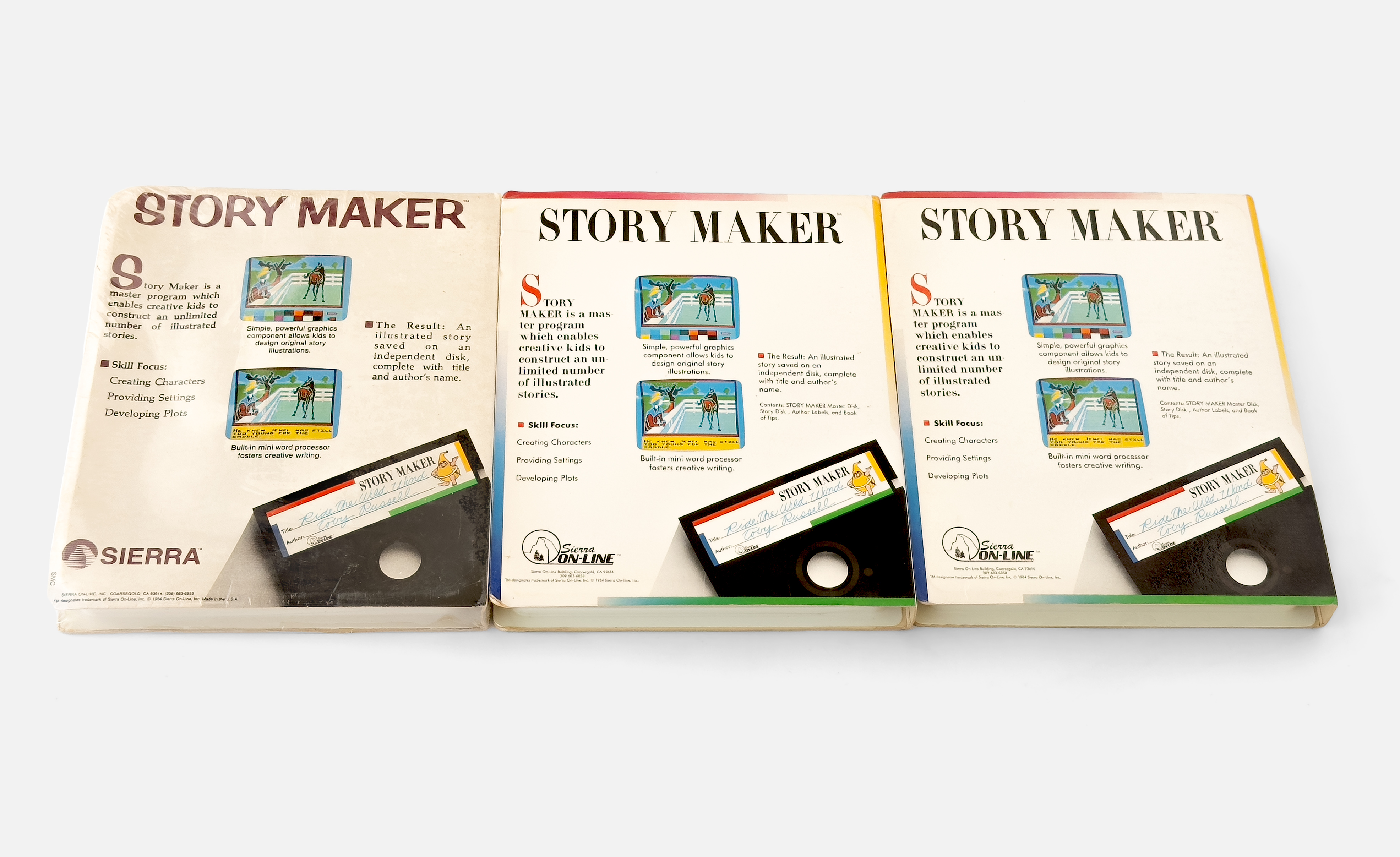
Story Maker allowed users to express their creativity by writing and illustrating stories, crafting cartoon strips, composing illustrated letters, etc.
Guiding users through each step of the creative process was Hack, the quirky mascot, offering assistance with tasks such as titling, character naming, sentence composition, and story ideas. Story Maker featured a simple built-in word processor, assisting with writing while constructing stories, and a paint program enabling users to create accompanying illustrations. Stories and illustrations could be saved onto a separate disk for future access and enjoyment.
Story Maker was published in the summer of 1984 for the Apple II, IBM PC/PCjr, and Commodore 64. An Atari 8-bit version was announced for a 3rd quarter release.
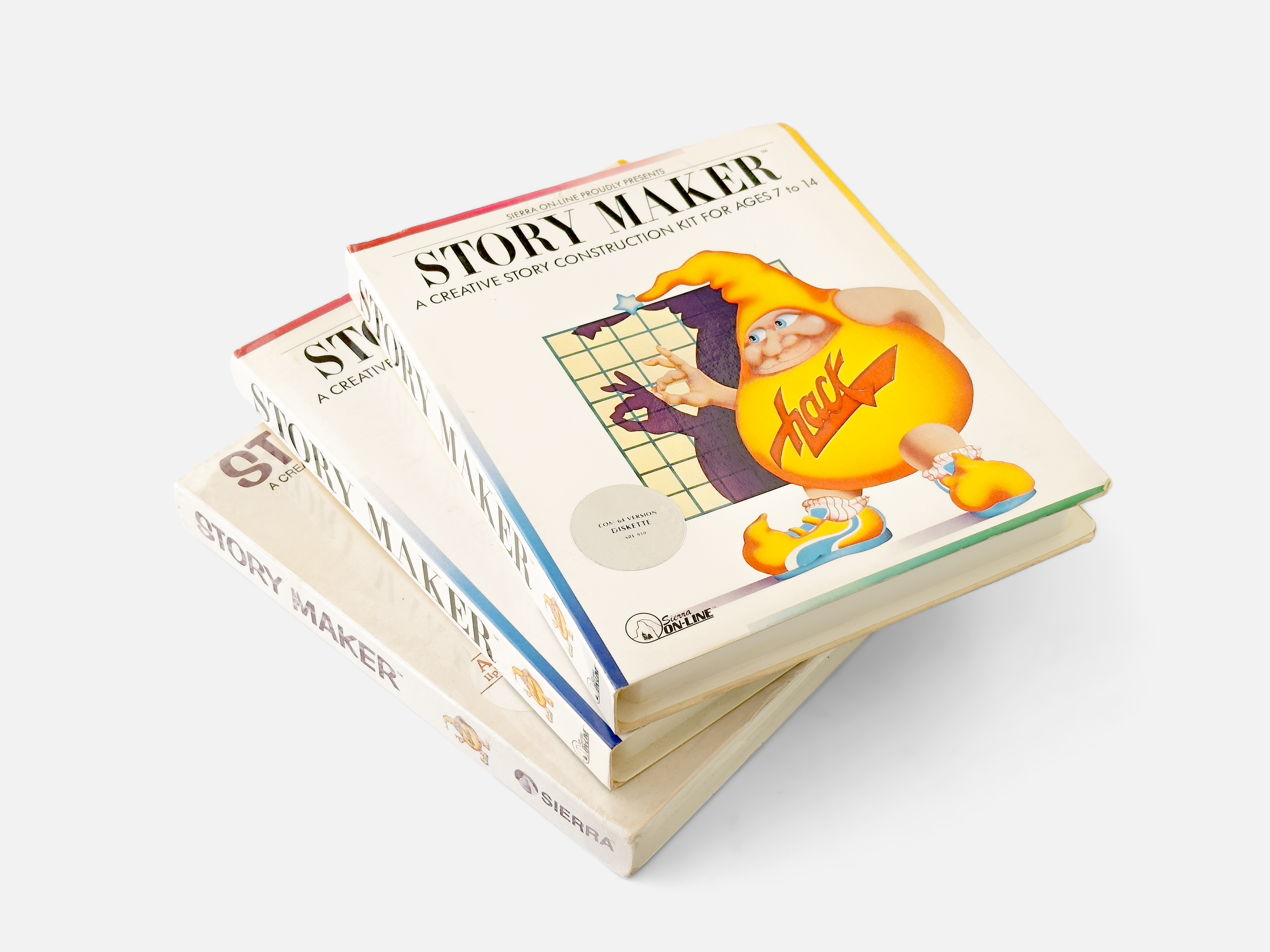
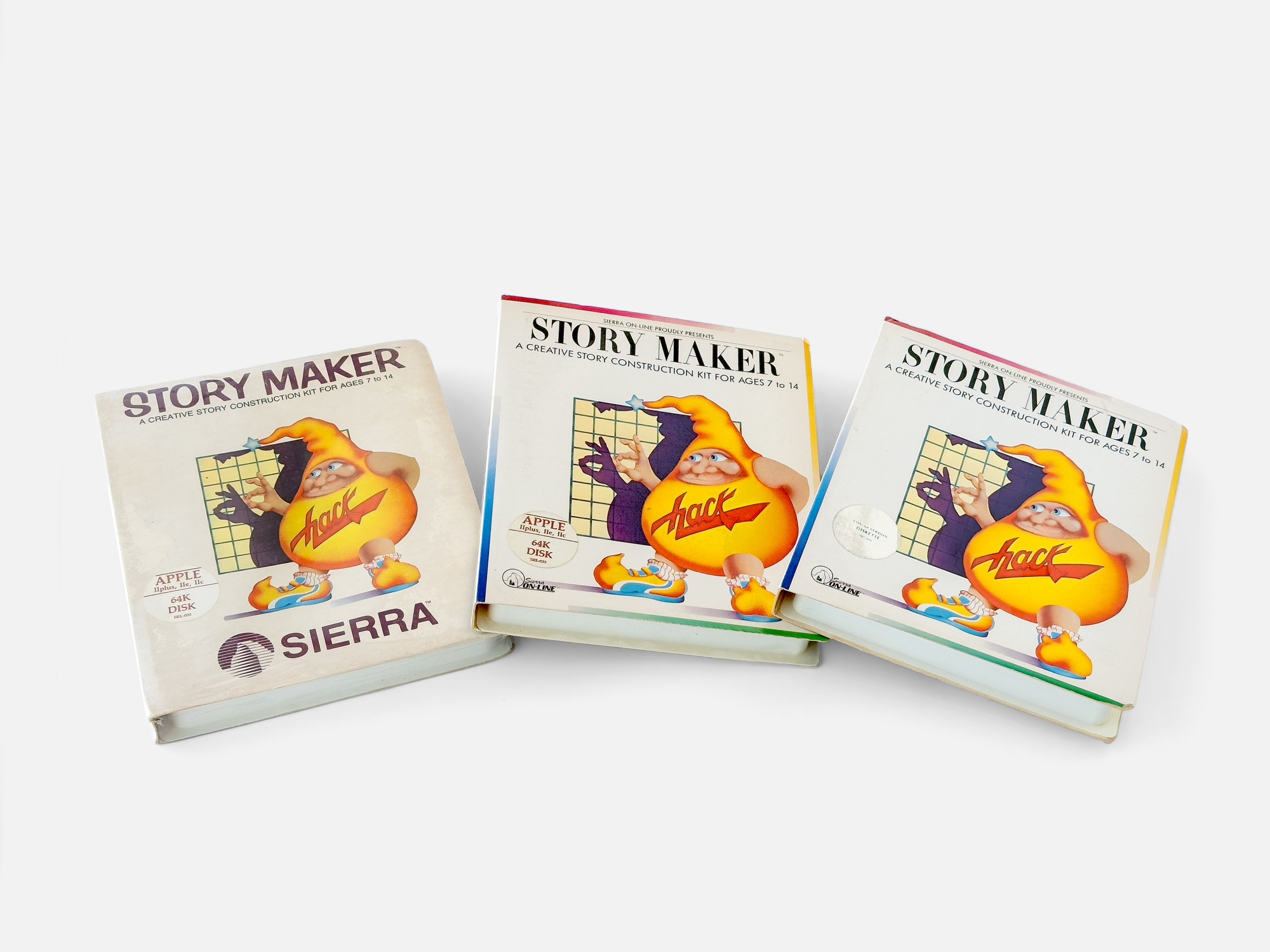
Robert “Bobbit” Bobbio’s Story Maker was released for the Apple II, IBM PC/PCjr, and Commodore 64 in the summer of 1984
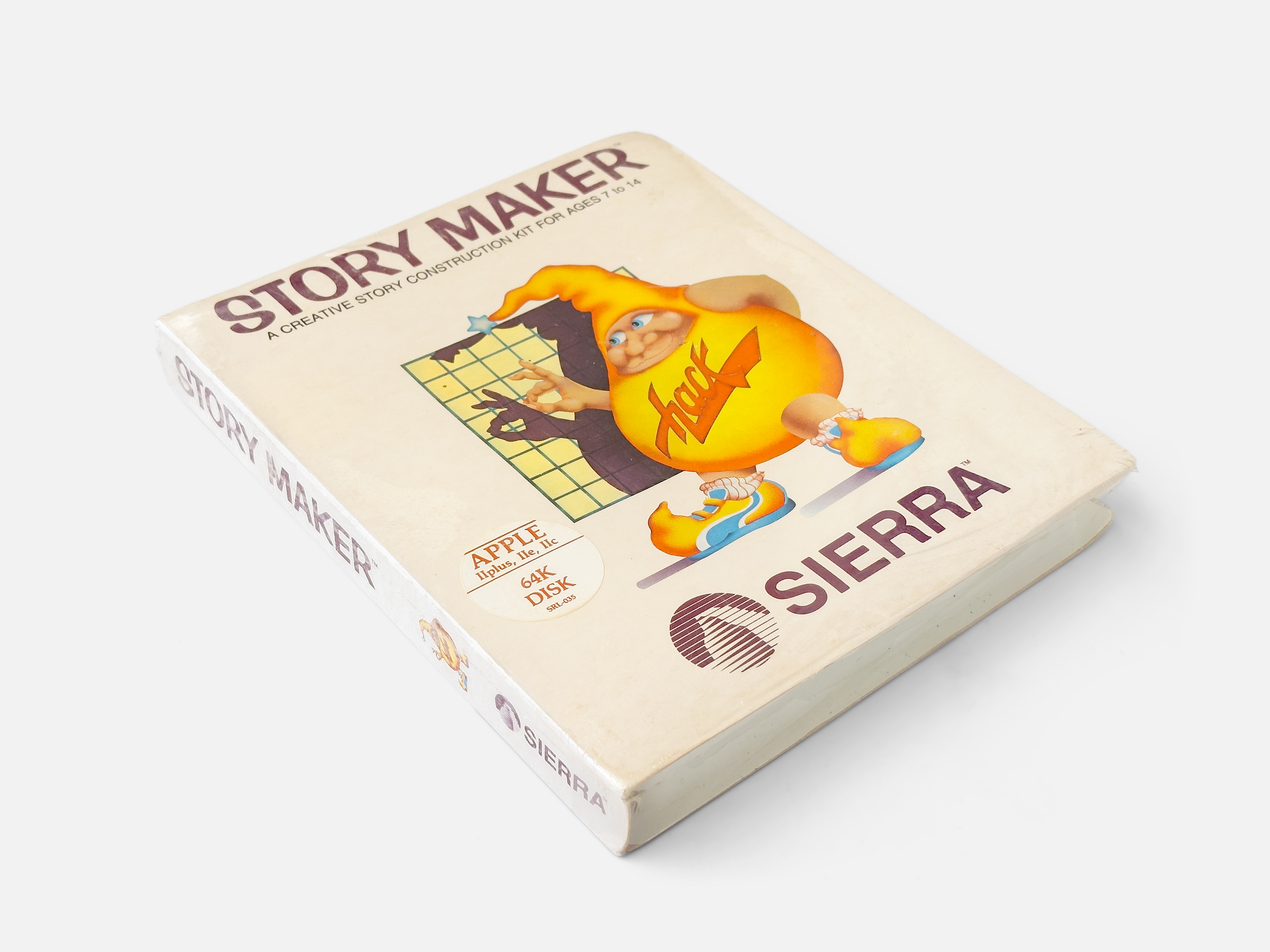
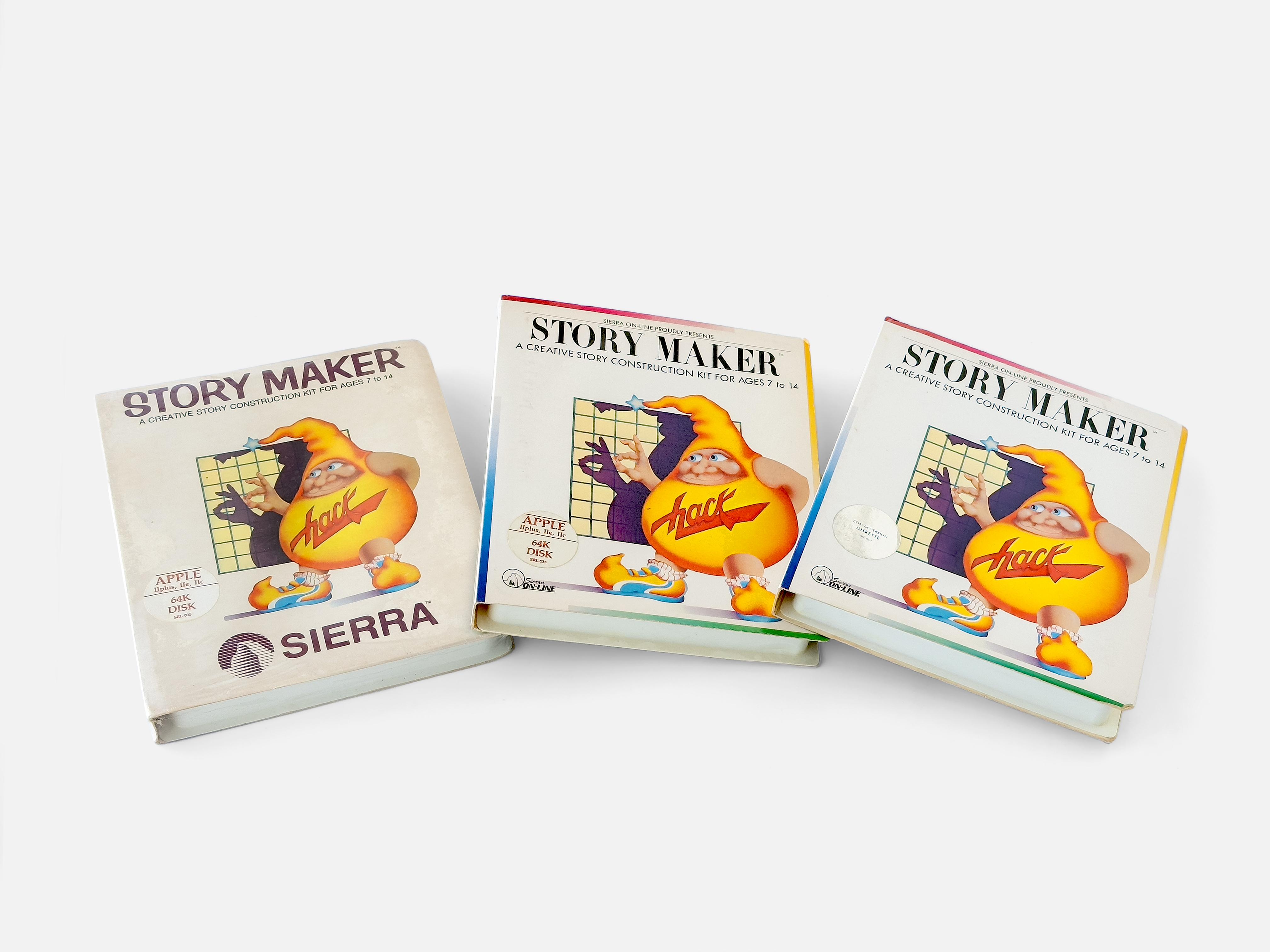
The Apple II version was released in two different boxes (white clamshell and rainbow clamshell).
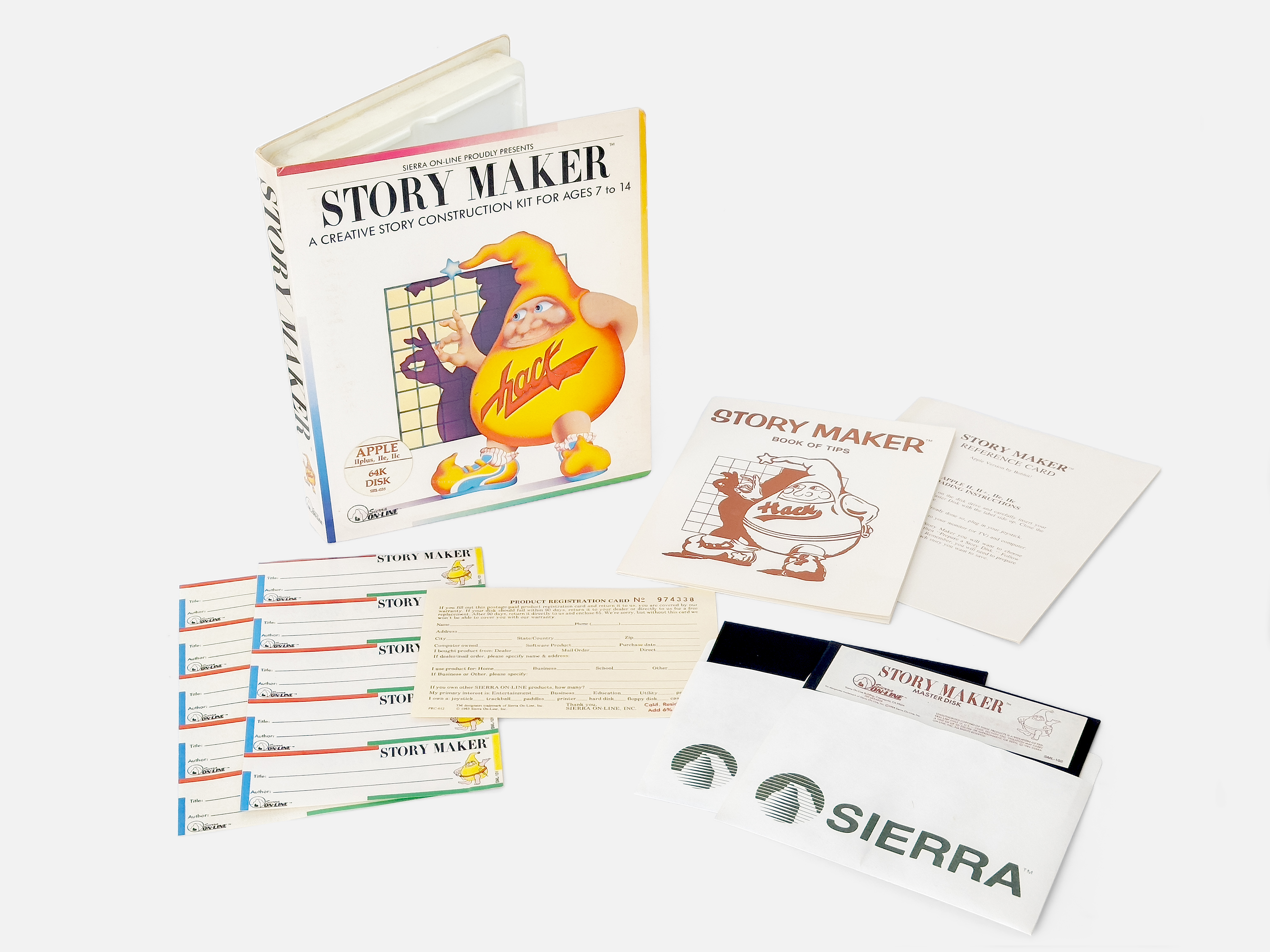
The content included the Book of Tips, an introduction to the art of creative writing, written by Sigma Development Group along with a master disk, an empty disk for users to save their constructed stories, and a number of title/author labels.
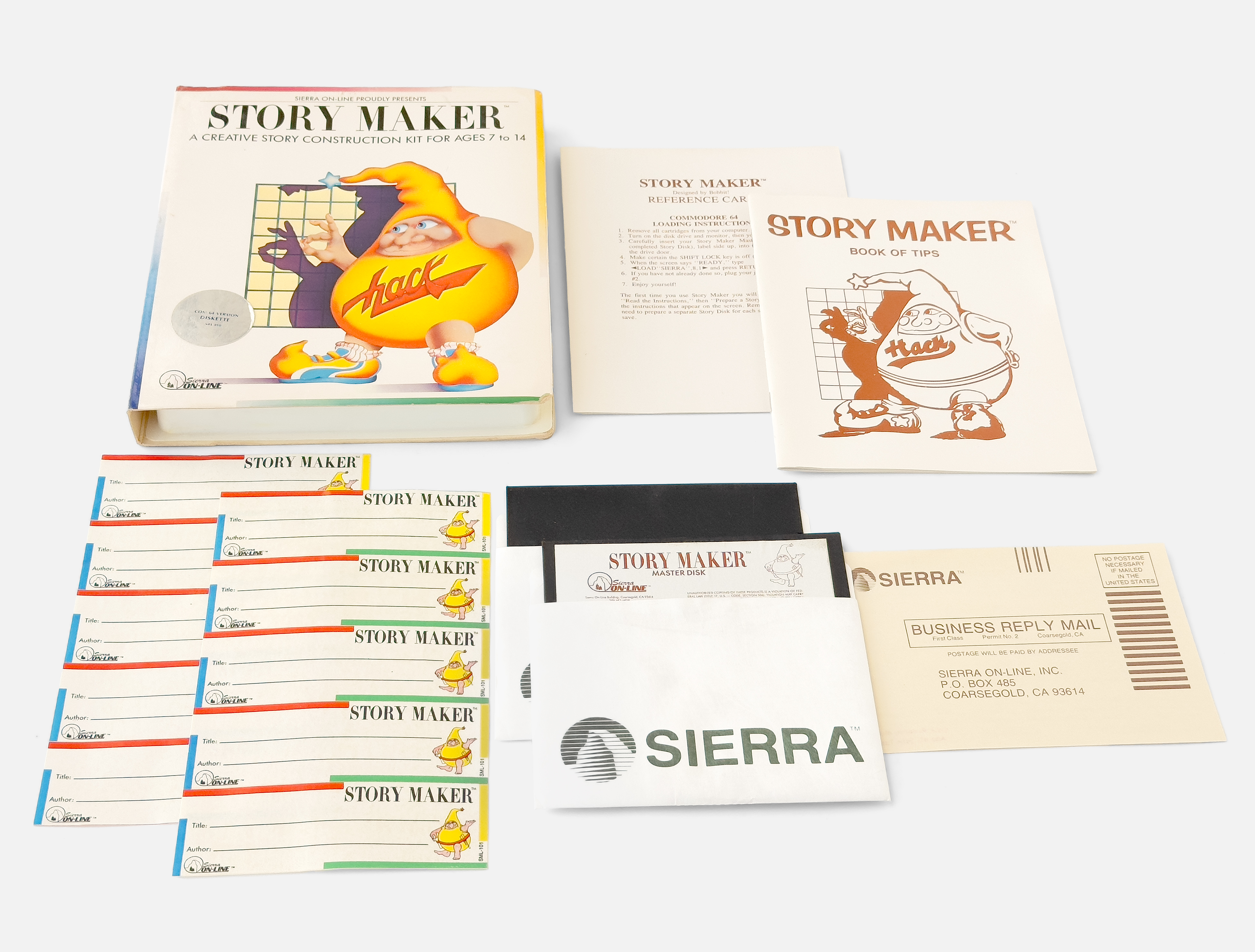
The Commodore 64 version was released in the rainbow clamshell and came with the same content as the Apple II version.
Sources: Toronto Pet User Group Issue 10 1985, Creative Computing Vol.10 No.4 1984, Wikipedia, The Washington Post, The New York Times, Computer Gaming World Aug 1984…

 Retro365