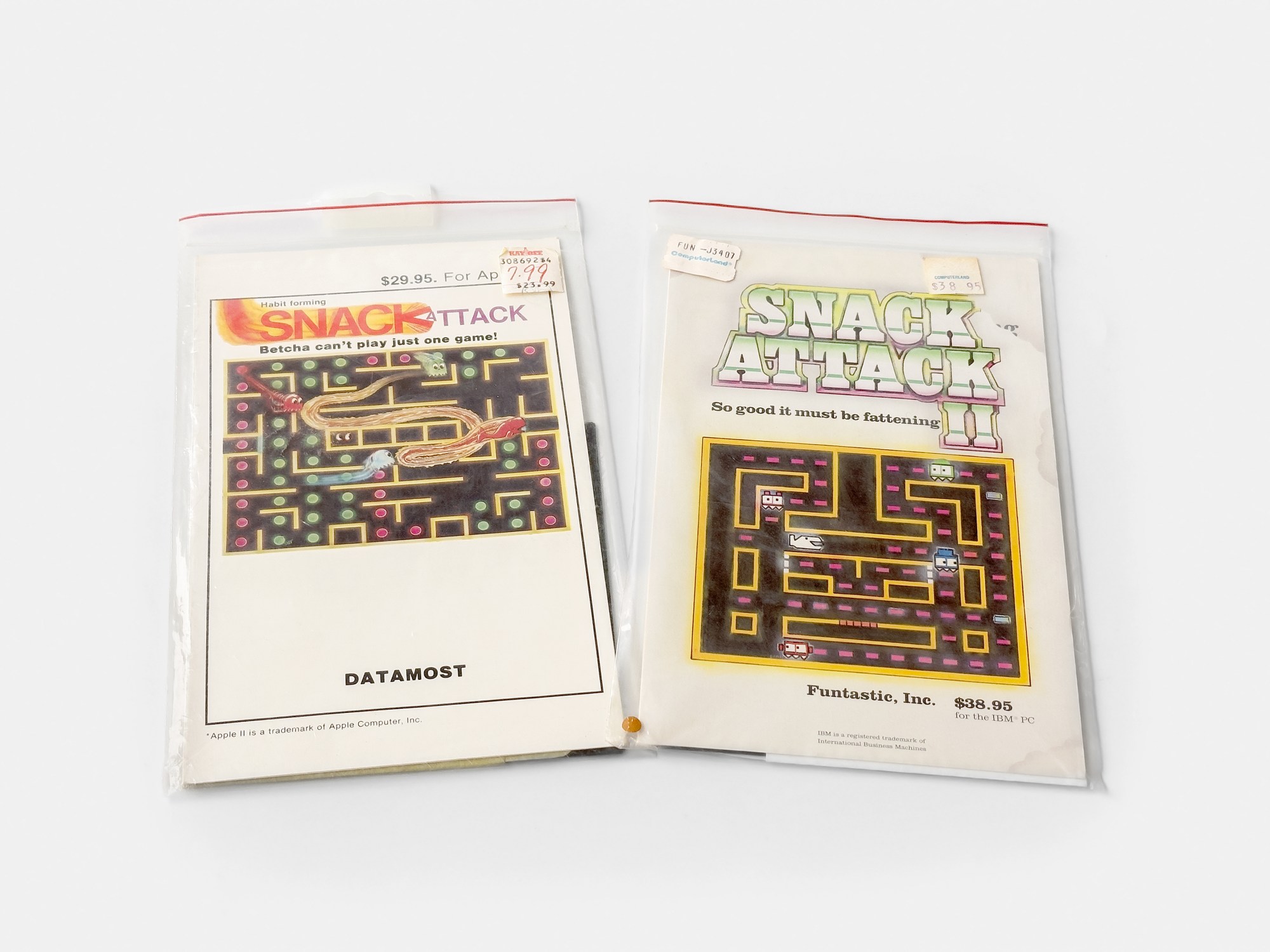
By 1980, American entrepreneur David Lawrence Gordon‘s company, Programma International, had grown into one of the largest software publishers in the world and the leading distributor of Apple II software. While the home computer market was in its infancy, it experienced rapid growth in tandem with the increasing interest in personal computers. Programma International’s success in the emerging market soon attracted the attention of Hayden Book Company, which later that same year, went on to acquire it.
Hayden was already known for its publications in technical magazines, directory catalogs, textbooks, and software. Adding Programma to its portfolio aimed to better serve a more diverse range of customers within the growing home computer software market, including hobbyists, consumers, and professionals. Intending to maintain Programma as a separate operation, Hayden kept Gordon serving as vice president and general manager. While enthusiastic about the acquisition and the new possibilities, Gordon clashed with the Hayden executives and was ultimately fired in the spring of 1981.
Gordon quickly moved on and established Datamost, Inc., based out of Chatsworth, California. His new company would come to publish technical books and software, with a strong focus on games for the 8-bit machines of the era. The first game to come out of Datamost was Dan Illowsky‘s County Fair, a shooting gallery game with a generous amount of inspiration from Gremlin/Sega‘s Carnival coin-op. The game was published for the Apple II in 1981 and showcased big, colorful graphics moving effortlessly across the screen in impressive numbers, a testament to young Illowsky’s efforts and programming skills.
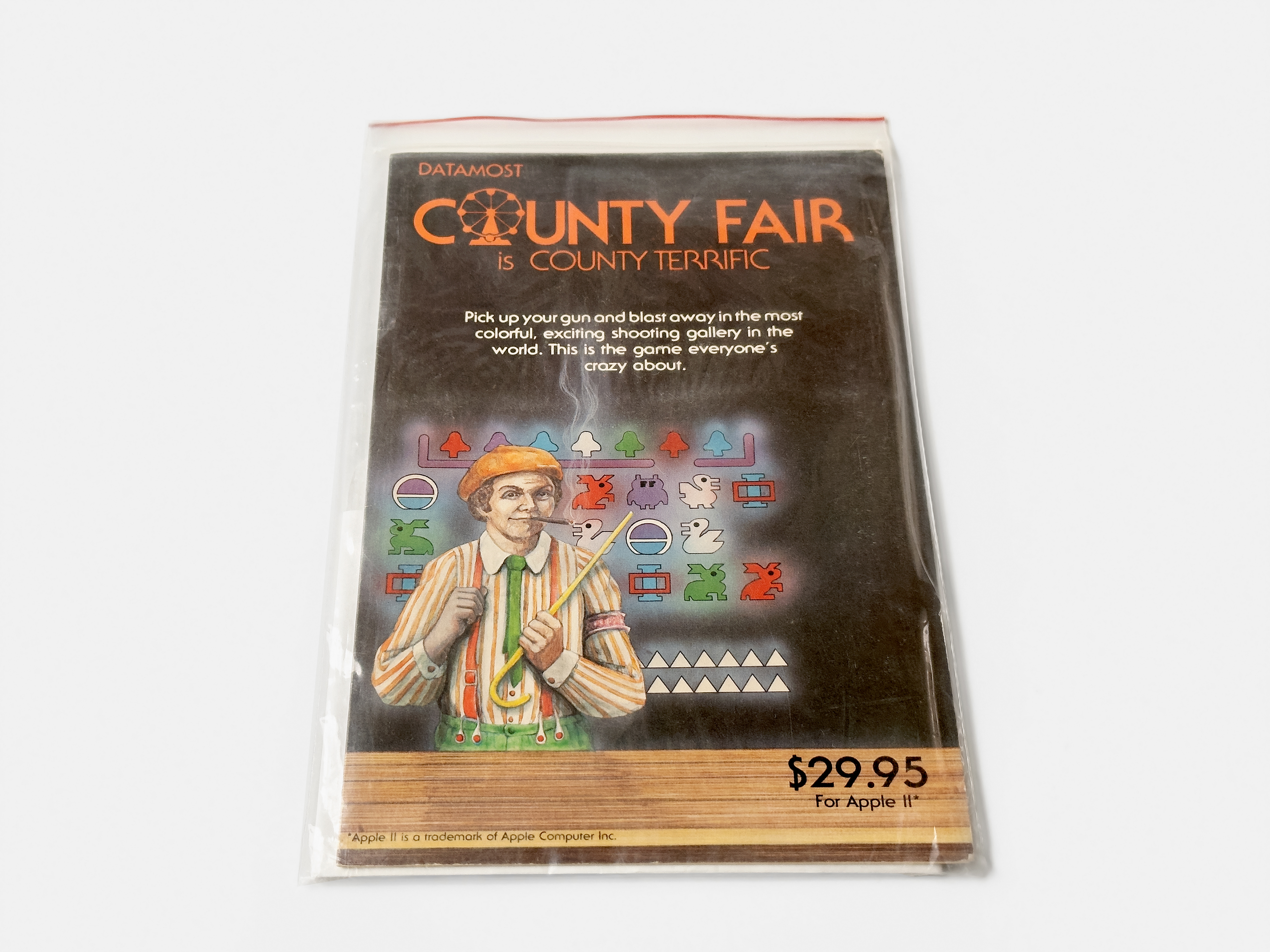
Dan Illowsky’s debut game, County Fair was published for the Apple II by Dave Gordon’s Datamost in 1981.
Illowsky had earned a Bachelor of Science in Elementary Education from Lehigh University in Bethlehem, Pennsylvania, in 1979 before attending Rensselaer Polytechnic Institute in Troy, New York, in 1980. Following, he pursued studies in Computer Science at the University of Pennsylvania to continue to develop his skills within the industry.
The era was marked by an abundance of home computer titles all trying to capitalize on the immensely popular video arcade games, and Illowsky found his inspiration for his second game in Namco‘s 1980 monster hit, Pac-Man. While most programmers would create direct imitations, Illowsky wanted to put his own twist and added a few unique features to set it apart in the saturated marketplace of Pac-Man clones.
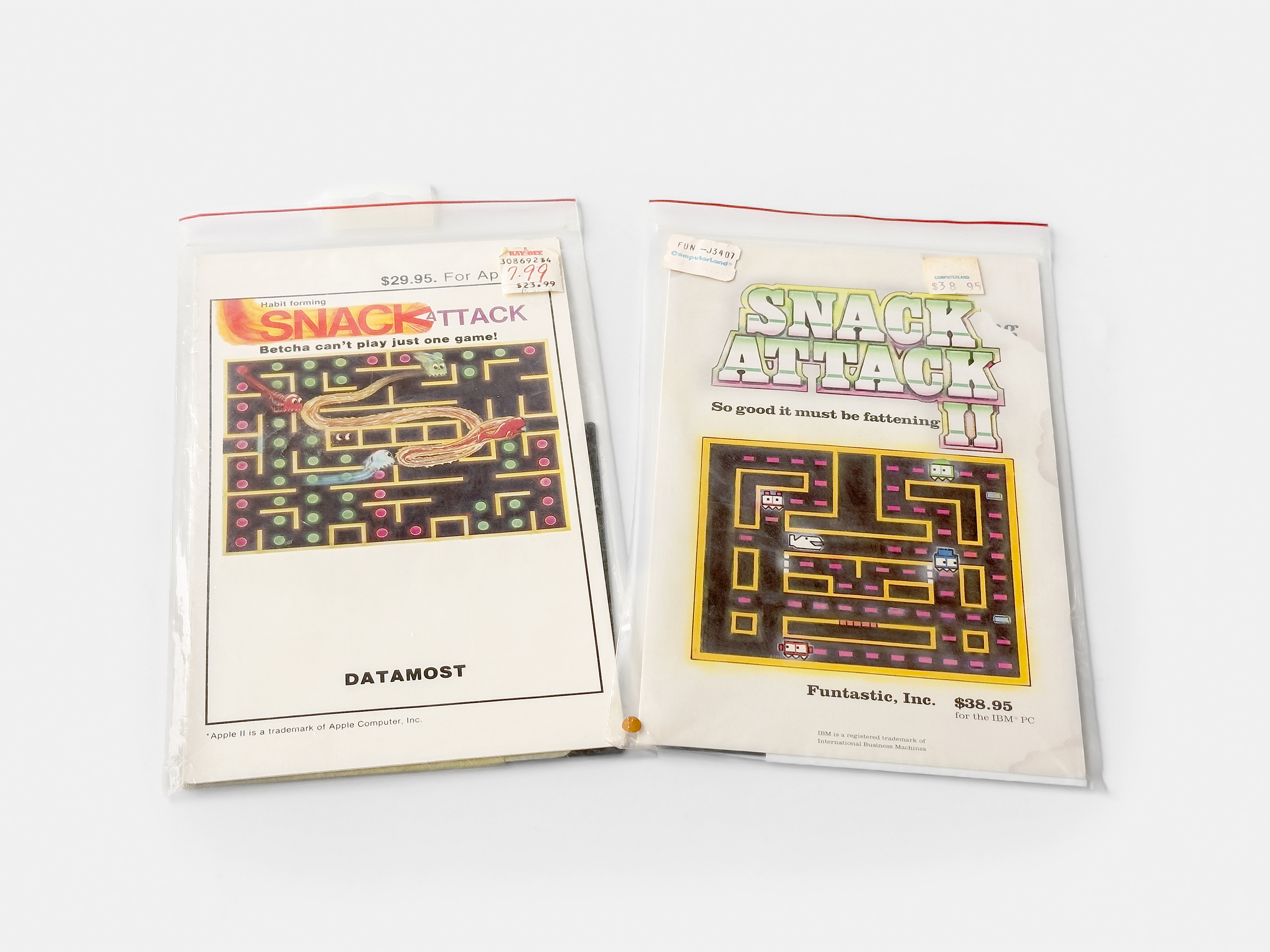
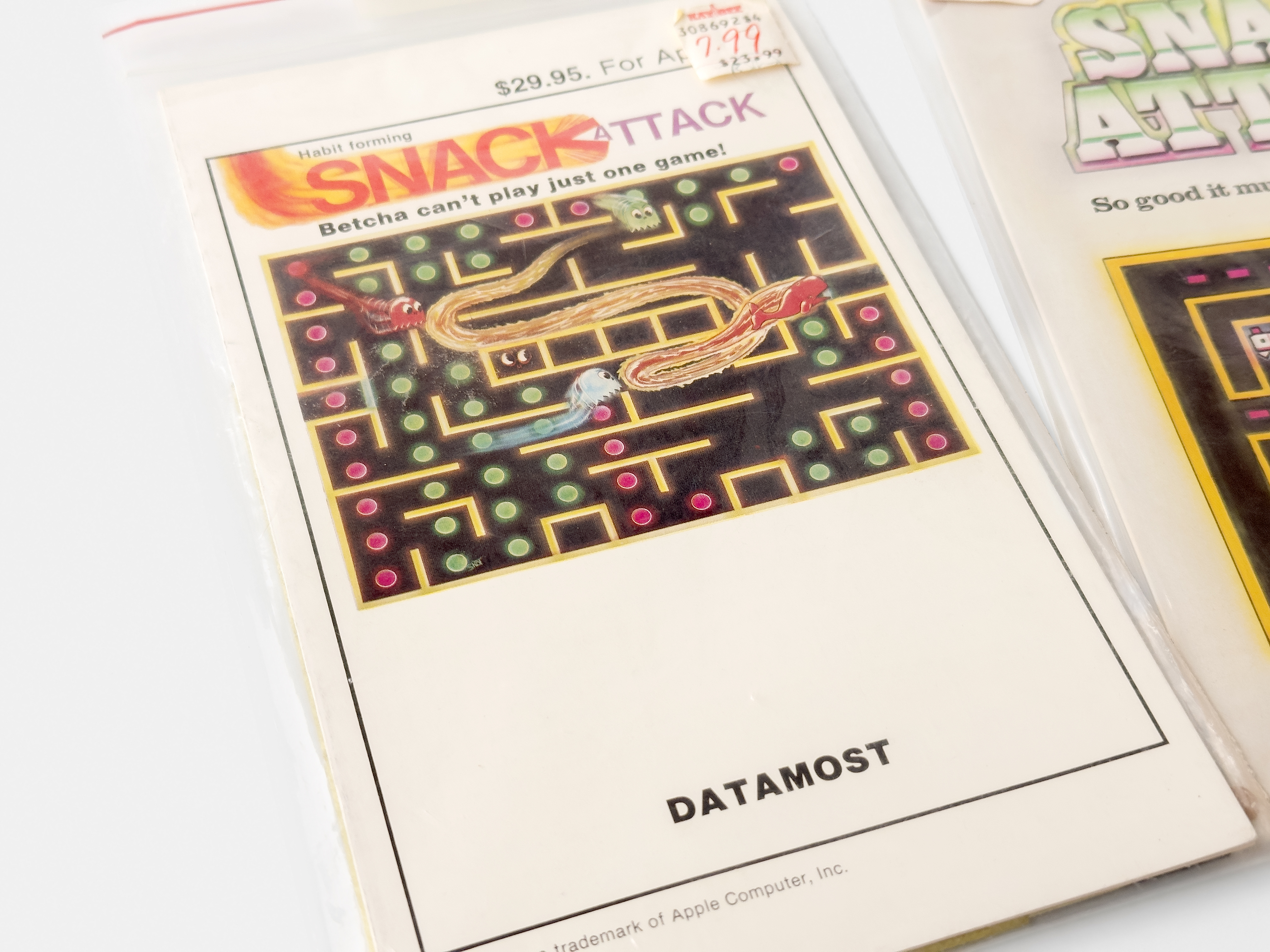
Illowsky’s Pac-Man-inspired creation, Snack Attack, hit the market in 1981 and immediately became a bestseller on the Apple platform. It secured a spot on Softtalk magazine’s top 30 list,t where it stayed for an impressive 15 months, ranking in the top 5 for a few.
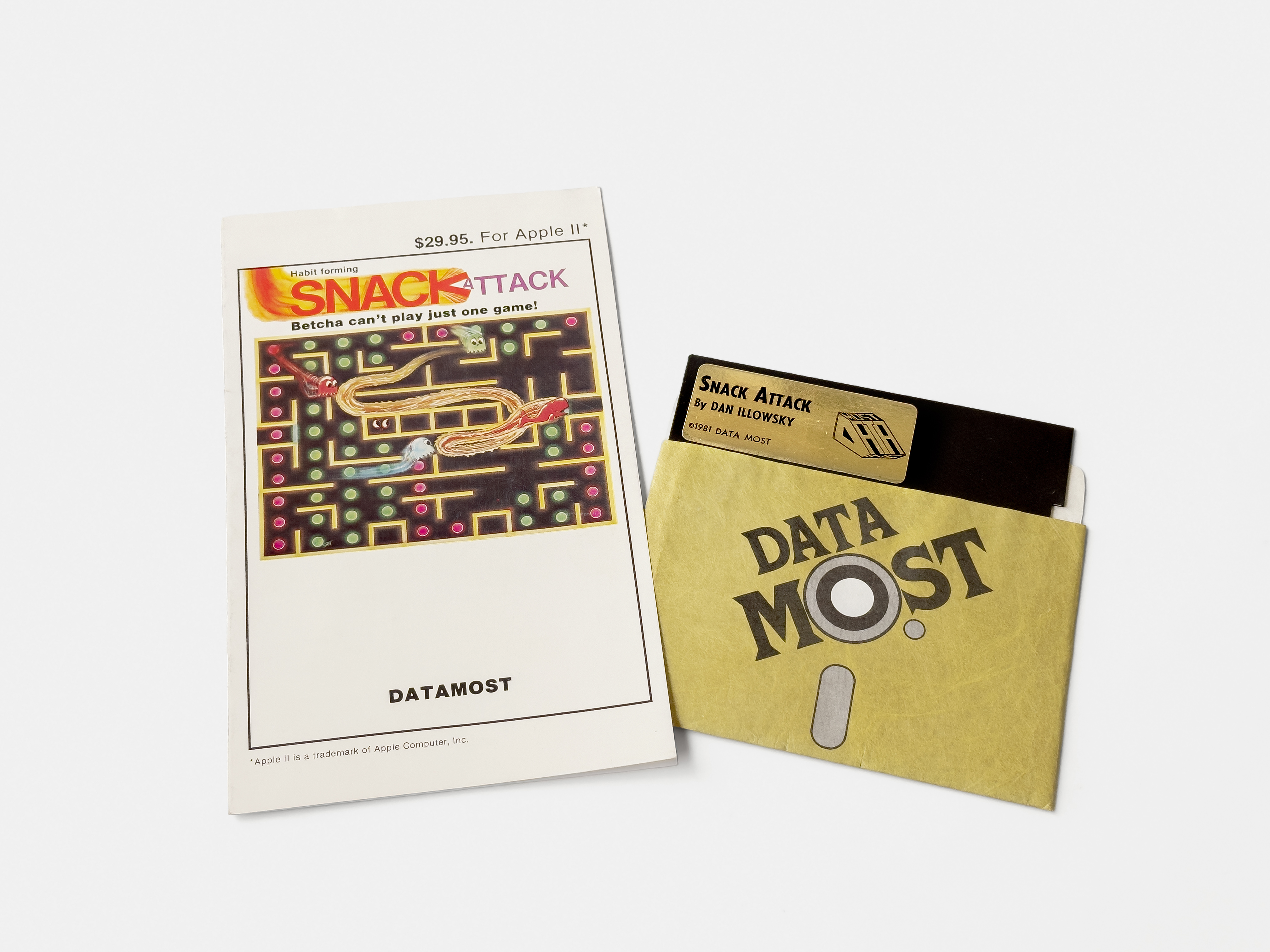
Dan Illowsky’s second game, Snack Attack, was, like his first game, published for the Apple II by Dave Gordon’s Datamost in 1981.
The game became one of, if not the, bestselling Pac-Man clone for personal computers at the time.
Snack Attack had a few improvements over the classic Pac-Man gameplay and was one of the best-playing Pac-Man-inspired games at the time.
The game features three mazes, looping with increasing difficulties, each containing special doorways, magic stars, and pop-up desserts.
Following the release of Snack Attack, Illowsky created Space Kadet, an Apple II game that was ultimately withdrawn from distribution when he left Datamost in 1982 to found his own company, Funtastic, Inc., to independently publish his creations. Along with Illowsky followed fellow programmer Michael Abrash, one of the early adopters of IBM’s new Personal Computer, introduced the previous August.
While the initial impression of the IBM PC suggested a well-designed yet unremarkable machine assembled from readily available components, including off-the-shelf parts from various suppliers, it defied everyone’s expectations, even IBM’s. Attributed to its open architecture, enabling compatibility with a diverse array of third-party hardware and software, it achieved commercial success at an unprecedented pace. Intended as a business-oriented machine, Abrash embraced the system and quickly became proficient in its intricacies, showcased with his Space Invader clone, Space Strik,e released for the platform in 1982 by Datamost.
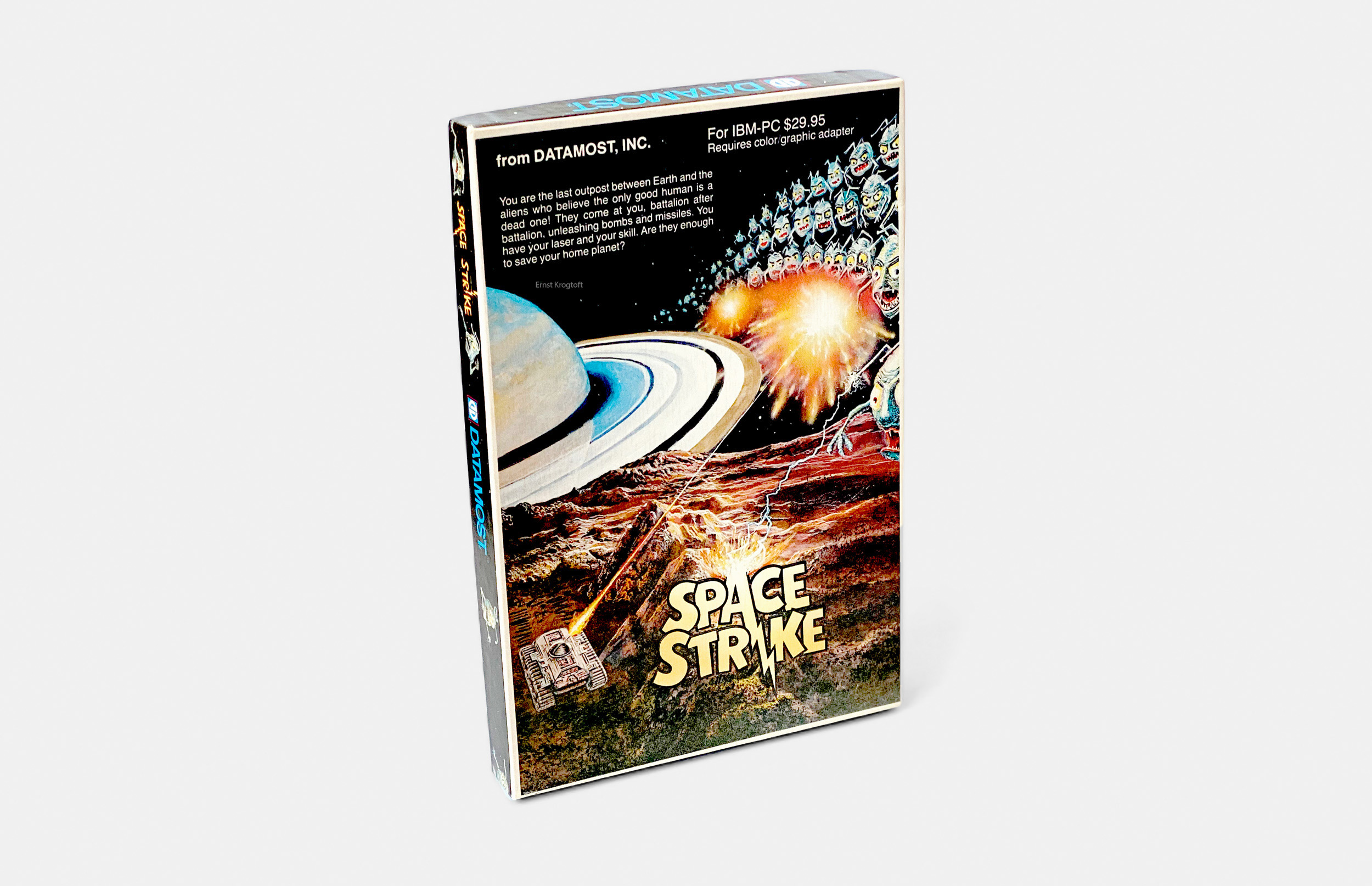
Michael Abrash’s Space Strike, a Space Invader clone, was published for the newly introduced IBM PC by Datamost in 1982. The game would not only help establish the business-oriented PC as a machine capable of playing fast-paced action games, but also Abrash as one of the programming and graphics pioneers of the x86 architecture.
The Apple II series continued to be successful during the early 1980s, and by 198,2 Apple Computer became the first personal computer company to reach $1 billion in annual sales. The same year Apple reached 750,000 sold Apple II systems, an impressive number, but soon faced impending competition from IBM, with an estimated 200,000 IBM PCs sold in its first full year on the market. Market analysts anticipated a substantial increase in IBM PC sales the following year, projecting figures ranging from $1 billion to $2 billion in revenues. Although this represented only a small fraction of IBM’s overall expected revenue of $35 to $40 billion, it represented a significant presence in the personal computer market.
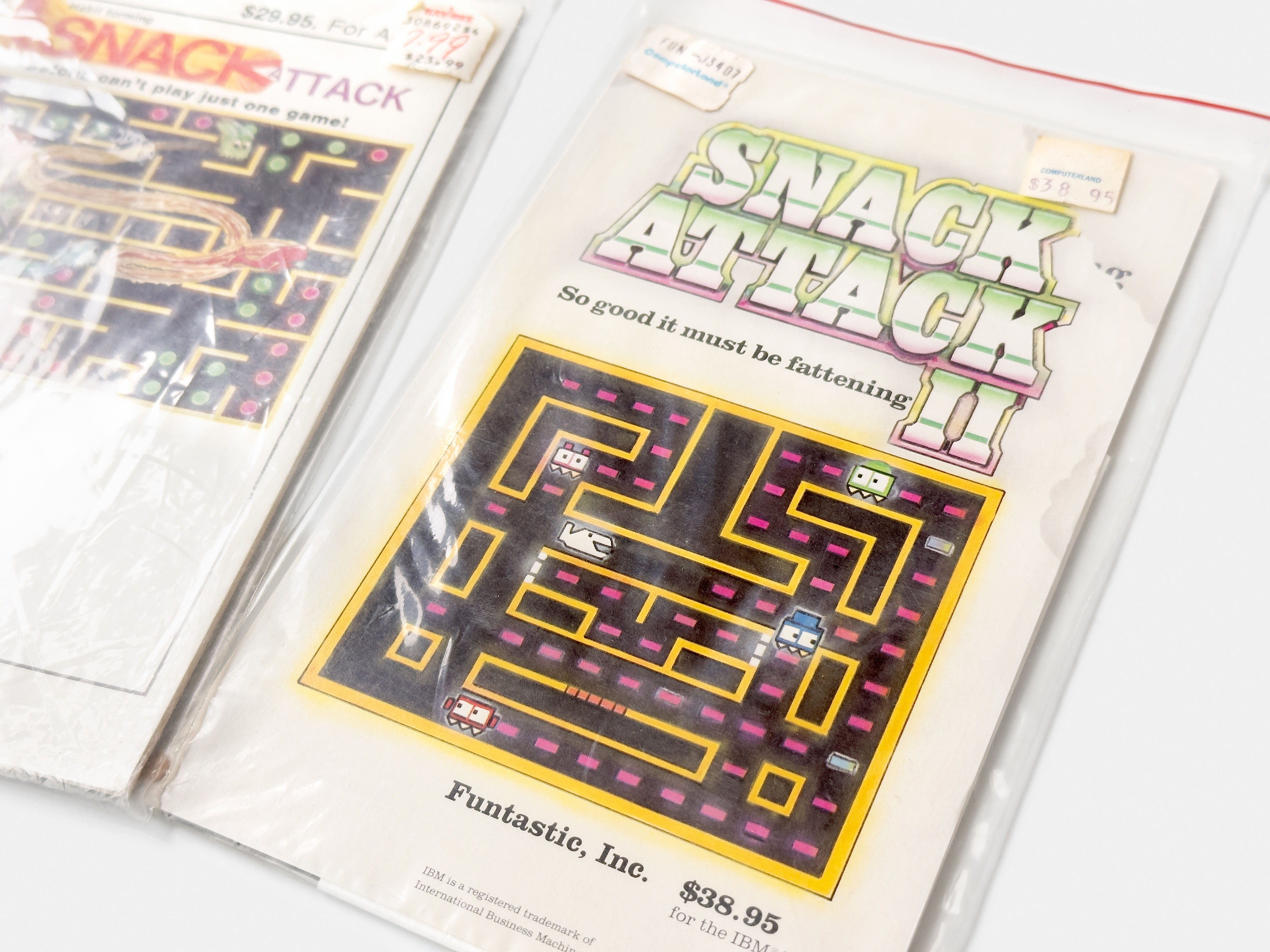
With the success of the IBM PC, a completely new and attractive market rapidly emerged. Illowsky wanted his popular Apple II Pac-Man clone available on the system, and Snack Attack, with the help of Abrash, was quickly ported to the platform and released as Snack Attack II in 1982.
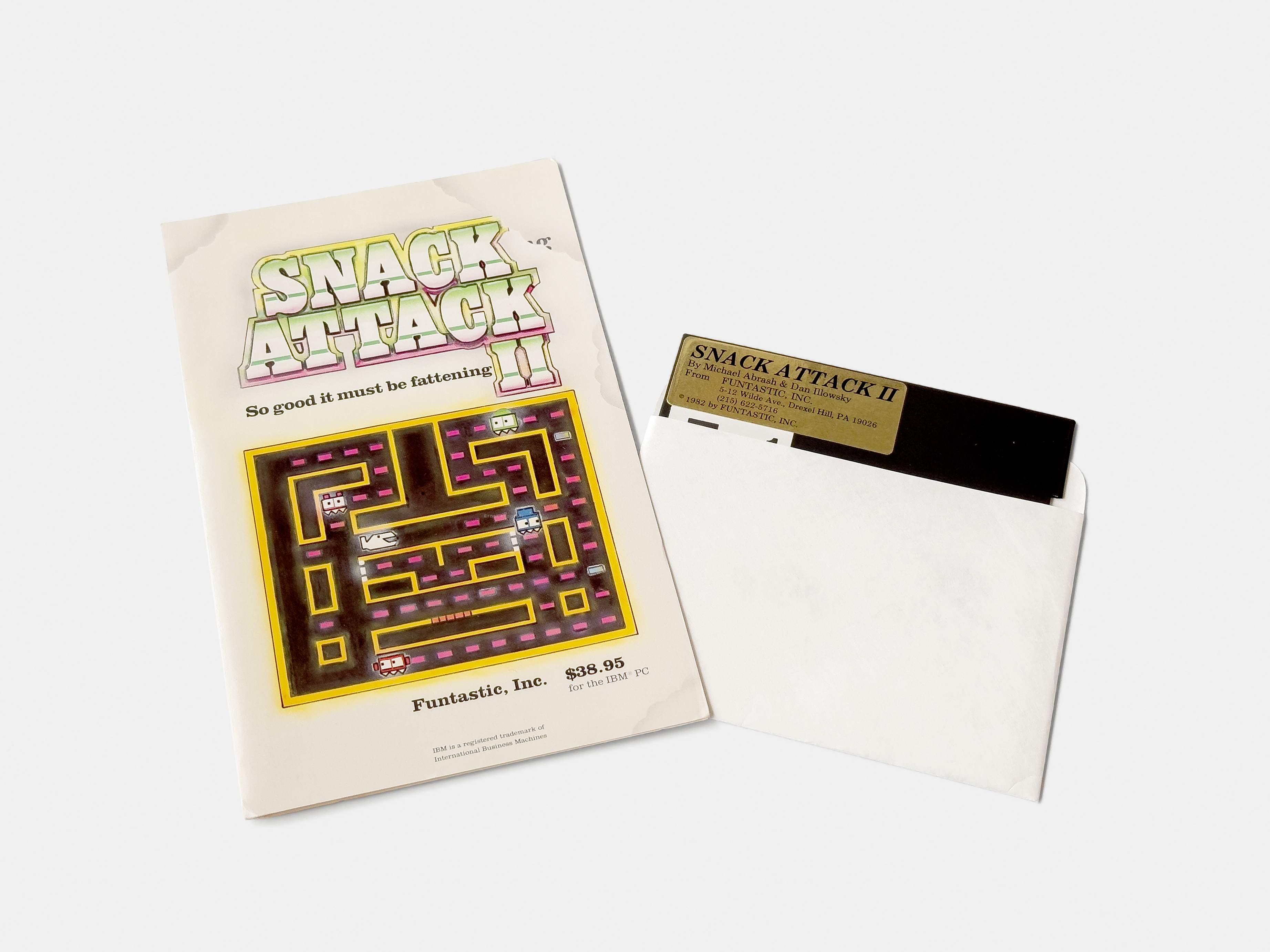
Dan Illowsky’s Snack Attack was ported to the IBM PC with the help of x86 genius Michael Abrash.
The game was published by Illowsky’s Funtastic as Snack Attack II in 1982.
Snack Attack’s success on the Apple II made it a perfect contender for the newly introduced IBM PC.
The game was extremely well-engineered but required 64k of memory and a color graphics adapter (CGA) to run.
Snack Attack II became the best Pac-Man clone available on the system and was one of the first IBM PC games that could be controlled by a joystick.
Snack Attack II received favorable reviews. Despite its relatively high price of $38.95, a whopping $120 in today’s money, a discerning reviewer stated that none of the 24 cartridges he owned for the Atari VCS had the appeal of this game. Bear in mind that investing in an IBM PC system capable of playing Snack Attack II could set you back around $4-5,000 in today’s currency, considerably more than the Atari VCS console (now renamed Atari 2600) priced at $130.
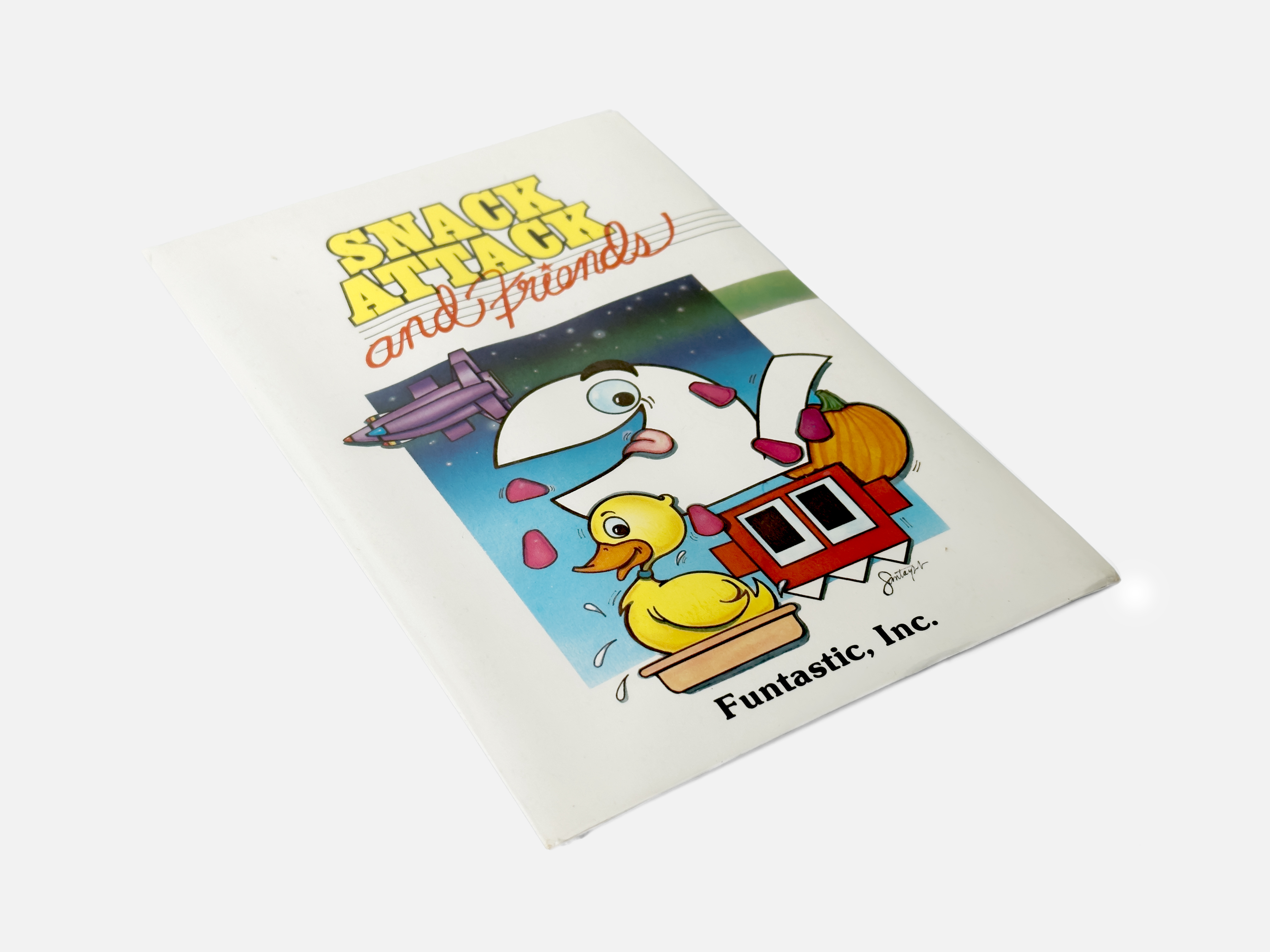
The original Snack Attack was rereleased in 1983 for the Apple II in the compilation Snack Attack and Friends, alongside Illovsky’s first game, Country Fair and Space Kadet, now dubbed Space Cadette. Funtastic would publish six titles before the end of 1983, all created by Illowsky and Abrash. The company’s IBM PC titles helped establish an entertainment market for what was by most conceived as a business-oriented machine and proved that when done right, the system could facilitate arcade-like experiences with fast-paced gameplay, colorful graphics, and sounds.
Following Funtastic, Illowsky, and Abrash would go on to co-found Mida Corp. and write technical books and articles on the x86 architecture for the mainstream technical press. Illowsky would continue to work in technology, help write parts of the Windows 95 Operating System, and establish a number of companies over the next 30 years.
Throughout the ’80s, Abrash would write on x86 code optimization and graphics both as an individual and as a columnist for the magazine Programmer’s Journal and later, in the early ’90s, for the monthly tech magazine Dr. Dobb’s Journal. He would come to work at Microsoft on graphics and assembly code for the first two versions of Windows NT and was hired by id Software in the mid-1990s to work on the rendering technology for Quake. Abrash returned to Microsoft to work on natural language research and later moved on to the Xbox team, where he would work on the first two Xbox video game consoles.
In 2014, Abrash joined Facebook as Chief Scientist, reuniting him with id Software‘s John Carmack, who was chief technology officer, working on Facebook’s venture into AR/VR.
Sources: Arcade Express Newsletter, Wikipedia, PC Magazine, Softalk, OldComputers.net, NY Times…
 Retro365