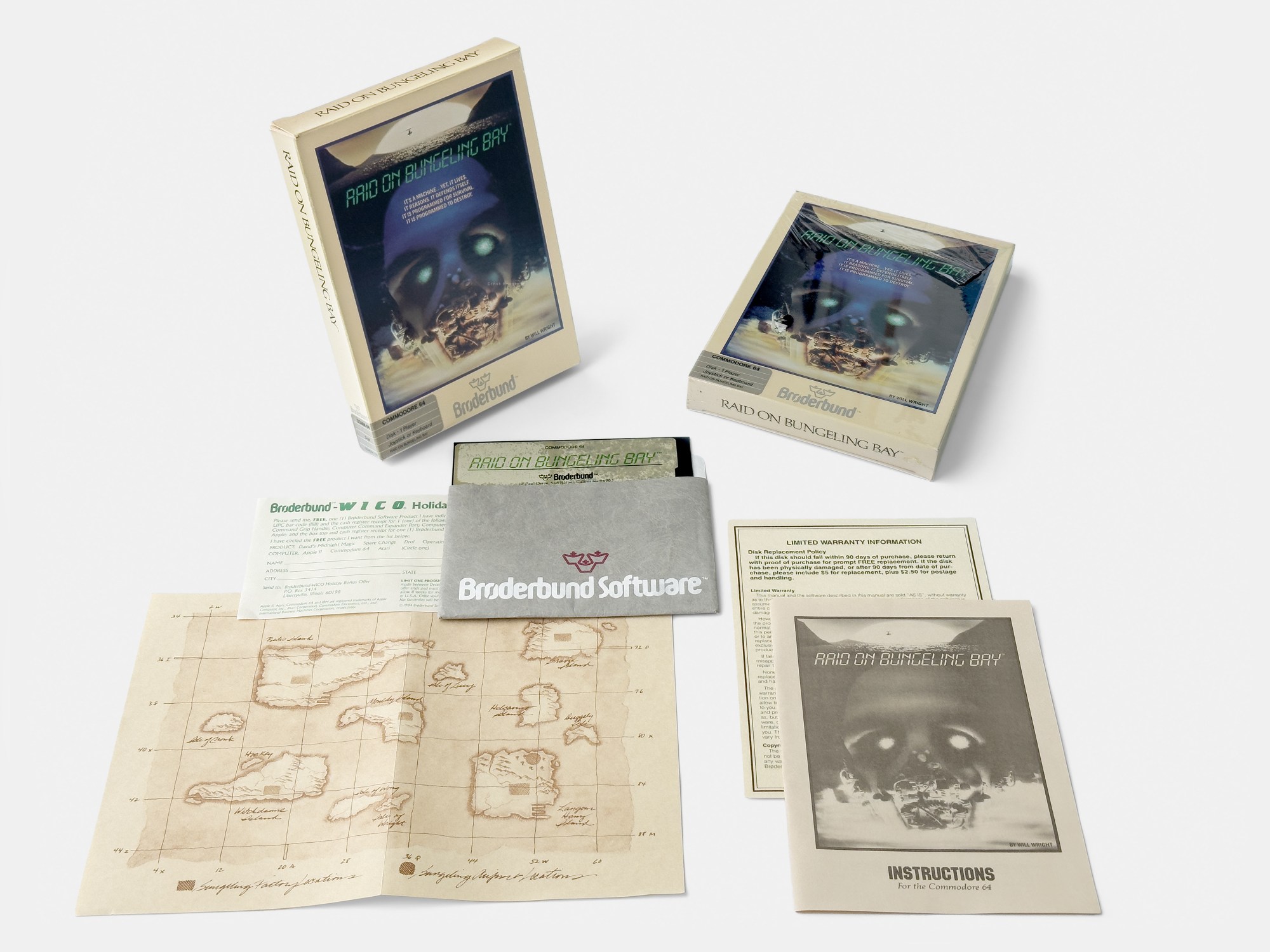
With more than 200 million copies sold worldwide, The Sims is one of the most successful and best-selling video game franchises of all time. The series was designed by William Ralph Wright with its first entry developed by his and Jeff Braun‘s company Maxis in 2000. Wright had previously established his reputation in the industry with his influential SimCity published in 1989, a title that evolved from his first game, Raid on Bungeling Bay.
Wright’s interest in game design began in childhood with board games like the adversarial Chinese strategy board game Go and tabletop wargames such as PanzerBlitz. Following his high school graduation, Wright pursued studies in architecture at Louisiana State University before transitioning to mechanical engineering at Louisiana Tech, with a particular interest in robotics and space exploration. Two years into his studies, in the fall of 1980, Wright dropped out and moved to New York City where he enrolled at The New School University.
Living in an apartment in Greenwich Village, Wright purchased his first computer, an Apple II+, and started to teach himself Applesoft BASIC, to connect and control the robots and other mechanical things he was building out of random parts at the time. While trying to implement John Conway’s Game of Life into BASIC it became apparent that the cellular automaton simulation needed a much better way of utilizing the computer’s hardware and he dove into Pascal and Assembly Language both lower-level programming languages with fewer layers of abstraction from the underlying hardware.
Having his own computer prompted a transition from tabletop games to computer games, all bought from the sole computer store in New York City. His fascination with simulations, coupled with his growing experiences as a computer game player, motivated him to try and develop a game of his own.
After a year at The New School, Wright concluded five years of collegiate studies without a degree and returned to Baton Rouge, Louisiana. When the Commodore 64 became available in 1982 Wright bought one the first and came to master its intricacies, including its custom chips, which enabled enhanced graphics and sound capabilities. While the Apple II gaming market was saturated and had its fair share of prolific designers, the Commodore 64 market was brand new and offered a level playing field for early adopters seeking to develop software for it.
Wright’s passion for helicopters and urge to create an open setting big enough for players to get lost in led him to build a top-down shooter with a helicopter navigating a large and, at the time, impressive scrolling world. Fascinated with simulation, he devised a simulated world that served as the underlying framework for the adversary, known as The Bungeling Empire. Within the framework, resources were gathered, transported to factories, and utilized in the production of the enemy’s military forces. While the intricacies of these processes may not have been immediately apparent to players, they would emerge as influential elements later in Wright’s career.
In order to maintain his workflow with the proven tools on his Apple II, Wright devised a custom software and hardware solution that allowed for the transfer of assets between the two systems. To create the custom character sets, the graphical tiles the game world would consist of, he developed a specialized software dubbed Chedit. To facilitate the arrangement of these tiles, allowing for the design of the game world’s islands and water, he extended his toolkit with Wedit, a dedicated world-building software.
In 1984, Wright moved to California and presented an early prototype to a number of potential publishers near the Bay Area. Brøderbund expressed keen interest and a new collaborative partnership was initiated with Lauren Elliott, co-designer of The Carmen Sandiego franchise, and Gene Portwood, both serving as project managers during the completion of Raid on Bungeling Bay. Co-founder of Brøderbund, Gary Carlston played a significant role during Wright’s time with the company, as somewhat of a mentor, imparting valuable insights into the industry, market dynamics, and the principles of running a successful software company.
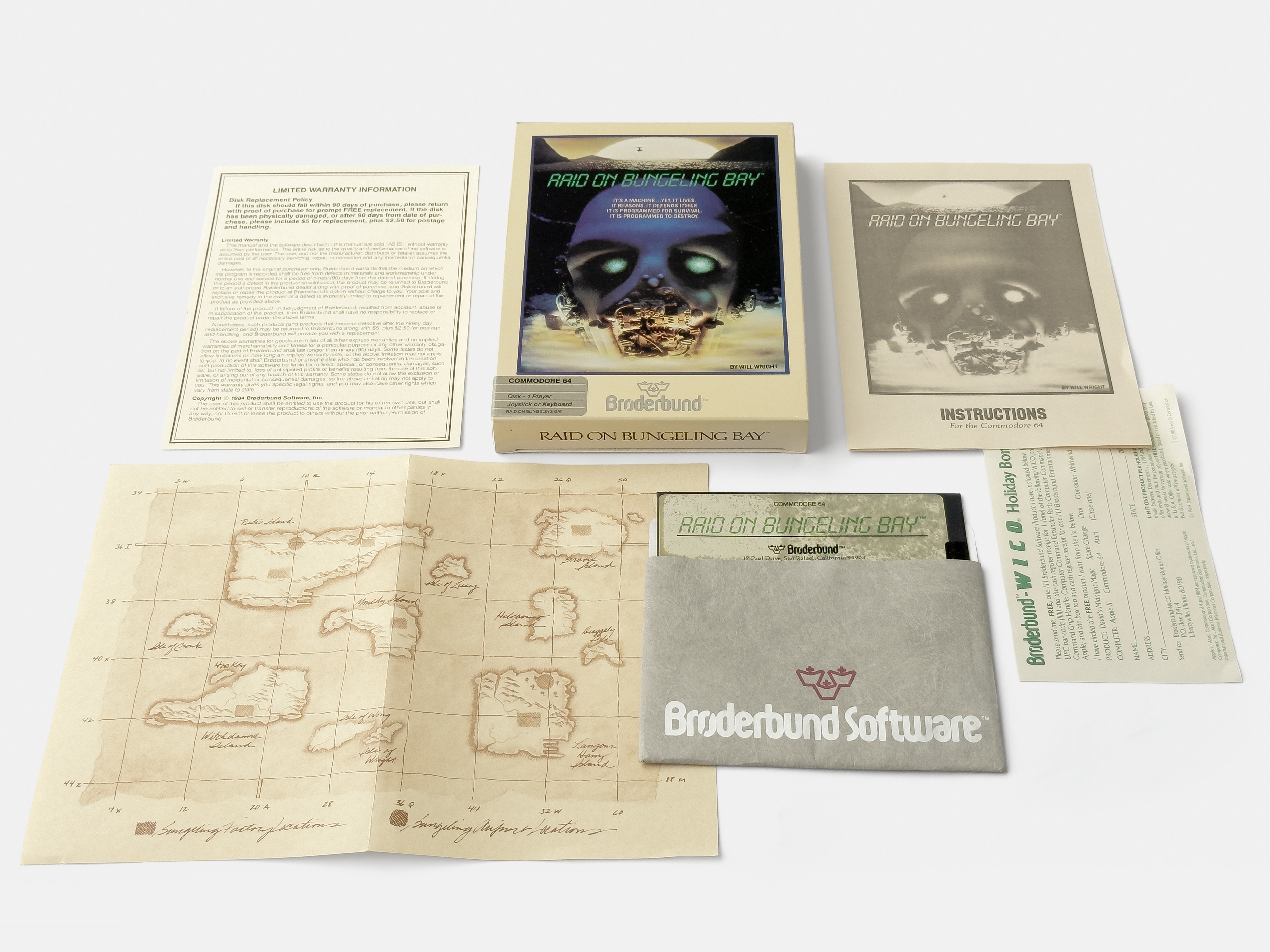
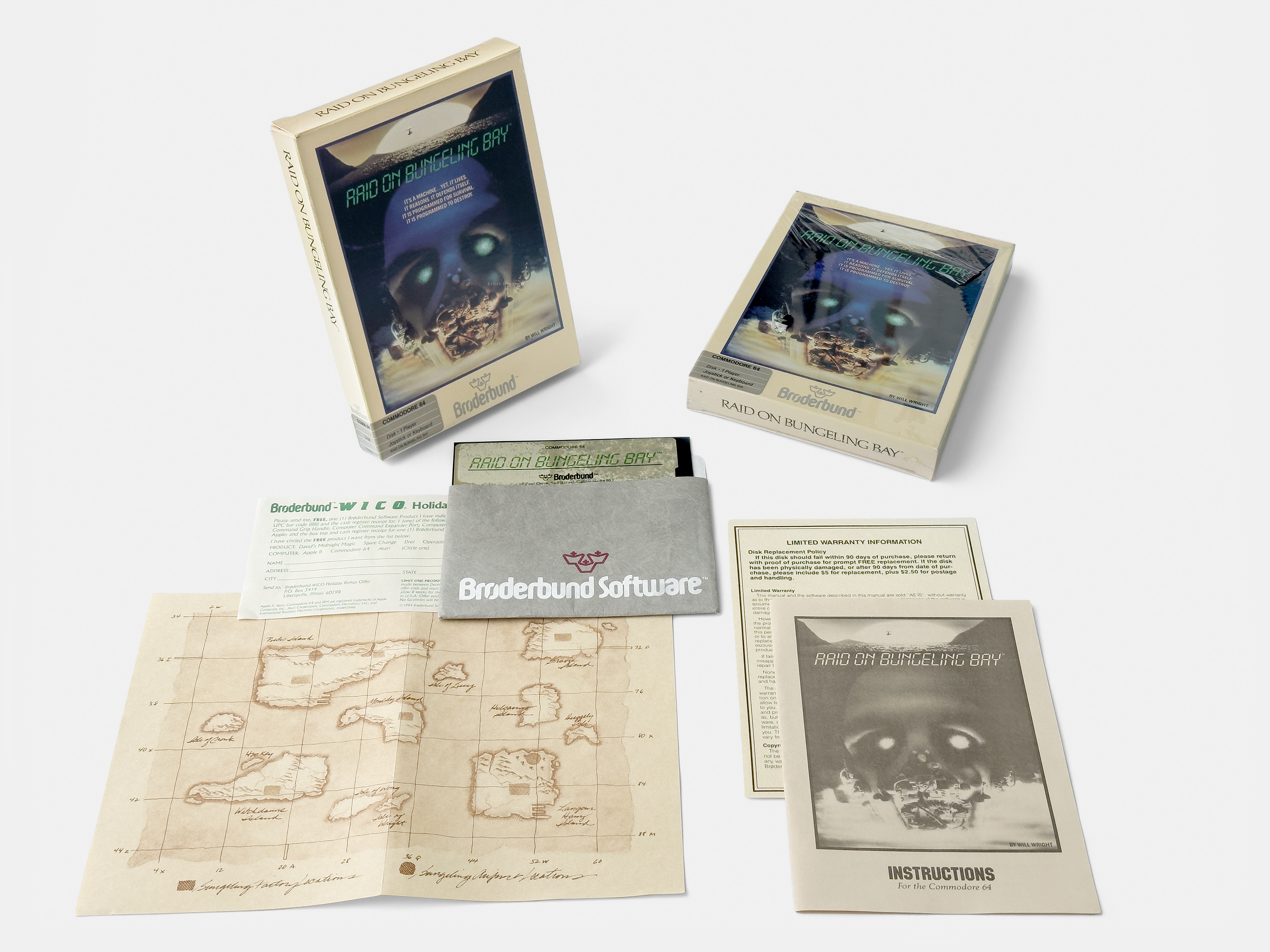
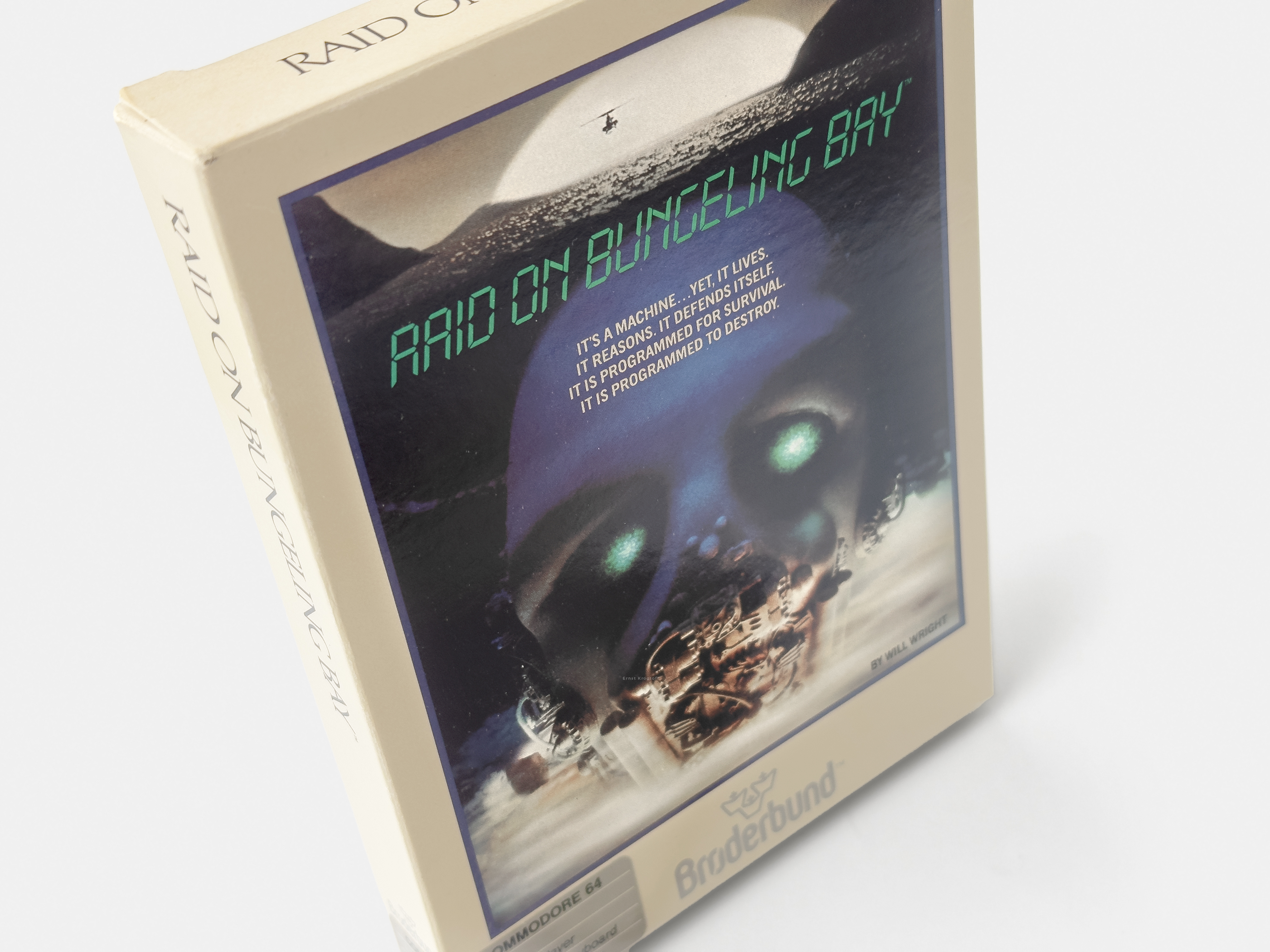
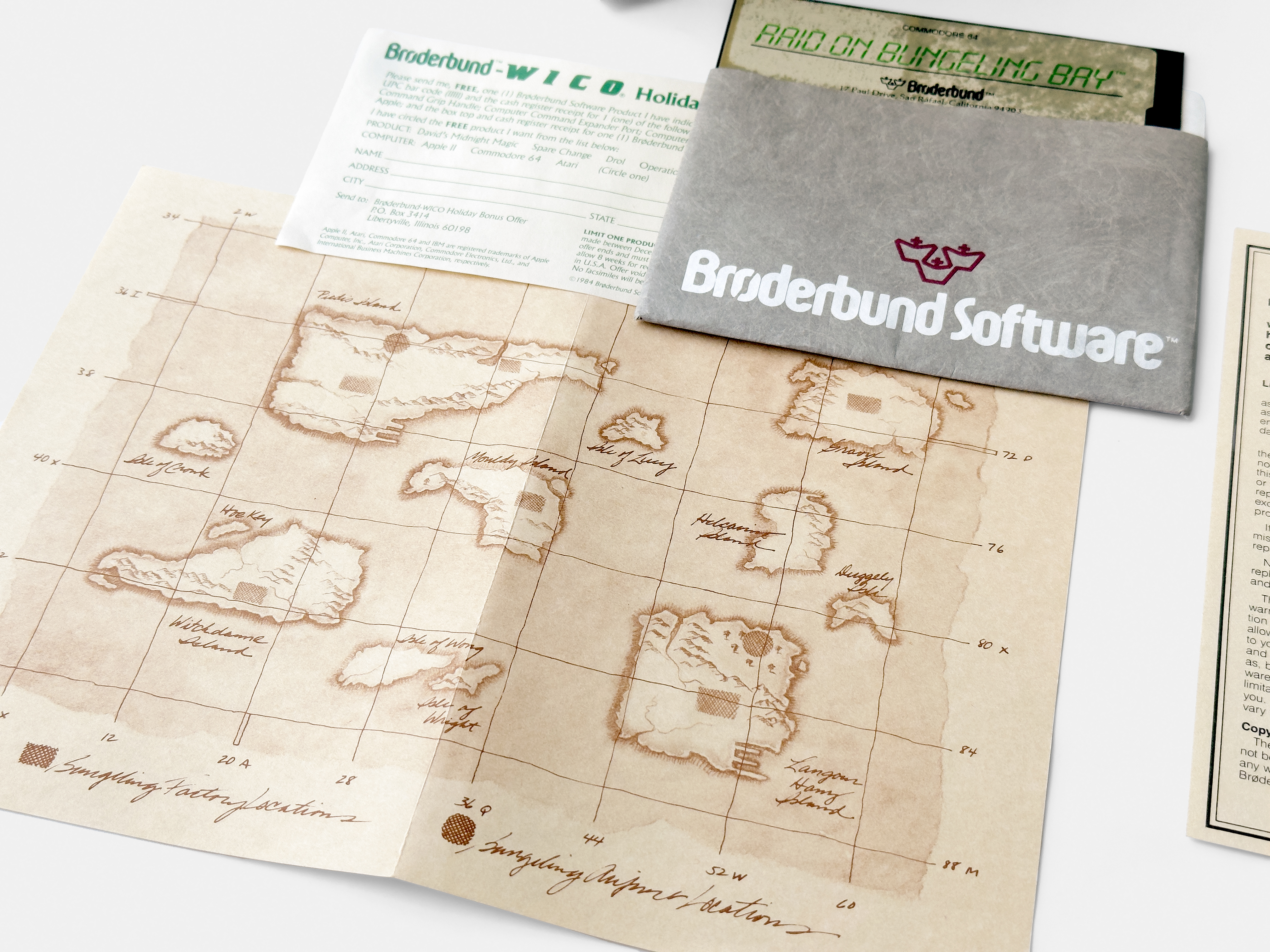
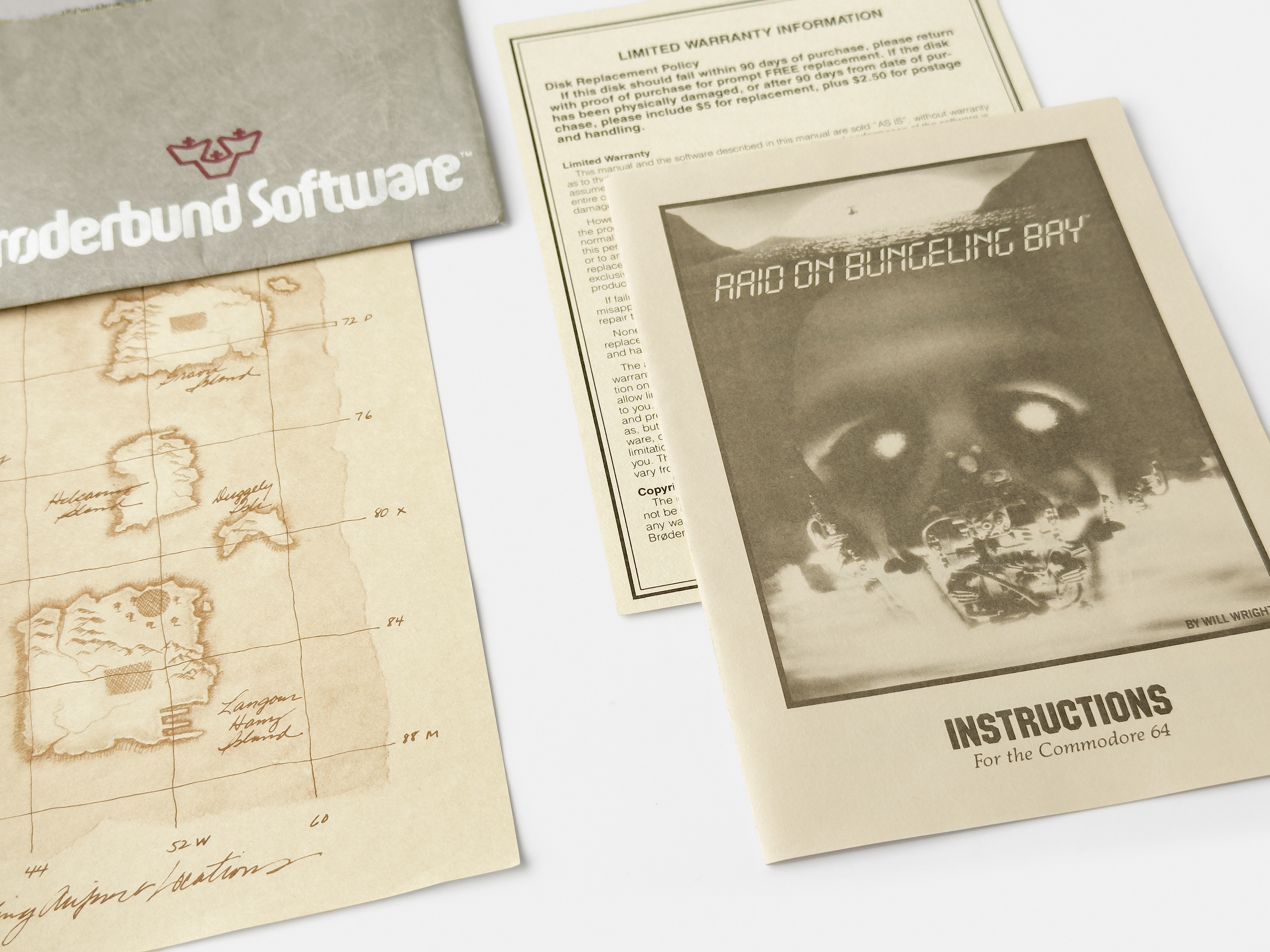
Will Wright’s first game, Raid on Bungeling Bay was picked up by Brøderbund and published for the Commodore 64 in 1984.
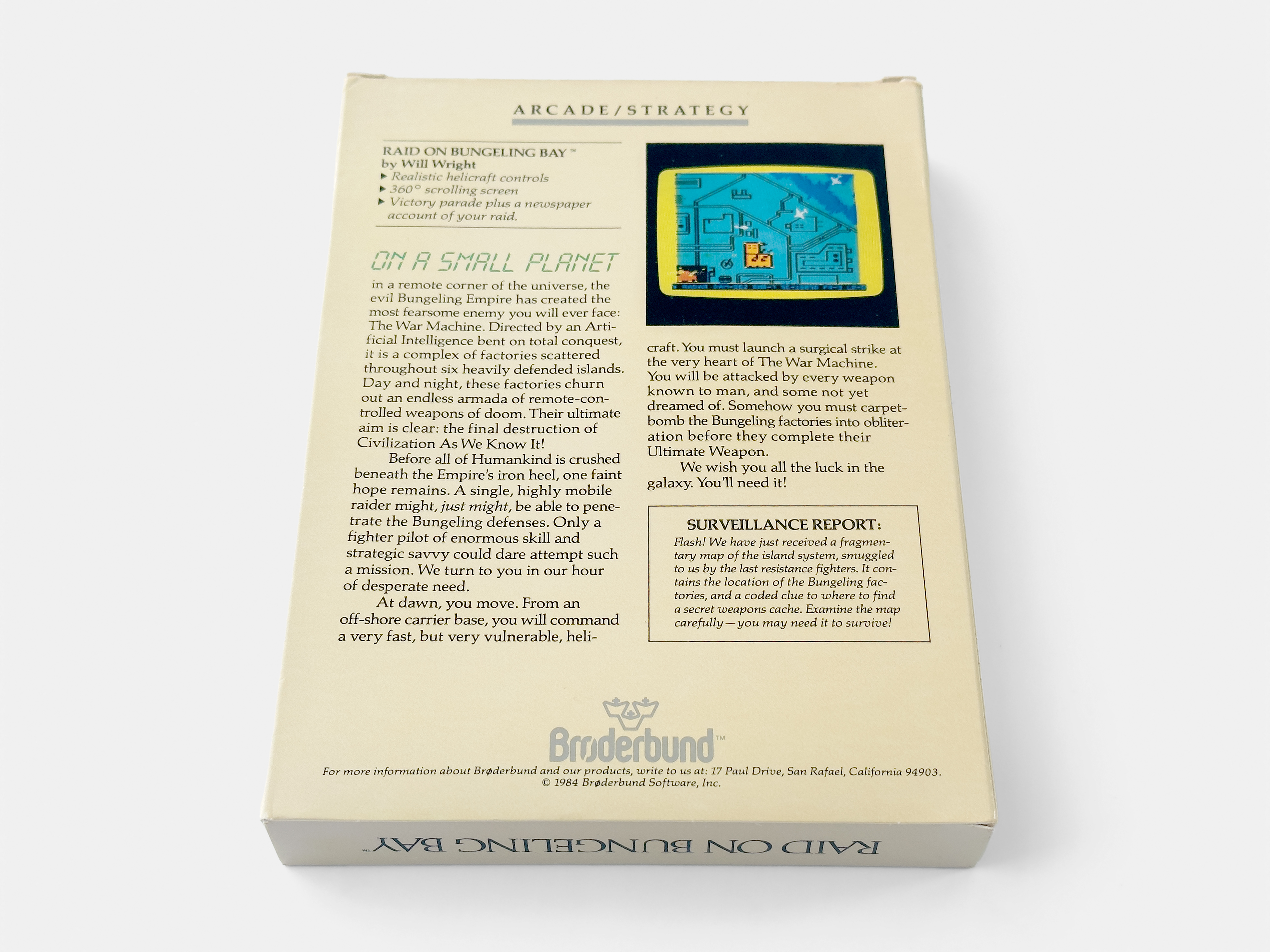
Raid on Bungeling Bay was a 2D shoot ’em up. You control a helicopter launched to attack the enemy’s infrastructure and bomb its six factories scattered across islands occupied by the Bungeling Empire while fending off escalating counterattacks. In order to win you must prevent the escalation by bombing all the factories as quickly as possible, keeping them from advancing their technology. If left alone for too long, the factories create enough new weaponry to overwhelm the player.
Raid on Bungeling Bay was received positively when it hit the market in 1984 and was reviewed as a game that possessed all the virtues needed to please the demanding gamer, with amazingly detailed graphics. While the game would contribute to Wright’s reputation as a game designer and lay the foundation for his future successes in the industry, it wasn’t the initial Commodore 64 release but the later Nintendo Entertainment System version, ported by Hudson Soft and published in Japan on February 15, 1985, that garnered the widespread success.
Due to extensive piracy on 8-bit home computers, the game only managed to sell around 20,000 copies for the Commodore 64. In contrast, the NES version, thanks to the security afforded by cartridge-based media went on to sell almost a million copies making Wright enough money to live on for several years and the financial freedom to pursue the development of what would later become the hugely successful SimCity.
Wright continued to work with the map editor created for Raid on Bungeling Bay as he enjoyed creating different maps and layouts. The map editing combined with the dynamic features in the game opened his eyes to the possibility of allowing others to experience the joy of constructing and simulating their own worlds, and what better way to do it than through urban planning, creating and simulating the aspects of an evolving city.
SimCity would revolutionize the simulation game genre and Wright’s ability to combine elements of simulation, strategy, and player-driven creativity became a hallmark of his work.
In 2007, Wright became the first game designer to receive the BAFTA Fellowship, previously only presented to those in the film and television industry.
Sources: Will Wright’s GDC Talk from 2010, Wikipedia, Game Developer, Arcadology…
 Retro365
Wasn’t aware that it came with a paper map! Cool!