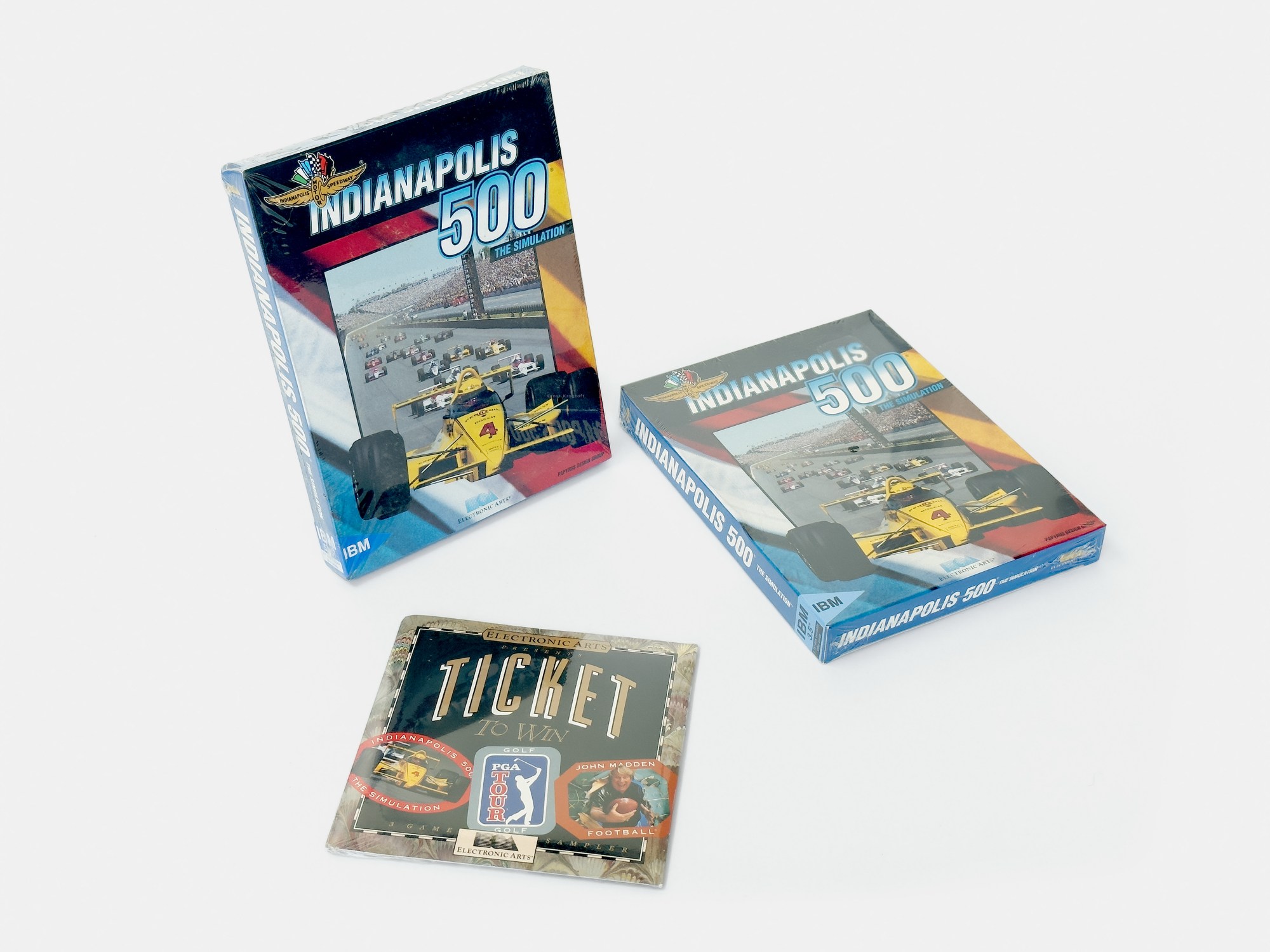
In 1987, David Kaemmer and Omar Khudari left Tom Snyder Productions, an educational software developer in Massachusetts to form Papyrus Design Group. The company’s debut game, a racing simulator, showcased car physics, realistic track layout, and 3D graphics and would be hailed as the first title in differentiating racing simulation games from the prevailing arcade-style gameplay that had characterized the racing genre up to this point.
Kaemmer had been an early adopter of the TRS-80 home computer and had dedicated countless hours in front of the crude 3D wireframe drawings displayed on the monitor while playing SubLogic‘s renowned Flight Simulator. At the arcade, his quarters were spent playing Atari‘s Pole Position, the highest-grossing video arcade game in the US in 1983 and 84 and the first racing game to feature a track based on a real racing circuit.
In 1985, Kaemmer graduated from Oberlin College in Ohio with a degree in mathematics as the school didn’t offer a computer programming course. With the intention to pursue a career in software development, he moved to the North East to work as a programmer in Boston’s Route 128 technology corridor, an area emerging as the East Coast equivalent to Silicon Walley.
During his time at Tom Snyder Productions, Kaemmer crossed paths with Khudari who had joined the company as a game developer back in 1982. Collaborating, the two would write business and educational software but with a shared dream of creating innovative games, they eventually made the decision to depart from their secure positions to establish Papyrus Design Group.
Kaemmer and Khudari headed to the West Coast to pitch a flight simulator idea to Electronic Arts. While EA declined the proposal the two were presented with the opportunity to conceive a game centered around simulating the Indianapolis 500 race. Flight and racing simulators both hinged upon real-world physics and simulations and with an offer of $70,000 advance against royalties, a development contract was signed.
Kaemmer was born and raised in Indiana, the home state of the famed Indianapolis Motor Speedway, situated merely an hour’s drive from his home. Here one of the biggest and most famous racing events in North America, the Indianapolis 500, was held annually with the main race event taking place on Memorial Day. It wasn’t uncommon for the event to draw in nearly 400.000 dedicated fans to the stands and millions more on pay-per-view. Kaemmer was a fan of the sport and obsessed with fast cars but knew literally nothing about race engineering and the intricate technical aspects of motorsports required to make a believable game.
For the next 18 months, Carroll Smith‘s book Tune to Win became Kaemmer’s bibble, with Race Car Engineering Mechanics by Paul Van Valkenburgh bridging any informational gaps.
With the ambition to create the first authentic racing simulation for the PC, Daemmer knew the game had to encompass more than the majority of titles on the market. It had to utilize a first-person 3D perspective, reminiscent of the captivating flight simulator experiences he loved, giving a true feeling of driving 200 mph around the banked oval racing circuit. The majority of racing games at the time adhered to a top-down 2D format or used faux 3D, aiming for believable car physics with fast-paced 3D graphics was definitely a tall order for late 1980s hardware.
True car physics was impossible to imitate but a simplistic approximation was possible. A dozen simple parameters could be adjusted on the car, directly affecting how it would handle on the track, allowing for a more technical gaming experience. The game would simulate the full race weekends of the Indianapolis 500 and its 33 cars, from practice sessions, and qualifying, to the main race event itself. The field was made up of the real entries for the 1989 race including their qualifying order with the exception of the player’s designated car, numbered 17, which replaced car number 29 of Rich Vogler, who qualified in 33rd and last place that year.
After the first year of development with Kaemmer as the designer and sole programmer, Papyrus welcomed their first employee, programmer Rich Garcia, to support the final half-year of production.
During the summer of 1989, the game’s theme music and sound effects were produced by British composer Rob Hubbard who had recently assumed the role of music director at Electronic Arts. Final 2D artwork was done by EA artist Wilfredo Aguilar.
Progressing into the autumn, Indianapolis 500, with the subtitle The Simulation, was put through Electronics Arts’ quality assurance before being published for the IBM PC in December of 1989. The game had cost $90,000 to produce, $20,000 more than what EA had paid in advance, money sourced from Kaemmer and Khudari’s own pockets.
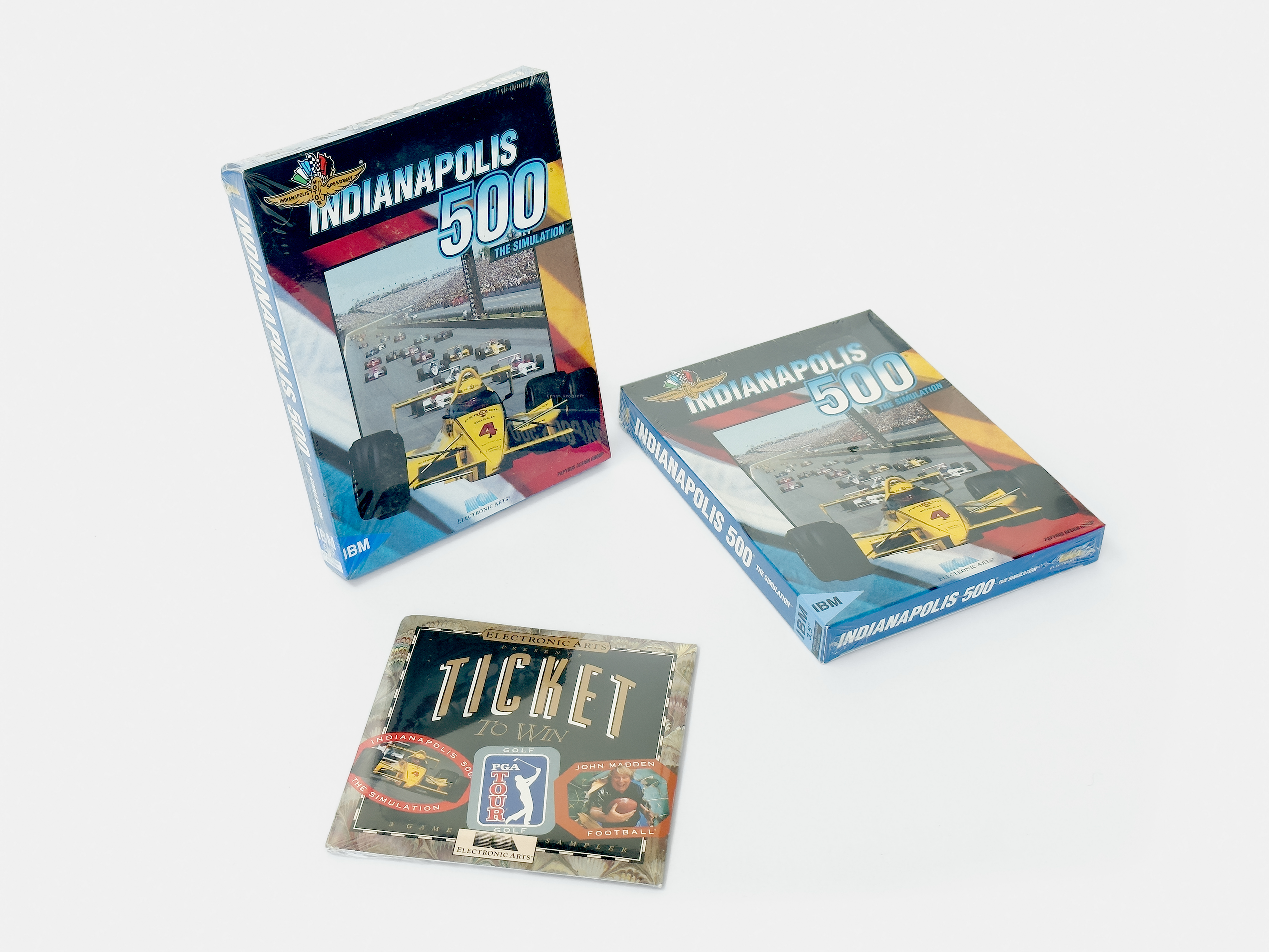
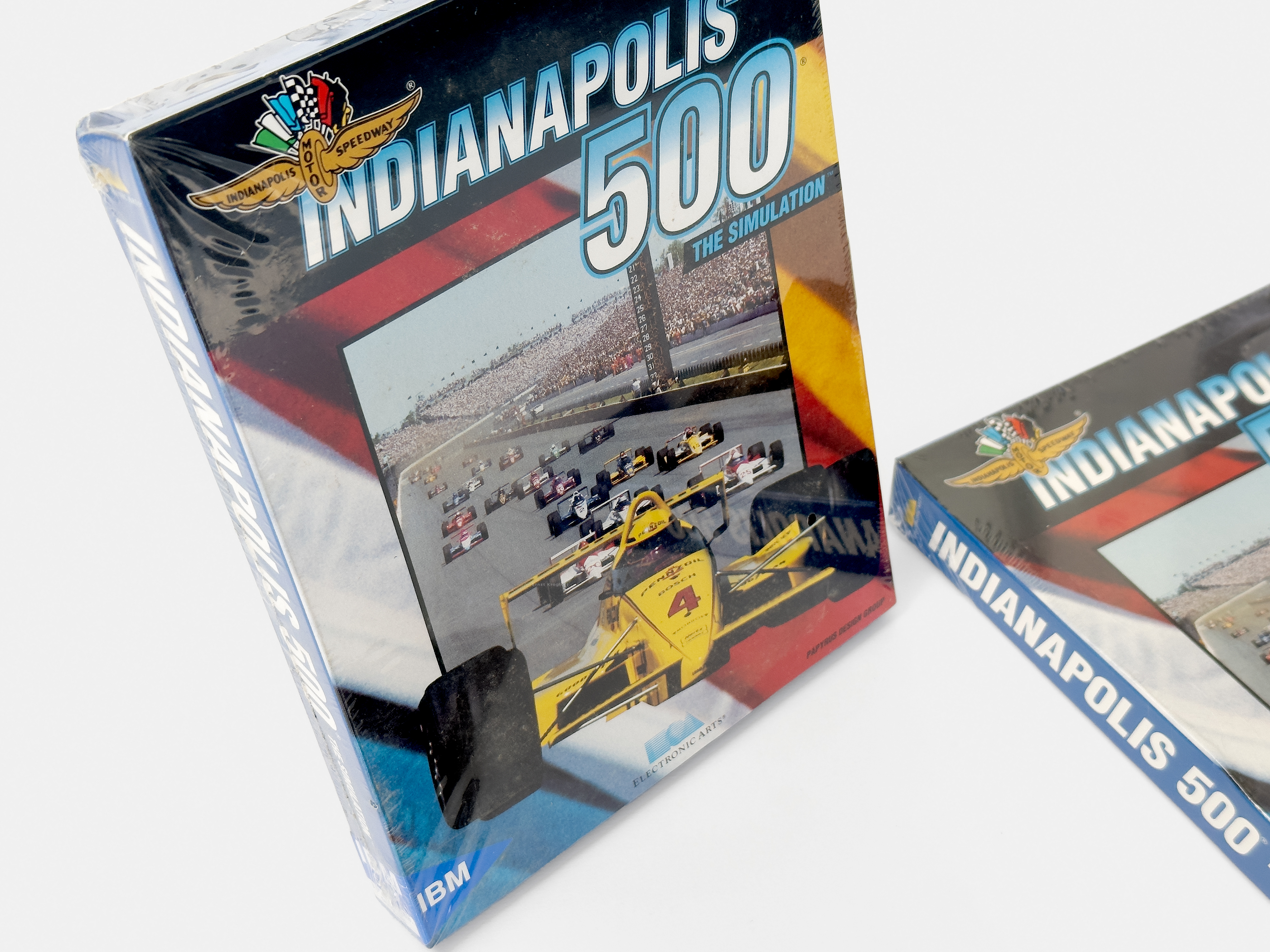
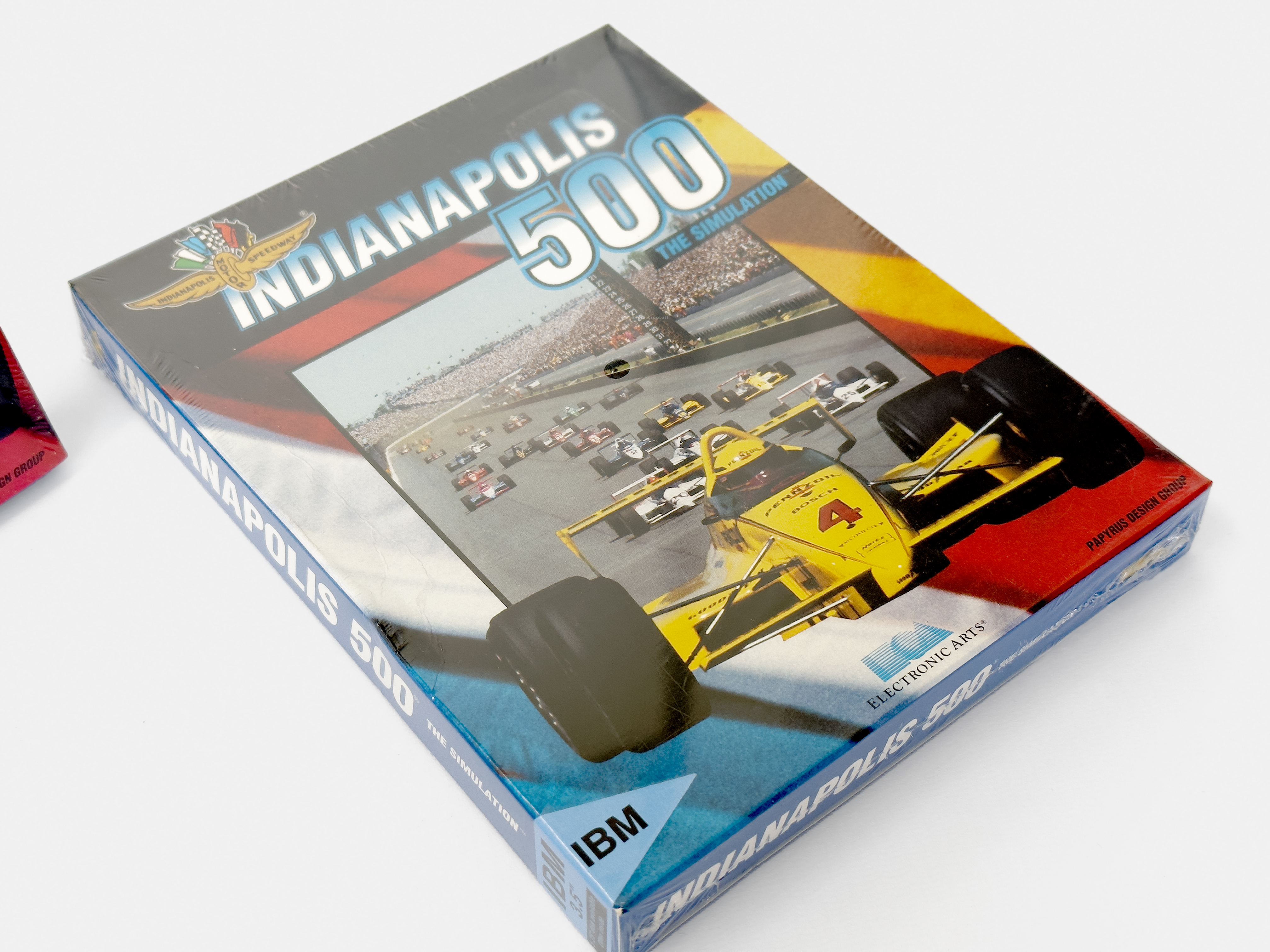
Papyrus’ debut game, Indianapolis 500: The Simulations was published for the IBM PC by Electronic Arts in December of 1989.
A Commodore Amiga version was released the following year.
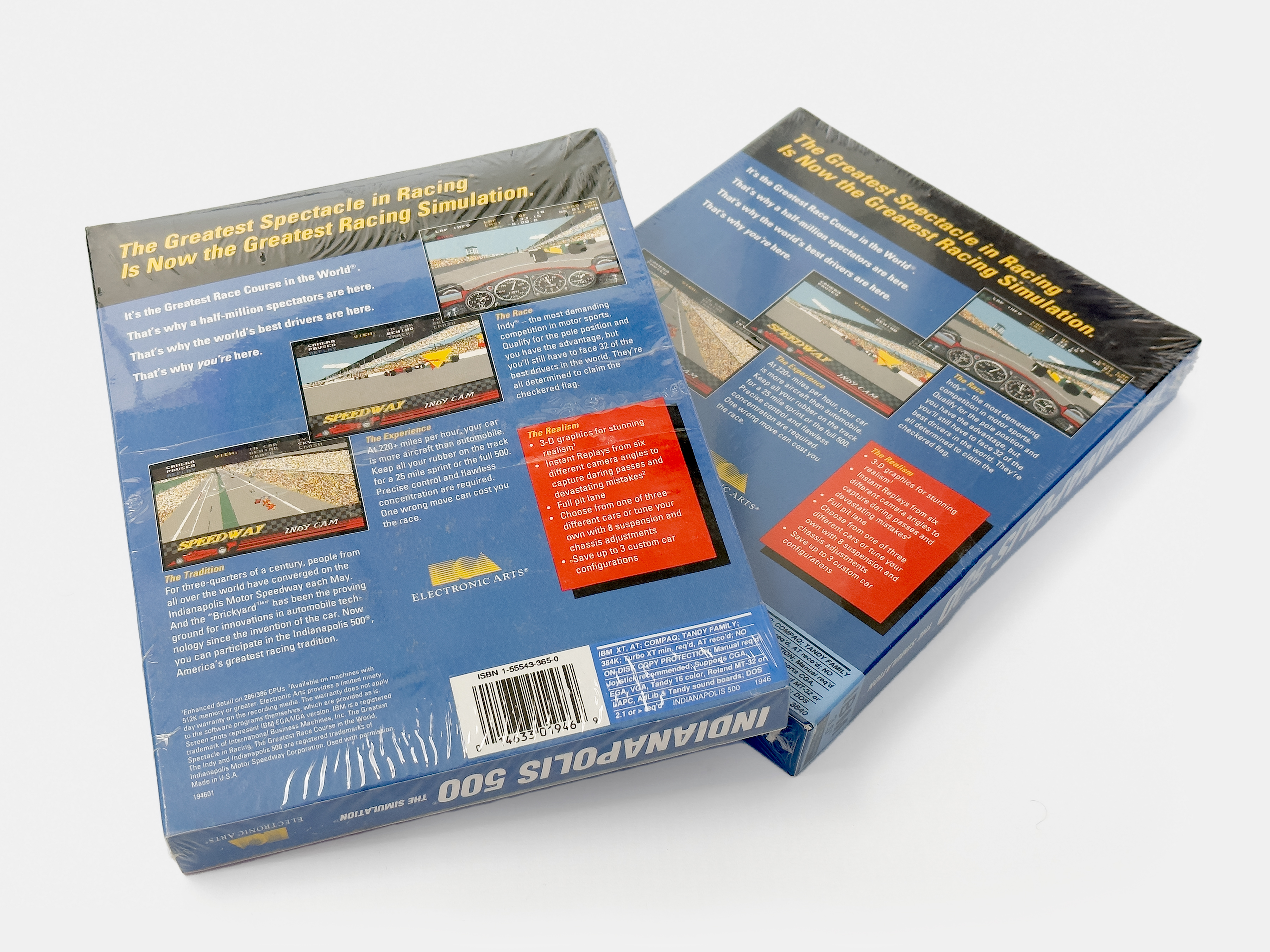
Indianapolis 500: The Simulation offered a comprehensive representation of the entire Indianapolis 500 race experience, from practice sessions to qualifying rounds and ultimately the main race event itself.
The racing unfolded from a first-person perspective, placing the player behind the wheel of one of three selectable cars/teams.
Replays could be enjoyed from several different angles and frequently exhibited mayhem when cars collided, incidents that transpired quite often during a race.
Electronic Arts had an eye on the emerging amiga market in Europe and had, following the PC release, requested for Papyrus to port the game for Commodore’s popular 16-bit platform. Kaemmer single-handedly spent eight months porting the game to the Amiga for another $30,000 facilitated through advances on royalties.
While Indianapolis 500 was received with praise for its graphics, controls, and hyper-realistic simulation, and went on to sell considerably, it wasn’t until the Commodore Amiga version hit the market in late 1990 Papyrus broke even. By 1994 Indianapolis 500 had surpassed 200,000 sold copies.
In 1994, PC Gamer UK named Indianapolis 500 the 38th best computer game of all time and called it pure racing action at its best. In 1996, Computer Gaming World declared Indianapolis 500 the 122nd-best computer game ever released.
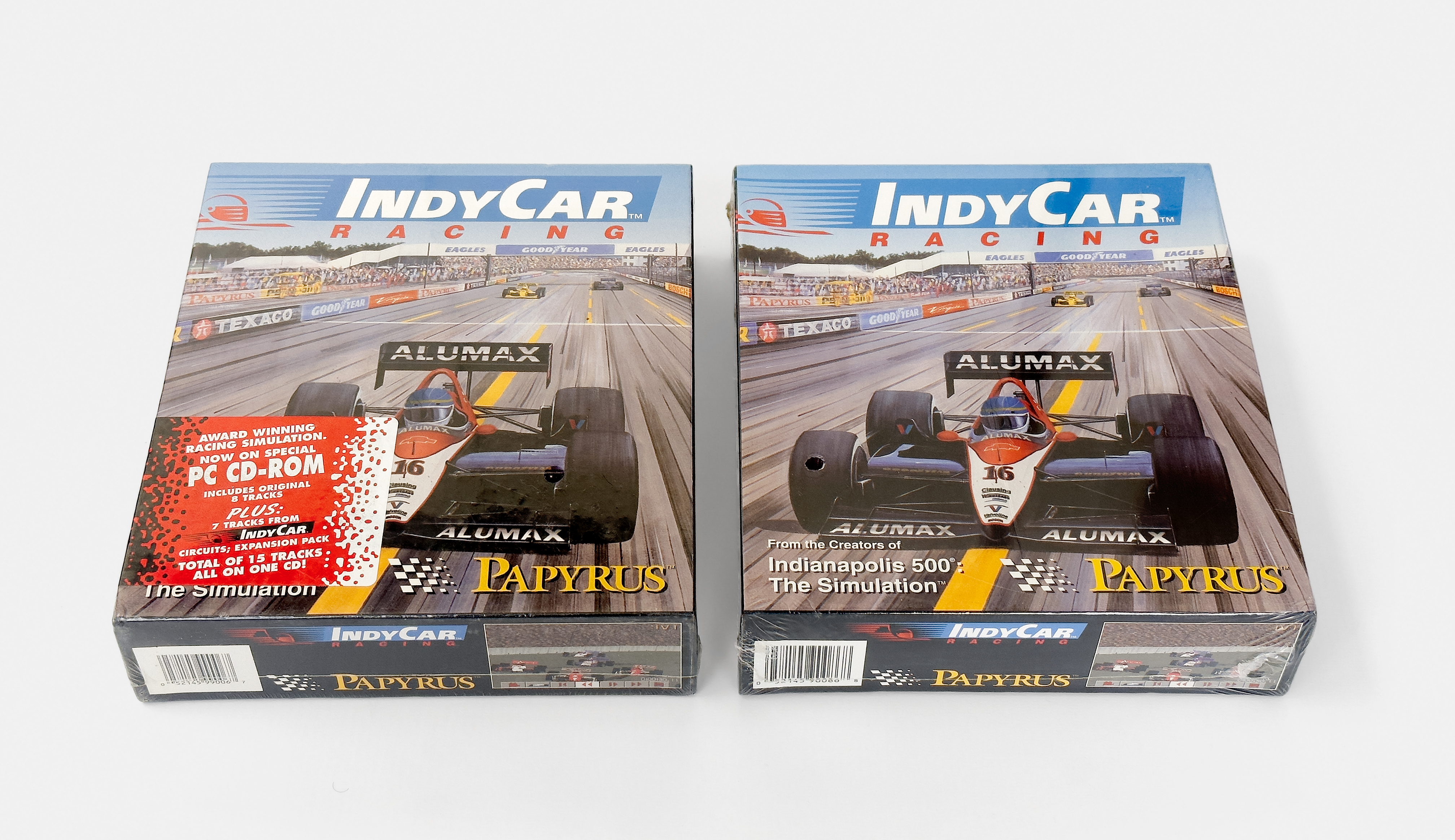
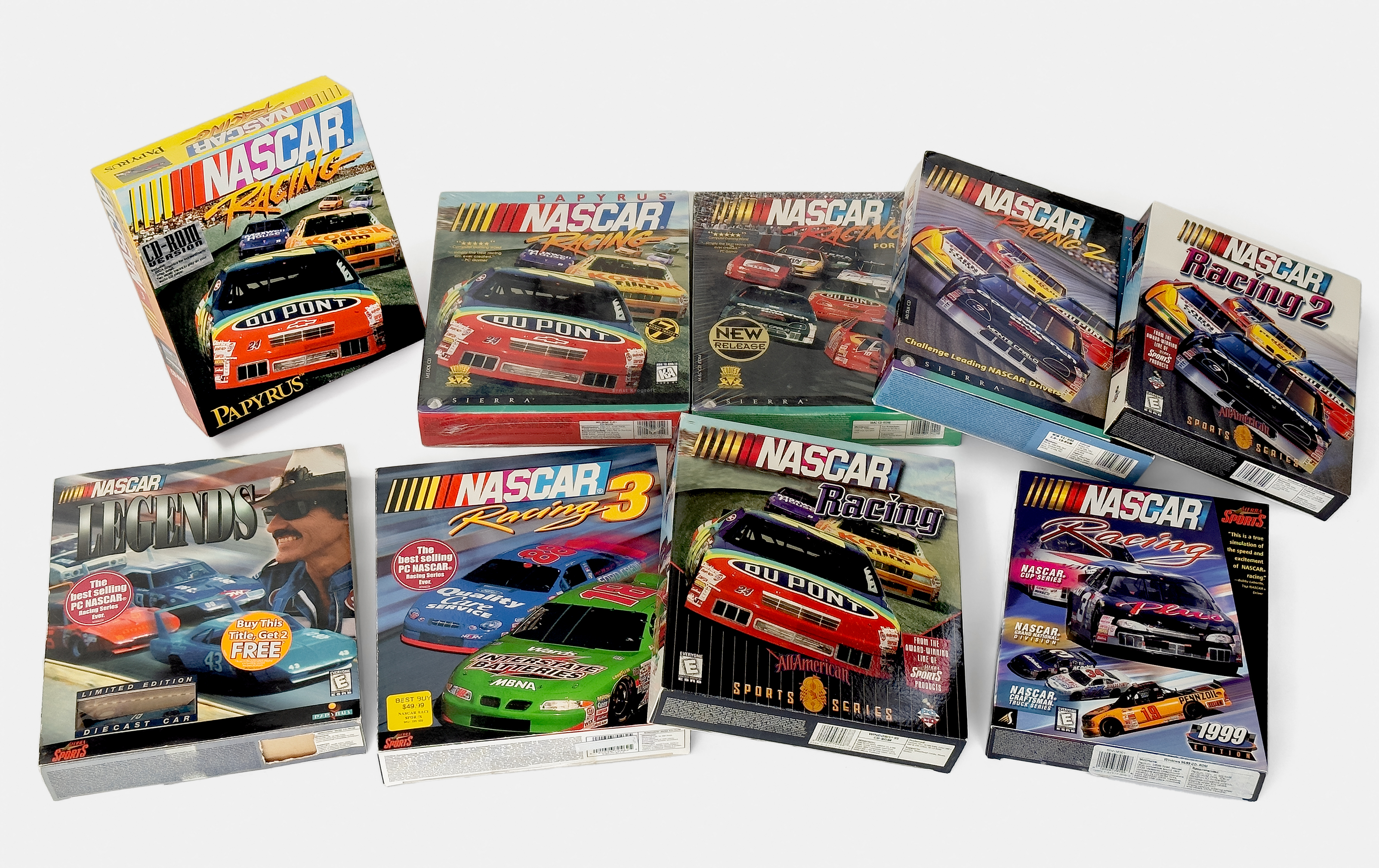
Indianapolis 500 marked only the beginning, spanning the next 15 years the small company would further develop the formula with its IndyCar Racing and later the widely acclaimed and much more profitable Nascar series of games but that’s all for an upcoming article.
Sources: The Boston Globe, MotorSport Magazine, Wikipedia, Omar Khudari’s blog, Gamespot…
 Retro365