Today, Allan Boyd stands among the world’s most experienced specialists in technology, media, and intellectual property. For over four decades, he has shaped, marketed, licensed, acquired, and invested in some of the most recognizable software products in history, a career that began when personal computers were still little more than speculative curiosities in an otherwise analog world. The impact of his work is all around us, even if his name is less well-known than the products he helped bring to life.
Boyd’s journey began in Scotland, where he was born and raised. In 1968, he left home to study Physics and Mathematics at the University of Bath in England, earning a Bachelor’s in Applied Science. By the early 1970s, his path had carried him across the Atlantic to Columbia University in New York, and eventually to Baltimore, Maryland. There, in the crucible of a nascent personal computing era, Boyd hand-built one of the earliest personal computers. Teaching himself to program microprocessors, he wrote machine code capable of performing complex mathematical calculations. His professional life initially revolved around sound. At Maryland Sound Industries, he designed large-scale concert equipment and became one of the first engineers to integrate microprocessors into audio systems.
It was in Baltimore that Boyd crossed paths with Ed Zaron, founder of Muse Software, one of the earliest independent software developers. Zaron introduced him to programming prodigy Silas Warner. One Saturday, Warner, aware of Boyd’s audio engineering expertise, asked if he could assist with a project of developing software capable of reproducing human voices on a computer. Their collaboration produced The Voice, one of the first applications able to play digitized speech on personal computers. The software would later make its way into Warner’s 1981 hit, Castle Wolfenstein, marking the first computer game to feature digitized voices.
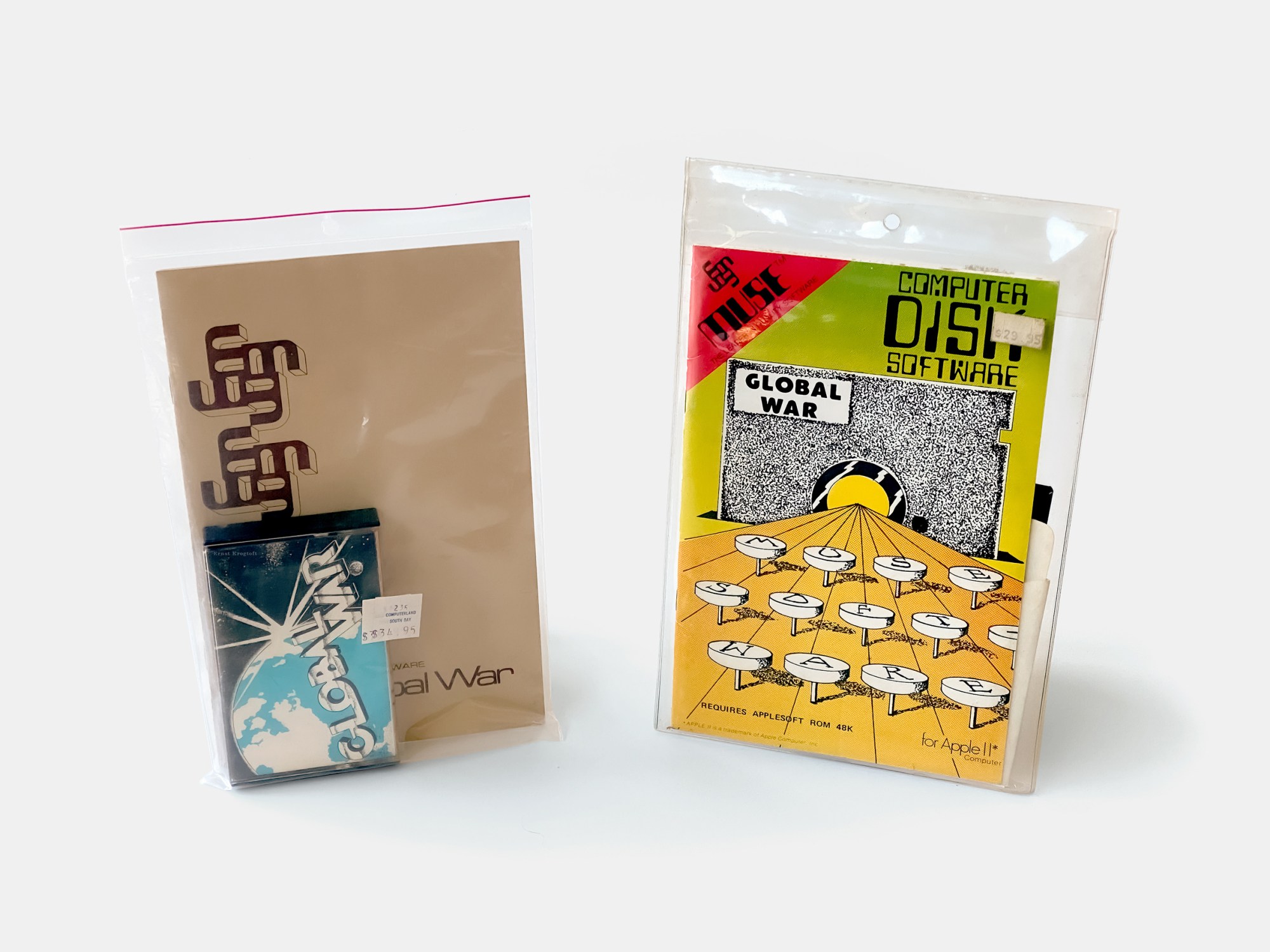
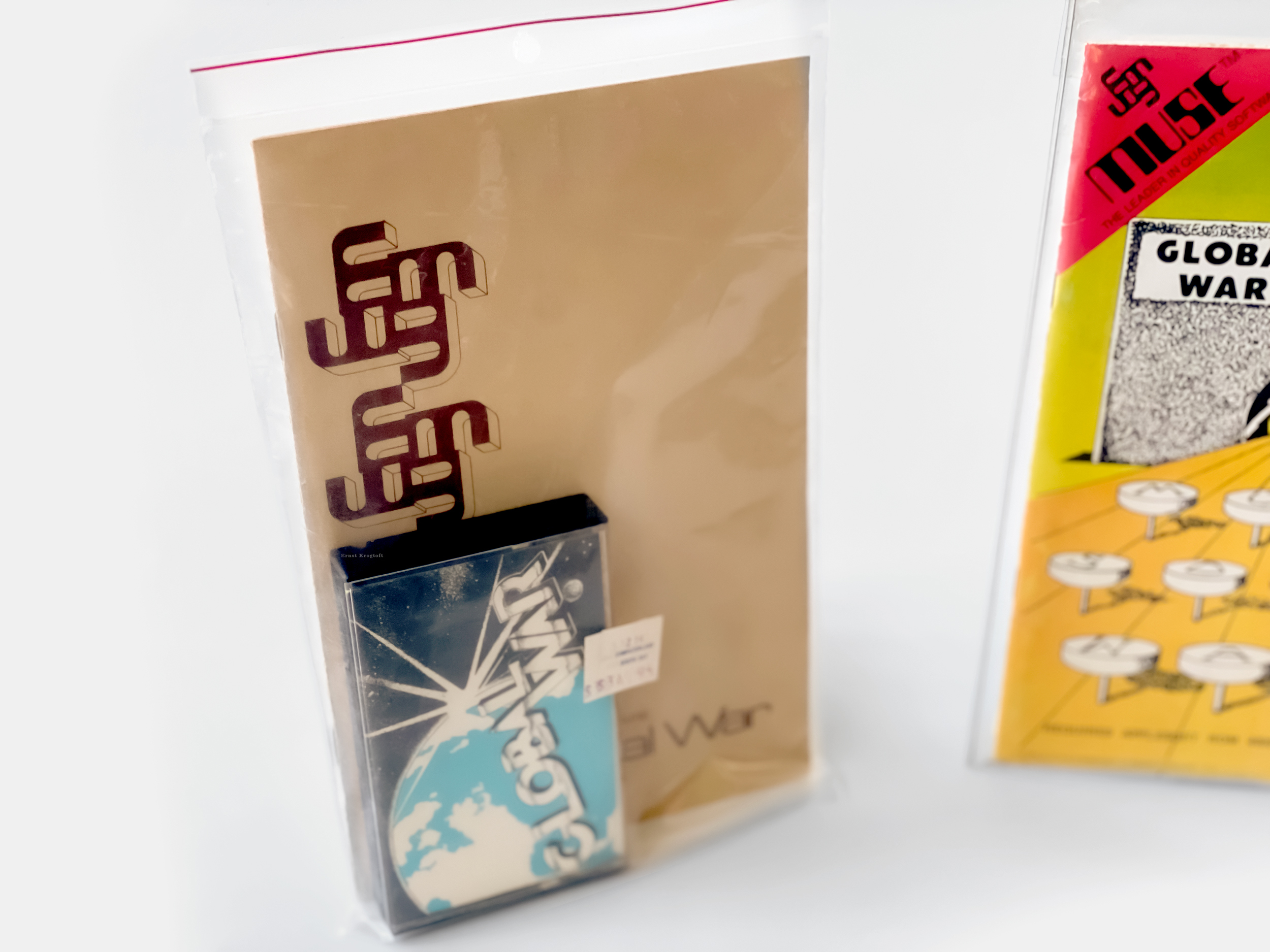
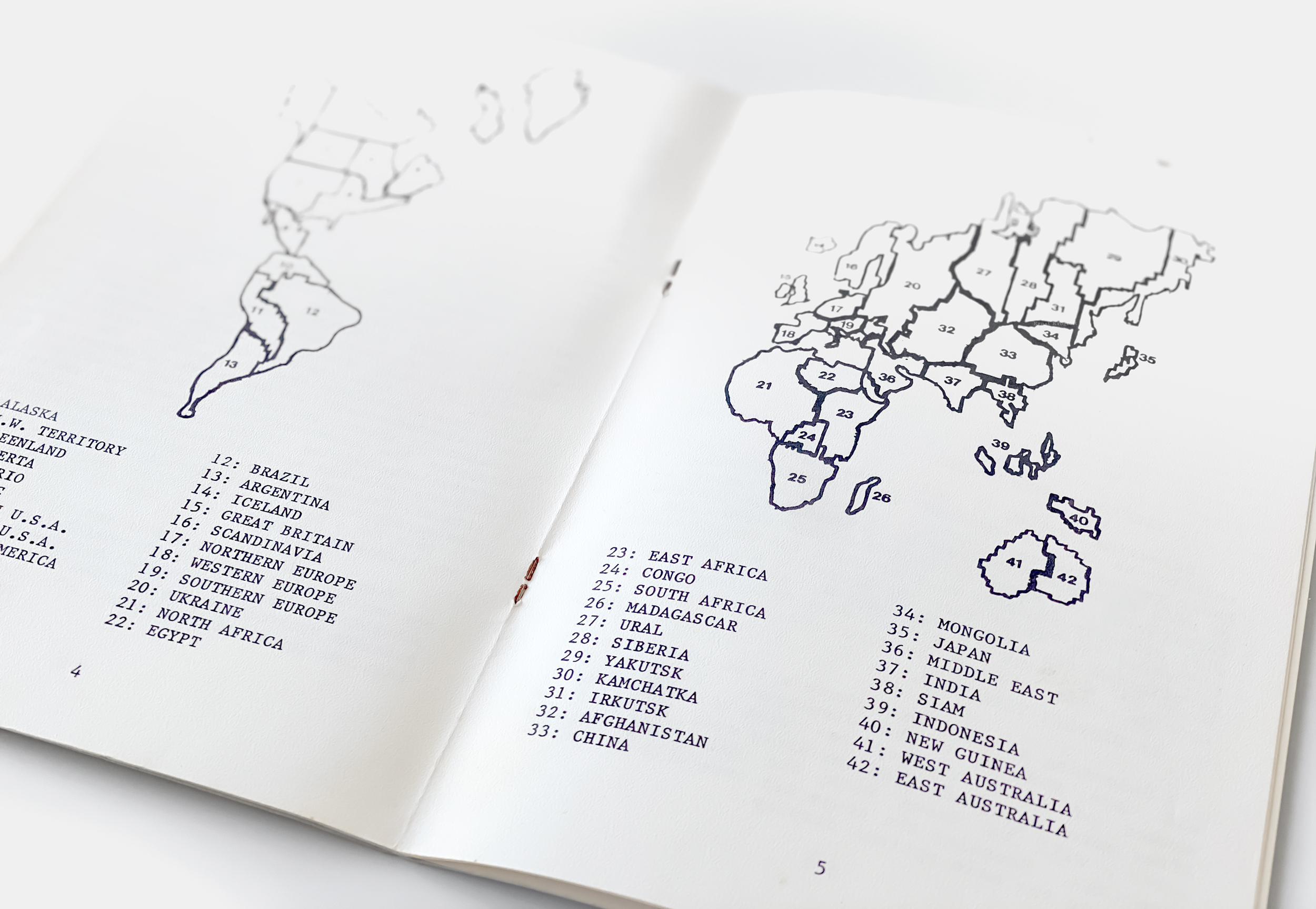
Boyd’s own creative impulses also found expression on the road. Touring between concerts, he carried his Apple II and, on the back of the tour bus, wrote his first and only published game, Global War. A multiplayer clone of the board game Risk, it was coded in Applesoft BASIC. While it offered no single-player mode, it allowed two to nine human players to compete for the 42 territories of the world. Reinforcements were awarded based on the number of territories and continents controlled, and battles were resolved with simulated dice rolls. Each turn concluded with a movement phase, letting players redistribute their armies across conquered lands. Released on cassette for the Apple II in 1979, Global War is now remembered as one of the earliest computerized adaptations of the beloved strategy board game.
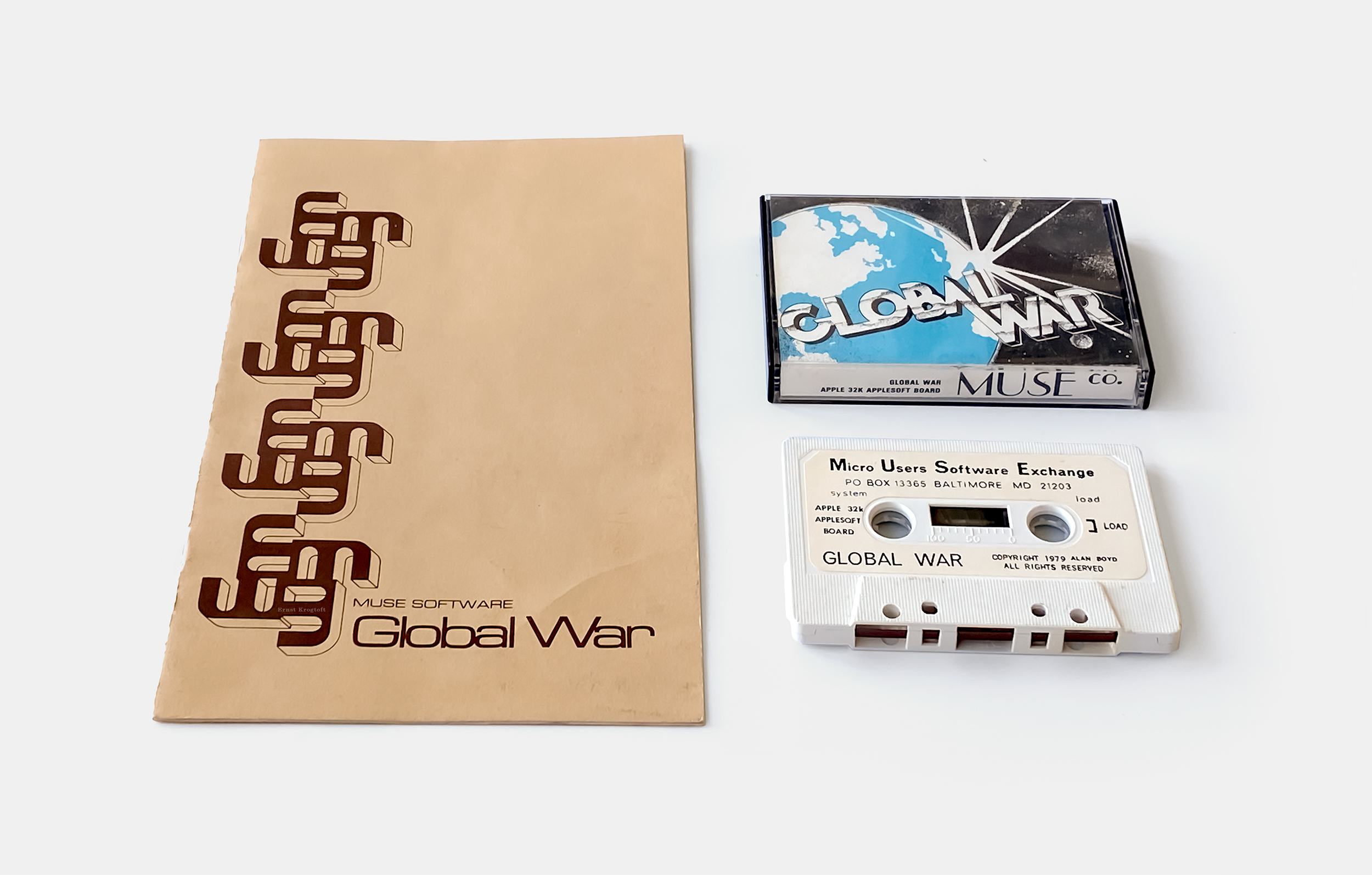
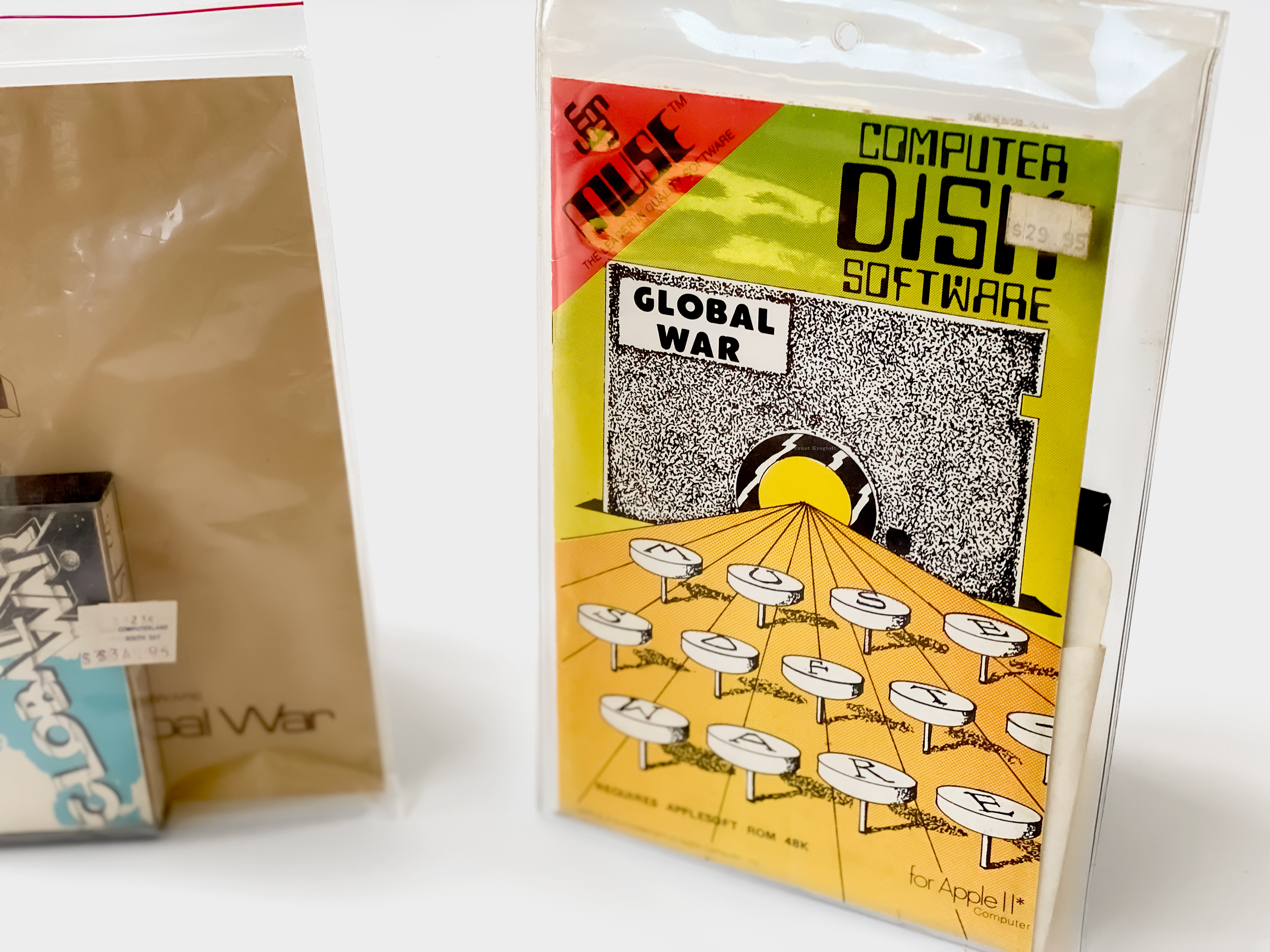
The original release of Alan Boyd’s Global War, published by Muse Software in 1979 for the Apple II
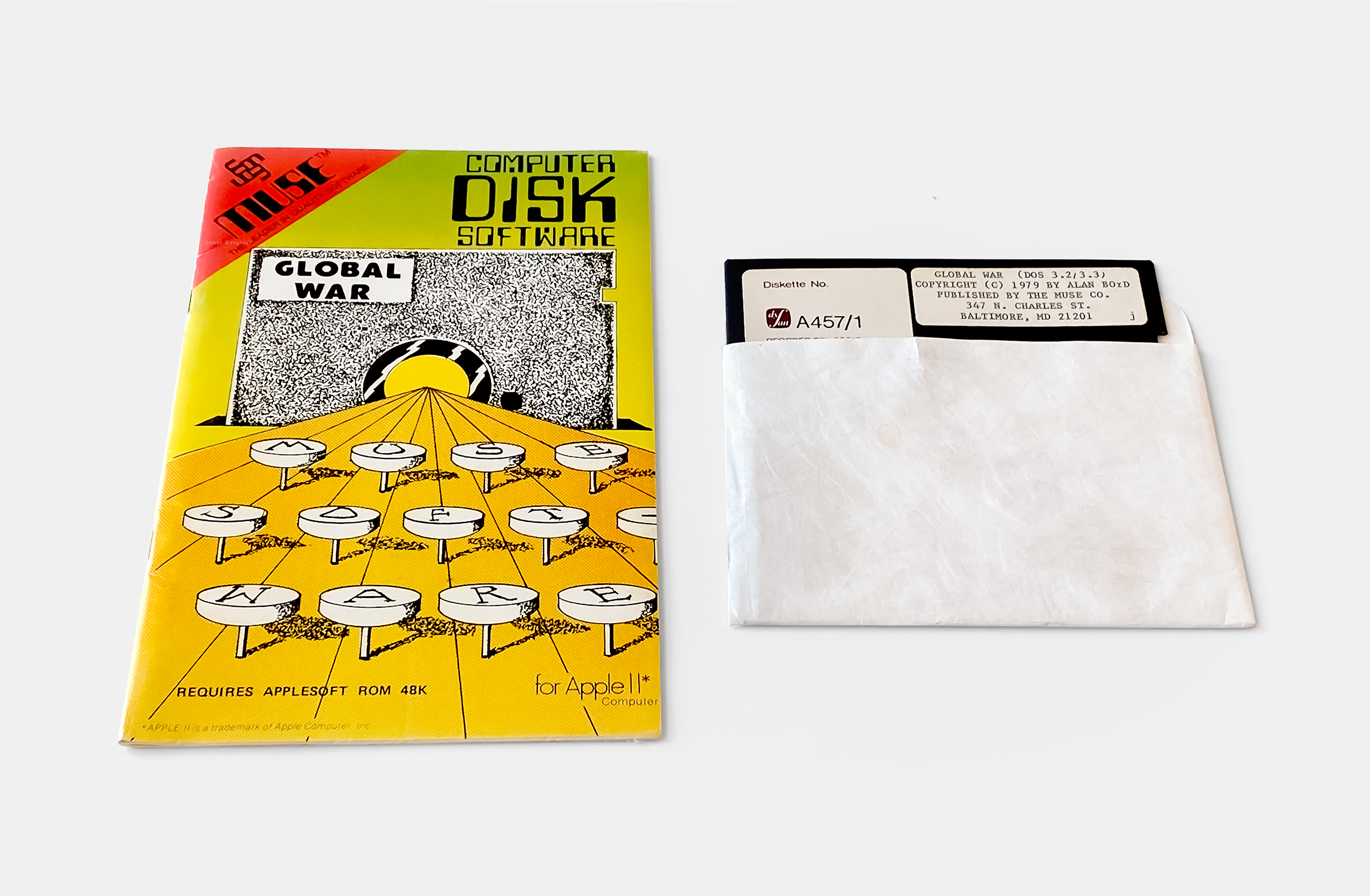
Global War was re-released in 1980 for the Apple II under Muse’s Computer Disk Software label, which republished many of the company’s earlier tape-based games on the then-modern 5.25″ floppy disks.
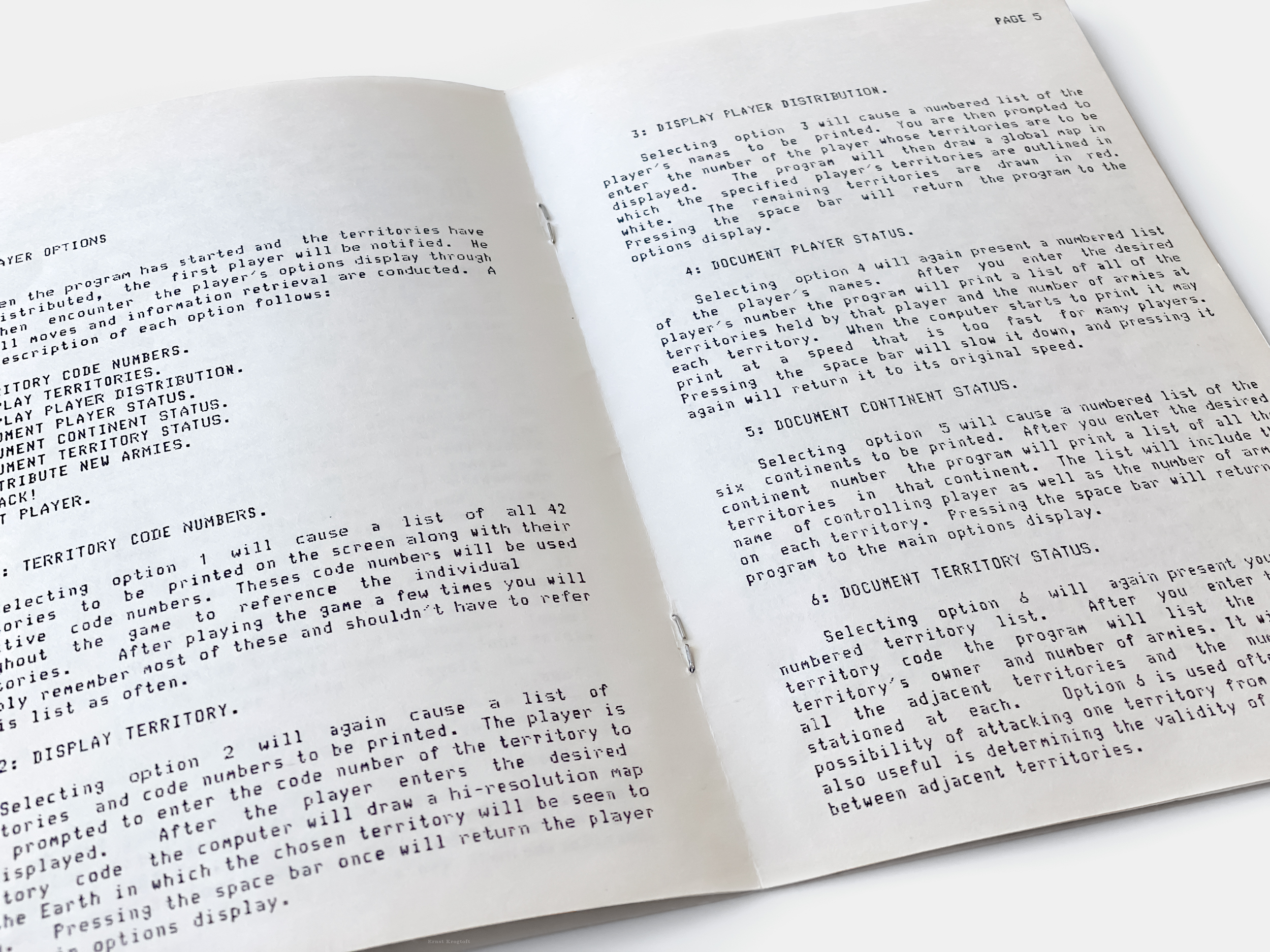
Global War was primarily text-based but included an impressive Hi-Res world map displaying each player’s territories. At the start of a game, armies and territories were randomly assigned, which could sometimes create an unbalanced distribution, and players had the option to redistribute to even the playing field. Games could also be saved, perfect for pausing when friends had to head home for dinner, and reloaded for the next session.
During one of his tours, Boyd also encountered a pair of young entrepreneurs, Bill Gates and the late Paul Allen. In January 1979, Microsoft had relocated its fledgling software company from Albuquerque, New Mexico, to Bellevue, Washington. By 1980, Boyd had joined Microsoft as Manager of Product Development, reporting directly to Gates. His mission was to identify, develop, and acquire products that complemented Microsoft’s in-house offerings, a role that would place him at the center of the company’s earliest strategic moves.
Boyd quickly helped shape Microsoft’s core operations. He established Product Marketing, responsible for bringing products to market, and the Acquisitions Group, tasked with licensing and overseeing the company’s early acquisitions. He led the development of the first Microsoft Flight Simulator in 1981, the same year the company incorporated, earning founder’s shares in the process. During his tenure, he played a vital role in a string of landmark products, including MS-DOS, Microsoft Word, Excel, Works, and Windows. A strong advocate for the Macintosh, Boyd pushed Microsoft to support Mac development. When Gates ultimately decided to abandon Macintosh projects in 1986, Boyd chose to seek new ventures.
In the years that followed, Boyd continued to pioneer. He brought the world’s first hypertext browser to market, helping establish hypertext as a foundation of the Internet. He founded HeadFirst Multimedia, the first integrated multimedia and interactive television company, where he conducted early trials in interactive TV and streaming media as early as 1990.
Boyd’s international influence also grew. In 1984, during his Microsoft years, he met Madam Wu Yi, former Vice President of the Chinese State Council, who invited him to advise the Chinese government on technology and intellectual property development. In 1999, he co-founded St Banks International Group, a Shanghai-based advisory and investment firm focused on early-stage technology ventures.
Recognition of Boyd’s expertise came from the highest levels. In the 1980s, the Reagan administration acknowledged him as one of the world’s leading intellectual property experts, and he served as an expert witness in high-profile IP cases for the U.S. Treasury Department. In 2009, he became Senior IP Consultant at Longan Law, one of China’s premier IP law firms. Two years later, he co-founded SmartCity Investments, China’s first software company dedicated to designing, developing, and licensing software for building the smart cities of tomorrow.
Today, Boyd resides in London. Even decades after experimenting with some of the earliest personal computers, he remains engaged in next-generation technology, guiding, investing in, and shaping the products that will define the future.
Sources: Allan Boyd, Singapore Management University, Wikipedia, LinkedIn

 Retro365